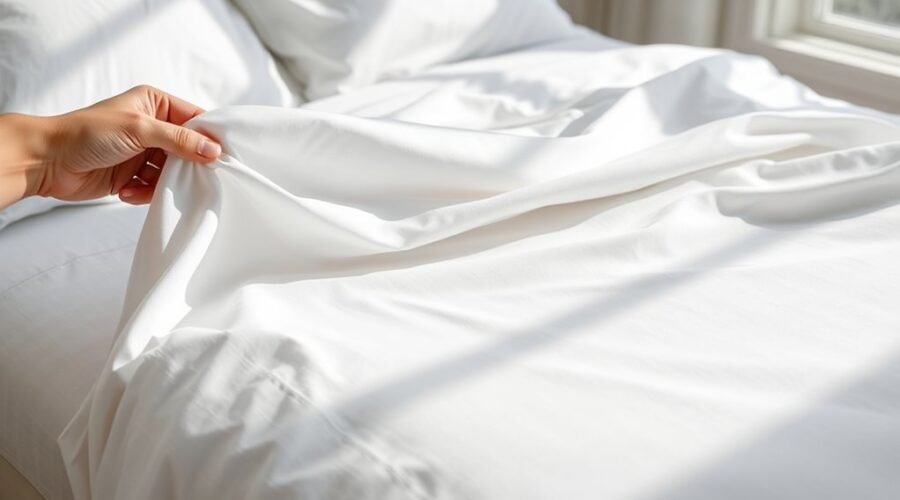
Percale weave is the quiet machinery of bedding, turning simple threads into a fabric that feels clean and exact. You get a one-over, one-under structure that creates a matte surface, better airflow, and a crisp hand. That balance is why it feels cool against your skin and wears well over time. If you want to know why thread count and cotton quality change the result, there’s more to unpack.
Key Takeaways
- Percale is a plain one-over, one-under weave that creates a smooth, durable, breathable fabric.
- Its balanced structure lets air flow easily, which helps sheets feel cool and comfortable.
- Percale typically uses long-staple cotton and a 200–400 thread count for crispness and strength.
- Compared with sateen, percale feels lighter, less shiny, and cooler against the skin.
- Proper cold washing and low-heat drying help percale keep its crisp, fresh feel.
What Is Percale Weave?
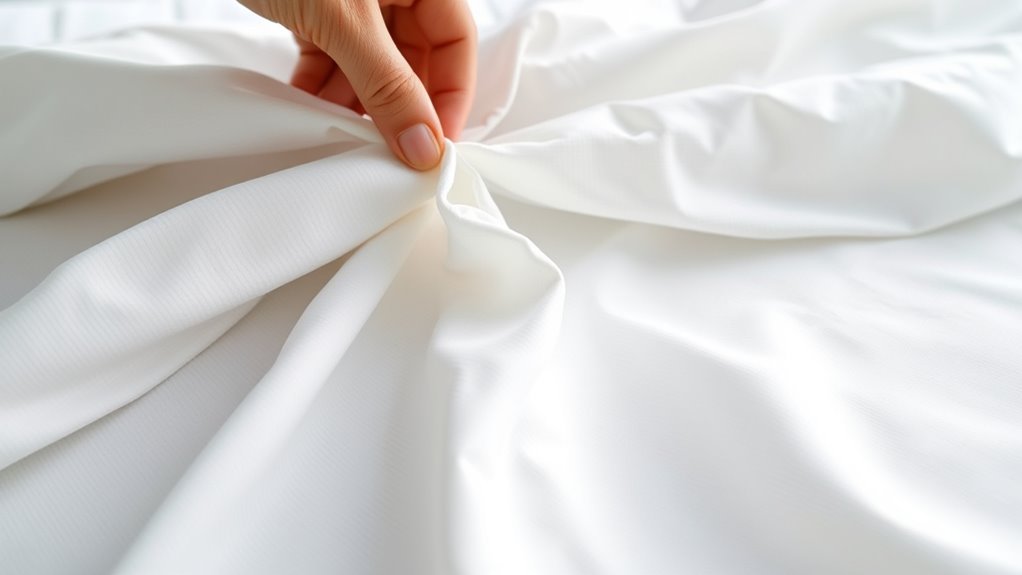
Percale weave is a plain, one-over, one-under textile structure that produces a smooth, durable fabric with a crisp hand. You get a Percale fabric when yarns cross evenly, creating a balanced weave that stays breathable and structurally sound.
If you choose cotton percale, you’re typically selecting long-staple fibers, such as Egyptian or Supima, which support longevity and a crisp surface. The preferred thread count usually falls between 200 and 400, giving you enough density for durability without sacrificing airflow.
Because the weave doesn’t trap excess heat, the fabric feels cool-to-the-touch and works well in warm climates. You can rely on this construction if you want bedding that resists heaviness and supports rest on your own terms.
That’s why percale is ideal for hot sleepers: it lets you sleep with less overheating and more comfort.
Why Percale Feels Crisp and Cool
Because its one-over, one-under structure leaves more space between yarns, percale moves air efficiently and keeps the fabric feeling crisp and cool against your skin. You get a light, liberated touch because the percale weave promotes breatheability, especially for hot sleepers in warm climates. Its matte finish reduces surface sheen and supports that dry, airy sensation.
| Factor | Effect |
|---|---|
| Thread count 200-400 | Balanced durability and crisp feel |
| Lightweight structure | Faster airflow through sheets |
| Matte finish | Cooler touch, less glide |
| Repeated washing | More softness without collapse |
With the right thread count, your sheets stay resilient without adding weight. Percale doesn’t trap heat, so you can rest with less overheating and more comfort. Over time, the fabric softens, but it keeps its structure, so you don’t lose that clean, crisp feel. This makes percale weave a precise choice when you want dependable coolness, tactile clarity, and everyday freedom.
Percale vs. Sateen Sheets
When you compare percale and sateen sheets, you’ll notice a clear difference in hand feel: percale’s one-over, one-under weave creates a crisp, structured surface, while sateen’s four-over, one-under construction produces a smoother, silkier finish.
Percale also stays cooler and more breathable because its weave allows more airflow, so it’s a stronger choice for hot sleepers.
Sateen, by contrast, traps more heat and feels warmer, which makes it better for cooler conditions.
Crisp Vs. Smooth Feel
A key difference between percale and sateen sheets is the feel against your skin: percale uses a one-over, one-under weave that produces a crisp, matte surface with a cool, breathable touch, while sateen’s four-over, one-under construction creates a smoother, silkier fabric with a slight sheen and more warmth.
If you want a crisp feel, percale sheets deliver it through their one-over-one-under weave, which feels cool to the touch and lets air move freely. That makes them a strong pick for hot sleepers and anyone who wants less heat buildup.
Sateen offers a smooth texture instead, with a softer drape. Percale also keeps its structure well, so you get a clean, liberated sleep surface that softens over time without losing performance.
Cool Breathable Vs. Warm
If you’re weighing percale against sateen for temperature control, the weave tells you a lot about how each fabric will perform.
Percale sheets use a one-over, one-under structure that opens the cloth, so you get stronger breathability, faster moisture wicking, and a pronounced cool feel. That makes them a smart choice for hot sleepers and warm rooms, especially when you want sleep without thermal restraint.
Percale usually sits around a 200 to 400 thread count, which supports airflow without sacrificing durability.
Sateen sheets, by contrast, use a four-over, one-under weave; that adds softness and a heavier hand, but it also traps more heat. If you run cold, sateen can feel comforting. If you run warm, percale gives you more freedom and ventilation.
How Percale Weave Affects Durability
Percale’s one-over, one-under weave gives it a tighter, more stable structure than sateen’s four-over, one-under pattern, which translates directly into greater strength and durability.
When you choose percale sheets, you’re relying on a one-over-one-under weave that preserves structural integrity under stress. A thread count of at least 200 supports this durability without compromising airflow, giving you long-lasting wear in daily use.
The fabric’s tight interlacing also makes it resistant to pilling, so the surface stays smoother after repeated washing. That robust construction matters if you launder sheets often or need reliable performance in demanding settings.
In hotels and other commercial environments, percale holds up because it resists abrasion, maintains its shape, and keeps its crisp hand over time.
You get a textile engineered for endurance, not fragility, so your bedding can stay functional, presentable, and comfortable through repeated cycles of use and care.
What Thread Count Means for Percale
Thread count helps explain why percale feels the way it does, but it only matters when it works with the weave and fiber quality. You need at least 200 threads for percale sheets to hold structure and deliver that crisp texture and cool hand.
Most percale lands between 200 and 400, where you get balanced softness, breathability, and durability without crowding the cloth. A high thread count above 400 can signal multi-ply yarns, and that often makes sheets heavier and less airy, so the fabric loses its liberated, light feel.
Don’t let marketing distract you: thread count isn’t the whole story. Cotton quality shapes the final result, and quality cotton, especially long-staple cotton, usually spins into smoother, stronger yarns.
When you compare options, read the weave, check the fiber, and treat thread count as one technical variable, not the measure of value.
Why Cotton Quality Matters Most
Cotton quality matters more than thread count because the fiber itself determines how percale feels, wears, and breathes. When you choose percale sheets made with long-staple cotton such as Egyptian or Supima, you get finer fibers that create a smoother surface, stronger yarns, and better softness without sacrificing structure.
That means your sheets can relax with washing while still holding their shape. Premium cotton also resists pilling, so the fabric keeps a clean, refined finish longer.
Just as important, high-grade cotton supports breathability in the tight percale weave, letting air move freely for reliable temperature regulation and a cool feel through the night. You’re not just buying fabric; you’re claiming comfort that lasts.
In practical terms, superior cotton quality delivers durability, comfort, and longevity, making well-made percale sheets a smart, durable investment in your sleep.
How to Choose the Best Percale Sheets
You should prioritize fiber quality by choosing long-staple cotton like Egyptian, Pima, or Supima, since these fibers deliver better softness, durability, and breathability.
Aim for a thread count between 200 and 400, which balances a crisp hand feel with low thermal resistance, and avoid synthetic finishes that can reduce airflow.
To preserve performance, check for GOTS or Oeko-Tex certification and follow care instructions like cool-water washing and low-heat tumble drying.
Fiber Quality Matters
Fiber quality is the foundation of a good percale sheet, and long-staple cotton varieties such as Egyptian, Pima, or Supima usually deliver the best balance of softness, strength, and durability.
You should prioritize high-quality cotton because it preserves breathability and keeps the fabric cool, crisp, and lightweight. Avoid coarse or blended fibers; they can blunt the clean hand feel and weaken percale’s performance.
Check the label for certifications like GOTS and Oeko-Tex, since they help confirm safer processing and responsible production. A clear fiber specification tells you more than marketing claims.
When you choose long-staple cotton with verified certifications, you claim a sheet that supports comfort, air flow, and lasting structure without excess compromise or chemical concern.
Ideal Thread Count
Once you’ve confirmed high-quality, long-staple cotton, thread count becomes the next filter for judging percale performance.
For percale sheets, target 200 to 400 threads per square inch; that range preserves crisp handfeel, breathability, and balanced softness without extra weight. If you push above 400, you’re often buying thinner yarns or multi-ply construction, and that can mute the open, cool structure you want.
Choose labels that specify long-staple cotton and verify OEKO-TEX when possible, because clean fiber sourcing matters. You’ll still gain softness as the fabric relaxes, but the sheet should feel structured, not dense.
For cooler weather, a slightly fuller weave within that range can feel more substantial while staying airy.
Care and Durability
For long-lasting percale, prioritize construction and care as much as initial handfeel: choose sheets woven from long-staple cotton such as Egyptian or Supima, with a thread count between 200 and 400 to preserve breathability and reduce stress on the fabric.
You’ll get better durability when the yarns are fine but strong. Verify organic cotton through GOTS or OEKO-TEX, which signals low chemical residue and safer use.
Wash in cold water on a gentle cycle, then dry on low heat to limit shrinkage and fiber fatigue. Skip synthetic finishes; they mute crispness and trap heat.
If you want a sharper look, iron pillowcases only. This care routine protects structure, keeps percale airy, and lets you move through sleep with less friction and more freedom.
How to Care for Percale Sheets
To keep percale sheets crisp and durable, wash them in cold water with a mild detergent, which helps preserve the weave’s structure and prevent fiber damage. You should care for percale sheets by avoiding bleach and fabric softeners, because they can weaken breathability and dull the preserved crisp feel. For drying, line-dry whenever possible; if you use a dryer, choose low heat to limit shrinkage and maintain freshness. Iron pillowcases only when you want a polished finish, since premium fibers soften with use.
| Action | Result |
|---|---|
| Mild detergent, cold wash | Clean fibers, stable weave |
| Avoid bleach | Breathability stays intact |
| Folded neatly, cool storage | Longer freshness, fewer wrinkles |
Store them folded neatly in a cool, dry place. This precise care routine lets your percale sheets stay functional, liberated from stiffness loss, and ready for restorative sleep.
Frequently Asked Questions
What Are the Downsides of Percale?
Percale’s downsides include durability concerns, lower wrinkle resistance, and more maintenance challenges, so you’ll often iron or rewash to keep it neat.
Depending on thread count and cotton types, new percale can feel stiff, and the crisp hand may not suit you if you want a silky finish.
Breathability factors can also make it feel too cool in cold rooms, and the cost comparison isn’t always favorable for your sleep quality.
Why Does Percale Feel Cool?
Verily, percale feels cool because you sleep on breathable fabrics with a one-over, one-under structure that boosts airflow.
You’ll notice its fabric composition and moderate thread count support moisture wicking, so heat and sweat move away fast.
Cotton types with a matte finish help stabilize sleep temperature, especially if your bed climate runs warm.
For your seasonal preferences, that crisp, liberated feel stays invigoratingly light and never traps heat.
What Kind of Sheets Feel Crisp and Cool?
You’ll feel crisp, cool sheets in percale cotton types, especially 200–400 thread count options with strong fabric breathability.
You’ll keep your sleep temperature down because the plain weave moves air and won’t trap heat. You’ll gain solid sheet durability, too.
For luxury bedding, choose percale for hot, humid seasonal preferences. Use gentle maintenance tips, and the fabric’ll soften without losing its clean, liberated feel.
Is Percale Weave Cooling?
Yes—percale weave can feel like a cool breeze across your skin. You get cooling performance from its breathable fabrics, one-over, one-under structure, and moisture wicking, which support temperature regulation in summer bedding.
Choose the right thread count and cotton types, and you’ll boost sleep quality without trapping heat. With proper fabric care, percale softens over time while keeping its crisp, liberated feel and dry comfort.
Conclusion
Now that you know what percale weave is, you can see why it feels like a cool breeze over a sunlit bed. Its one-over, one-under structure gives you a crisp, breathable surface, while quality cotton adds strength and softness over time. When you choose percale, you’re picking a fabric that balances airflow, durability, and comfort with engineering-like precision. Care for it well, and it’ll reward you with a clean, matte finish night after night.