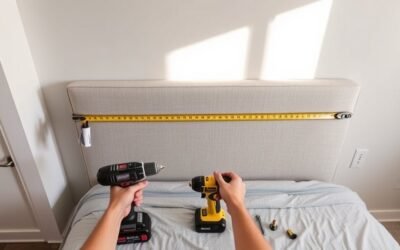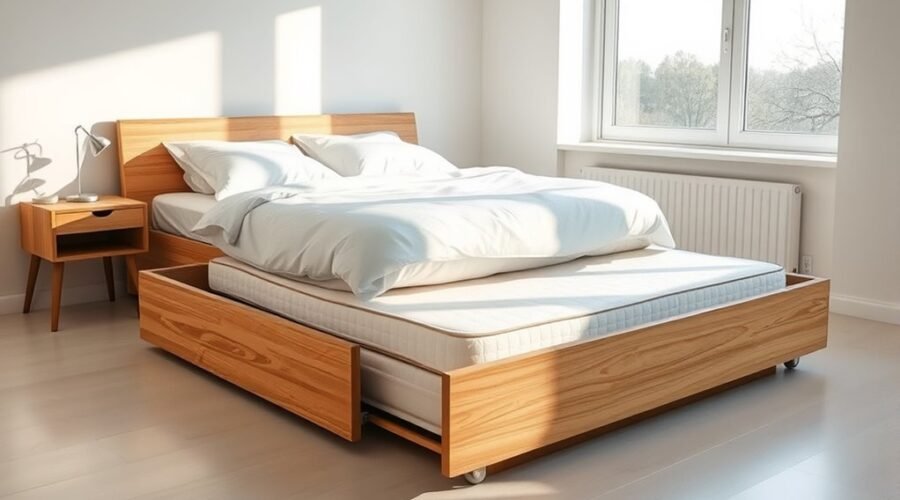
If you’re looking at a trundle bed, you’re seeing a main bed with a second, lower bed stored underneath on casters or rollers. You pull the lower frame out from one side, and it slides into place for use, then tucks back under when you’re done. The setup saves floor space, but the details change depending on the bed style, and that’s where the differences start to matter.
Key Takeaways
- A trundle bed is a space-saving bed with a second mattress stored underneath the main bed.
- The lower bed slides out on wheels or casters when extra sleeping space is needed.
- Trundle beds usually come in twin or full sizes and keep the floor clear when tucked away.
- Most trundle mattresses are 6 to 8 inches thick so they can slide in and out smoothly.
- Some trundle beds pop up to match the main bed height for easier access and a more level sleep surface.
What Is a Trundle Bed?
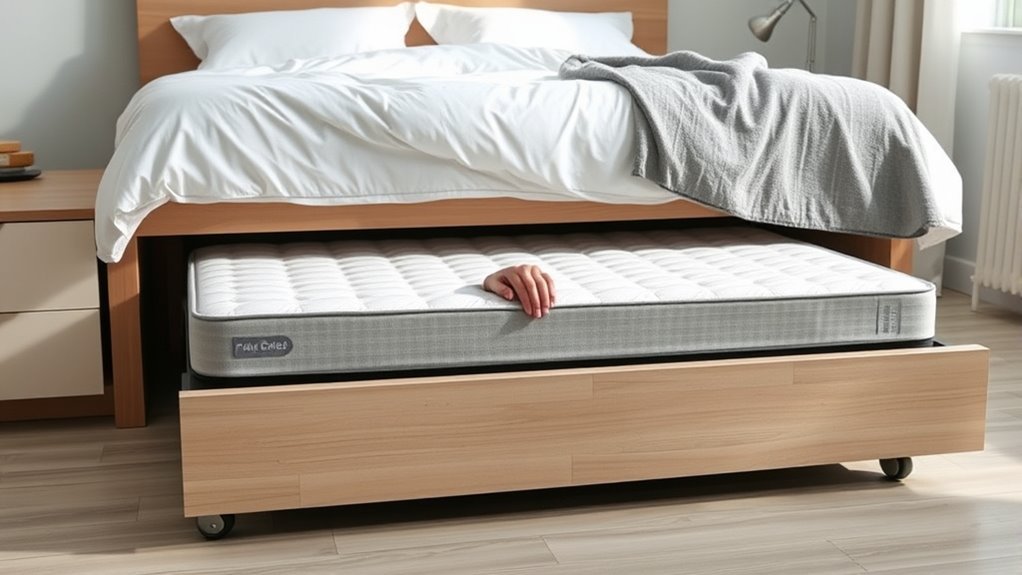
A trundle bed is a compact bed frame with a lower mattress that rolls on wheels and slides neatly under the main bed when not in use, making it a smart space-saving option.
You can use this trundle bed in a twin size or full-size layout to add additional sleeping space without crowding your room. The lower mattress stays tucked away until you need an extra sleeping surface for a child, visitor, or overnight guest in a guest room.
Because the frame sits low and uses wheels or casters, you get easy sliding and quick setup while keeping the footprint modest. You also keep your floor open for movement, storage, and daily use.
In practical terms, a trundle bed gives you a compact bed frame that supports flexibility, comfort, and efficient room planning. It suits smaller spaces where you want freedom, not clutter, and it keeps extra bedding ready when life shifts.
How Trundle Beds Work
Trundle beds work by pairing a main bed frame with a second bed stored underneath, usually mounted on wheels or rolling casters so you can slide it in and out with little effort.
You pull the lower bed from beneath the main bed when you need extra sleeping surfaces, then slide back the unit to reclaim floor space. The trundle sits low, about 10 to 14 inches off the ground, so it’s accessible for kids and easy to roll.
A standard trundle usually accepts a 6 to 8 inch mattress, which fits inside the 9 to 12 inch compartment without binding. Some models pop up to match the main bed height, giving you a flatter guest bed setup for older teens or adults.
In practice, trundle beds let you convert one footprint into two beds, freeing storage space and keeping your room open, flexible, and ready for motion.
Trundle Bed vs. Daybed
If you’re comparing space-saving sleep options, a trundle bed and a daybed serve different jobs.
A trundle bed gives you an extra bed that slides out below the main frame, so you can expand sleeping space without claiming more floor area. You’ll usually see twin beds in this setup, making it a practical fit for a kids’ bedroom or guest room where use of space matters.
A daybed looks more like a standard bed with raised sides, and it doubles as one of your seating areas during the day. That gives you more versatility, especially if you want one piece to work harder.
Daybeds often offer storage underneath, while a trundle bed stays focused on sleep and may not add much storage.
Choose the trundle bed when you want maximum sleeping capacity; choose the daybed when you need both lounging and sleeping in a single, adaptable frame.
Standard Trundle vs. Pop-Up Trundle
When you’re choosing between a standard trundle and a pop-up trundle, the biggest difference is height and how you plan to use the bed.
A standard trundle sits low, usually 10 to 14 inches, so it tucks neatly under the bed frame and delivers space-saving convenience for occasional sleepovers. Its lower design works best for kids, but it can feel cramped for adult guests because the mattress and sleeping surface stay close to the floor.
A pop-up trundle rises to 18 to 22 inches, so you can match the main bed’s height and improve access and comfort for older teens and adults. You’ll also get a slightly more generous mattress range and a sturdier feel.
The tradeoff is cost: the pop-up trundle uses a more complex mechanical design, so it’s pricier.
If you want simple, compact use, choose standard. If you want flexibility and better comfort, choose pop-up.
Trundle Bed Mattress Size and Thickness
You’ll need to match the mattress size to the trundle frame, which is usually twin or full, so it fits without binding in the compartment.
Keep the thickness low—typically 6 to 8 inches, and often no more than 6 inches if you need extra clearance for lids or tight tracks.
That balance gives you enough support while still letting the mattress slide back under the main bed easily.
Mattress Size Fit
Choosing the right mattress for a trundle bed starts with height and footprint. You need a trundle mattress that fits the bed frame, clears the main bed, and slides freely. Most trundle setups use a standard size twin size or full size mattress, but the width and length must match the compartment. Measure the vertical space from the slats to the side rail, then subtract one inch for bedding clearance. Keep the mattress height at 8 inches or less so the sliding action stays smooth and the sleeper gets solid support.
| Size | Dimensions | Use |
|---|---|---|
| Twin | 39″x75″ | Common fit |
| Full | 54″x75″ | Wider fit |
| Height | 6-8 in | Best clearance |
Thickness Limits
Trundle bed mattresses usually need to stay between 6 and 8 inches thick so they can slide in and out without binding under the main bed.
You’ll get the best fit when you match that thickness to the trundle compartment, which commonly measures 9 to 12 inches high. A 6-inch mattress often gives safer clearance for the lid mechanism when you store it underneath.
Stick with standard twin bedding, and you won’t need special linens or extra sizing work. Choose a purpose-made trundle mattress if you want reliable support without exceeding the limit.
That controlled thickness keeps the bed mobile, protects the slide action, and helps you use the space freely and efficiently.
Clearance And Support
Proper clearance is what keeps a trundle bed working smoothly, so the mattress has to fit both the compartment height and the slide path.
You should measure the trundle compartment carefully, because most bays allow only 9 to 12 inches of height. For reliable support, choose a mattress between 6 and 8 inches thick, then subtract about one inch for bedding clearance.
A standard twin mattress can work, but a thinner trundle mattress usually slides better and preserves space. When you match the mattress to the bed’s limits, you protect the frame, reduce drag, and keep the lower bed easy to pull out.
That fit gives you practical freedom: smooth access, stable support, and a trundle that does its job without resistance.
Who Should Buy a Trundle Bed?
If you need extra sleeping space without giving up valuable floor area, a trundle bed is a smart fit. You should buy one if you host children’s sleepovers, need temporary sleeping for visitors, or want more sleeping capacity in guest rooms. It’s also a strong choice for shared rooms in apartments or small homes, where a space-saving layout matters.
| Best for | Why it works |
|---|---|
| Children | Easy-access second bed for sleepovers |
| Siblings | Two beds within one footprint |
| Guest rooms | Adds temporary sleeping without bulk |
| Small homes | Preserves open floor area |
| Growing families | Gives flexibility and optional additional storage |
You’ll gain flexibility as your needs change, and you can tuck the lower unit away when you don’t need it. If you want a practical trundle bed that supports organized living, shared rooms, and efficient use of extra space, this setup delivers clear functional value.
Frequently Asked Questions
What Are the Disadvantages of a Trundle Bed?
You’ll face weight limits, mattress thickness restrictions, comfort issues, and space constraints with a trundle bed.
You may also lose storage solutions, since the lower bed occupies valuable floor space.
Some design options look sleek, but assembly complexity and frequent movement can create durability concerns and wear.
If you use one often, follow maintenance tips and choose carefully, because low aesthetic appeal and limited support can undermine freedom and rest.
Can You Put a Regular Mattress in a Trundle Bed?
Yes, you can, but about 9 to 12 inches of trundle clearance means you’ll usually need a thinner one.
You should check mattress thickness, mattress types, and bed frame compatibility before buying. A 6-inch mattress often improves sleep comfort, mattress height, and weight capacity.
Keep space considerations, bedding options, maintenance tips, and mattress durability in mind, and follow the maker’s guidelines so you keep the lower bed free and usable.
Can an Adult Sleep in a Trundle Bed?
Yes, you can sleep in a trundle bed, but you should check trundle bed dimensions, weight capacity, and mattress thickness first.
For adult comfort, choose a pop-up model or thicker mattress, since low sleeping arrangements can feel cramped.
These space saving design styles work best for guest accommodations, not nightly use.
You’ll want to watch durability concerns and match the bed to your body, freedom, and support needs.
Do Trundle Beds Pull All the Way Out?
Yes, most trundle beds pull all the way out, giving you full access for guest accommodations or a children’s sleepover.
Their trundle bed mechanics usually rely on a simple sliding mechanism with wheels, so you can extend them smoothly.
As space saving furniture, they boost bedroom versatility without crowding your room.
Check mattress compatibility, ease of use, safety features, and stylish designs to match your needs.
Conclusion
So, when you choose a trundle bed, you get a smart space-saver that works like a hidden drawer: it rolls out when you need it and disappears when you don’t. You’ve seen the difference between standard and pop-up styles, and why mattress thickness matters. In a 10-by-12-foot guest room I once measured, one trundle turned cramped floor space into a usable sleeping area overnight. That’s the point: simple mechanics, more room, less clutter.