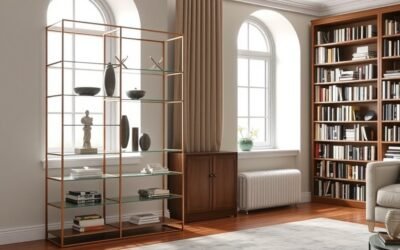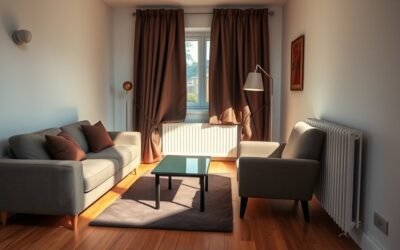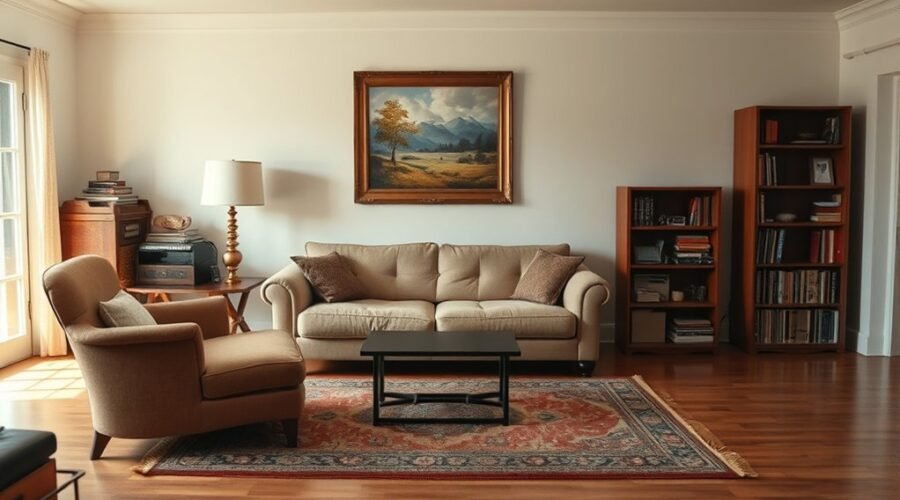
A room can feel unbalanced after you rearrange furniture when the largest pieces, visual weight, scale, focal points, and walking paths no longer work together. One side may look heavier, the seating may stop relating to the rug or focal point, or furniture may interrupt natural movement. The fix is usually a few deliberate placement changes rather than buying new decor.
Quick Answer
Your room probably feels unbalanced because visual weight, furniture scale, focal points, or traffic flow changed during the rearrangement. Start with the largest pieces, identify which side looks visually heavy, reconnect seating to the main focal point and rug, clear walking paths, and then adjust smaller decor one item at a time.
Key Takeaways
- Balance is about perceived visual weight, not simply placing identical furniture on both sides of the room.
- Large, dark, tall, densely textured, or visually solid pieces usually attract more attention than small, light, open pieces.
- A clear focal point, usable walking paths, and a rug that connects the seating group can make a rearranged room feel intentional again.
- Move the largest pieces first and change one thing at a time so you can tell which adjustment improves the room.
Why Your Room Feels Unbalanced
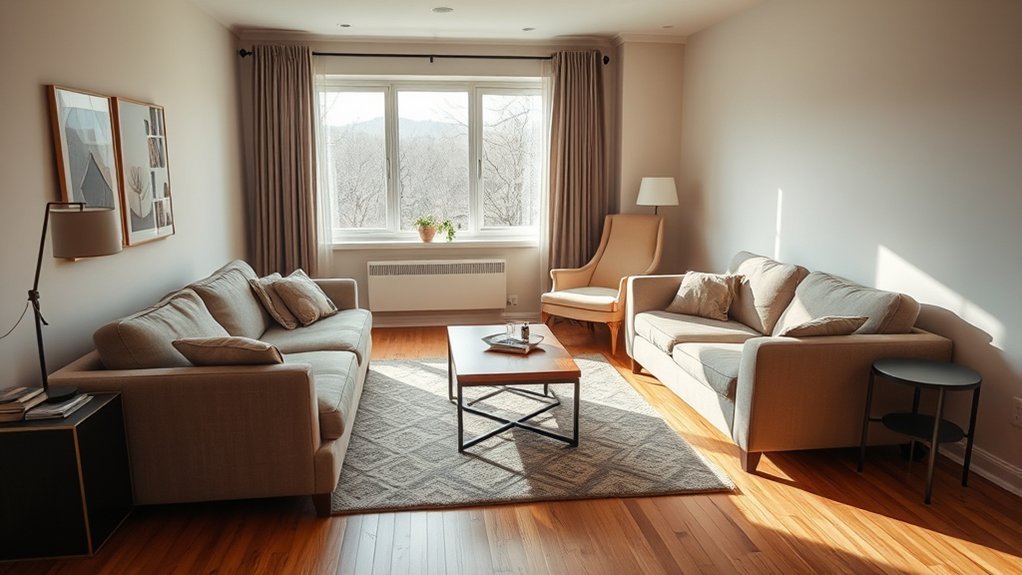
A room usually feels unbalanced when its visual weight is distributed unevenly. A sectional, tall cabinet, dark bookcase, fireplace, large window, or bold piece of artwork can pull the eye toward one area while the opposite side feels empty.
Visual weight is not the same as physical weight. A glass table may be physically heavy but look lighter than a smaller solid-wood cabinet because you can see through it. Dark colors, dense textures, large shapes, strong contrast, and tall forms can also make an object appear more dominant.
This idea follows basic design principles taught by Iowa State University Extension, which describes balance in terms of visual weight and scale as the size relationship between objects and the space they occupy.
A balanced room does not need matching furniture on both sides; it needs the major visual elements to feel intentionally distributed.
Scale matters too. A very small rug beneath a broad sofa can make the seating group look disconnected, while an oversized cabinet can dominate a narrow wall. Artwork, mirrors, lamps, and plants also affect the room’s perceived weight, especially when several strong elements cluster in the same area.
Circulation can make the room feel wrong even when the furniture looks attractive. If you must squeeze between a sofa and table, walk around a chair to reach a doorway, or dodge an open drawer, the arrangement will feel awkward in daily use.
Do a Quick Room-Balance Check Before Moving Anything
Before dragging the furniture around again, spend a few minutes diagnosing what actually changed. This prevents endless trial and error.
- Stand at the main doorway. Notice where your eye goes first and which side of the room feels visually heavier.
- Identify the main focal point. It may be a fireplace, TV, large window, artwork, bed, or another architectural feature.
- Look at the largest pieces first. Sofas, beds, cabinets, dining tables, and bookcases affect the layout far more than pillows or small accessories.
- Trace the natural walking path. Check entrances, door swings, drawers, cabinets, and the route people use most often.
- Check the rug and furniture as one group. Seating should look connected to the rug instead of appearing to float around a tiny center rug.
- Look vertically as well as left to right. One tall bookcase on an otherwise low wall may need visual support from artwork, a lamp, curtains, or another vertical element elsewhere.
Pro Tip: Take a phone photo from the doorway before moving anything. A flat photo often makes a visually heavy corner, undersized rug, awkward gap, or crowded wall easier to notice than when you are standing inside the room.
Which Furniture Placements Make It Worse
Certain furniture placements make imbalance more noticeable. One common problem is clustering the tallest and darkest furniture on the same side of the room. A bookcase, dark sofa, floor lamp, and heavy media console can collectively overpower an almost empty opposite wall.
Overcrowding is another problem. When sofas, chairs, side tables, and cabinets are pushed too close together, the room loses usable space and the furniture stops reading as separate, intentional pieces. Educational furniture-arrangement guidance from the Utah Education Network likewise emphasizes visual mass, focal points, proportion, and avoiding overcrowding.
A second mistake is forcing every object against the walls. Some rooms need that approach because of their size, but in larger rooms it can leave a dead center and make the furniture feel disconnected. Pulling a chair, sofa, or console slightly inward can create a more coherent seating zone.
Furniture can also feel misplaced when it ignores the room’s main purpose. A sofa does not always have to face a fireplace or television directly, but the seating should make sense for what people actually do in the room. In a conversation-focused living room, chairs should relate to one another. In a TV-focused room, viewing angles matter more.
Blocking walkways creates another layer of imbalance because the room may look acceptable from one viewpoint but function poorly in real use. Keep doorways, frequently used routes, and access to storage free of unnecessary obstacles.
Note: There is no single furniture-clearance number that works for every private home and every person. Household needs, room size, mobility requirements, door swings, and local accessibility or building requirements may all affect the amount of clear space you need.
How Scale and Visual Weight Affect Balance
Scale determines how large or small one item appears in relation to the room and the furniture around it. A large sectional can work beautifully in a large living room but dominate a narrow room if little open space remains around it.
Visual weight adds another layer. Size matters, but so do color, material, texture, contrast, and shape. A dark solid cabinet can look heavier than a pale open shelving unit of similar dimensions. A brightly colored chair may pull more attention than a larger neutral chair.
Height also matters. If every large piece sits low to the floor except one tall cabinet, that cabinet can look disconnected. You do not necessarily need another cabinet to balance it. Curtains, artwork, a floor lamp, a plant, or a vertical grouping of smaller objects can provide visual support without adding another bulky item.
Symmetrical vs. Asymmetrical Balance
Symmetry is the easiest type of balance to recognize. Matching end tables, paired lamps, or two similar chairs can create a calm, orderly arrangement. It works especially well around a centered fireplace, bed, window, or other strong focal point.
However, symmetry is not required. Utah State University Extension notes that balance can also be asymmetrical, where different elements create an overall sense of equilibrium. For example, one substantial chair and floor lamp may visually balance two smaller chairs on the opposite side.
The goal is not to make both halves identical. The goal is to keep one part of the room from dominating the composition without a reason.
Use Anchors to Fix Awkward Flow
Balance does not come from furniture alone. Visual anchors give the room a clear center and help separate intentional zones from empty or leftover space. A fireplace, large artwork, television, window, substantial sofa, dining table, or area rug can all act as anchors.
If a room has two competing focal points, such as a fireplace on one wall and a television on another, decide which one matters most for the room’s primary activity. The secondary focal point can still remain visible without forcing every seat to face it directly.
| Anchor | Effect | Placement |
|---|---|---|
| Fireplace | Grounds the room | Use as a primary or secondary focal point |
| Artwork | Directs attention | Above or near a major furniture surface |
| Plant | Softens heavy mass | Corners or visually empty areas |
| Side table | Supports larger seating | Beside seating where it is useful |
| Console | Shapes entry or wall space | Along an open wall without blocking circulation |
Area rugs are another powerful anchor. The rug should visually connect the seating group rather than look like an isolated island under only the coffee table. In many rooms, placing at least the front portion of the main seating pieces over the rug helps the pieces read as one zone, although the exact arrangement depends on the rug size and room proportions.
Multiple smaller anchors can support one dominant element. A floor lamp, side table, artwork, and chair may collectively balance the visual presence of a large sofa without requiring another equally large piece of furniture.
Furniture Moves That Restore Room Balance
When a rearranged room feels wrong, start with the largest objects rather than styling accessories. Moving pillows while the sofa, rug, and cabinet are poorly positioned will not solve the underlying layout.
- Set the largest furniture piece. Position the sofa, bed, dining table, or sectional according to the room’s main function and focal point.
- Balance the second-heaviest area. Move a chair, console, bookcase, plant, lamp, or artwork so all of the visual mass is not concentrated on one side.
- Clear the circulation path. Make sure people can enter, cross, sit down, open doors, and reach storage naturally.
- Reconnect the rug to the furniture. If the rug looks too small or isolated, change its orientation or furniture placement before assuming you need to replace it.
- Check vertical balance. Use lighting, curtains, plants, mirrors, or artwork to prevent one tall object from feeling isolated.
- Add smaller decor last. Lamps, cushions, baskets, and accessories should reinforce the layout rather than compensate for a weak one.
Symmetry can quickly calm an uneven arrangement, but do not force it where it hurts function. Matching end tables or lamps can work well around a sofa, while an asymmetrical arrangement may be better in a room with an off-center window, angled fireplace, doorway, or open-plan connection.
When scale seems off, you do not always need new furniture. A large sofa can feel lighter when paired with open-legged tables, lighter colors, fewer competing objects, and more open floor around it. A small chair can feel more substantial when it sits beside a floor lamp, table, or artwork rather than floating by itself.
Make one change, then look at the room from the doorway and from the seats you use most often. This keeps you from changing several variables at once and losing track of what actually improved the room.
Frequently Asked Questions
What Does It Mean When You Constantly Rearrange Your Furniture?
Constantly rearranging furniture does not have one psychological meaning. You may simply enjoy decorating, be testing better traffic flow, want more usable space, be responding to changing household needs, or feel bored with the current layout. If the room never seems right, measure the space, identify its main function and focal point, and change the largest pieces before adjusting small decor.
What Is the Biggest Mistake in Placement of Furniture?
One of the biggest mistakes is arranging furniture piece by piece without considering the room as a whole. Scale, visual weight, focal points, walking paths, door swings, and the room’s main activity should work together. A layout may contain attractive furniture and still feel wrong when a bulky piece dominates one side or circulation is blocked.
Is Rearranging Furniture ADHD?
No. Rearranging furniture by itself does not indicate ADHD. According to the CDC and National Institute of Mental Health, ADHD involves a persistent pattern of symptoms such as inattention and/or hyperactivity-impulsivity that begins in childhood, occurs across situations, and interferes with daily functioning. Someone with concerns about a broader pattern of symptoms should discuss them with a qualified healthcare provider rather than judging ADHD from one decorating habit.
What Is the 2/3 Rule Furniture?
The 2/3 rule is better treated as a flexible styling guideline than a universal furniture rule. Designers sometimes use a roughly two-thirds proportion between related elements because it can look visually balanced. However, furniture does not always need to fill two-thirds of a wall or room. Room dimensions, doors, windows, circulation, furniture function, and the relationship between nearby pieces matter more than following one ratio rigidly.
How Do I Know Which Side of the Room Is Visually Heavy?
Stand at the main doorway and notice where your eye lands first. Large, dark, tall, solid, brightly colored, or high-contrast pieces usually attract more attention. If one side contains several of those elements while the other side is mostly empty, the room may feel visually heavy there. A photo from the doorway can make the imbalance easier to spot.
Does a Balanced Room Have to Be Symmetrical?
No. Symmetrical rooms use similar elements on both sides of a center point, while asymmetrical rooms balance different objects with comparable visual impact. A large chair and floor lamp, for example, may balance two lighter chairs on the opposite side. Function and overall visual weight matter more than perfect mirroring.
Sources
- Iowa State University Extension — Understanding Design for Home Improvement — supports the definitions of balance, visual weight, proportion, and scale.
- Utah State University Extension — 4-H Home Environment Lessons — supports the use of balance, emphasis, proportion, rhythm, space, color, and texture in interior design.
- Utah Education Network — Furniture Arrangement — supports guidance on visual mass, focal points, furniture proportion, groupings, and avoiding overcrowding.
- Centers for Disease Control and Prevention — ADHD in Adults — supports the explanation of adult ADHD symptoms and diagnosis.
- National Institute of Mental Health — ADHD in Adults: 4 Things to Know — supports the clarification that ADHD diagnosis depends on a persistent symptom pattern and functional impairment, not one isolated behavior.
Conclusion
A room can feel unbalanced after furniture is rearranged when scale, visual weight, focal points, rugs, and circulation stop working together. Start with the largest pieces, identify where the room looks visually heavy, reconnect furniture to its main purpose and focal point, and protect the natural walking path. Then adjust lighting, artwork, plants, and smaller accessories. A balanced room does not need perfect symmetry; it needs the major elements to feel intentional, connected, and easy to use.