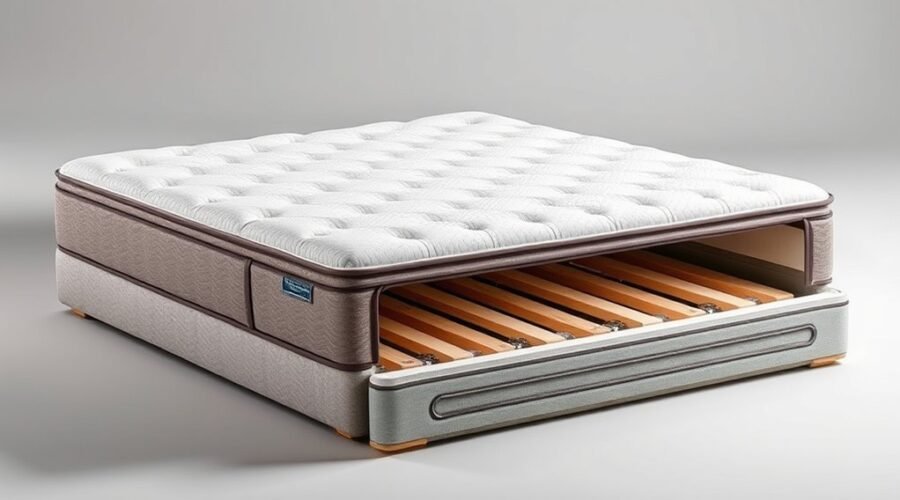
Nearly 60% of mattress sagging complaints trace back to weak support, not the mattress itself. When you choose a mattress foundation, you’re getting a rigid support platform designed to keep weight evenly distributed and the sleep surface stable, unlike a box spring’s coil-based interior. That difference affects airflow, durability, and compatibility with foam or hybrid beds, and the details inside can change how your mattress performs over time.
Key Takeaways
- A mattress foundation is a stable base that supports the mattress and prevents sagging.
- Inside, it may use solid panels, wooden slats, or a rigid frame for support.
- Unlike a box spring, a foundation usually has no coils or shock-absorbing springs.
- Slatted foundations improve airflow, while solid foundations offer the firmest support.
- The right foundation protects mattress shape, improves durability, and helps maintain warranty coverage.
What Is a Mattress Foundation?
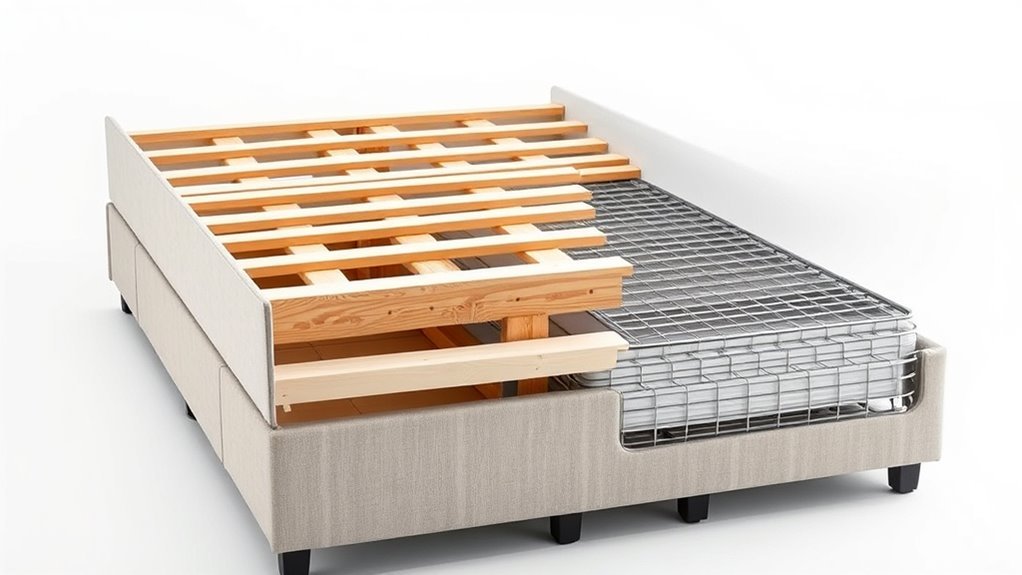
A mattress foundation is the stable support system beneath your mattress that helps prevent sagging, preserve shape integrity, and improve overall performance.
You rely on it to create a solid base that keeps a flat surface under many mattress types, including memory foam, latex, and innerspring models. That compatibility matters because each material responds differently to pressure, and the right support helps the mattress perform as engineered.
A well-built mattress foundation also elevates the mattress off the floor, which improves airflow, reduces moisture buildup, and makes bed access easier.
When you choose a foundation suited to your setup, you strengthen comfort and protect longevity. Proper maintenance can help it last 10 years or more, giving you durable support without unnecessary replacement.
In practical terms, the foundation isn’t extra furniture; it’s structural infrastructure that helps your mattress stay stable, clean, and effective over time.
Mattress Foundation vs. Box Spring
When you compare a mattress foundation with a box spring, you’ll see a key structural difference: a foundation gives you a rigid, flat support surface, while a box spring uses coils for shock absorption and a more responsive feel.
You’ll also need to match the support system to your mattress type, because foundations work well with foam, hybrid, and innerspring models, but box springs usually suit traditional innerspring beds better.
For durability, a foundation helps prevent sagging and can extend mattress life, whereas an incompatible box spring may reduce support, create extra movement, and shorten performance over time.
Core Structural Differences
Unlike a box spring, a mattress foundation is a rigid support platform made of wood or metal that’s designed to keep your mattress evenly supported and resist sagging. You get solid support, not coil-based bounce, so weight distribution stays more consistent and wear stays lower.
- The box spring uses metal coils for shock absorption.
- Modern foundations use a flat or slatted design for airflow.
- You can build customizable bed setups with varied heights.
- A strong mattress foundation boosts durability beyond many box spring frames.
For you, that means less structural flex and more control over how your bed performs.
Box spring designs suit innerspring mattresses, but modern foundations free you to choose a cleaner, steadier base that supports long-term comfort and durability.
Mattress Type Compatibility
Your mattress type determines whether a mattress foundation or box spring will perform best. You need compatibility between the support system and your bed’s construction.
Foam mattresses and hybrids need firm foundation support from modern foundations, so they don’t sink or sag. Box springs, with internal coils, suit innerspring mattresses because they add shock absorption that matches that design.
If you use box springs under foam mattresses, you can distort alignment and risk premature wear. Slatted foundations also work when slats sit no more than 2.75 to 3 inches apart, giving stable support without flex.
Choose by mattress type, not habit, because the wrong pairing can void warranty coverage and limit performance. When you match the base correctly, you keep control, comfort, and structural integrity.
Support And Durability
A solid foundation is built for support, not just lift. Your mattress foundation gives rigid, flat support that protects shape, boosts durability, and guards against sagging.
Unlike box springs, which use coils for shock absorption, a foundation distributes load evenly, so foam mattresses and hybrids stay stable instead of sinking. If you choose slats, keep spacing at 3 inches or less; wider gaps can weaken support.
Adjustable bases add customizable positions, giving you more control over comfort and alignment than traditional box springs. This matters for your mattress lifespan and warranty, since many brands require a stable foundation, not a box spring, for valid coverage.
- Even load distribution
- Reduced sagging
- Better foam mattress performance
- Greater freedom with adjustable bases
Why a Mattress Foundation Matters
A mattress foundation supports your bed evenly, helping maintain shape, reduce sagging, and keep memory foam or hybrid mattresses performing as designed.
It also lifts the mattress off the floor, improving airflow and limiting exposure to dirt, dust, and pests for a cleaner sleep surface.
Mattress Support And Shape
When a mattress foundation does its job well, it gives the bed a stable support system that helps preserve the mattress’s shape, prevent sagging, and maintain consistent performance over time.
You get the proper support your body needs because the foundation matches your mattress types and keeps mattress integrity intact.
- It resists flexing, so you won’t sink unevenly.
- Rigid foundations help memory foam and hybrids stay aligned.
- Stable support can enhance airflow by lifting the bed platform.
- Correct support improves overall sleep quality and reduces back strain.
If you pair the wrong base with your mattress foundation, you risk premature wear, lost comfort, and warranty issues.
Choose properly, and you protect freedom of movement, durability, and a cleaner sleep system.
Airflow And Cleanliness
Because a mattress foundation lifts your mattress off the floor, it improves airflow around the bed, helping regulate temperature and limit moisture buildup that can cause mold or mildew.
You get a cooler sleep environment because circulation moves heat away from the surface, which matters when you use foam mattresses that can trap warmth.
A mattress foundation also protects cleanliness by blocking dirt and dust from reaching the underside, and that barrier helps reduce allergens and enhance hygiene.
Choose slats or breathable materials when you want better circulation and reliable support.
When you keep the foundation clean and inspect it regularly, you prevent moisture from lingering and extend lifespan without sacrificing comfort or freedom.
That simple structure keeps your sleep space cleaner, drier, and more breathable.
Height And Longevity
Beyond comfort, mattress foundation height affects how easily you can get in and out of bed, with most standard bases sitting about 5 to 9 inches off the floor for better accessibility. You also gain support that protects your mattress from premature sagging and preserves mattress lifespan.
- A stable mattress foundation keeps height consistent.
- Even support reduces breakdown and extends longevity.
- Proper airflow limits moisture accumulation and heat.
- You should replace foundation units every 8 to 10 years.
If your base is incompatible, your mattress warranty can be voided, and performance drops fast. Choose a foundation that matches your mattress to maintain airflow, support, and hygiene.
That way, you keep your sleep setup efficient, free from unnecessary wear, and ready to deliver lasting comfort.
Types of Mattress Foundations
Mattress foundations come in several types, and each one supports your bed differently to match specific comfort, height, and mattress-compatibility needs.
When you choose a mattress foundation, you can match it to your sleep setup instead of adapting your body to a rigid frame.
Box springs use internal coils and suit a traditional innerspring mattress, but they’re usually a poor fit for foam mattresses.
Box springs use internal coils and work best with traditional innerspring mattresses, not foam beds.
Platform foundations give you solid support with a flat deck, so you don’t need extra slats.
Slatted foundations use closely spaced wood slats, which promote airflow and work well with foam and hybrid beds.
Bunkie boards deliver low-profile, solid support when you want extra height control without bulk.
Adjustable bed bases let you change position with a remote, and some add massage functions.
Each option gives you a distinct structural profile, so you can choose the one that fits your mattress and your autonomy best.
How Mattress Foundation Support Helps
The foundation you choose doesn’t just set bed height or style; it also determines how well your mattress performs over time. A proper mattress foundation gives you even support, so your mattress keeps its shape, resists sagging, and delivers steady comfort night after night.
When weight spreads across the base, it lowers pressure points, which can reduce tossing, joint strain, and sleep disruption. Good support also opens airflow under the mattress, helping regulate temperature for a cooler, more breathable rest.
Just as important, many brands tie warranty coverage to the right foundation, so you protect your claim while you sleep freely. A sturdy base also limits structural damage and material breakdown, helping your mattress lifespan last longer.
- Stable support preserves surface integrity.
- Even weight distribution eases pressure points.
- Better airflow helps manage heat.
- Correct bed height and warranty compliance add value.
Which Mattress Works With Which Base
Choosing the right foundation for your mattress type helps prevent early wear and keeps the sleep surface performing as designed. Your mattress foundation should match the mattress types you own, because compatibility affects support beneath and long-term durability.
Memory foam mattresses need a solid, flat base; box springs let them sink and can undermine structure. Innerspring models, by contrast, benefit from box springs, since the coils gain extra shock absorption and feel more responsive.
Memory foam needs a solid, flat base, while innerspring mattresses benefit from the added support of box springs.
Hybrid mattresses usually pair well with slatted foundations, but you need slats spaced no more than 3 inches apart to keep the core evenly supported. Latex mattresses also prefer a firm, level surface, so modern foundations work better than traditional box springs.
If you use the wrong base, you risk sagging, premature wear, and possibly a voided warranty, so choose with precision and confidence.
How to Choose the Right Mattress Foundation
To choose the right mattress foundation, you need to match the base to your mattress type, since foam and hybrid models usually need a firm, flat surface for proper support.
You should also evaluate foundation height so it fits your accessibility needs and keeps your bed proportions balanced in the room.
Finally, check durability and load capacity, because stronger materials and higher weight ratings can improve long-term mattress support and extend service life.
Mattress Compatibility
Matching your mattress to the right foundation matters because the wrong support can hurt comfort, durability, and warranty coverage. To protect mattress compatibility, compare foundation types with your bed’s construction before you buy.
Use a solid mattress base or firm platform for foam mattresses and hybrid models so they keep even foundational support and resist sagging. Choose a box spring only when manufacturer guidelines say your innerspring mattress can use one for added shock absorption.
Check slat spacing closely; gaps should stay within 2.75 to 3 inches. Verify weight capacity for both the mattress and sleepers, since overload weakens structure.
When you match support correctly, you keep your sleep setup efficient, stable, and free from preventable failures.
- Confirm model-specific requirements
- Match support to mattress design
- Measure slat spacing precisely
- Review load limits before purchase
Foundation Height
Foundation height shapes both how your bed performs and how easy it’s to use. When you choose a mattress foundation, match foundation height to your standard mattress and your body’s needs.
Standard-height foundations, usually 8 to 10 inches, give you a familiar lift and support a balanced overall bed height. If you want a cleaner modern aesthetic, low-profile foundations around 5 inches can suit thicker mattresses and streamline bed design.
You should also weigh accessibility: lower setups can make getting in and out harder if you have mobility limits. The right height improves comfort, preserves visual symmetry, and helps your bedroom feel intentional, not constrained.
Durability And Support
Durability and support determine whether your mattress foundation will keep performing over time or start causing problems. You need a mattress foundation that distributes weight evenly, delivers proper support, and prevents sagging.
Choose solid wood or metal for better durability; weaker frames often fail sooner and reduce mattress performance. Check the weight capacity before buying, especially if you share the bed or use a heavier mattress. Most quality models handle 500 to 1,500 pounds.
With slatted foundations, keep slats no more than 2.75 to 3 inches apart for consistent support and warranty protection.
- Inspect materials for long-term durability
- Verify weight capacity matches your load
- Measure slat spacing for proper support
- Protect mattress performance and coverage
When to Replace a Mattress Foundation
You should replace a mattress foundation when you notice loose, cracked, or broken parts, since damage like that can weaken support and stability. A sagging foundation or excessive movement under load also signals failure. If the protective fabric is ripped, you can lose adequate cleanliness and support, so replace your foundation instead of trying to patch it. When you buy a new mattress, confirm the foundation is compatible; mismatched systems can distort performance and shorten life.
| Sign | What you feel | Action |
|---|---|---|
| Broken parts | Wobble, noise | Replace |
| Sagging foundation | Uneven sleep surface | Replace |
| Worn fabric | Dirt exposure | Replace |
Most mattress foundation units last 8 to 10 years, depending on material and use. At that point, durability and support usually decline, even if damage isn’t obvious. Choosing a sound mattress foundation helps you reclaim steady, responsive rest without compromise.
What Adjustable Bed Bases Do
Adjustable bed bases take the idea of support a step further by letting you change the bed’s position for comfort and function. With an adjustable bed base, you can raise your head or feet into customizable positions that support reading, lounging, or recovery.
These changes can deliver health benefits by improving circulation, easing back pain, and reducing snoring through better alignment and airflow. Most models use wireless control, so you can fine-tune height without leaving your mattress.
- Dual-zone features let each partner choose a separate angle.
- Compatibility with many mattress types helps you keep stable support.
- Adjustable bed bases work alongside mattress foundations, not static frames.
- You gain precise control over comfort and support.
You’re not locked into one posture; you shape the bed to your needs. That freedom matters when you want performance, personalization, and relief in one system.
Purple Foundations to Consider
Purple offers several foundations that cover both simple support and advanced adjustability, so you can match the base to your mattress and sleep needs.
If you want a responsive mattress foundation, the Purple Premium Smart Base gives you four preset positions and dual adjustable zones, letting you fine-tune support without sacrificing independence.
The Purple Adjustable Base adds customizable settings for different sleeping positions, which can improve your sleep experience when you need relief or alignment.
If your priority is rigid stability, the Purple Metal Platform delivers sturdy support and works with many mattress types because of its low-profile design.
For a more refined room setup, the Purple Upholstered Bed Frame pairs modern aesthetics with no-creak support, so you don’t trade style for function.
When you need more capacity and convenience, the Purple Premium Plus Smart Base adds dual-zone massaging, under-bed lighting, and up to 750 pounds of support.
Frequently Asked Questions
Does a Mattress Foundation Make a Difference?
Yes, a mattress foundation makes a real difference because you get better mattress support, mattress stability, and weight distribution, which can improve sleep quality.
You’ll also notice alignment benefits, less noise reduction issues, and longer durability factors when foundation materials match your bed.
The right base affects bed height too, so you can move more freely while protecting comfort, structure, and the mattress’s lifespan.
Is a Mattress Foundation the Same Thing as a Boxspring?
No, you’re not dealing with the same thing: a mattress foundation gives you rigid mattress support, while a box spring uses coils for added give.
That difference affects sleep quality, durability factors, and performance impact. You should check foundation types, height considerations, compatibility issues, and assembly differences before buying.
The right choice improves design benefits, protects your warranty, and helps you claim better freedom from sagging and unnecessary replacement.
How Do You Know if You Need a Mattress Foundation?
You need a mattress foundation if your bed sinks like a raft in a storm.
Check your mattress manufacturer’s specs for mattress support, bed frame compatibility, and approved foundation types.
If you notice uneven weight distribution, sagging, or reduced sleep quality, you’re risking mattress longevity.
Consider foundation materials, height preference, and aesthetic considerations too.
If the mattress sits on the floor, airflow drops and mold can grow.
Can You Put a Mattress Foundation Directly on the Floor?
Yes, you can put a mattress foundation directly on the floor if you want floor support and surface stability.
You’ll improve weight distribution and can control height preference, but you should choose breathable foundation materials for mattress ventilation, moisture protection, and less dust accumulation.
You may sacrifice some aesthetic choices and accessibility, and certain warranties can be voided, so check the terms before you commit to floor placement.
Conclusion
When you choose the right mattress foundation, you’re not just supporting your bed—you’re protecting the sleep system beneath you. A rigid, well-built base keeps your mattress level, limits sagging, and helps airflow do its quiet work. But the real difference shows up over time: a foundation can shape comfort, durability, and support in ways you might not notice at first. Choose carefully, and you’ll feel the change long before your mattress gives out.