Heavy furniture doesn’t just press down on hardwood; it can create permanent dents by concentrating force on a few small contact points. You can reduce that risk with the right pads, but the material and fit matter more than most people expect. If you choose poorly, you may trade one problem for another. The next step is making sure each leg gets the right protection and stays in place.
Key Takeaways
- Use felt or rubber furniture pads to spread weight and reduce dents and scratches.
- Match pad size and thickness to the furniture leg and weight for full, stable coverage.
- Place hardwood-safe rug pads and area rugs under heavy furniture to cushion pressure.
- Lift furniture instead of dragging it, and use sliders when moving heavy pieces.
- Inspect pads regularly and repair dents or scratches quickly to prevent further damage.
Why Heavy Furniture Dents Hardwood Floors
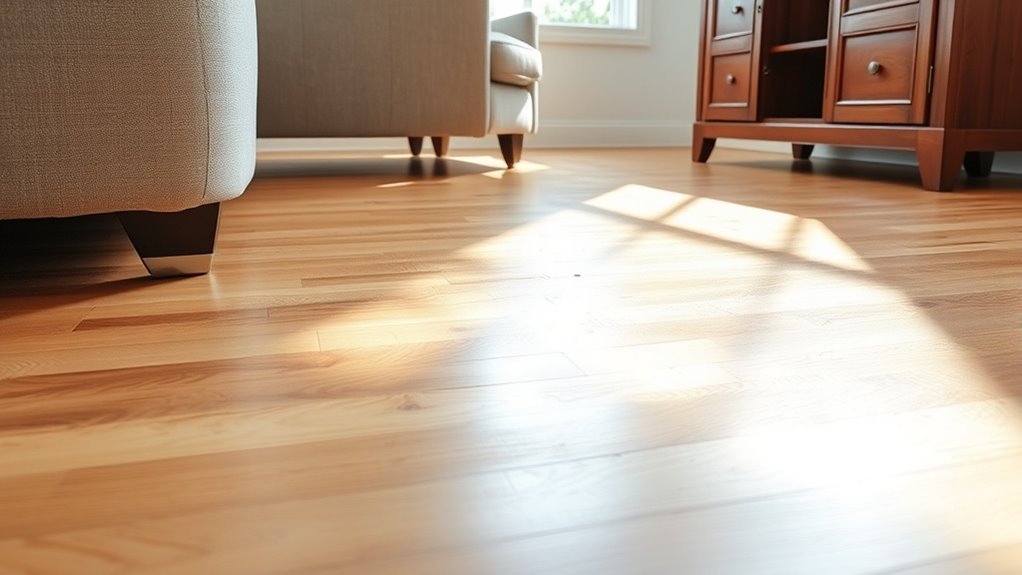
Heavy furniture dents hardwood floors because its weight is concentrated on a few small contact points, creating high pressure that can leave permanent indentations.
You’re seeing a simple load problem: when a leg supports most of the mass, the force can exceed the floor’s surface tolerance. Even furniture around 50 pounds can leave marks if you don’t protect wood floors. Softer species, such as pine, dent more easily than oak or maple because they compress faster under the same pressure.
If you drag or slide heavy furniture, you add shear force, which can gouge the finish and deepen damage. You can reduce risk by placing pieces so their weight spreads more evenly across the room. That helps the floor carry the load instead of absorbing it at one point.
The better you manage contact pressure, the less likely your hardwood floors will show dents, indentations, or visible wear over time.
Choose Felt Or Rubber Pads
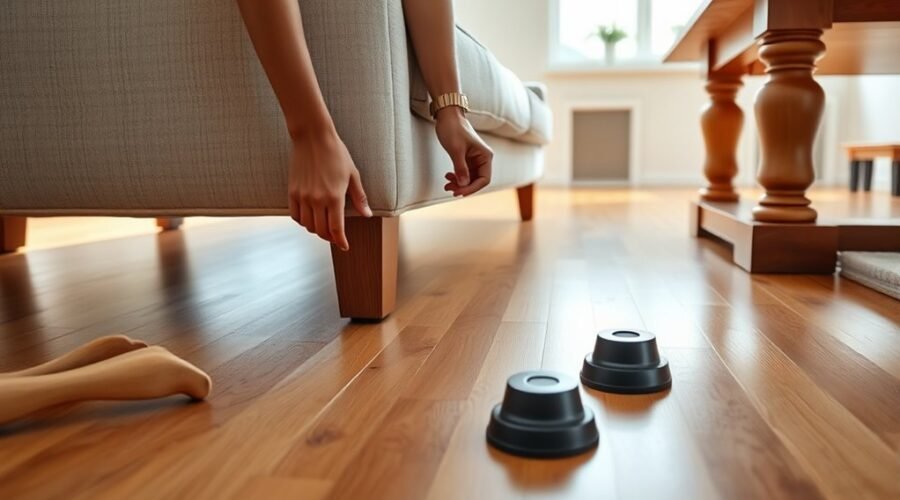
To reduce pressure points and keep furniture from shifting, add felt or rubber pads under each leg.
FELT PADS create a soft cushion that spreads load over a wider area, which helps prevent scratches and dents on hardwood. Choose rubber pads when you need extra grip; they resist sliding and help keep heavy pieces stable during use.
For best floor protection, match pad thickness to the weight and movement of the furniture. Thicker pads usually suit heavier items, while thinner pads work for lighter loads and smoother contact.
High-quality pads can reduce wear and extend floor life by limiting direct contact between furniture legs and the finish. Inspect pads regularly, because compressed or worn material stops protecting effectively.
Replace damaged FELT PADS or rubber pads before exposed furniture legs touch the floor. Consistent maintenance keeps your hardwood looking sound and minimizes long-term damage.
Fit Pads To Each Furniture Leg
Fit each pad to the exact footprint of the furniture leg so you get full coverage and stable contact with the floor. Measure the base of each leg, then choose FELT FURNITURE PADS that match the shape and size closely.
On chair legs, a pad that’s too small leaves exposed edges, while one that’s too large can catch and shift. For heavy pieces, use thicker floor protectors, at least 1/4 inch, to spread load and reduce point pressure.
Make sure the pad surface sits flat, with no overhang or gaps, so it can prevent scratches and dents more effectively. Check corners and curved profiles carefully; irregular legs need trimmed pads or shaped protectors for even contact.
Before you move the furniture, confirm every leg has the same fit and that the pad covers the contact area completely. Recheck worn pads regularly, because compressed felt loses support and protection.
Install Pads For A Secure Hold
Secure each furniture pad firmly to the leg so it won’t shift, slip, or peel away during use.
Secure each furniture pad firmly to prevent shifting, slipping, or peeling during everyday use.
When you install FURNITURE PADS on chair legs, press them onto a clean, dry surface and apply steady pressure for full contact.
Match the pad type to the load: use thicker felt for heavy pieces and thinner pads for lighter items.
If the leg shape varies, choose a pad size that covers the full contact point without overhang.
Proper attachment keeps the pad from moving and reduces scratches, dents, and gouges on the hardwood floor.
Check each pad regularly for compression, frayed edges, or adhesive failure, and replace it as soon as it loosens or wears thin.
Different furniture may need different PADS, so mixing sizes can improve coverage and stabilize contact.
A secure fit helps you maintain low-friction support and protects the floor during everyday use.
Add Rugs And Rug Pads For Extra Protection
Choose a rug pad made for hardwood floors so you don’t damage the finish with adhesive or excess friction.
Use a non-skid pad to keep the rug from slipping or shifting under traffic and furniture.
Add rugs with enough cushioning to spread weight under heavy pieces and reduce dents and pressure marks.
Choose Rug Pad Type
When you add rugs under furniture, the rug pad you pick matters just as much as the rug itself. Use rug pads made for hardwood, not cheap foam sheets.
Felt or rubber options cushion chair legs and heavy feet, add grip, and help prevent floor scratches and dents. A thick pad works best under large, dense pieces; a thinner pad suits lighter furniture.
Choose non-skid rug pads when you need extra stability, since they reduce shifting that can wear the finish over time. Make sure the pad matches the rug size so edges stay supported.
Check pads regularly for flattening, cracking, or debris, and replace worn ones promptly. Good rug pads protect the floor and extend the life of your setup.
Prevent Slipping And Shifting
Adding area rugs and the right rug pads can prevent slipping and shifting while protecting hardwood from heavy furniture. You should place rugs under load points to spread pressure and reduce direct contact with hardwood floors. Use rug pads made for hardwood floors; they grip better, help prevent slipping, and limit movement that can cause dents or scratches. For heavy furniture, choose non-skid rug pads that stay stable without leaving adhesive residue.
| Benefit | Effect |
|---|---|
| Grip | Reduces shifting |
| Stability | Keeps rugs aligned |
| Protection | Limits scratches |
| Fit | Supports heavy furniture |
| Maintenance | Easier repositioning |
Check rug placement regularly and adjust edges as needed. This keeps coverage consistent and maintains protection over time.
Add Cushion Under Furniture
Place area rugs under heavy furniture to create a soft barrier that reduces scratches and dents on hardwood floors.
To add cushion under furniture, pair each rug with a high-quality rug pad so the load spreads evenly and impact is absorbed. Choose non-skid pads to keep the rug stable and prevent shifting that can expose the floor.
For hardwood, thick felt pads work best because they compress slightly without trapping grit or causing floor damage. If your furniture moves often, use chair glides on the legs to reduce friction before it reaches the rug.
Check rugs and pads regularly, and vacuum underneath to remove debris. This simple layer system gives you better protection, less wear, and longer-lasting floor performance.
Lift Furniture Instead Of Dragging It
Lift furniture instead of dragging it to prevent scratches, gouges, and finish damage on hardwood floors. When you lift, you stop direct contact that can scar the surface and shorten flooring life.
Even a small chair can cause major damage if you drag it, because the load can press dirt and debris into the finish and leave permanent marks. About 25% of floor damage comes from moving furniture carelessly, so your handling method matters.
Even a small chair can leave permanent marks when dragged, especially if dirt gets pressed into the finish.
Use furniture sliders when you need extra support; they help you lift heavy items with less effort while still protecting the floor.
Before moving anything, plan the path, bend your knees, and keep the item level. Remind everyone in your home to lift, not drag, so the habit sticks.
Consistent care lowers repair calls, reduces maintenance costs, and keeps your floors looking clean and intact longer.
Stop Grit From Scratching Floors
Even if you lift furniture instead of dragging it, grit can still scratch hardwood when it gets trapped under legs, pads, or shoes. You need to block that debris path. Fit furniture pads made of felt or rubber under every heavy leg, and keep them clean so they don’t grind particles into the finish. Sweep with a soft-bristled broom or microfiber mop to remove abrasive dust before it causes scratches.
| Control | Action | Effect |
|---|---|---|
| Felt pads | Install under legs | Reduces direct grit contact |
| No-shoes rule | Remove outdoor shoes | Limits tracked dirt |
| Area rugs | Place in traffic zones | Captures debris early |
Use area rugs or mats at entries, hallways, and other high-traffic spots. They intercept grit before it reaches bare wood. With consistent cleaning and barriers, you cut wear and protect the floor surface from avoidable abrasion.
Replace Worn Furniture Pads Before They Fail
Check furniture pads regularly and replace them at the first sign of wear. Heavy furniture legs compress felt, rubber, or plastic cushions over time, so inspect each pad for thinning, cracking, tearing, or slipping.
Check furniture pads regularly and replace them at the first sign of wear.
When pads lose integrity, they can’t spread load properly, and the leg can contact wood directly, increasing the chance of scratches and dents. Don’t wait for obvious failure; proactive replacement helps you avoid wear and tear that can damage your floor.
Choose high-quality furniture pads rated for heavy furniture, since they resist compression and movement better than standard pads. In high-traffic rooms, felt pads may last only a few months, so set a routine check schedule and replace them as soon as you see edge fraying or flattening.
A small, timely swap costs far less than refinishing.
Repair Scratches And Dents In Hardwood
Small scratches and shallow dents can often be fixed before they become permanent marks. To repair scratches, first clean the area, then apply a wood filler that matches your floor color with a putty knife. Wipe away excess so the floor’s finish stays smooth. For minor marks, a light mix of vinegar and olive oil can reduce visibility and improve luster.
| Issue | Action |
|---|---|
| Surface scratch | Use color-matched filler |
| Minor scratch | Apply vinegar and olive oil |
| Deep dent | Steam with damp cloth and iron |
| Large damaged area | Sand and refinish |
For deeper dents, place a damp cloth over the spot and press a warm iron on top for a few seconds to raise the fibers. If the damage covers more area, sand lightly with fine-grit paper, then stain to match. Finally, protect the repaired zone with sealant, and keep checking furniture feet for wear.
Frequently Asked Questions
What to Put on Furniture Legs to Protect Hardwood Floors?
Use furniture pads, felt sliders, rubber caps, or cork coasters on your furniture legs.
You’ll want thick felt pads for heavy pieces because they spread weight and reduce dents. Rubber caps add grip, while cork coasters help distribute load under larger legs.
Install them securely, then check them regularly and replace worn parts. This keeps you from scratching, gouging, or sliding your hardwood floors during everyday use.
How Do You Protect Hardwood Floors From Heavy Furniture?
You protect hardwood floors from heavy furniture by improving furniture placement and weight distribution.
Use wide felt pads, furniture coasters, or area rugs under each leg to spread pressure.
Add protective coatings to the floor for extra resistance, and keep a no-shoes policy to reduce grit.
For floor maintenance, inspect pads regularly, replace worn ones, and move heavy pieces carefully instead of dragging them.
How Can I Protect My Floor From Sofa Legs?
Use leg pads or sofa support cups under each sofa leg to spread weight distribution and reduce dents.
You can add floor mats beneath the sofa area for extra protection, especially on soft hardwood finishes.
Don’t drag the sofa; lift it when you move it.
Check the pads regularly and replace worn ones before they scratch.
Choose pads that fit tightly, so they won’t slip or tilt under load.
What Are Some Good Chair Leg Protectors for Wooden Floors?
You can use chair leg pads, felt furniture glides, rubber leg caps, and furniture sliders to protect wooden floors.
Like armor on a knight’s boots, these add a soft barrier between wood and weight. Choose thick felt furniture glides for everyday chairs, rubber leg caps for grip, and furniture sliders for moving heavy pieces.
Make sure you match the protector to the leg shape, and check them regularly so they don’t wear out.
Conclusion
You’ve done the hard part: your hardwood floors are now protected, but the real test starts over time. Keep checking every pad, rug, and slider before wear turns into damage. If a leg goes bare, dents can happen fast. Sweep often, lift instead of drag, and replace anything loose right away. Stay alert, because the smallest gap in protection can become the next scratch, the next dent, the next repair.