If your fitted sheet keeps popping off the corners, the problem may be pocket depth rather than sheet quality. Thick mattresses, pillow-tops, mattress toppers, and padded protectors can all increase the height a fitted sheet has to cover. The important number is not simply whether your mattress is over 12 inches; it is the full height of your sleep setup compared with the specific fitted sheet’s published fit range.
Quick Answer
You need deep pocket sheets when a regular fitted sheet cannot comfortably cover the full height of your mattress plus any topper or padded protector. Do not use 12 inches as a universal cutoff because brands define pocket depth differently. Measure first, then choose a sheet whose stated mattress-depth range comfortably includes your setup.
Key Takeaways
- “Deep pocket” is a retail description, not one universal inch measurement used by every bedding brand.
- Measure the mattress plus any topper, pad, or protector that stays underneath the fitted sheet.
- A 12- or 13-inch mattress does not automatically require a sheet labeled “deep pocket”; check the manufacturer’s stated maximum mattress depth.
- Too-shallow sheets tend to ride up or pop off, while unnecessarily deep sheets can leave loose fabric and wrinkles.
- Pocket depth, correct bed size, elastic construction, fabric stretch, and laundering all affect how well a fitted sheet stays in place.
What Is a Deep Pocket Sheet?
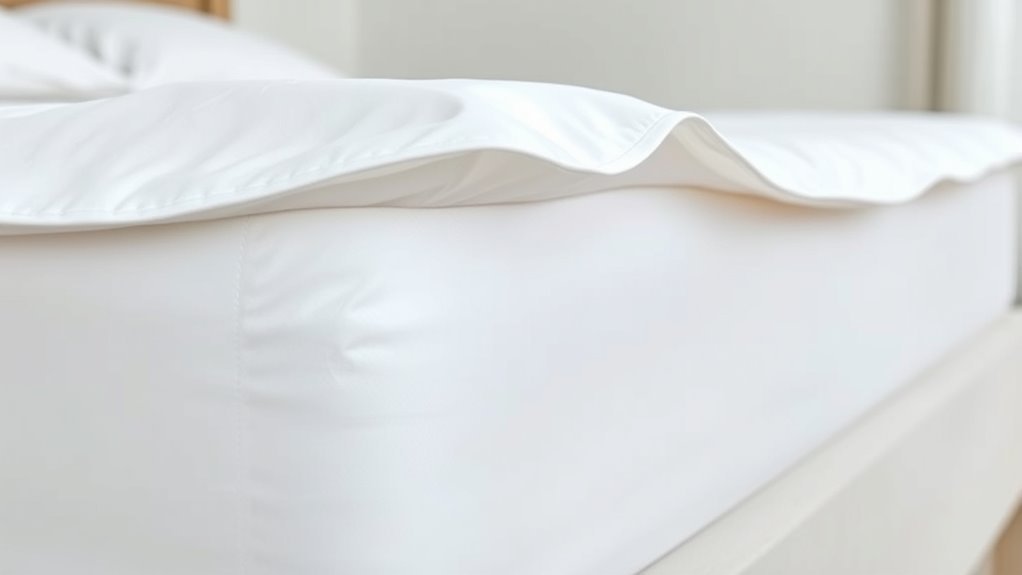
A deep pocket sheet is a fitted sheet made with enough side fabric to wrap around a taller mattress and tuck underneath its lower edge. It is useful for thick mattresses, pillow-top beds, and mattresses with toppers or padded protectors.
The term does not have one fixed measurement across the bedding market. Current manufacturer specifications show how much sizing can vary. Brooklinen says its fitted sheets fit mattresses up to 16 inches deep, Tempur-Pedic lists sheet styles that accommodate up to 13 or 15 inches, and Purple lists 15-inch standard fitted sheets and 20-inch deep-pocket versions.
Note: Treat labels such as “standard,” “deep,” and “extra deep” as shopping categories. The actual inch measurement or the manufacturer’s “fits mattresses up to” specification is more useful than the label alone.
Extra depth gives the fitted sheet more fabric at the corners and sides. When that depth is paired with effective elastic, the sheet can wrap underneath a taller mattress without being stretched to its limit.
Which Mattresses Need Deep Pocket Sheets?
You may need deep pocket sheets when the complete mattress setup is taller than the maximum depth supported by your current fitted sheet. Mattress type can give you a clue, but measurement is more reliable than assuming every pillow-top, hybrid, or adjustable mattress needs the same pocket size.
Deep or extra-deep pockets are especially worth checking when you have:
- a tall pillow-top or Euro-top mattress;
- a thick hybrid or foam mattress;
- a mattress topper that adds several inches of height;
- a padded mattress pad or protector under the fitted sheet;
- sheet corners that repeatedly ride up despite being the correct bed size; or
- an adjustable bed where a shallow fitted sheet loses its grip as the mattress bends.
A standard or regular fitted sheet can still work on some 12-, 13-, or even taller mattresses if the manufacturer specifically rates it for that depth. That is why measuring and checking the product specification is more dependable than relying on a fixed 12-inch rule.
Standard vs. Deep vs. Extra-Deep Pocket Sheets
There is no single industry-wide cutoff that every manufacturer follows. The examples below show why shoppers should compare actual dimensions instead of assuming the label tells the whole story.
| Example | Published fit | What it shows |
|---|---|---|
| Tempur-Pedic sheets | Up to 13 or 15 inches, depending on style | Different sheet lines from one brand can use different depth limits. |
| Brooklinen fitted sheets | Up to 16 inches; 12–16 inches listed as the best fit | A fitted sheet does not have to be marketed as “extra deep” to cover a relatively tall mattress. |
| Purple SoftStretch | 15-inch standard; 20-inch deep pocket | The same manufacturer may separate standard and deep versions at a completely different cutoff from another brand. |
The safest shopping rule is simple: use the label to narrow your choices, then use the actual depth specification to make the final decision.
How to Measure Mattress Depth
Measure the bed exactly as you use it. A topper or padded protector can turn a sheet that once fit correctly into one that constantly pulls loose.
At a Glance
| Time Required | About 2–3 minutes |
| Difficulty | Easy |
| Tools Needed | Measuring tape or ruler; a straightedge can help on a rounded pillow-top |
| Cost | $0 if you already have a measuring tape |
- Remove the top bedding. Take off the fitted sheet, flat sheet, blankets, and comforter.
- Leave normal under-sheet layers in place. Keep the mattress topper, pad, or padded protector if it normally sits underneath the fitted sheet.
- Measure from the bottom edge to the highest point. Hold the tape vertically against the mattress instead of following its curved side.
- Check more than one location. Pillow-tops and soft toppers may be slightly taller at one area than another. Use the highest practical measurement.
- Confirm the bed size too. A queen fitted sheet still needs queen width and length; additional pocket depth cannot correct the wrong mattress size.
- Compare your result with the product listing. Look for wording such as “fits mattresses up to 15 inches” or a clearly stated pocket depth and fitting range.
Pro Tip: Do not press the tape deeply into a soft topper or pillow-top while measuring. You want the bed’s normal resting height, not a compressed number that makes the mattress seem shorter than it is.
How Standard Sheets Fit Tall Mattresses
A standard fitted sheet can work perfectly on a tall mattress if that specific product was designed for the height. The problem starts when the sheet’s usable depth is shallower than the mattress-and-topper combination.
A sheet that is too shallow may show several signs:
- one or more corners repeatedly pop off;
- the elastic barely reaches underneath the mattress;
- the sheet surface feels overly stretched;
- the corners ride upward after you turn in bed; or
- the sheet fits until you add a topper or padded protector.
A sheet can also be too deep. In that case, excess material may gather along the sides or sleeping surface, especially if the elastic is weak or the fabric is very stretchy.
The best pocket is not automatically the deepest one. It is the one that reaches securely underneath your mattress without forcing the corners or leaving unnecessary loose fabric.
What Makes Deep Pocket Sheets Stay Put
Extra corner depth solves only one part of the fit problem. A fitted sheet also needs enough elastic tension and the correct width and length to stay anchored.
Full-perimeter elastic can help distribute tension around the mattress instead of concentrating the grip at only a few points. Purple, for example, describes its SecureStretch elastic band as helping its fitted sheet hug the mattress.
Other useful construction details include:
- elastic around the full perimeter;
- reinforced or well-sewn corner seams;
- enough stretch for the mattress shape;
- clear head/foot labels on directional fitted sheets; and
- a pocket depth appropriate for the full mattress setup.
Elastic eventually wears with use and laundering, so a sheet that once fit correctly may begin slipping even if your mattress has not changed.
Best Materials for Deep Pocket Sheets
Pocket depth determines whether the sheet can cover the mattress. Material determines much more of the sheet’s feel, texture, drape, care requirements, and stretch. Choose the depth first, then compare fabrics within the sizes that fit your bed.
Cotton, Rayon or Viscose Made From Bamboo, and Linen
Cotton is widely available in percale, sateen, jersey, flannel, and other constructions, so its feel can range from crisp to smooth or stretchy.
Products commonly marketed as “bamboo sheets” are usually manufactured fibers such as rayon or viscose made from bamboo. The Federal Trade Commission says textiles should not simply be called bamboo unless they are made directly from actual bamboo fiber. When bamboo is the cellulose source for rayon or viscose, wording such as “rayon made from bamboo” or “viscose made from bamboo” is more accurate.
Linen has a different texture and drape from cotton and manufactured cellulose fabrics. It often feels more textured when new and softens with repeated use and laundering.
- Cotton: versatile, widely available, and offered in many weaves and finishes.
- Rayon/viscose made from bamboo: usually smooth and drapey; judge cooling or moisture-management claims by the specific product rather than assuming all products perform the same way.
- Linen: textured, relaxed, and often chosen for its airy feel.
- Polyester or microfiber blends: commonly affordable, easy-care, and sometimes more wrinkle-resistant.
- Jersey or stretch blends: useful when flexibility matters, including on some adjustable mattresses.
Softness, Breathability, and Fit
Fiber type is only one part of how a sheet feels. Weave, yarn construction, fabric weight, finishing, and added stretch fibers can change softness and airflow significantly.
Percale is generally associated with a crisp, matte feel. Sateen usually feels smoother and has more sheen. Jersey is knitted rather than woven and tends to stretch more than typical percale or sateen.
For a thick mattress, prioritize the correct fitted-sheet depth and reliable elastic first. Then choose the fabric and weave according to the feel and care routine you prefer.
How Deep Pocket Sheets Improve Sleep Comfort
Deep pocket sheets can make a thick mattress more comfortable to use when they solve an actual fit problem. A properly fitted sheet stays flatter and is less likely to pull away from the corners, leaving fewer wrinkles and less loose material underneath you.
The practical benefits can include:
- fewer fitted-sheet corners pulling loose;
- less bunching caused by an overstretched or poorly fitted sheet;
- more consistent mattress coverage;
- fewer nighttime sheet adjustments; and
- a cleaner, more even-looking sleep surface.
Pocket depth itself does not guarantee better cooling or better sleep quality. Those outcomes depend on many factors, including the fabric, mattress, room temperature, bedding layers, and the individual sleeper. The direct benefit of the correct pocket depth is simply a better-fitting fitted sheet.
What to Check Before You Order
Before buying a fitted sheet, confirm the complete mattress height and compare it with the manufacturer’s specifications. Do not assume a 12-inch mattress needs “deep pocket” sheets or that an 18-inch product is automatically better than a 15-inch one.
| Measured mattress height | What to look for | Important check |
|---|---|---|
| 10 inches | Many regular fitted sheets may work | Confirm the product’s minimum/maximum fit range. |
| 12 inches | Regular or deep-pocket may work | Do not choose by label alone; many standard sheets accommodate this height. |
| 13 inches | Choose a sheet explicitly rated for at least the full setup height | Include a topper or padded protector in the measurement. |
| 15 inches | Often requires a generous regular sheet or a deep-pocket design | Check whether the published number is pocket depth or maximum mattress height. |
| 18 inches or more | Deep or extra-deep options are more likely to be needed | Verify the exact maximum supported mattress depth before ordering. |
Also check the following:
- the correct Twin, Twin XL, Full, Queen, King, California King, or split size;
- whether a topper or mattress pad is included in your measurement;
- full-perimeter versus corner-only elastic;
- care instructions and permitted drying temperature;
- whether the manufacturer warns about shrinkage;
- fabric stretch if you use an adjustable base; and
- return or exchange terms in case the fit differs from your measurement.
Common Deep Pocket Sheet Fit Problems
The Corners Keep Popping Off
Recheck mattress height, including every layer beneath the fitted sheet. If the sheet is the correct width and length but the elastic barely reaches underneath the mattress, the usable pocket is probably too shallow. Worn elastic can cause the same symptom.
The Sheet Is Loose or Wrinkled
A pocket that is much deeper than the mattress can leave excess side fabric. Confirm that the fitted sheet is the correct bed size, then check whether the product was designed for a taller minimum mattress height than yours.
The Fit Changed After Washing
Follow the product’s care label. Heat, repeated laundering, and fiber type can affect dimensions and elastic over time. If a sheet fit closely before washing, even a modest dimensional change may become noticeable on a tall mattress.
An Adjustable Bed Pulls the Sheet Off
First confirm that the pocket is deep enough for the mattress. Then look at elasticity and fabric stretch. An adjustable base bends the mattress, so a fitted sheet that has little give may pull harder at the corners than a flexible design.
Warning: Do not force a fitted sheet onto a mattress when the elastic barely reaches the underside. Excessive stretching can strain seams and elastic, and the sheet may release suddenly from a corner.
Frequently Asked Questions
How do I know if I need deep pocket sheets?
Measure the full mattress setup, including any topper, pad, or padded protector beneath the fitted sheet. Then compare that number with the sheet manufacturer’s stated maximum mattress depth. You need a deeper fitted sheet if your current sheet cannot reach securely underneath the mattress or repeatedly pops off despite being the correct bed size.
Does a 12-inch mattress require deep pocket sheets?
Not necessarily. Some regular or standard fitted sheets are designed to fit 12-inch mattresses and considerably taller ones. Check the specific product’s depth range instead of assuming the “deep pocket” label is required.
What are the best deep pocket sheets for a thick mattress?
The best choice is a fitted sheet in the correct bed size whose published depth range comfortably covers your mattress and any topper. Full-perimeter elastic can help with grip. After confirming fit, choose cotton, linen, rayon or viscose made from bamboo, microfiber, jersey, or another fabric according to the feel and care routine you prefer.
Do I need deep pocket sheets for a 13-inch mattress?
Possibly, but not because 13 inches automatically falls into one universal category. Some standard sheets accommodate that height, while other sheet lines require a deeper version. Measure the total setup and choose a product explicitly rated for at least that mattress depth.
Can deep pocket sheets be too deep?
Yes. A fitted sheet that is much deeper than the mattress may leave excess fabric along the sides or surface. Strong elastic can compensate for some extra material, but choosing a depth range reasonably close to your measured mattress generally produces a neater fit.
Do adjustable mattresses need deep pocket sheets?
Not automatically. The fitted sheet still needs the correct depth for the mattress, but an adjustable bed also benefits from reliable elastic and enough fabric stretch to move as the mattress bends. Check the sheet manufacturer’s compatibility guidance when available.
Conclusion
A deep pocket sheet is useful when your mattress is too tall for the fitted sheet you are using, but there is no universal rule that every mattress over 12 inches needs one. Measure the mattress together with any topper or padded protector, confirm the correct bed size, and compare the result with the manufacturer’s published fit range. The right sheet should reach securely underneath the mattress without being stretched to its limit or leaving large amounts of loose fabric.
Sources
- Federal Trade Commission — Bamboo Textiles — proper terminology and marketing guidance for rayon or viscose manufactured from bamboo.
- Brooklinen — Fitted Sheet Size Guide — current example of fitted sheets designed for mattresses up to 16 inches deep.
- Tempur-Pedic — Which Sheets Should I Buy to Fit My Mattress? — manufacturer depth specifications of 13 and 15 inches depending on sheet style.
- Purple — SoftStretch Sheet Specifications — example of 15-inch standard and 20-inch deep-pocket fitted-sheet dimensions and perimeter elastic construction.