A well-styled nightstand should look good without getting in the way of what you actually need at bedtime. Start with one useful anchor—usually a lamp—then add one or two smaller pieces such as a book, tray, plant, or flameless candle. Vary their heights, leave some open surface, and keep everyday essentials easy to reach.
Quick Answer
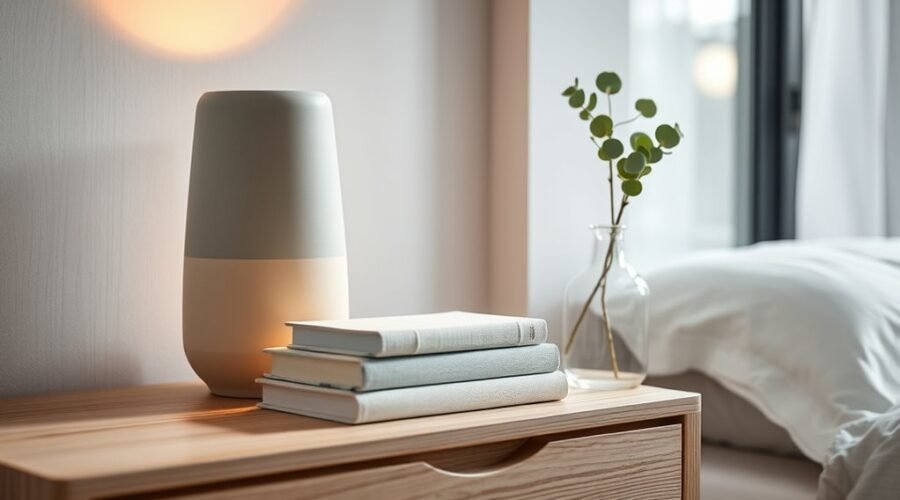
To style a nightstand, use one tall anchor such as a lamp, one medium-height item such as a book or vase, and one low item such as a tray or flameless candle. Keep the colors related, mix a few textures, and leave enough empty surface for the things you use at night.
Key Takeaways
- Use a lamp, book, tray, vase, plant, or flameless candle as a simple starting group.
- Choose a nightstand whose top is close to the height of your mattress so items are easy to reach.
- Vary height, shape, and texture instead of lining up several objects of the same size.
- Leave part of the surface open for a phone, water, glasses, or other bedtime essentials.
- Treat three-item and 3-5-7 decorating ideas as flexible styling tools, not strict rules.
- For bedroom ambiance, a flameless candle is safer than leaving an open flame near the bed.
At a Glance
| Time Required | About 10–20 minutes once you have the items you want to use |
| Difficulty | Easy |
| Tools Needed | Optional tape measure; cable clips or ties if you use chargers |
| Cost | Often $0 when restyling items you already own; otherwise varies by decor and lighting choices |
Start With a Lamp, Book, and Candle

A lamp, a book, and a small accent are an easy place to begin because they naturally create three different levels. Set the lamp first. It provides useful light and usually becomes the tallest object in the arrangement.
Add a book beside or partly beneath a smaller object. A book introduces color and personality while giving you something screen-free to reach for before bed.
The strongest nightstand arrangements combine something useful, something personal, and enough empty space to keep the surface practical.
For the third piece, choose a low object such as a trinket tray, small vase, plant, clock, or flameless candle. A scented diffuser can also add fragrance without introducing an open flame.
If you use a real candle while you are awake, treat it as a temporary accent rather than permanent bedtime lighting. The U.S. Consumer Product Safety Commission advises never leaving candles unattended and extinguishing them before sleeping. The National Fire Protection Association also recommends avoiding candle use in bedrooms and keeping burning candles at least 1 foot from anything that can burn.
Warning: Do not fall asleep with a candle burning. Keep an open flame away from bedding, curtains, books, tissues, clothing, and other combustible material. A flameless candle is the safer choice for routine bedside ambiance.
To keep the group from looking crowded, vary the heights and materials. A smooth ceramic lamp, cloth-bound book, and wood or metal tray create contrast without requiring more objects.
Choose the Right Nightstand Size
The most useful measurement is not a universal nightstand height—it is the height of your own mattress. Measure from the floor to the top of the mattress after the bed is fully assembled. Then look for a nightstand whose top is close to that level.
Furniture expert Susan Caudle, quoted by Southern Living, recommends a nightstand that is roughly level with or slightly lower than the mattress so the surface remains comfortable to reach. A height in the low-to-upper 20-inch range is common, but low platform beds and thick mattresses can move the ideal height outside that range.
Width is more flexible. A narrow bedside table may be the right choice in a tight room, while a larger table can work well beside a queen or king bed when there is enough floor space. Instead of following a fixed mattress-to-nightstand ratio, check three things:
- Will your lamp and essentials fit without overlapping?
- Can drawers and doors open completely?
- Can you move beside the bed without squeezing around the furniture?
Pro Tip: Measure the bed height, available floor width, and your lamp base before buying a nightstand. Those three numbers are more useful than relying on one “standard” bedside-table size.
Balance Height, Shape, and Texture
To keep a nightstand from looking flat, vary the height, shape, and material of the objects you use. A simple arrangement often works best when the tallest item sits toward the back, a medium-height item fills the middle area, and a lower piece sits closer to the front.
The sequence does not have to be exact. What matters is that every object remains visible and the group does not turn into a straight row of similarly sized pieces.
Mixing shapes can help. A slim lamp beside a rounded vase and rectangular book stack creates more contrast than three objects with matching silhouettes.
Texture works the same way. Smooth ceramic, natural wood, linen, glass, woven fibers, or brushed metal can add depth even when everything stays within a restrained color palette.
- Place the tallest object toward the back.
- Add a medium-height object beside or slightly in front of it.
- Use one low object to anchor the front.
- Mix shapes and materials rather than repeating the same form.
- Stop before the surface loses its open space.
Pick a Cohesive Color Palette
A cohesive color palette can make unrelated objects feel like one arrangement. You do not need every piece to match. Instead, repeat one or two colors already present in the bedding, headboard, rug, wall color, or artwork.
Neutral tones such as ivory, taupe, charcoal, brown, and soft gray are easy foundations. From there, add one accent color if you want more contrast.
Start with colors already present in the bedroom, then repeat one or two of them on the nightstand.
Texture prevents a limited palette from becoming dull. For example, a matte ceramic vase, glossy tray, natural wood frame, and linen-covered book can look distinct even when their colors are similar.
You can also change one accent seasonally. Warmer rust, ochre, or deep green can feel fitting in fall, while pale greens, blues, florals, or natural woven finishes may feel lighter in spring and summer. These are options, not rules.
Keep the Nightstand Functional
A nightstand is not only a display surface. Before adding decor, reserve a small landing zone for the things you actually use at night.
That may include a glass or bottle of water, reading glasses, a phone, medication, an alarm clock, or a book. If every inch is decorated, even a beautiful arrangement becomes frustrating.
Keep frequently used items toward the front or on your dominant-hand side. Less-used decor can sit toward the back.
If you charge devices beside the bed, route cables behind the nightstand or secure them with small cable clips so they do not snake across the surface. A tray can also keep a charging case, watch, rings, or earbuds from spreading out.
Note: Empty space is part of the design. You do not need to decorate every corner of the tabletop.
Choose and Place a Bedside Lamp
If a lamp is part of the arrangement, choose one that leaves enough usable tabletop around its base. On a compact nightstand, a narrow-base lamp or wall-mounted sconce can preserve valuable surface space.
Place the lamp where you can reach its switch comfortably from bed. If you read in bed, make sure the shade directs useful light toward your book without forcing you to lean toward the lamp.
A large lamp can be the only tall decorative element you need. Once the lamp has visual weight, the remaining pieces should usually be smaller so they support it instead of competing with it.
Style a Small Nightstand
When your nightstand is small, start with function and reduce the number of decorative pieces. Two objects may work better than three if you need to preserve room for water, glasses, or a phone.
A small nightstand often feels more generous when every item earns its place.
- Choose a compact lamp, narrow-base lamp, or wall-mounted light.
- Add one slim vase, plant, clock, tray, or book stack.
- Use the wall for artwork instead of filling the tabletop.
- Keep the surface partly open for daily essentials.
- Use a drawer, basket, or tray for items that would otherwise create visual clutter.
This approach keeps the nightstand useful while still giving it personality.
Use Books to Add Height
A short stack of books can lift a small lamp, vase, bowl, or keepsake and help separate objects that would otherwise sit at the same level.
Choose books that fit the scale of the tabletop. Two or three are usually enough for a compact surface. If a stack becomes so tall that the top object feels unstable, remove a book.
Covers do not need to match perfectly, but colors that relate to the rest of the room can make the arrangement feel more connected.
Stack for Lift
Place the largest or thickest book at the bottom and the smallest at the top. A low candle alternative, bowl, small vase, or decorative object can sit on the stack if it remains stable.
- Start with two or three books.
- Put the largest book on the bottom.
- Add one small object on top if the stack is steady.
- Keep enough clear surface around the stack for practical use.
Balance With Scale
Books work best when they solve a scale problem. If a tiny vase disappears beside a tall lamp, raising it on one or two books can make the two pieces relate more naturally.
Mix horizontal and vertical book placement only when there is enough room. On a very small nightstand, a single horizontal stack is usually cleaner.
Style Books Tactfully
Use books you genuinely like rather than choosing them only by spine color. A bedside stack can show your interests while giving you something easy to read before sleep.
Rotate finished books rather than letting the stack grow indefinitely. That keeps the nightstand personal without turning it into a second bookshelf.
Add a Tray to Keep Things Tidy
A simple tray gives jewelry, glasses, loose change, a watch, lip balm, or earbuds one defined place. Visually, it turns several small objects into one grouped element.
Choose a tray that leaves clear space around it rather than covering most of the nightstand. Wood, rattan, ceramic, metal, stone, or lacquer can all work; choose the material based on the room and the finish of the table.
A tray also helps separate practical items from decorative ones. For example, rings and glasses can stay inside the tray while a lamp and book remain outside it.
Style a Nightstand Without a Lamp
If you use a wall sconce, pendant, floor lamp, or other room lighting, you can style the nightstand without a table lamp.
Create height with stems, branches, a medium vase, or artwork placed behind the table. Then add one lower item such as a tray, book stack, small bowl, or clock.
- Add height with stems, branches, or artwork.
- Use a mid-height vase or sculptural piece.
- Ground the arrangement with books or a tray.
- Leave open surface so the composition does not feel crowded.
Leaning or hanging artwork above the nightstand can create vertical interest without taking up additional tabletop space.
Use the Three-Item Formula
The three-item formula is a useful shortcut, not a requirement. Think in terms of roles rather than specific objects:
- One tall item: lamp, stems, artwork, or a tall vase.
- One useful middle item: books, clock, small plant, or framed photo.
- One low item: tray, bowl, keepsake, or flameless candle.
If your nightstand is tiny, use two pieces. If it is large, you can build two small groups instead of scattering many unrelated objects across the top.
Mixing ceramic, metal, wood, paper, fabric, or glass can keep a simple three-piece arrangement from feeling flat.
Understand the 3-5-7 Decorating Rule
The 3-5-7 rule is commonly used to describe grouping decorative objects in odd numbers—usually three, five, or seven. It does not mean that a room must contain three heights, five textures, and seven colors.
Interior designers quoted by Livingetc describe odd-numbered groupings as a way to introduce asymmetry and visual movement. Three items are often enough for a nightstand because five or seven can quickly overcrowd a small surface.
The rule is optional. Symmetry can work beautifully in formal or traditional bedrooms, and two carefully chosen objects are better than adding a third simply to satisfy a formula.
Swap in Seasonal Pieces
You can refresh a nightstand without buying an entirely new set of decor. Change one or two small pieces while keeping the basic arrangement intact.
A vase, book cover, tray, stems, small textile, or fragrance can introduce a seasonal color or texture without overwhelming the room.
Seasonal Color Swaps
For fall, you might introduce rust, brown, deep red, muted orange, or dark green. Spring can work well with softer greens, pale blue, blush, cream, or fresh flowers.
Use seasonal color as an accent rather than changing every object at once.
- Swap one candle alternative, vase, or tray.
- Change flowers, branches, or greenery.
- Rotate one or two books with different cover colors.
- Keep the main lamp and everyday essentials in place.
Rotate Textures and Materials
Texture can create a seasonal shift even when the colors stay similar. Warm wood, wool, velvet, or darker ceramics may suit a cozy winter room, while linen, glass, light wood, rattan, or pale pottery can create a lighter warm-weather feel.
You do not need a complete reset. One material change is often enough to make the arrangement feel different.
Update Scented Accents
Fragrance can be part of the bedside atmosphere, but an open flame is not necessary. A reed diffuser, scented sachet, or flameless scented candle can provide fragrance without requiring you to remember to extinguish a flame before sleep.
If you prefer a real candle, enjoy it only while you are awake and nearby, then extinguish it well before going to bed.
Current Nightstand Trends in 2026
There is no single nightstand style defining 2026, but several directions appear repeatedly in current design coverage.
Architectural Digest’s 2026 nightstand selections include minimalist forms alongside wood, cane, metal, colorful, and storage-focused designs, showing that variety is stronger than one dominant look.
Current ELLE Decor reporting also points to growing interest in discreet technology, longevity, repairability, natural materials, and furniture designed to serve more than one function.
For a bedroom, that can translate into:
- charging drawers or discreet cable management;
- compact storage in smaller rooms;
- natural wood and tactile materials;
- durable pieces intended to last rather than follow a short trend cycle;
- simple forms paired with more personal lamps, books, art, or objects.
Frequently Asked Questions
What are some cute things to put on a nightstand?
Good options include a small lamp, decorative tray, one or two books, framed photo, compact clock, plant, flowers, keepsake, or flameless candle. Choose only enough pieces to leave room for the practical things you use at night.
What is the 3-5-7 rule of decorating?
The 3-5-7 rule is a styling guideline based on grouping objects in odd numbers, especially groups of three, five, or seven. On a nightstand, three items are often plenty. Varying their height, size, texture, and shape can keep the group interesting, but the rule is optional rather than mandatory.
What should I do if I only have one nightstand?
Make the single nightstand work hard. Use a lamp or wall light, a small tray for essentials, and one personal accent such as a book, plant, photo, or vase. You do not need a matching table on the other side of the bed; artwork, a floor lamp, basket, plant, or open floor space can provide visual balance.
What are the trends for nightstands in 2026?
Current 2026 design coverage shows several directions rather than one universal style. Multifunctional storage, discreet charging or technology, durable construction, natural materials, repairability, and both minimalist and more expressive finishes are all visible. Choose the features that fit your room and daily routine rather than buying a nightstand only because it is labeled trendy.
Conclusion
A polished nightstand does not need many objects. Start with what you actually use, add one tall element, one supporting piece, and one smaller accent, then leave enough open surface to keep the table functional. Match the nightstand height to your mattress, vary shape and texture, manage charging clutter, and use a flameless candle if you want bedside glow without an open flame. The result can feel layered and personal without becoming crowded.
Sources
- Southern Living — How Tall Should Your Nightstand Be? — supports mattress-relative nightstand height and flexible width guidance.
- U.S. Consumer Product Safety Commission — Candle Safety Guidance — supports extinguishing candles before sleeping and never leaving them unattended.
- National Fire Protection Association — Candle Safety — supports avoiding candles in bedrooms and keeping flames at least 1 foot from combustible materials.
- Livingetc — The 3-5-7 Decorating Rule — supports the correct odd-number grouping explanation.
- Architectural Digest — Best Nightstands and Bedside Tables for 2026 — supports the range of contemporary nightstand styles and multifunctional designs.
- ELLE Decor — Eco-Friendly Home Trends for 2026 — supports current interest in integrated technology, longevity, repairability, and sustainable materials.