A wrinkled rug can often be flattened without damage, but the safest method depends on its fibers, dyes, backing, and care instructions. Start with low-risk methods such as laying it flat, vacuuming gently, reverse-rolling, and weighting curled areas. Use steam only if the manufacturer allows heat and moisture, and always test a hidden spot first.
Quick Answer
To remove wrinkles from a rug, first lay it flat, vacuum gently, and try reverse-rolling or flat weights. If the care label allows heat and moisture, test a hidden spot and use brief, controlled steam through a protective cloth. Avoid steaming jute, sisal, viscose, delicate handmade rugs, or any rug whose manufacturer prohibits it.
Key Takeaways
- Check the rug’s care label and fiber content before using heat or moisture.
- Start with gentle methods: lay the rug flat, vacuum it, reverse-roll it, or use smooth, evenly distributed weights.
- Use a handheld steamer or steam iron only when the manufacturer permits it, and keep direct heat away from the rug surface.
- Do not steam jute or sisal, and use extra caution with viscose, silk, handmade, antique, or moisture-sensitive rugs.
- Furniture dents can sometimes be lifted with controlled moisture, but only on colorfast rugs that are safe to wet.
- Some rugs settle in a few days, while deep shipping creases may take one to three weeks.
At a Glance
| Time Required | About 10–20 minutes of active work; several hours to several days of resting time may be needed |
| Difficulty | Easy, provided the rug is suitable for DIY treatment |
| Tools Needed | Vacuum, flat weights, clean white cotton cloth, and optionally a handheld steamer or steam iron if approved by the manufacturer |
| Cost | Low; often no additional cost if you already have the household items needed |
How to Steam a Wrinkled Rug Safely
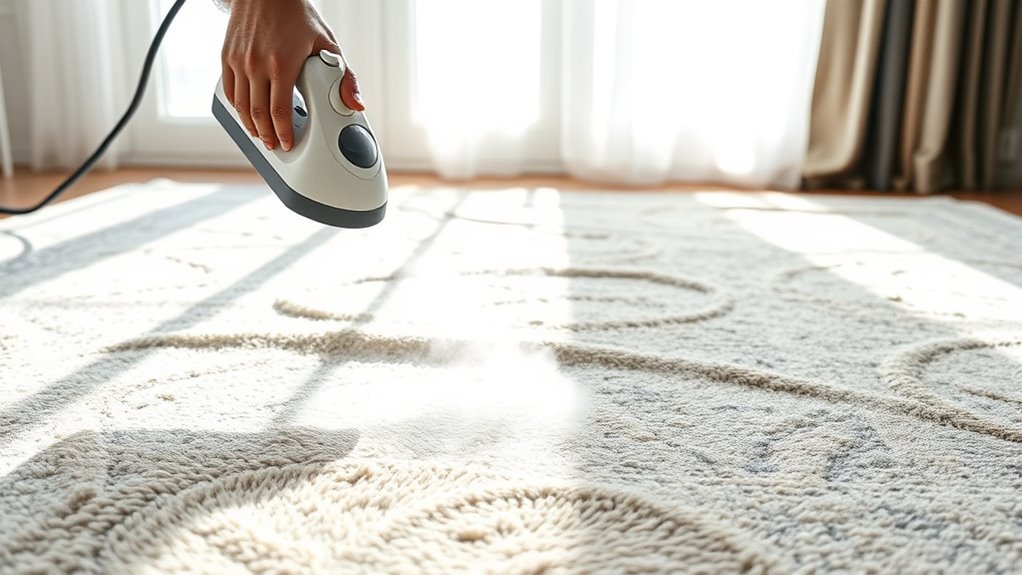
Before you steam a wrinkled rug, check the care label and manufacturer instructions. The safest treatment depends on the rug’s fiber, dye, backing, adhesives, and construction. The Carpet and Rug Institute recommends following manufacturer-specific care directions, especially for specialty and valuable rugs.
Warning: Do not assume low steam is safe for every rug. Nourison specifically advises against steam-cleaning jute and sisal, and notes that moisture can weaken viscose fibers. Silk, antique, handmade, Oriental, Persian, latex-backed, rubber-backed, or otherwise delicate rugs may also require professional care.
If the label permits heat and moisture, perform a patch test on an inconspicuous area. Stop if you see dye transfer, color change, puckering, distortion, backing movement, unusual odor, or texture change.
For an approved rug, a handheld steamer is easier to control than a high-moisture steam mop. Keep the steamer a few inches above the surface, move continuously, and use only enough steam to relax the crease rather than wet the rug.
Use the gentlest method that works. Heat and moisture should be optional tools, not the starting point for every wrinkled rug.
If you use a steam iron, place a clean white cotton cloth or damp towel over the crease and follow the rug manufacturer’s instructions. Never put a hot iron directly on rug fibers.
Work in small sections. Keep the heat source moving, and do not linger in one spot. After each brief pass, use flat hands to smooth the area gently without pulling or stretching the backing.
Let the treated area cool and dry completely before placing the rug pad or furniture back underneath it. If a wrinkle remains, repeat only after the area has cooled and you have confirmed that the rug shows no damage.
What to Check Before Steaming a Rug?
Before you steam a rug, confirm three things: the manufacturer allows heat and moisture, the material is suitable for DIY treatment, and a hidden test area remains stable.
Do not continue if the test produces color transfer, shrinkage, puckering, hardening, softening, adhesive movement, backing distortion, or a change in texture.
Check Care Label
Check the care label before deciding which flattening method to use. Look for restrictions covering steam cleaning, ironing, wet cleaning, machine washing, drying, professional cleaning, and heat exposure.
Manufacturer directions override generic rug-care advice. For example, Nourison’s material-care guidance says jute and sisal should not be steam-cleaned or wet-shampooed because these plant fibers can shrink or pucker when exposed to excess moisture.
Viscose and similar rayon-based fibers also need special care because moisture can weaken the fiber. Valuable handmade, antique, silk, Oriental, or Persian rugs are better candidates for professional inspection when a crease will not settle naturally.
Backing matters too. Rubber, latex, adhesives, and layered constructions can react differently to heat and moisture. Do not deliberately soak or heat the backing unless the rug manufacturer specifically instructs you to do so.
If the label says the rug is washable, follow the stated wash and drying procedure rather than assuming the rug can also be steamed.
When the label is missing or unclear, start with dry methods such as flat resting, reverse-rolling, vacuuming, and weighting. Avoid steam until you can confirm the rug’s care requirements.
Test Fabric Heat Tolerance
After checking the label, identify the rug’s fiber content and construction. Heat tolerance cannot be judged simply by labeling a rug “synthetic” or “natural.”
Polyester, polypropylene, nylon, wool, cotton, viscose, silk, jute, and sisal all behave differently, and dyes, adhesives, backing materials, pile construction, and previous treatments also affect how a rug responds.
Choose a small hidden area and perform a patch test using the same amount of heat and moisture you plan to use on the visible crease. Put a clean white cloth against the area afterward and check for dye transfer.
If the fibers remain stable, continue at the lowest effective setting. Keep the tool moving and avoid direct contact between a hot surface and the rug.
Pro Tip: If reverse-rolling or weighting is already improving the crease, keep using the dry method. There is no benefit to adding steam when a gentler treatment is working.
How to Prep a Rug for Steaming
Lay the rug flat on a clean, dry, hard surface in a well-ventilated room. Remove any separate rug pad before using moisture or heat so water cannot become trapped underneath.
Vacuum the rug carefully to remove grit and dust. Use a suction setting appropriate for the rug, and avoid a beater bar if the manufacturer warns against it. Cleaning loose debris first reduces abrasion when you smooth the fibers.
Check the care label once more and make sure the wrinkle is not being caused by furniture, a bunched rug pad, folded backing, or an uneven floor.
| Tool | Purpose | Note |
|---|---|---|
| Handheld steamer | Controlled steam | Use only if the rug manufacturer permits steam |
| Steam iron | Spot treatment through a cloth | Never place the hot soleplate directly on the rug |
| Thin white cotton cloth | Protect fibers and check dye transfer | Use a clean, colorfast cloth |
| Flat weights | Hold relaxed areas flat | Keep books or colored objects away from damp fibers |
Gather everything before you begin so the rug can be treated in short, controlled passes. Keep the backing as dry and stable as possible throughout the process.
How to Remove Rug Creases With Steam
If the rug’s manufacturer permits steaming and the patch test is successful, you can use controlled steam to help relax a stubborn crease. A handheld steamer is generally easier to control than a steam mop because you can limit both heat and moisture.
- Lay the rug flat and remove any separate rug pad.
- Hold the handheld steamer a few inches above the crease.
- Move continuously across the area rather than concentrating heat in one spot.
- Stop before the fibers or backing become wet.
- Smooth the relaxed area gently with flat hands.
- Let the section cool and dry before deciding whether another pass is necessary.
If you are using a steam iron and the manufacturer allows it, place a clean damp cotton cloth between the iron and rug. Use short passes and never allow the soleplate to touch exposed rug fibers.
The goal is to relax the crease without changing the rug’s backing, adhesives, color, or texture. If the rug begins to smell unusual, pucker, discolor, stiffen, soften, or distort, stop immediately.
Note: Avoid using a steam mop as the default crease-removal tool. It can apply more moisture and heat than necessary and may affect rugs or backings that are not designed for steam treatment.
How to Smooth Rug Fibers by Hand
Starting near the center of the affected area, place your palms flat on the rug and use light, even pressure as you work outward. The goal is to settle the surface, not stretch the rug.
Use overlapping passes and check the texture from different angles. Pressing too aggressively can distort the pile or pull the backing out of shape.
If the care instructions specifically allow light moisture, a very small amount of mist may help some fibers relax. Do not mist jute, sisal, viscose, silk, dye-unstable rugs, or any rug whose label prohibits wet treatment.
For suitable cut-pile rugs, you can gently lift flattened fibers with your fingers or a soft rug-safe brush. Avoid aggressive brushing on loops, delicate yarns, fringe, or handmade constructions.
If a crease remains, use reverse-rolling or even pressure instead of repeatedly adding more heat or moisture.
Once the rug lies flat, place a compatible rug pad underneath to reduce movement and bunching. Check both the rug and flooring manufacturer’s requirements before choosing an adhesive-backed or rubberized pad.
What to Do for Stubborn Wrinkles?
For stubborn wrinkles, move from the gentlest treatment to stronger methods rather than repeatedly steaming the same area.
Start by reverse-rolling the rug in the opposite direction of the curl or crease. If that is not enough, lay the rug flat and use smooth, evenly distributed weights.
Only add steam after those methods if the manufacturer permits it and the rug has passed a hidden-area test.
Reverse Rolling Method
If stubborn wrinkles remain, roll the rug in the opposite direction from the curl or shipping set. The Nourison flattening guide recommends opposite-direction rolling as one option for curled rugs.
- Start with the rug flat and identify the direction of the curl.
- Roll it smoothly in the opposite direction without forcing a sharp bend.
- Secure the roll gently so it does not unravel.
- Leave it rolled for several hours or about a day.
- Unroll it on a clean, flat floor and inspect the crease.
- Repeat only if the backing remains flexible and undamaged.
If you hear cracking, see delamination, or feel unusual stiffness while rolling, stop. Older or brittle backing can be damaged by aggressive reverse-rolling.
Use controlled pressure and patience instead of tightening the roll excessively.
Weighted Steam Treatment
For a rug that is confirmed safe for steam, treat only the stubborn crease with a brief pass from a handheld steamer. Then let the surface cool slightly before placing a clean, smooth, flat weight over the area.
If the rug is still damp, do not put printed books, cardboard, wood finishes, or other materials that could transfer color directly onto it. Use a clean white cloth and a flat protective board if necessary.
Leave the weight in place until the rug has cooled and dried. Check periodically so the weight does not crush high pile or create a new indentation.
If the crease does not improve after repeated gentle treatment, stop adding heat. The rug may need more settling time or professional attention.
How to Fix Rug Dents and Bumps
Furniture dents and shipping bumps are different problems, so they should not always be treated the same way.
On a colorfast, water-safe rug, an ice cube can sometimes help a compressed furniture dent by slowly adding a small amount of moisture. Place the ice over the dent, allow it to melt, blot excess moisture with a clean white cloth, and gently lift the fibers with your fingers or a spoon edge after the area has softened.
Skip the ice method on jute, sisal, viscose, silk, handmade or antique rugs, water-sensitive dyes, and any rug whose care label says to keep it dry.
For bumps caused by rolling or shipping, reverse-roll the rug rather than wetting it. Lay it flat afterward and use smooth weights where necessary.
If the care instructions allow low heat, a hair dryer held well away from the rug and kept moving may help some materials relax, but dry methods are the safer first choice.
- Identify whether the problem is a furniture dent, shipping crease, curled edge, or general buckling.
- Use controlled moisture only on rugs confirmed to be water-safe.
- Reverse-roll shipping bumps and curled areas.
- Use flat weights to hold problem areas in position.
- Let the rug dry completely before replacing furniture or a rug pad.
After the area is dry, vacuum gently if the rug’s care instructions permit it. Rotate furniture or use suitable furniture protectors to reduce repeat compression.
How to Help a Rug Set Flat
Start by reverse-rolling the rug against the direction of the curl. Then unroll it on a clean, dry, flat surface and give the backing time to relax.
Next, use flat weights on curled edges or stubborn creases. If the rug is approved for heat and moisture, you can add a brief steam treatment after the dry methods have been tried.
Smooth the surface outward with your hands, but do not pull hard from opposite ends or deliberately stretch the backing.
Reverse Roll Technique
Roll the rug in the opposite direction of the curl using a smooth, broad roll rather than a sharp fold. Secure it lightly and allow it to rest.
- Roll against the curl.
- Keep the roll smooth rather than excessively tight.
- Let it rest for several hours or about a day.
- Unroll it on a hard, flat surface.
- Inspect the backing and edges before repeating.
If the rug still resists, give it additional flat resting time before trying another cycle. Do not combine tight rolling with heavy heat.
Once the rug has settled, a suitable rug pad can help keep it from shifting or bunching.
Weight Down Edges
Once the rug is flat on the floor, place smooth, heavy objects over curled edges and creases. Distribute the pressure across a broad area so the weight does not leave a new dent.
Leave the weights in place for several hours to a few days and check the rug periodically. Some manufacturer guidance suggests that shipment-related creases may continue relaxing naturally for days or even weeks.
| Area | Action | Typical Check Point |
|---|---|---|
| Edges | Weight down evenly | Check after several hours |
| Curled areas | Reverse-roll, then add flat weight | Recheck the next day |
| Stubborn spots | Use continued pressure; add steam only if approved | Allow several days if needed |
Do not place heavy objects on fragile fringe, raised carving, delicate pile, or wet areas where color transfer could occur.
Steam And Smooth
If the care label allows steaming, place the rug on a clean, dry surface with any separate pad removed. Treat the crease from the side recommended by the manufacturer.
- Patch-test an inconspicuous area first.
- Move the handheld steamer continuously over the crease from a safe distance.
- Use only enough steam to relax the fibers.
- Smooth the area gently with flat hands.
- Let the rug cool and dry completely.
- Add a clean, flat weight if the crease still lifts after cooling.
Do not keep the rug face down for every treatment by default. Some backings should not be exposed directly to heat or moisture, so follow the rug’s own care directions.
If deep-set wrinkles remain after one or two cautious treatments, return to dry flattening methods or consult a professional rather than repeatedly wetting the rug.
How to Prevent Future Rug Wrinkles
Store rugs rolled rather than sharply folded whenever their construction allows it. Avoid crushing the roll with heavy objects or keeping it in a damp, excessively hot, or unstable environment.
When the rug is in use, place a properly sized rug pad underneath it to reduce sliding, bunching, and edge movement. A pad that bunches underneath the rug can create its own ripples, so keep it flat and slightly smaller than the rug.
Before using adhesive-backed pads or rug tape, check the flooring manufacturer’s instructions. Some adhesives and rubberized products can discolor or interact with certain floor finishes.
Rotate the rug periodically to spread wear and furniture pressure across different areas. The exact interval depends on traffic, sunlight, layout, and the manufacturer’s recommendations rather than a fixed six-month rule.
After cleaning, allow both the rug and its backing to dry completely before putting it back in place. Trapped moisture can cause odor, staining, backing problems, or movement.
Inspect the underside periodically for a bunched pad, moisture, delamination, or uneven wear. Correcting the cause early is easier than treating a deep crease later.
How Long It Takes for a Rug to Flatten
How long a rug takes to flatten depends on the material, backing, how tightly it was rolled or folded, room conditions, and how severe the crease is.
Many new rugs begin settling within a few days. However, some shipment-related folds and waves can take one to three weeks to disappear completely. Manufacturer guidance therefore matters more than a universal deadline.
- Lay the rug flat and allow it to acclimate.
- Vacuum gently if the manufacturer permits it.
- Reverse-roll pronounced curls.
- Use evenly distributed weights on stubborn areas.
- Add controlled steam only when the care instructions specifically allow it.
- Check progress every day or two rather than repeatedly treating the same area.
You may see faster improvement when a flexible rug is reverse-rolled and then weighted, but do not increase heat or moisture simply to speed up the process.
If the rug still has pronounced ridges after adequate settling time, focus on the affected areas and inspect the underside for backing damage or a bunched pad.
If the backing looks distorted, cracked, separated, or permanently buckled, professional evaluation is safer than continued DIY treatment.
Frequently Asked Questions
How to Smooth Out a Wrinkled Rug?
Lay the rug flat and start with gentle methods such as vacuuming, reverse-rolling, and smooth flat weights. If the care label allows heat and moisture, patch-test a hidden area and use brief controlled steam through a protective cloth. Let the rug cool and dry completely before repeating treatment.
How to Get Ripples Out of a Rug?
First check whether the ripple comes from shipping, a curled edge, a bunched rug pad, or backing damage. Reverse-roll shipping ripples, flatten the rug on a hard surface, and use broad, even weights. Use steam only on rugs whose manufacturer permits heat and moisture.
Will Rug Wrinkles Go Away?
Many shipping wrinkles gradually relax after the rug is unrolled and used. Some settle within a few days, while deeper folds may take one to three weeks. Reverse-rolling and flat weights can help. Persistent buckling, cracking, or backing distortion may require professional attention.
How to Get Wrinkles Out of an Area Rug Without a Stretcher?
You usually do not need a stretcher for a movable area rug. Lay it flat, reverse-roll it against the curl, and use smooth weights on stubborn creases. If the manufacturer permits steam, treat only the problem area with controlled heat and moisture, then let the rug dry flat.
Can You Steam a Jute or Sisal Rug to Remove Wrinkles?
Do not steam jute or sisal unless the rug manufacturer gives specific instructions allowing it. These plant fibers are highly absorbent and can shrink or pucker when exposed to excessive moisture. Reverse-rolling, flat resting, and professional care are safer choices.
When Should You Stop DIY Rug Flattening and Call a Professional?
Stop if you see dye transfer, shrinkage, puckering, backing separation, cracking, permanent buckling, unusual odor, or texture damage. Professional care is also the safer choice for valuable handmade, antique, Oriental, Persian, silk, viscose, or otherwise delicate rugs.
Conclusion
You can often flatten a wrinkled rug without aggressive treatment. Check the care label, vacuum gently, lay the rug flat, and try reverse-rolling or smooth weights first. Use controlled steam only when the rug manufacturer allows heat and moisture, and always patch-test before treating a visible area.
For moisture-sensitive fibers, valuable handmade rugs, or any rug showing backing damage, professional care is safer than repeated DIY steaming. Once the rug is flat and completely dry, a compatible rug pad can help limit movement and future wrinkling.
Sources
- The Carpet and Rug Institute — Cleaning and Maintenance — manufacturer-care guidance, basic rug care, and professional-care recommendations.
- Nourison — Rug and Carpet Care — material-specific care, including jute, sisal, viscose, and professional-cleaning cautions.
- Nourison — How to Lay Out Your New Rug — vacuuming, weighting, reverse-rolling, and conditional heat treatment for creases.
- Ruggable — Rug Instructions and Care — guidance on allowing packaging creases to settle naturally and using appropriate vacuuming.
- Rugs USA — Removing Bunching, Creasing and Folded Corners — settling times, reverse-rolling, and weighted flattening.