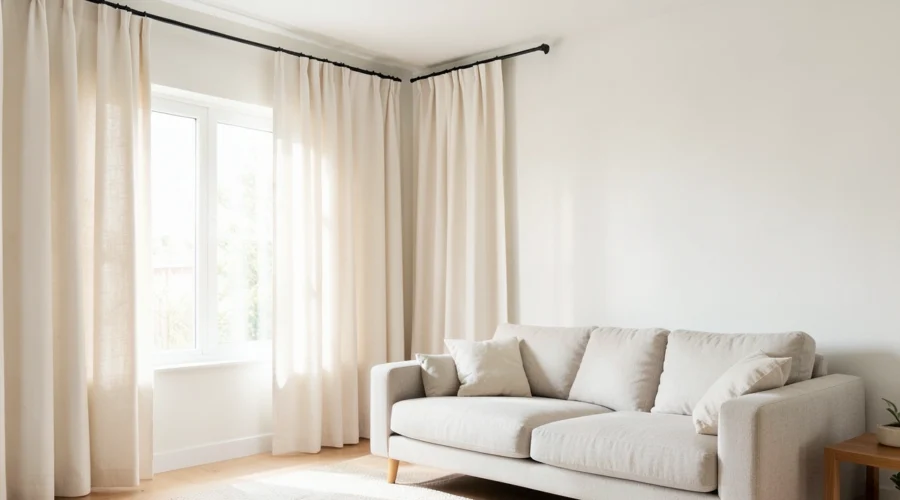
Knowing how to hang curtains correctly is the cheapest way to change how a room looks. The same panels can make a window look short and cramped or tall and generous, and the only difference is where the rod sits. Most people mount the rod right above the window frame and flush with its edges, which is exactly what makes the window look smaller than it is.
The fix is a handful of measurements: how high to place the rod, how far it should extend past the frame, how long the panels should be and how full they should look. This guide gives each rule with the reasoning behind it, then walks through the install from the first pencil mark to the last tweak.
Quick Answer
To hang curtains, mount the rod 4 to 6 inches above the window frame, or higher if the ceiling allows, and extend it 8 to 12 inches past each side so the panels clear the glass when open. Choose panels that reach within half an inch of the floor, and buy a total panel width of two to two and a half times the rod length. Use a level, drill pilot holes, and anchor brackets into studs or rated wall anchors.
Key Takeaways
- Hang the rod higher and wider than the window to make it look larger.
- A common rule is 4 to 6 inches above the frame and 8 to 12 inches beyond each side.
- Floor-length panels should stop about half an inch above the floor.
- Total fabric width should be 2 to 2.5 times the rod length for a full look.
- Always find a stud or use a rated anchor, because curtains and rods are heavier than they look.
What to Measure Before You Hang Anything
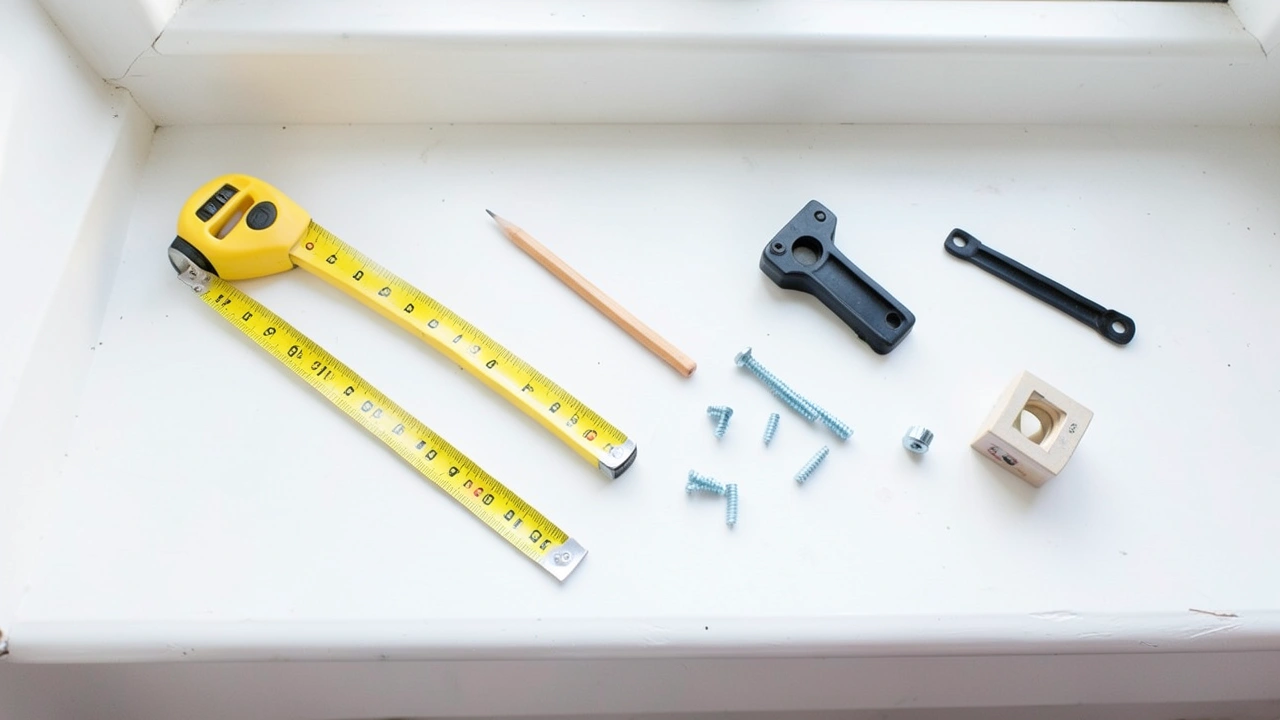
Grab a tape measure, a pencil and a level before you drill. Measure the window frame width and height, then the distance from the top of the frame to the ceiling. That last number decides how high your rod can go. Write the numbers down, because it is easy to forget them halfway up a ladder.
| Measurement | What to record | Why it matters |
|---|---|---|
| Frame width | Outside edge to outside edge of the trim | Sets the rod length |
| Frame height | Top of the trim to the sill or floor | Sets the curtain length |
| Ceiling gap | Top of the trim to the ceiling | Limits how high the rod can go |
| Wall space on each side | Trim edge to the nearest corner or wall | Limits how wide the rod can extend |
| Floor to rod | Floor up to your planned rod height | Sets the final panel length |
If the window sits close to a corner, the rod may have to stop short on that side. In that case extend it as far as the space allows and keep the panels symmetrical by matching the other side.
How High to Hang the Curtain Rod
The most common designer rule is to place the rod 4 to 6 inches above the top of the window frame. With ceilings of 8 feet, this is usually enough to draw the eye upward. If you have a higher ceiling, you can go higher still, and many designers place the rod about two thirds of the way between the frame and the ceiling. With standard ceilings, mounting the rod just under the crown molding or about 3 inches below the ceiling creates the tallest effect.
One caution: very high rods work best with floor-length panels. If the panels would stop short of the floor, a high rod can look odd, so measure the full drop before you commit.
How Wide Should the Curtain Rod Be
The rod should extend well beyond the window frame so that the panels can rest against the wall when open, leaving the whole window uncovered. A good starting point is 8 to 12 inches on each side of the frame. That gives the glass full light and makes a narrow window look wider.
Brackets should sit just inside the ends of the rod, and the finials should extend 2 to 3 inches past them. For a rod longer than about 48 inches, add a center bracket so it does not sag under the weight of the fabric.
Choosing the Right Curtain Length
| Style | Where the hem lands | Best for |
|---|---|---|
| Floor-grazing | About 1/2 inch above the floor | Most rooms, easy to clean around |
| Kiss | Barely touching the floor | A tailored, clean look |
| Puddle | 2 to 6 inches of extra fabric on the floor | Formal, dramatic rooms with little foot traffic |
| Sill length | Just at or below the windowsill | Kitchens and spots with radiators or furniture below |
| Apron length | About 4 inches below the sill | Small windows that need a bit of extra drop |
If the panels are a few inches too long, you can fix that without sewing. Our guide to hemming curtains without sewing covers hem tape and other quick methods.
Panel Width and Fullness
Curtains look best when the fabric is gathered rather than stretched flat. Designers usually aim for a total panel width of 2 to 2.5 times the width of the rod, so a 60-inch rod needs 120 to 150 inches of fabric. Thinner or lighter fabrics need the higher number, and heavy lined drapes can get by with less. What is curtain fullness ratio explains how to calculate the number for any header style.
How to Hang Curtains Step by Step
- Mark the rod height. Measure up from the top of the frame to your chosen height and make a small pencil mark at the center of the window.
- Mark the bracket positions. Measure out from each side of the frame to the planned width, then use a level to mark both bracket heights the same.
- Find the studs. A stud finder shows you where the framing is. Place at least the outer brackets into a stud if you can.
- Drill pilot holes. Use a bit slightly smaller than the screw. If you cannot hit a stud, use a drywall anchor rated for the weight of your rod and panels.
- Attach the brackets. Drive the screws in until the bracket is snug, then check the level again.
- Add the center bracket. If the rod is longer than roughly 48 inches, place a center bracket in line with the others.
- Thread the panels onto the rod. Slide on rings, clips or the rod pocket, and add the finials.
- Set the rod in place. Lift the rod into the brackets and tighten the set screws.
- Adjust the folds. Pull the fabric into even folds, step back and check the hem against the floor.
For a more detailed walk-through of the mounting stage, see how to install a curtain rod straight and level.
Hardware for Different Curtain Headers
The way a curtain attaches to the rod changes how it hangs. A few of the most common styles:
- Grommet panels slide directly onto the rod and fall in wide, even folds. See what is a grommet curtain.
- Rod pocket panels have a sewn sleeve that gathers on the rod. See what is a rod pocket curtain.
- Pinch pleat panels use hooks and rings and give a tailored, formal look. See what is a pinch pleat curtain.
- Clip-on rings work with almost any flat-top panel and make height adjustments easy.
Common Mistakes That Make Windows Look Smaller
| Mistake | What happens | Fix |
|---|---|---|
| Rod mounted flush with the frame | Window looks short and boxed in | Raise it 4 to 6 inches or more |
| Rod only as wide as the frame | Panels cover the glass when open | Extend 8 to 12 inches each side |
| Panels too short | Looks like the curtains shrank | Measure from rod to floor, then subtract 1/2 inch |
| Not enough fabric | Flat, sparse look | Use 2 to 2.5 times the rod width |
| Brackets not in studs | Rod sags or pulls out | Use studs or rated anchors |
| Uneven brackets | Rod tilts | Use a level for every mark |
Finishing Touches
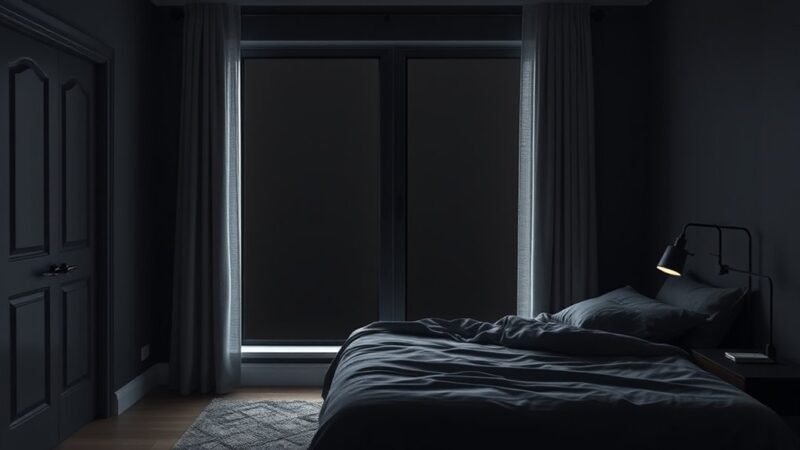
New curtains almost always arrive creased from the package. You can fix the wrinkles while they hang: steam wrinkles out of curtains while they hang shows how. If light leaks around the edges are a concern, especially in a bedroom, see how to block light gaps around curtains and how to hang blackout curtains for tips that work with wider rods and return brackets.
Frequently Asked Questions
How high above the window should I hang curtains?
A standard rule is 4 to 6 inches above the top of the window frame. Going higher, up to near the ceiling, makes the room feel taller, as long as your panels are long enough to still reach the floor.
How far past the window should a curtain rod extend?
Most designers extend the rod 8 to 12 inches beyond each side of the frame. This lets the panels stack against the wall so they do not block the glass.
How long should curtains be?
For most rooms, panels should end about half an inch above the floor. Some people prefer them to just touch the floor, and formal rooms sometimes use a puddle of extra fabric.
Should curtains hang inside or outside the window frame?
Outside is the standard choice. It lets you hang the rod higher and wider and keeps the panels clear of the glass. Mounting inside the frame suits only very shallow, tidy windows.
Do I need to hang curtains into a stud?
Use a stud for the end brackets whenever possible. If the stud does not line up, drywall anchors rated for the weight work, and a center bracket spreads the load on longer rods.
How many curtain panels do I need for one window?
Most windows use two panels, one on each side. The total width of both panels should be 2 to 2.5 times the rod length.
Conclusion
The way to hang curtains well is to measure first and think of the rod as part of the room, not just the window. Go higher and wider than the frame, choose a length that reaches the floor, give the panels enough fullness, and anchor everything into solid wall. Those four decisions do more for a room than the fabric itself.
Keep Reading
- How to Install a Curtain Rod Perfectly Straight and Level: Mounting the rod level and secure
- How to Hem Curtains Without Sewing a Single Stitch: Shorten panels with hem tape
- What Is Curtain Fullness Ratio and How the Math Works: How much fabric you really need
- How to Steam Wrinkles Out of Curtains While They Hang: Remove creases without taking them down
- How to Hang Blackout Curtains for Full Light Coverage: Better light control for bedrooms