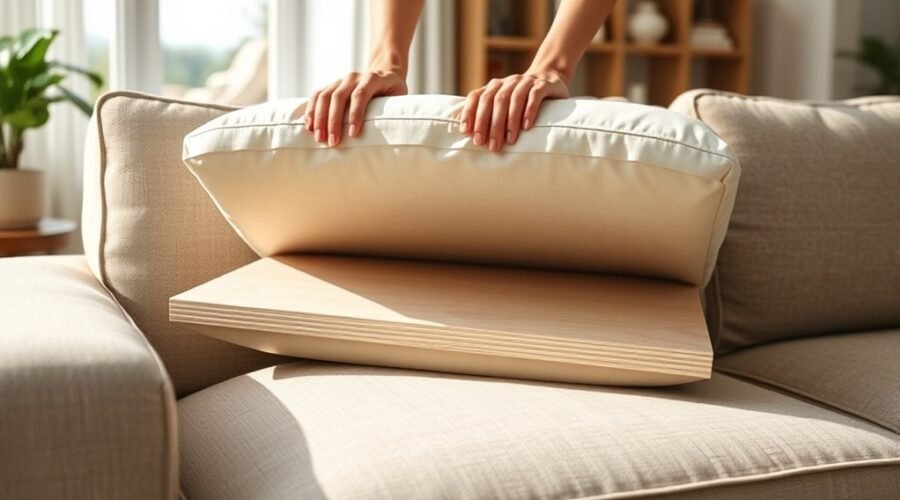
Sagging couch cushions are usually caused by compacted fiberfill, stretched support, or worn suspension. A quick fix starts with thorough fluffing and kneading to redistribute fill. If needed, add polyester fiberfill inside the cover for extra loft. Light steaming can help fibers relax and rebound. A support board under the cushions can reduce bottoming out, and regular flipping and rotation help prevent repeat sagging. Persistent flattening usually means the foam has failed, and more details follow.
What Causes Couch Cushions to Sag?
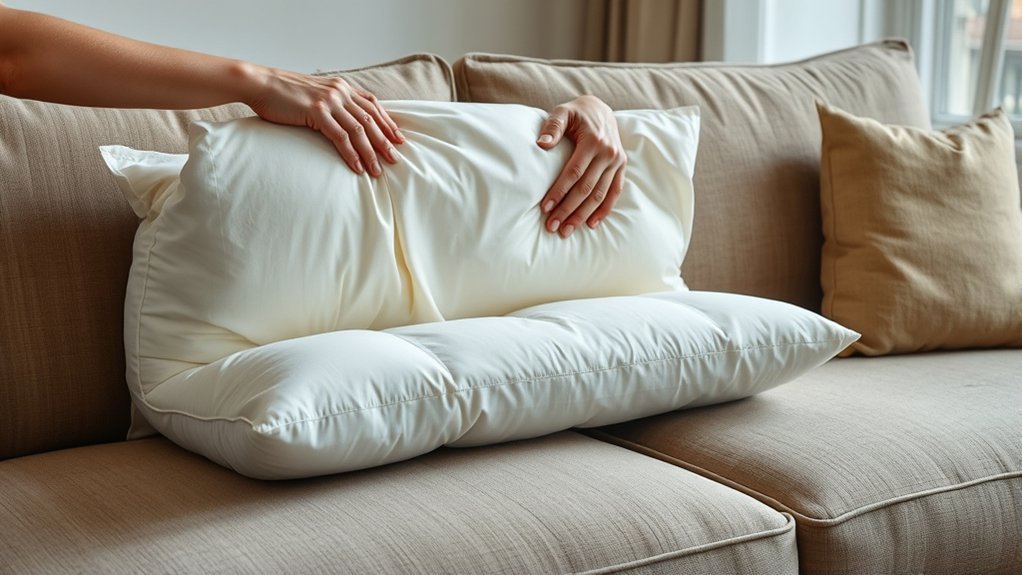
Couch cushions sag primarily because their internal materials and support systems degrade with use. In a couch, foam gradually loses resilience under repeated compression, so the seat no longer rebounds fully.
Polyester fiberfill can also compact, clump, and flatten, creating uneven support and visible sagging zones. Beneath the cushions, springs or webbing may stretch, weaken, or fail, reducing structural support across the frame.
Increased home use accelerates wear and tear, especially when the couch carries heavier daily demand than intended. Poor maintenance compounds the problem: cushions that are not rotated or regularly fluffed wear unevenly, and that imbalance spreads sagging faster.
The result is a seat that no longer distributes weight efficiently, limiting comfort and freedom of movement. Understanding these causes helps identify whether the issue lies in foam, fill, or suspension, and shows where practical intervention can restore support without replacing the entire couch.
Fluff Couch Cushions for a Quick Lift
A quick fluff can restore lost volume by redistributing the filling inside the cushions, especially in fiberfill or down-filled models. This fluffing cushions routine redistributes weight, supports even wear, and creates a quick lift without equipment.
When cushions regularly receive manual kneading, beating, and corner shaping, they recover loft and maintain an inviting appearance. The method is free and straightforward, making it practical for budget-conscious households seeking relief from sagging without replacement.
Regular kneading, beating, and corner shaping restore loft, keeping cushions inviting, supportive, and budget-friendly without replacement.
- Fluff both sides to keep the fill balanced.
- Pair with periodic rotating to spread pressure.
- Repeat weekly to prevent set-in compression.
- Use consistent handling to prolong the life.
For best results, cushions should be lifted, shaken, and turned in place, then returned to the frame. Over time, this simple maintenance helps preserve comfort and delay visible sagging.
Add Polyester Fiberfill to Sagging Cushions
When fluffing no longer restores enough loft, polyester fiberfill can be added to increase cushion volume and support.
To add polyester fiberfill, open the cushion cover and place it around the existing foam to restore volume without replacing the core. This budget-friendly method offers a temporary lift, improves surface fullness, and can enhance comfort with minimal tools.
The material is lightweight hypoallergenic, making it suitable for households seeking a cleaner fill option. By filling voids and soft spots, it helps redistribute weight more evenly across the cushion, reducing lumps and premature deflation.
Moderation is important; too much fill can distort the cover and limit movement. Periodic inspection and replenishment can prolong life and prevent sagging from returning.
Used carefully, fiberfill gives a practical, low-cost way to regain structure while preserving existing cushions and household autonomy.
Steam Cushions Back Into Shape
Applying steam can help cushions regain their original shape by relaxing compressed fibers and allowing them to expand back into place. A careful steaming method can steam cushions without oversaturating them, helping restore shape and reduce compaction in polyester cushions and foam inserts.
A handheld steamer should be held at a safe distance, moving evenly across the surface to distribute heat and moisture without creating wet spots.
- Use a handheld steamer or steam iron on low risk settings.
- Keep the nozzle moving to avoid moisture damage.
- After steaming, gently fluff cushions to redistribute filling.
- Repeat as part of a maintenance routine to prolong lifespan.
Once the surface cools, fluff cushions again so the fibers settle more evenly. This practical approach supports comfort, preserves structure, and gives sagging furniture a freer, more resilient feel.
Add a Cushion Support Board
For cushions that still sink after steaming, a support board can add a firm base beneath the sofa cushions and reduce further sagging.
A cushion support board is a practical DIY fix for homeowners who want to fix sagging couch cushions without replacing foam. Made from heavy-duty engineered wood, it fits snugly inside the frame and creates a level support system underneath the seat.
By keeping the surface stable, it distributes weight more evenly across the cushions, which helps reduce pressure points and enhance overall comfort. This simple solution can also protect sectionals, recliners, and similar furniture from worsening wear, prolonging the life of both cushions and frame.
Some models, such as the Meliusly Sofa Support board, require no tools and include safety-focused design features, making installation straightforward and accessible.
Used correctly, a support board restores structure without dependence on costly repairs, helping the household reclaim comfort and control.
Flip and Rotate Couch Cushions Regularly
Regularly flipping and rotating couch cushions helps distribute pressure evenly across the seating surface, reducing localized wear and slowing sagging. To flip and rotate on a weekly schedule, preventing uneven wear and helping extend lifespan. This practice redistributes weight, encourages fiber recovery, and keeps support more uniform in high-use seating areas.
- Turn each cushion front to back and side to side.
- Match the schedule to weekly use, especially in busy households.
- Check for signs of wear during each rotation.
- Use early intervention to address minor damage before it spreads.
Consistent rotation preserves overall comfort without requiring replacement foam. It keeps the seating surface responsive, balanced, and more inviting.
Consistent rotation keeps cushions comfortable, responsive, and balanced without replacing foam.
When cushions are managed with simple discipline, the couch stays functional longer and remains easier to enjoy day after day.
How to Tell When Foam Needs Replacing
Foam replacement can be identified with a slow bounce-back test: if pressed areas fail to recover promptly, the material has likely lost resilience.
Lumps, flat spots, and uneven surfaces indicate compacted or deteriorated foam that no longer distributes weight evenly.
When support is gone and sagging becomes pronounced, the foam has usually broken down beyond practical repair.
Slow Bounce-Back Test
A quick resilience check can reveal whether a couch cushion’s foam is still serviceable. The slow bounce-back test measures how fast cushion filling recovers after pressure is released.
During the bounce-back test, a healthy cushion should regain shape in 2-3 seconds, signaling proper support. Longer recovery, or visible compression that persists, points to foam degradation and foam breakdown.
Frequent use can drive noticeable sagging, making the seat feel trapped rather than free. If the cushion stays depressed for more than a few seconds, it is usually time to replace the foam.
- Press firmly, then release.
- Watch recovery time closely.
- Compare both cushions.
- Schedule timely repairs early.
Lumps And Flat Spots
Lumps, flat spots, and hard areas usually indicate that the cushion foam has lost structural integrity and should be replaced.
In sagging couch cushions, visible unevenness across the seat confirms that compressed foam can no longer distribute weight evenly. A quick fix through fluffing may improve appearance, but it cannot restore the underlying support.
If a cushion shows height differences, persistent dips, or hard spots after use, foam replacement is the practical remedy. Slow shape recovery and localized flattening both point to material failure, not normal wear.
Inspection should be systematic: compare cushion heights, feel for compacted zones, and note areas that stay misshapen.
When those signs persist, the safest path is to replace the foam and restore consistent support.
When Support Is Gone
When cushions remain flat after use and recover slowly, the problem has moved beyond simple fluffing and points to foam that has lost resilience.
To Fix Sagging, inspect whether the problem is contained within the cushion cover or spread through the sofa’s frame and support board. If the seat feels neither soft or firm in a balanced way, or if it fails to spring back after pressure, foam replacement is likely.
Visible dips, cracks, lumps, or a hard texture are serious issue markers, not cosmetic defects. A stretched suspension system confirms deeper failure.
- Press and release; delayed rebound signals degradation.
- Check for uneven density inside the cover.
- Compare each cushion against a sound one.
- If support is gone, simple DIY fluffing will not restore load-bearing comfort.
Frequently Asked Questions
How to Firm up Saggy Couch Cushions?
Saggy couch cushions are firmed by adding cushion support through DIY solutions like fiberfill, batting, or thin boards.
Then adjusting cushion layering for a tighter profile. Smart fabric choice and furniture arrangement help reduce strain, while maintenance tips such as weekly fluffing, flipping, and rotating preserve shape.
Careful upholstery care extends life, delaying cushion replacement. Foam alternatives offer practical reinforcement, restoring comfort without dependence on costly replacements.
Can I Fix a Sagging Couch Using Non-Removable Cushions?
Yes—non-removable cushions can be improved.
Like a clockmaker tuning a throne, one may use cushion support, DIY solutions, and upholstery tips to restore shape. Foam alternatives, careful fabric care, and furniture maintenance help comfort enhancement without cushion replacement.
For severe sagging, hidden boards or inserts aid support. Regular fluffing, rotation, and sagging prevention preserve freedom from discomfort, while selective seam access can refresh filling and improve resilience.
What Is the Best Product for Fixing Sagging Couch Cushions?
The best product is a cushion support board such as the Meliusly Sofa Support, because it provides immediate reinforcement, stable weight distribution, and measurable comfort enhancement.
For DIY solutions, it works well with foam alternatives, fabric types, and filling materials like polyester fiberfill. Restoration techniques improve results when paired with cushion covers and maintenance tips.
This practical option reduces sagging, extends lifespan, and supports liberation from costly replacement cycles.
How Can I Fix Sagging Sofa Cushions?
Sagging sofa cushions can be corrected with cushion support, DIY solutions, and careful cushion maintenance.
Polyester fiberfill or other filling materials may restore loft, while steaming and upholstery techniques can improve shape across different fabric types.
A thin board or insert can aid seating ergonomics and comfort enhancement.
Regular fluffing, rotation, and inspection support furniture restoration, preventing further collapse and preserving practical freedom from costly replacements.
Conclusion
In the end, sagging couch cushions can often be revived without replacing the foam. A firm fluff, a measured dose of fiberfill, or a burst of steam can restore lost height, while a support board adds a hidden backbone beneath the fabric. Regular flipping and rotating help preserve shape over time. When cushions remain flattened like tired soil after every treatment, the foam itself has likely reached the end of its useful life.