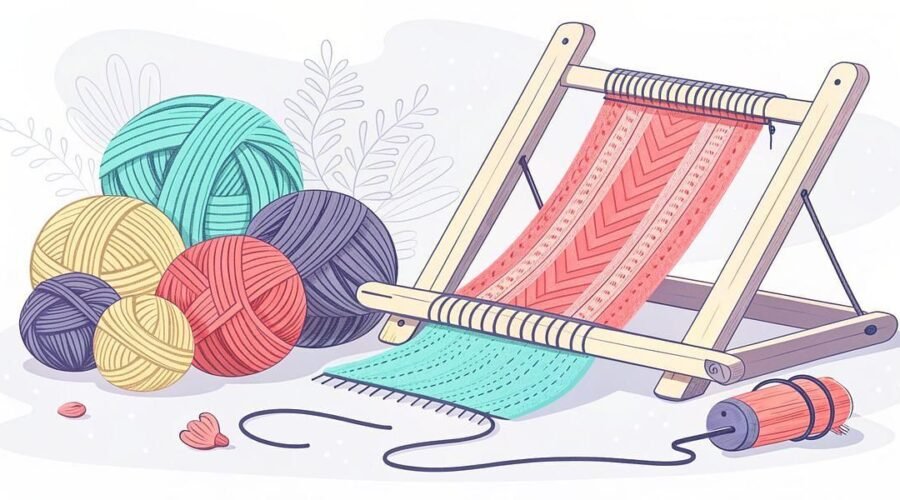
Starting weaving is much easier when you know which tools are essential and which ones can wait. A beginner mainly needs a loom that suits the project, suitable warp and weft yarn, a way to carry the weft, a tool for packing each row, scissors, and a few finishing supplies. The products below can fill several of those roles, but they work best as part of a complete beginner setup rather than as a toolkit by themselves.
Quick Answer
For your first weaving project, start with a small frame, cardboard, or rigid-heddle loom; strong warp yarn; weft yarn; a tapestry needle or shuttle; a fork, comb, or loom beater; scissors; and a measuring tape. Add heddle hooks, warping pegs, separators, or dowels only when your loom or project needs them.
Affiliate disclosure: We may earn a commission when you make a qualifying purchase through the retailer links in this article, at no extra cost to you. Product availability, ratings, and review totals can change after publication.
Key Takeaways
- A loom, warp, weft, weft-carrying tool, beater, scissors, and measuring tool make a more complete starter kit than yarn and needles alone.
- Choose warp for strength and low stretch; choose weft for the texture, color, and finished fabric you want.
- Lily Sugar’n Cream Cone is a current 100% cotton, #4 Medium/Worsted option, but follow your loom or project instructions when deciding whether to use it as warp.
- Plastic tapestry needles are useful for frame weaving and finishing, while rigid-heddle weaving commonly uses stick shuttles for the main weft.
- The Darice dowels are a legacy product listing; an equivalent smooth hardwood dowel can serve the same light DIY role if the exact pack is unavailable.
At a Glance
| Time Required | About 30–90 minutes for a first basic setup; weaving time depends on project size. |
| Difficulty | Beginner |
| Tools Needed | Loom, warp and weft yarn, tapestry needle or shuttle, beater or fork, scissors, measuring tape; loom-specific warping tools as required. |
| Cost | Varies widely. A cardboard or simple frame setup can use inexpensive supplies; a purpose-built rigid-heddle loom costs more but includes much of the weaving mechanism. |
Essential Weaving Tools for Beginners
Weaving interlaces two yarn systems. The warp runs lengthwise and stays under tension on the loom. The weft travels back and forth across that warp. Each opening through which the weft passes is a shed, and pressing the new weft into place is called beating or beat-up.
A practical beginner kit usually includes:
- Loom: A cardboard or frame loom is inexpensive for small tapestry-style projects. A rigid-heddle loom adds a heddle/reed that helps create sheds and beat the weft.
- Warp yarn: Choose yarn that is reasonably strong, smooth, and resistant to stretching or abrasion.
- Weft yarn: This can be softer or more decorative because it does not normally carry the same continuous tension as the warp.
- Tapestry needle or shuttle: A blunt tapestry needle is convenient on small frame looms. Stick or boat shuttles are more efficient across wider sheds.
- Beater: Depending on the loom, use the rigid heddle/reed, a weaving comb, tapestry beater, or even a sturdy fork for small frame projects.
- Scissors: Keep a sharp pair nearby for cutting yarn cleanly.
- Measuring tape or ruler: Useful for planning warp length, checking project width, and keeping dimensions consistent.
- Loom-specific accessories: A warping peg, heddle hook, clamps, warp separators, lease sticks, or dowels may be needed depending on the loom.
Schacht’s beginner rigid-heddle equipment list includes a rigid-heddle loom, reed, warping peg and clamp, heddle hook, two stick shuttles, heavy paper for warp separation, scissors, cloth tape measure, and tapestry needle. Schacht’s beginner equipment list is a useful example of how the full setup extends beyond yarn alone.
Choose the Right Type of Beginner Loom
Cardboard or Simple Frame Loom
This is the easiest low-cost way to learn the over-under rhythm of plain weave. You usually carry the weft with a tapestry needle or small shuttle and pack rows with a fork or weaving comb. It is especially good for small wall pieces, samplers, and basic tension practice.
Rigid-Heddle Loom
A rigid-heddle loom combines a reed and heddle so you can separate warp threads into sheds and beat the weft with one main component. It is a practical step up when you want scarves, towels, runners, or longer lengths of cloth. Ashford maintains current rigid-heddle setup and learning tutorials covering assembly, warping, weaving, and related techniques.
Multi-Shaft Loom
Table and floor looms give you more shafts and greater pattern control, but they bring more equipment, threading, and setup decisions. They are excellent once you know you want to explore more complex structures, but they are not required for learning the basic mechanics of weaving.
Note: Dowels are useful in some DIY frame-loom setups as separators, shed sticks, supports, or spacers, but they are not a substitute for every component of a purpose-built loom.
Warp Yarn vs. Weft Yarn
Beginners often get better results when they stop treating every yarn as interchangeable. Warp stays under tension and repeatedly rubs against loom parts, so strength, smoothness, and predictable stretch matter. Weft normally has more freedom because it travels across the warp and can be chosen for color, texture, absorbency, or softness.
The Craft Yarn Council classifies worsted yarn as #4 Medium. That category is useful when comparing yarn thickness, but knitting needle or crochet-hook sizes printed on a yarn label do not tell you the correct weaving sett. Match your yarn to the spacing of your frame, the dent of your rigid heddle or reed, and the type of fabric you want. Craft Yarn Council yarn-weight standards provide a common reference for yarn size.
Pro Tip: For your first project, use a smooth, light- or medium-colored warp. It is easier to see each thread, catch skipped warps, and judge whether your tension and beat are even.
Top Picks
The scores below are editorial beginner-fit scores, not laboratory measurements or retailer star ratings. They reflect beginner compatibility, versatility, durability/care, and overall value. Live prices, availability, ratings, and review totals can change.
|
Category |
Product |
Editorial Score |
|---|---|---|
|
🏆 Best Cotton Yarn |
95/100 |
|
|
💰 Best Budget Needles |
78/100 |
|
|
🎯 Best DIY Dowel Option |
85/100 |
Selection Criteria
When choosing beginner weaving supplies, prioritize compatibility first. A good yarn can still be frustrating if it is poorly matched to the loom or intended sett, and a useful finishing needle does not replace a shuttle on every loom.
Durability and care come next because strong warp materials, smooth tools, and washable project yarns reduce avoidable problems while you are learning. Versatility also matters: supplies that can handle multiple small projects offer more value than highly specialized items you may use only once.
Finally, beginner friendliness matters more than complicated features. The best first tools make it easy to see your threads, maintain tension, correct mistakes, and finish a project cleanly.
Lily Cotton Cone

Lily Sugar’n Cream Cone is a practical cotton option when you want a durable, absorbent yarn for household textiles and weaving practice. Yarnspirations currently identifies the cone as 100% cotton, #4 Medium/Worsted, 400 g/14 oz. Its current manufacturer page lists 616 m/674 yd, while some older retailer stock and listings show 645 m/706 yd, so check the label on the cone you receive.
The yarn works especially well for projects where cotton’s absorbency and easy care are useful, such as dishcloth-style textiles, placemats, simple runners, and sturdy décor. It can also be used for weaving practice, although whether it is right for the warp depends on your loom, sett, and project. Do not assume that a yarn is suitable for every warp simply because it is labeled worsted weight.
Yarnspirations says to wash colors separately because some shades may run, wash at up to 86°F/30°C on a delicate setting, and tumble dry low on delicate. A sample swatch is still worthwhile when dimensions or colorfastness matter.
What People Say
The review material captured with the source article is generally positive, especially about usefulness for household cotton projects and the large cone format. Because marketplace reviews change continually, treat the chart and rating below as a snapshot from the supplied source article, not a live measure of current customer sentiment.
Overall Sentiment in Source Snapshot: Positive

|
Pros |
Cons |
|---|---|
|
✅ 100% cotton; absorbent and useful for household textiles |
❌ Firmer and less drapey than many garment-focused fibers |
|
✅ Manufacturer provides machine-wash and low-tumble-dry care directions |
❌ Some colors may run, so colors should be washed separately |
|
✅ #4 Medium/Worsted size is easy to see while learning |
❌ Not automatically suitable for every loom sett or warp application |
|
✅ Large cone reduces the number of joins on larger projects |
Long-Term Value
A large cotton cone can serve many practice pieces and household projects. Its value is strongest when you already know that a medium-weight cotton suits the sett and finished fabric you want.
Return On Investment
For beginners who plan to make several cotton projects, buying one larger cone can reduce interruptions caused by joining short lengths. The real value depends on how well the yarn matches your loom and intended project, not simply on total yardage.
DIY Guide
For a frame loom, wind only a manageable amount of weft onto your needle or small shuttle so it passes through the warp without tangling. On a rigid-heddle loom, wind the weft onto a stick shuttle and follow the loom or project instructions for sett.
Weave a small sample first. Check the edges, fabric density, and tension, then wash the sample according to the yarn’s care instructions before committing to a larger household item.
Learning Value
The medium-weight cotton is easy to see, which helps a new weaver notice skipped warp threads and differences in beat. Cotton also has relatively little bounce compared with highly elastic yarns, so tension changes are easier to observe.
Ease Of Use
|
Feature |
Ease Level |
|---|---|
|
Handling/Winding |
Easy |
|
Using as Weft |
Easy |
|
Matching to Warp Sett |
Moderate |
|
Care/Washing |
Easy, with manufacturer care directions |
Versatility
This cotton works across household textiles, practice swatches, simple décor, and many other crafts. It is less suited to projects that require a very soft, elastic, or flowing fabric.
Expertise Level
Beginner
Ease Of Assembly
No assembly is required. The main beginner task is matching the yarn to the loom and winding a manageable amount onto the needle or shuttle.
Key Benefits
- Current manufacturer specification is 100% cotton and #4 Medium/Worsted
- Large 14 oz cone supports multiple practice and household projects
- Visible medium-weight yarn makes basic weaving errors easier to spot
Retailer rating snapshot in the supplied article: 4.7/5 (9,217+ reviews at capture). Ratings and review totals can change; check the live retailer listing for current figures.
SODIAL Needles
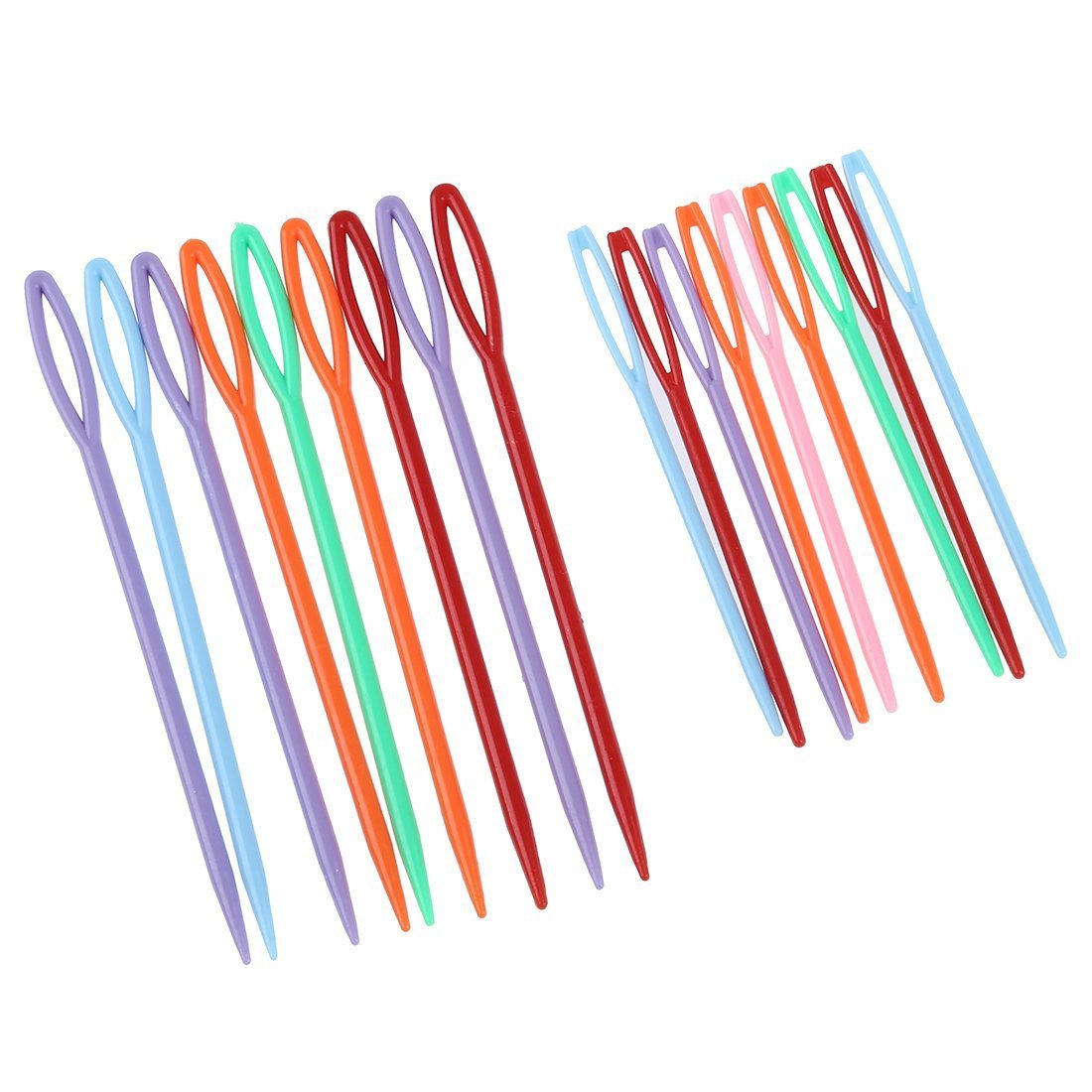
A large-eye, blunt tapestry needle is one of the simplest tools for small frame weaving and for finishing almost any woven project. This SODIAL-style set contains multiple plastic needles in two lengths, giving a beginner inexpensive options for carrying yarn through a small warp, weaving in ends, darning, and joining pieces.
Plastic construction keeps the needles light and reduces the chance of a sharp tip splitting yarn, although it also makes them less rigid than metal needles. On wider rigid-heddle projects, a stick shuttle is usually faster for the main weft; keep a tapestry needle nearby for finishing, detailed inlay, or repairing mistakes.
What People Say
The review material supplied with the original article describes the needles as inexpensive and easy to handle. Because the listing and its reviews can change, the sentiment chart below should be read as a historical snapshot rather than a live customer-research result.
Overall Sentiment in Source Snapshot: Positive

|
Pros |
Cons |
|---|---|
|
✅ Assorted lengths suit different finishing and small-weaving tasks |
❌ Plastic is less rigid and durable than metal under heavy use |
|
✅ Blunt shape is friendly to yarn and woven fabric |
❌ Not a replacement for a shuttle on wider loom projects |
|
✅ Lightweight and comfortable for basic detail work |
❌ Thick yarn or dense fabric may be awkward with some needle eyes |
|
✅ Low-cost way to build a starter finishing kit |
Long-Term Value
The pack covers many light-duty tasks, so a beginner can practice weaving in ends, seaming, mending, and small-frame weaving without buying several specialized finishing tools immediately.
Return On Investment
The main value is versatility rather than durability. A pack can support repeated practice and finishing work, while a stronger metal tapestry needle can always be added later if you begin working with dense fabric or heavier yarn.
DIY Guide
Choose a needle that is long enough to pass comfortably through several warp threads without forcing it. Thread only a manageable length of weft so you do not spend the project pulling a long tail through every shed.
For finishing, weave yarn tails back through several adjacent picks before trimming. Avoid forcing a plastic needle through dense material; switch to a more suitable needle instead of enlarging or damaging the eye.
Learning Value
A tapestry needle lets you slow down and see the over-under path clearly. That makes it especially useful for learning plain weave, correcting a skipped warp, adding small areas of color, and finishing ends neatly.
Ease Of Use
|
Feature |
Ease Level |
|---|---|
|
Threading |
Easy |
|
Tip Control |
Easy |
|
Durability |
Moderate |
|
Use on Dense Fabrics |
Moderate to Difficult |
Versatility
Useful for small-frame weaving, finishing, mending, seaming, and yarn crafts. For wider loom weaving, pair the needles with a proper shuttle rather than expecting the needle to handle every weft pass.
Expertise Level
Beginner to Intermediate
Ease Of Assembly
The needles are ready to use. Select a length that fits the project and match the eye size to the yarn rather than forcing thick yarn through a small opening.
Key Benefits
- Multiple lengths cover weaving and finishing tasks
- Blunt plastic tips are approachable for beginners
- Lightweight, inexpensive addition to a basic craft toolkit
Retailer rating snapshot in the supplied article: 4.7/5 (9+ reviews at capture). Check the current listing rather than treating that small historical review sample as a current quality measure.
Darice Dowels

These 1/4-inch by 12-inch hardwood dowels are useful as light craft components, warp separators, spacers, shed sticks, or supports in suitable small DIY loom designs. The supplied listing describes a pack of 10 unfinished wooden rods, so they can also be cut, sanded, painted, or stained for other craft projects.
There is an important freshness issue: Michaels closed its Darice wholesale operation in 2020. That means this exact Darice product can appear as older or remaining stock rather than as a continuously produced current line. If the linked pack is unavailable, an equivalent smooth, straight hardwood dowel of the size required by your loom design can perform the same basic job.
At only 1/4 inch in diameter, these are light craft dowels, not heavy structural rails. Do not rely on a thin dowel as the main tension-bearing member of a large loom unless your design specifically supports it.
What People Say
The source article’s review summary emphasizes the rods’ consistent size, easy customization, and usefulness across small craft projects. Treat the sentiment chart below as a snapshot tied to the source material, particularly because the Darice line itself is now legacy inventory.
Overall Sentiment in Source Snapshot: Positive

|
Pros |
Cons |
|---|---|
|
✅ Consistent 1/4-inch × 12-inch size for light craft work |
❌ Thin diameter is not ideal for heavy tension or structural loads |
|
✅ Unfinished wood can be sanded, painted, or stained |
❌ Natural wood can split if forced, struck, or drilled carelessly |
|
✅ Useful for spacers, shed sticks, macramé, and general crafts |
❌ Exact Darice listing may be legacy or remaining stock |
|
✅ Easy to cut and adapt for small projects |
Warning: Wear eye protection when cutting or sanding wooden dowels, keep fingers out of the cutting path, support the rod securely, and sand sharp or splintered ends before using a dowel around yarn or hands.
Long-Term Value
Simple hardwood dowels remain useful after your first weaving experiment because they can become spacers, shed sticks, hanging rods, macramé supports, or general craft components.
Return On Investment
The value comes from having several adaptable pieces rather than from the Darice branding itself. If legacy stock becomes expensive, buy an equivalent smooth hardwood dowel locally instead of paying a premium for the old package.
DIY Guide
Measure the required length before cutting. Secure the dowel, make a clean cut with a suitable fine-tooth saw or other appropriate woodworking tool, then sand the cut end until no splinters remain.
If you are using a dowel as a shed stick or separator, check that it is straight and smooth enough to slide past the warp without snagging fibers. For a load-bearing loom component, use dimensions and materials specified by a proven loom design rather than guessing.
Learning Value
Dowels are useful for understanding how simple separators and supports affect a DIY frame setup. Because they are inexpensive and easy to modify, they let you experiment before investing in more specialized weaving hardware.
Ease Of Use
|
Feature |
Ease Level |
|---|---|
|
Cutting/Trimming |
Easy with appropriate tools and care |
|
Sanding/Finishing |
Easy |
|
Strength For Loom Support |
Limited to light-duty applications |
|
Use In Macramé |
Easy |
Versatility
Well suited to light loom accessories, spacers, shed sticks, macramé bases, small décor, and craft builds. Do not treat a 1/4-inch rod as a universal structural part for large or highly tensioned looms.
Expertise Level
Beginner to Intermediate
Ease Of Assembly
The rods are usable as supplied for some projects, while others require measuring, cutting, and light sanding. Any load-bearing use should follow the dimensions of a tested loom plan.
Key Benefits
- Predictable 1/4-inch × 12-inch dimensions
- Unfinished surface can be cut, sanded, painted, or stained
- Multipurpose pieces for light weaving accessories, macramé, and crafts
Retailer rating snapshot in the supplied article: 4.7/5 (2,930+ reviews at capture). Because Darice wholesale operations closed in 2020, verify both current seller and product condition before purchasing legacy stock.
How to Set Up Your First Practice Weave
- Choose a small project. A coaster-sized sampler, small wall piece, or short practice strip is easier to control than a large first project.
- Prepare the loom. Follow the loom manufacturer’s warping method or the design instructions for your frame loom.
- Check warp tension. Threads should feel consistently tensioned across the width without pulling a lightweight frame out of shape.
- Wind a manageable amount of weft. Put it on a tapestry needle or shuttle rather than dragging a long loose length through every row.
- Start plain weave. Pass the weft over one warp and under the next, then reverse that sequence on the return row.
- Leave room at the turn. Do not pull the weft tightly around the outside warp. Allow enough yarn to travel over-under without drawing the edges inward.
- Beat consistently. Pack each row with similar pressure rather than forcing the weft as tightly as possible.
- Inspect frequently. Fix a skipped warp or tension problem when it appears instead of discovering it several inches later.
Good beginner weaving is less about buying many tools and more about controlling three things consistently: warp tension, weft placement, and beat.
Common Beginner Weaving Problems
|
Problem |
Likely Cause |
What to Do |
|---|---|---|
|
Edges pull inward |
Weft is being pulled too tightly at each turn |
Leave a slight angle or arc of weft before beating it into place. |
|
Loose sections of warp |
Uneven warping tension |
Correct tension before continuing and follow your loom’s approved adjustment method. |
|
A long float appears |
A warp thread was skipped |
Undo enough rows to correct the path, or repair a small error carefully with a tapestry needle. |
|
Fabric feels unusually stiff |
Beat may be too hard or sett/yarn combination too dense |
Use gentler, more consistent beating and review the project sett. |
|
Warp yarn frays |
Yarn may be too delicate for the abrasion and tension |
Choose a smoother, stronger warp yarn and check the loom for rough contact points. |
Frequently Asked Questions
What tools do I need to start weaving?
Start with a loom, warp yarn, weft yarn, a tapestry needle or shuttle, a beater or fork, scissors, and a measuring tape. A rigid-heddle loom may also use a warping peg, clamp, heddle hook, stick shuttles, and warp-separator paper. Keep the first setup simple so you can focus on tension and plain weave.
Which yarn should I choose?
Choose a strong, smooth, low-stretch yarn for the warp and a weft that produces the texture and appearance you want. A visible medium-weight yarn can make early practice easier, but match yarn thickness to your frame spacing, heddle or reed, and project instructions rather than relying only on a knitting or crochet yarn-weight label.
How do I care for my woven pieces?
Follow the care requirements of every fiber in the finished piece and test a sample first when shrinkage or colorfastness matters. For Lily Sugar’n Cream cotton specifically, Yarnspirations says to wash colors separately, use water no hotter than 86°F/30°C on delicate, and tumble dry low on delicate.
Is a frame loom or rigid-heddle loom better for a beginner?
A frame or cardboard loom is inexpensive and excellent for learning basic over-under weaving on small projects. A rigid-heddle loom costs more but makes it easier to create sheds, beat the weft, and weave longer functional cloth such as scarves, towels, and runners.
Do I need both a tapestry needle and a shuttle?
Not for every project. A tapestry needle can carry weft on a small frame loom and is useful for finishing. A shuttle is more efficient for repeatedly carrying weft across a wider shed. Many rigid-heddle beginners therefore use stick shuttles for weaving and keep a tapestry needle for finishing or detail work.
Can I build a beginner loom with wooden dowels?
Dowels can be useful in a DIY loom as spacers, separators, shed sticks, or light supports, but the correct diameter and construction depend on the loom design and warp tension. Thin 1/4-inch craft dowels should not automatically be treated as the main structural rails of a large, highly tensioned loom.
Customer Preferences
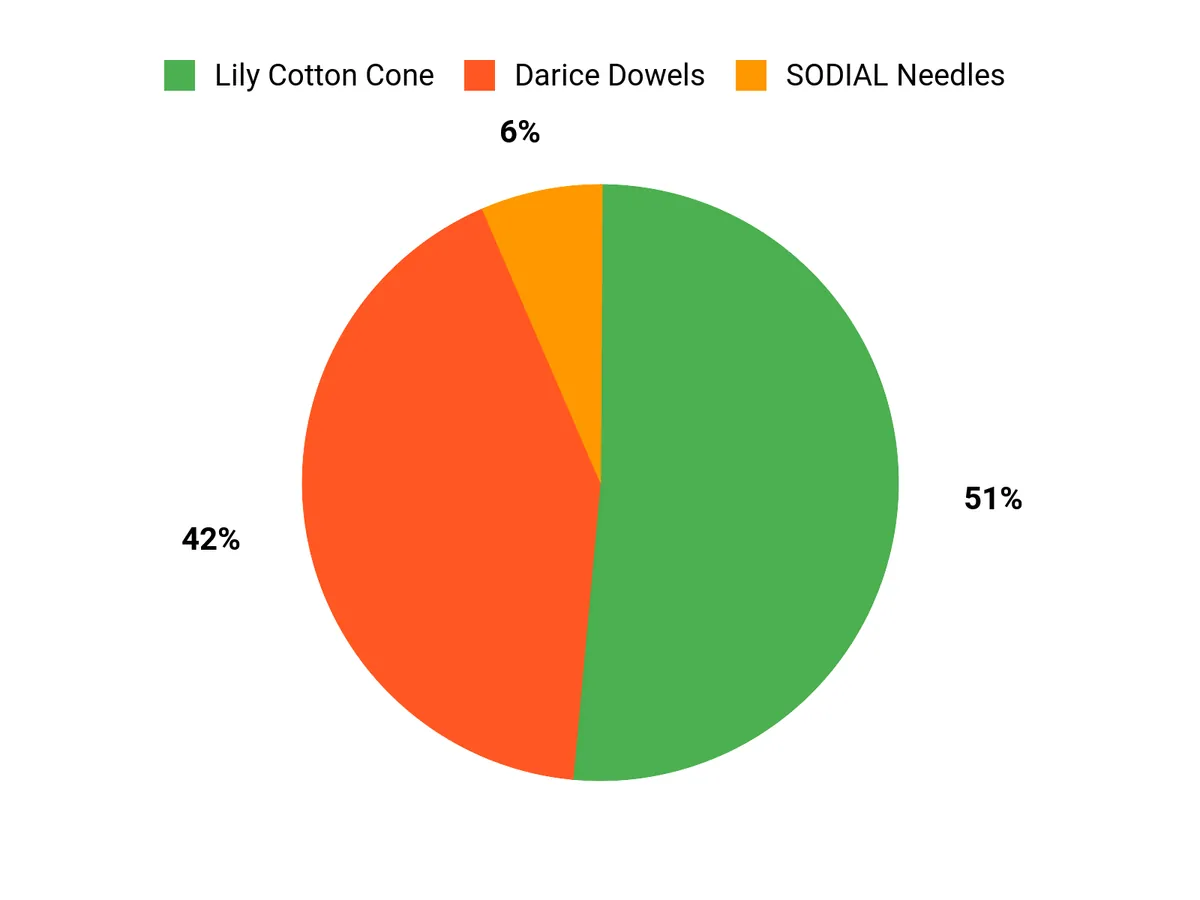
The three featured products solve different beginner needs rather than directly competing with one another. The Lily cone is most useful when you want a visible, washable medium-weight cotton. The SODIAL needles are inexpensive tools for small-frame weaving and finishing. The Darice dowels are optional DIY components for light craft applications.
The chart below comes from the original article and should be interpreted as an editorial comparison of those use cases, not as a current consumer survey.
Product Comparison
| Lily Sugar’n Cream Cotton Cone Yarn | SODIAL(R) 18 pcs Plastic Hand Sewing Yarn Darning Tapestry Needles | Dowel Rod – Wood – 1/4 x 12 inches – 10 pieces | |
|---|---|---|---|
|
|
|
|
|
| Rating | 4.7/5 in supplied article snapshot; live rating may differ | 4.7/5 in supplied article snapshot; live rating may differ | 4.7/5 in supplied article snapshot; legacy listing and live rating may differ |
| Material | 100% USA-grown cotton according to Yarnspirations | Plastic | Hardwood |
| Count or Length | 1 cone, 400 g/14 oz; current Yarnspirations listing: 616 m/674 yd. Some older retailer listings show 645 m/706 yd. | 18 pieces; marketplace listings describe 9 pieces at 9.3 cm and 9 pieces at 7 cm | 10 pieces; 1/4-inch diameter × 12-inch length |
| Use Cases |
|
|
|
| Shop Now | Shop Now | Shop Now |
Wrapping Up
Start with the few tools that control the actual weaving process: a suitable loom, dependable warp, appropriate weft, a needle or shuttle, a beater, scissors, and a measuring tool. Once those basics are covered, optional pieces such as dowels and additional finishing tools make more sense.
The Lily Sugar’n Cream Cone is a useful medium-weight cotton for many practice and household projects, provided it matches your loom and desired sett. The SODIAL needle set offers an inexpensive way to handle small-frame weaving and finishing. The Darice dowels can still be useful as light DIY craft components, but the exact listing is legacy stock, so an equivalent smooth hardwood dowel is a sensible substitute.
Your first project does not need elaborate equipment. A small loom, clear plain weave, even warp tension, relaxed edges, and consistent beating will teach you more than buying a large collection of tools before you know which type of weaving you enjoy.
Sources
- Yarnspirations — Lily Sugar’n Cream Cone — current fiber content, weight, yardage, gauge classification, and care instructions.
- Craft Yarn Council — Standard Yarn Weight System — standardized #4 Medium/Worsted classification.
- Schacht Spindle Company — Beginning Rigid Heddle Weaving — example beginner equipment list and basic techniques.
- Ashford Wheels & Looms — Rigid Heddle Tutorials — manufacturer setup and weaving resources.
- Federal Trade Commission — Endorsement Guides FAQ — guidance on clear and conspicuous affiliate disclosures.
- U.S. SEC — Michaels Companies filing — documentation of the plan to close Darice wholesale operations in 2020.
This roundup is reader-supported. We may earn a referral commission on qualifying purchases made through retailer links in this article. Product prices, availability, ratings, and review counts may change after publication.