Heavy furniture can dent, scratch, or gouge hardwood when a large load rests on a small contact area or when a leg moves across the finish. The best protection is not simply adding any pad you can find. You need a clean, properly sized protector that spreads the load, stays securely in place, and is compatible with your specific hardwood finish.
Quick Answer
The best way to protect hardwood floors from heavy furniture is to spread each load over a wider, clean contact area and prevent movement. Use properly sized felt pads or furniture cups, choose floor-safe rug pads, keep grit away, and lift furniture instead of dragging it. Check protectors regularly for wear or shifting.
Key Takeaways
- Use non-staining felt pads, furniture cups, or other hardwood-safe protectors that fully cover each furniture contact point.
- For very heavy furniture, wider protectors matter because they spread the load over a larger area and reduce concentrated pressure.
- Use only rug pads and backing materials approved for your hardwood finish; some rubber or latex products can cause marks or discoloration.
- Lift furniture when possible, and use helpers plus protected moving paths for pieces that are too heavy to lift safely.
- Keep grit away, inspect pads for wear, and use finish-compatible repair products rather than vinegar, oil, steam, or an iron.
At a Glance
| Time Required | About 10–30 minutes for a typical room, plus extra time for very heavy furniture |
| Difficulty | Easy for normal furniture; get help with large or heavy pieces |
| Tools Needed | Measuring tape, hardwood-safe felt pads or furniture cups, cleaning cloth, optional rug pad, and plywood or hardboard for difficult moves |
| Cost | Usually low for basic protectors; larger rug pads, caster cups, and moving equipment cost more |
Why Heavy Furniture Dents Hardwood Floors
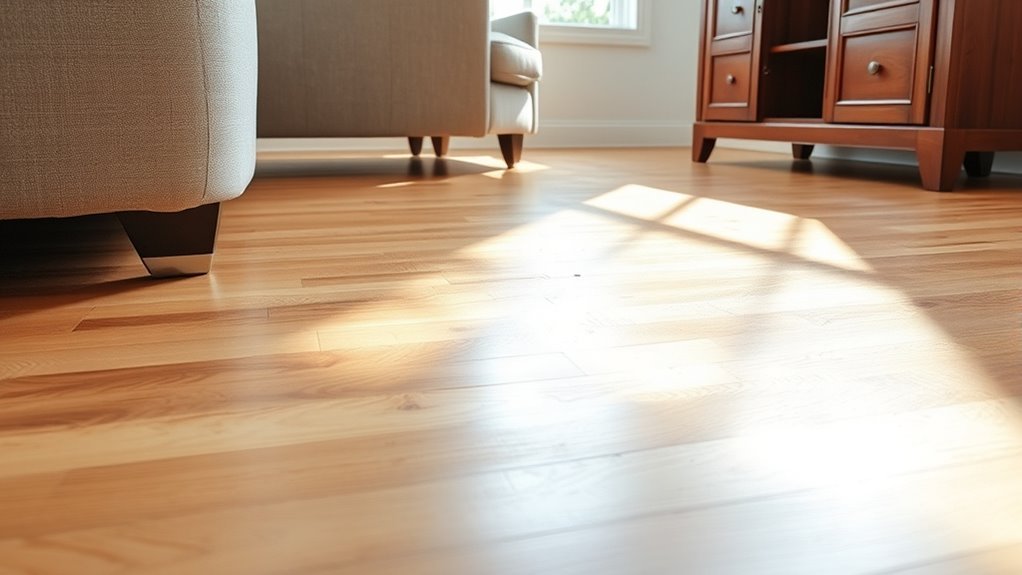
Heavy furniture dents hardwood floors when its load is concentrated on a small area. A narrow sofa leg, cabinet foot, bedpost, or caster places more pressure on the wood than a wider contact point carrying the same load.
The National Wood Flooring Association explains that the Janka hardness scale gives an indication of how well a solid wood species can resist dents and dings. Lower-hardness woods are generally more susceptible to indentation than harder species, although construction, finish, load, and real-world use also matter.
There is no reliable universal furniture-weight threshold at which hardwood will dent. A relatively modest load on a very small foot may create more concentrated pressure than a heavier piece supported by a broad base. That is why protector width and contact area are as important as furniture weight.
Movement adds a second problem. Dragging a loaded leg across the floor can grind dirt into the finish and create scratches or gouges in addition to pressure marks.
For dent prevention, spread the load. For scratch prevention, stop hard contact, grit, and dragging.
Choose Felt Or Rubber Pads
For most hardwood floors, non-staining felt pads are a dependable starting point. Felt creates a soft barrier between the furniture and finish, while a wide protector can also increase the effective contact area under the leg.
Bona’s furniture-protection guidance lists felt and rubber among materials that can work on hard floors, but it also warns that rubber may leave scuff marks. Floor finishes differ, so do not assume every rubber compound is safe for every hardwood floor.
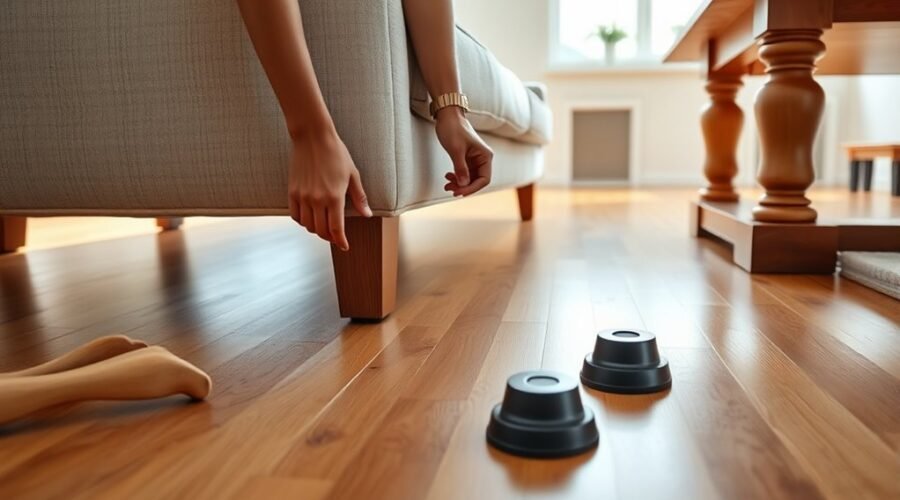
For a heavy sofa, cabinet, bed, safe, or similar stationary item, consider a wider furniture cup or coaster rather than relying only on a small adhesive dot. A wider protector distributes the load more effectively.
| Protector | Best Use | Main Caution |
|---|---|---|
| Non-staining felt pad | Chairs, tables, sofas, beds, cabinets | Keep it clean and replace it when compressed or loose |
| Furniture cup or coaster | Heavy stationary furniture and concentrated leg loads | Choose a wide, stable, hardwood-safe design |
| Rubber/grip protector | Items that need extra resistance to sliding | Confirm compatibility because some rubber can scuff or react with finishes |
| Furniture slider | Temporary moving or repositioning | Use a version specifically designed for hard floors and remove it after the move unless the manufacturer says it is suitable for permanent use |
Pro Tip: When two protectors are equally floor-safe, the wider one generally does a better job of spreading a heavy load than a narrow one.
Fit Pads To Each Furniture Leg
Fit each protector to the furniture’s actual contact point. Measure the bottom of the leg or foot before choosing the pad, cup, or coaster.
A protector that is too small leaves part of the leg unsupported and keeps pressure concentrated in a small area. A protector that is too large can catch, tilt, or shift if it extends awkwardly beyond the leg.
For heavy furniture, do not focus on a universal pad-thickness number. Instead, look for a durable protector designed for hard flooring and suitable for the load. Thick felt may work well under heavy pieces, but contact area, material quality, and stability matter just as much.
Irregular or curved legs may need trimmed felt, shaped protectors, or a properly sized furniture cup. Once installed, every foot should sit level so the furniture does not rock and concentrate additional force on one leg.
Install Pads For A Secure Hold
A furniture pad only works if it remains attached and clean. Before installing an adhesive pad, remove dust, waxy residue, and loose debris from the bottom of the furniture leg, then let the surface dry completely.
Secure each protector so the furniture remains level and the pad cannot curl, slide, or expose a hard edge against the floor.
Press adhesive pads firmly across their full surface. If a chair moves frequently, inspect the adhesive more often because repeated side loading can loosen an edge.
Do not stack random small pads to create extra thickness. Stacked pads can become unstable and may allow the furniture to tilt. Use one properly sized protector designed for the application instead.
After installation, set the furniture down gently and check each contact point. Make sure no nail, staple, screw, hard plastic edge, or bare furniture leg can touch the hardwood.
Add Rugs And Rug Pads For Extra Protection
Area rugs can protect hardwood from grit, repeated foot traffic, and incidental surface wear around furniture. However, a rug by itself should not be treated as a substitute for proper protectors under concentrated furniture legs.
The rug pad also needs to be compatible with the flooring. Some solid rubber, latex, foam, PVC, or other backing materials may discolor, mark, or trap moisture against certain finishes.
Warning: Do not assume that any “non-slip” rug pad is hardwood-safe. Check the flooring manufacturer’s care or warranty instructions and choose a breathable, non-staining pad that is approved for your floor finish.
Choose Rug Pad Type
Choose a rug pad labeled for use on finished hardwood and verify that its material is acceptable to your flooring manufacturer. Bruce’s hardwood-care guidance, for example, recommends breathable, non-staining rugs and mats and cautions against solid rubber or latex backing on its hardwood products.
Felt rug pads provide cushioning and are often useful under larger area rugs. Combination grip pads may help reduce movement, but their gripping material still needs to be compatible with the finish beneath it.
Size the rug pad so it stays under the rug instead of protruding at the edges. Periodically lift the rug to check for trapped debris, moisture, residue, or changes in the finish.
Prevent Slipping And Shifting
A shifting rug can grind grit against the floor. Use a compatible rug pad to keep the rug stable, then continue using suitable protectors under the actual furniture contact points.
| Benefit | Effect |
|---|---|
| Grip | Reduces rug movement when the backing is floor-safe |
| Stability | Helps keep rug edges and furniture placement aligned |
| Surface protection | Reduces direct contact with grit and traffic |
| Cushioning | Adds a secondary protective layer beneath the rug |
| Maintenance | Allows the rug to be lifted so debris and moisture can be checked |
Add Cushion Under Furniture
An area rug and compatible rug pad can add cushioning around a sofa, bed, dining table, or other large piece. For concentrated loads, keep appropriately sized furniture pads or cups under the individual feet as well.
If chairs move frequently across the rug and onto exposed hardwood, fit the chair legs with clean felt protectors so a hard edge does not reach the floor.
Vacuum or clean beneath rugs periodically. Fine grit trapped between a rug system and hardwood can act like an abrasive when the rug shifts.
Lift Furniture Instead Of Dragging It
Lift furniture instead of dragging it whenever you can. Both Shaw and Bruce advise protecting hardwood from furniture movement and avoiding dragging heavy pieces across the surface.
Even a short drag can turn grit beneath a furniture leg into an abrasive that scratches or gouges the finish.
Before moving a piece, empty drawers or shelves when practical, clear the route, and remove loose dirt from the floor. Small stones or grit under a leg, slider, or wheel can cause damage even when the moving tool itself is floor-safe.
For very heavy furniture or appliances, Bruce recommends protecting the travel path with hardboard or plywood rather than rolling or sliding the load directly on bare hardwood. A floor-safe moving slider can also be useful when its manufacturer specifically rates it for hard surfaces.
Warning: Do not try to lift a very heavy sofa, cabinet, appliance, safe, or piano by yourself. Use enough helpers or suitable moving equipment so you can control the load without dropping it, injuring yourself, or forcing a leg into the floor.
Stop Grit From Scratching Floors
Furniture protectors cannot do their job well if sand, dirt, or small stones collect beneath them. Grit can become trapped under felt, rug pads, shoes, and furniture feet and then grind against the finish when anything moves.
The NWFA recommends routine sweeping, dust mopping, or vacuuming with a bare-floor setting to remove abrasive dirt and debris.
| Control | Action | Effect |
|---|---|---|
| Furniture pads | Keep them clean and securely attached | Reduces hard contact and trapped grit |
| Entry mats | Trap dirt before it reaches hardwood | Reduces abrasive particles indoors |
| Shoes-off habit | Leave outdoor footwear near the entrance | Limits stones and grit carried in tread |
| Routine cleaning | Sweep, dust mop, or vacuum appropriately | Removes debris before furniture can grind over it |
Pay extra attention to dining chairs, desk chairs, stools, and other furniture that moves often. Their pads collect debris faster than the protectors under stationary cabinets or beds.
Replace Worn Furniture Pads Before They Fail
Inspect furniture protectors periodically and replace them when they become thin, hard, torn, dirty, curled, cracked, or loose. Frequently moved dining chairs usually need more attention than furniture that stays in one place.
Replace a protector before the furniture leg, fastener, or hard backing underneath it reaches the hardwood.
Compressed felt is not automatically useless, but it should still be soft, clean, securely attached, and thick enough to keep the furniture hardware away from the floor. If grit has become embedded in the felt, replace the pad rather than continuing to slide it across the finish.
Also inspect the hardwood beneath very heavy stationary furniture occasionally when it can be done safely. Catching a shifted protector or developing pressure mark early is easier than dealing with a deep dent later.
Protect Casters And Rolling Furniture
Casters create different stresses from normal furniture legs because the load is concentrated on a small rolling contact area. Office chairs, serving carts, pianos, movable islands, and other wheeled items therefore need special attention.
Use wheels, caster cups, or protective mats that the flooring manufacturer approves for hardwood. For stationary pianos or similarly heavy wheeled furniture, a wide caster cup can increase the contact area and keep a narrow wheel from concentrating the entire load on one spot.
If an item rolls regularly, clean the wheels and the floor beneath them. A tiny stone embedded in a wheel can scratch a long track through the finish.
Hard metal or narrow plastic casters should not roll directly across hardwood unless the flooring manufacturer specifically allows them. When moving very heavy rolling furniture, protect the path with suitable hardboard or plywood where practical.
Avoid Common Furniture-Protection Mistakes
- Do not use a tiny pad on a wide, heavily loaded foot. Use full coverage and, when appropriate, a wider cup or protector to distribute pressure.
- Do not leave grit under felt pads. Felt that collects abrasive debris can scratch when the furniture moves.
- Do not assume all rubber is hardwood-safe. Some compounds can scuff, stain, or react with certain finishes.
- Do not rely on a rug alone for a concentrated heavy leg. Continue using a suitable protector at the contact point.
- Do not drag furniture because it has felt pads. Felt reduces direct abrasion but does not make uncontrolled dragging risk-free.
- Do not leave moving sliders under furniture permanently unless their manufacturer approves that use.
- Do not use steam, an iron, vinegar, or oil-based DIY treatments as a universal hardwood repair. Finish systems and flooring constructions react differently.
Note: Your flooring manufacturer’s care and warranty instructions take priority over general advice. A protector that is safe on one finish may not be approved for another.
Repair Scratches And Dents In Hardwood
Choose a repair method based on the type and depth of damage rather than treating every scratch or dent the same way.
| Issue | Safer Action |
|---|---|
| Scuff or very light surface mark | Clean with a product approved for the floor finish and reassess after drying |
| Minor surface scratch | Use a manufacturer-approved touch-up marker, stain pen, or repair kit when appropriate |
| Deep scratch or gouge | Have the damage evaluated for localized repair, recoating, sanding, or board repair |
| Deep dent or indentation | Consult the flooring manufacturer or qualified wood-floor professional before attempting moisture or heat-based treatment |
| Large damaged area | Professional resanding, refinishing, or replacement may be needed |
The NWFA notes that touch-up markers, stain pens, and furniture-repair kits can help with minor surface scratches. Bigger repairs may require professional attention.
For deep dents and gouges, the NWFA’s technical guidance says repair can involve isolated repairs, resanding, or replacement of the affected area. A complete sand-and-refinish may be appropriate when damage reaches deeply into the wood.
Avoid treating hardwood with a damp cloth and hot iron unless the flooring manufacturer specifically instructs you to do so. Heat and excess moisture can harm many wood-floor and finish systems. Also avoid general vinegar-and-oil remedies; major floor-care manufacturers warn that acidic vinegar and unsuitable oil-based products can damage or dull finishes.
Sources
- National Wood Flooring Association — Durability — explains Janka hardness and resistance to dents and dings.
- National Wood Flooring Association — Problem Prevention — covers furniture protectors and minor scratch repair.
- Bona — Protect Floors From Furniture — covers felt, rubber, furniture traffic, fit, and protector maintenance.
- Bruce Flooring — Hardwood Flooring FAQs — covers dents, moving furniture, rug backing, scratches, moisture, and steam.
- National Wood Flooring Association — Refinishing Your Floors — explains when deep scratches and dents may require professional refinishing.
Frequently Asked Questions
What to Put on Furniture Legs to Protect Hardwood Floors?
Use clean, non-staining felt pads, hardwood-safe furniture cups, or another protector approved for your floor finish. Heavy furniture benefits from a wide contact area that spreads its load. Rubber grip pads may work on some floors, but check compatibility first because some rubber compounds can scuff or react with finishes.
How Do You Protect Hardwood Floors From Heavy Furniture?
Protect hardwood floors from heavy furniture by covering every contact point, spreading concentrated loads over wider protectors, keeping grit away, and preventing unwanted movement. Use compatible rugs or rug pads as a secondary layer, lift furniture instead of dragging it, and inspect pads periodically for compression, dirt, or adhesive failure.
How Can I Protect My Floor From Sofa Legs?
Use properly sized felt pads or wide furniture cups under every sofa leg. Wider cups can be useful when a heavy sofa rests on narrow feet. Keep the protectors clean, make sure the sofa sits level, and lift the sofa with help rather than dragging it when you need to reposition it.
What Are Some Good Chair Leg Protectors for Wooden Floors?
Non-staining felt pads are a common choice for dining and occasional chairs because they create a soft barrier against the finish. Match the protector to the leg’s size and shape, keep grit out of the felt, and replace the pad when it becomes loose, hard, dirty, or worn through.
Are Rubber Furniture Pads Safe for Hardwood Floors?
Some rubber furniture protectors are suitable for hardwood, but not every rubber compound is compatible with every finish. Rubber can also leave scuff marks. Check the flooring manufacturer’s care instructions and use products specifically labeled as non-staining and safe for your floor type.
What Is the Safest Way to Move Heavy Furniture Across Hardwood?
Lift the furniture when it is safe to do so. For very heavy pieces, use helpers or suitable moving equipment and protect the route with plywood or hardboard when needed. If you use furniture sliders, choose ones specifically designed for hard flooring, clean the floor first, and move slowly without letting grit become trapped underneath.
Conclusion
Protecting hardwood floors from heavy furniture comes down to three habits: spread concentrated loads, prevent abrasive movement, and keep every contact point clean. Use properly sized felt pads or furniture cups, choose rug materials that are compatible with your finish, and lift furniture instead of dragging it. Inspect protectors periodically so a worn pad, trapped piece of grit, or exposed furniture leg does not become an avoidable scratch or dent.