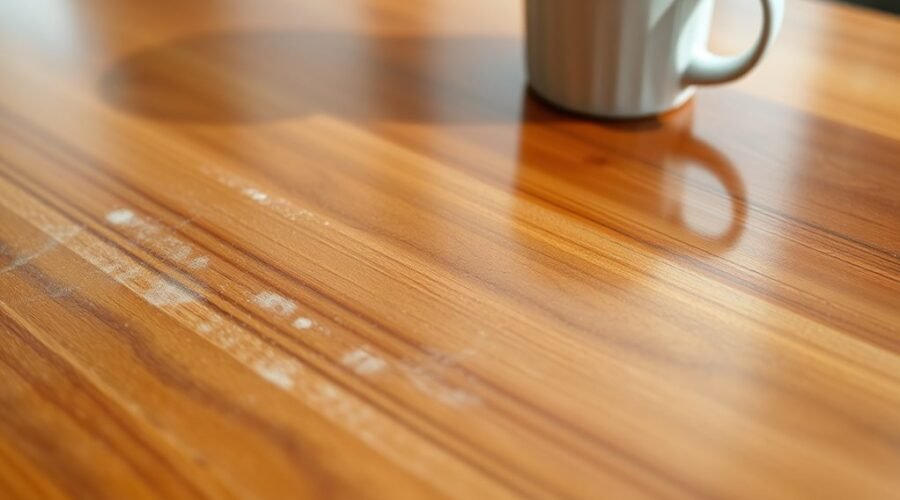
Wood furniture develops white marks and heat rings when hot items trap moisture beneath the finish. Heat opens pores in the wood surface, and cooling leaves vapor or condensation in the finish layer, creating a cloudy, pale stain. Lacquer and shellac are especially prone to this damage. White rings are usually surface-level and often reversible, while dark burn marks signal deeper fiber injury. Proper care and quick treatment can prevent lasting damage and expose more effective repair options.
What Causes Heat Stains on Wood?
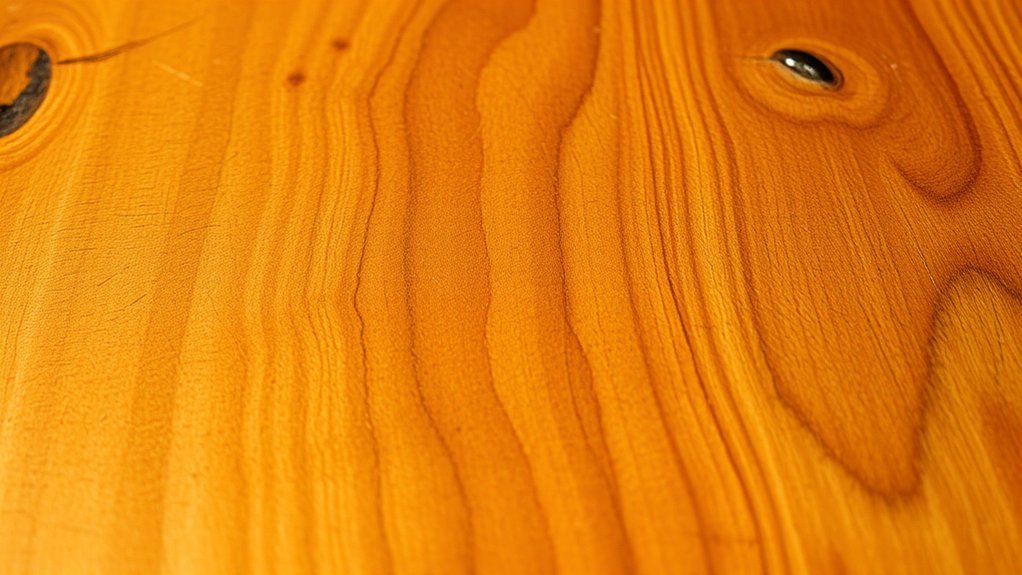
Heat stains on wood occur when hot objects, such as dishes or mugs, transfer heat that drives moisture beneath the finish, producing white or cloudy marks on the surface.
As wood pores expand under heat, steam and trapped moisture penetrate the coating and scatter light, creating heat stains and white marks on wood surfaces.
If exposure continues, the finish may fail and the substrate may darken, indicating more severe scorching.
The mechanism is physical, not mystical: temperature, humidity, and contact time combine to displace moisture into vulnerable layers.
Effective prevention depends on interrupting that transfer with coasters, trivets, and protective finishes.
Regular maintenance preserves control over wood surfaces and reduces the likelihood that transient heat becomes lasting damage.
Where white marks appear, rapid drying and appropriate treatment may limit permanence, but neglected stains can become entrenched.
Clean, protected furniture remains freer from avoidable wear and retains its intended appearance.
Why Do Heat Rings Form on Wood Tables?
When a hot plate or mug rests on a wood table, steam and trapped moisture can migrate beneath the finish and create a cloudy ring as the surface cools. The heat expands the wood’s pores, opening a path for moisture to enter the finish layer.
Heat opens wood pores, letting trapped moisture slip beneath the finish and leave a cloudy ring.
As the table returns to room temperature, that moisture remains suspended, producing white stains that mark the outline of the object. On wood furniture, these rings indicate a surface-level reaction rather than immediate structural failure, but repeated exposure can deepen the damage.
Prompt treatment improves removal prospects because older marks tend to become more embedded in the wood. Practical prevention is straightforward: use coasters, trivets, or insulated mats under hot items, and avoid setting heated cookware directly on finished surfaces.
Understanding this mechanism helps owners protect wood furniture with minimal effort and prevent recurring heat rings, preserving both appearance and long-term durability while supporting careful, independent care.
White Heat Stains vs Dark Burn Marks
White moisture rings usually reflect trapped steam beneath the finish, often from mugs or boxes, and they are generally less severe than dark scorch marks.
Dark burn marks indicate direct fiber damage from extreme heat, such as a pan or iron, and they often leave a permanent change in the wood surface.
The repair approach depends on this distinction, since white stains may respond to simple treatment while dark marks often require sanding and refinishing.
White Moisture Rings
Cloudy white moisture rings form when warmth from mugs, dishes, or other hot items briefly opens the finish and wood pores, allowing moisture to become trapped beneath the surface coating. On wood furniture, these white marks usually indicate heat stains rather than structural loss, so the finish often remains intact.
| Indicator | Meaning |
|---|---|
| Cloudy white ring | trapped moisture |
| Light surface haze | heat stains |
| Finish remains clear | limited penetration |
| Often removable | less severe damage |
| Prompt treatment | protects wood furniture |
These marks are generally easier to correct than dark burn marks because the wood fibers are not scorched. Accurate identification supports practical, independent action: remove heat sources, dry the area, and choose a method matched to the stain depth.
Dark Scorch Marks
Dark scorch marks indicate a more serious form of damage than white heat stains, because direct contact with an extremely hot object can burn the wood fibers and leave a charred or discolored surface.
These dark scorch marks usually show where direct heat overcame the finish and reached the substrate. By contrast, white heat stains form as cloudy spots when moisture becomes trapped in the finish, allowing moisture to penetrate without immediate fiber damage.
The visual difference is practical: white heat stains are pale and hazy, while dark burn marks appear brown, black, or unevenly charred.
Recognizing this distinction helps homeowners choose appropriate, freedom-supporting care practices and avoid treating severe damage as a minor blemish.
It also clarifies prevention: use insulation, limit heat exposure, and keep hot items off finished wood.
Damage Repair Difficulty
Repair difficulty differs sharply between white heat stains and dark burn marks.
White stains usually signal moisture trapped beneath the wood finish, creating cloudy heat stains that often respond to simple repair methods. Gentle reheating, careful drying, or light polishing can restore the surface without major intervention, supporting practical furniture care and preserving freedom from costly service.
Dark burn marks, however, indicate scorched wood fibers from pans, irons, or similar objects. These marks penetrate deeper, so sanding, spot refinishing, or full refinishing may be needed. In severe cases, professional assistance is more effective.
Recognizing severity early helps select the correct response, reduces unnecessary damage, and protects the furniture’s aesthetic appeal while keeping restoration work efficient and controlled.
How Heat Traps Moisture in Wood Finish
Heat from hot objects causes the wood pores to expand, which allows moisture to move into the finish.
As the furniture cools, that moisture can become trapped beneath the surface and form white marks or heat rings.
These cloud-like stains usually indicate damage to the finish, not the wood itself.
Heat Opens Wood Pores
When a hot object rests on a wooden surface, the temperature change can cause the wood’s pores to expand and temporarily open, making it easier for moisture to move into the finish.
Heat also produces steam at the contact point, increasing the amount of moisture available at the surface. As the wood pores open, the finish can admit this vapor, and the result may be white marks or faint heat rings that appear cloudy rather than dark.
In technical terms, the surface has been altered by heat, not abrasion. Effective prevention depends on limiting direct contact with hot items and preserving finish integrity.
This practical restraint reduces pore expansion, keeps moisture from becoming trapped, and helps wood furniture remain clear, stable, and free from visible stains.
Moisture Gets Trapped
As the surface cools after contact with a hot object, steam and residual moisture can become trapped within the finish and upper wood fibers, leaving a pale, cloudy mark behind. Heat from mugs or hot plates drives moisture deeper into the wood, then the cooling phase seals it in. The result is white marks, heat stains, or rings that interrupt the finish and signal hidden vapor movement.
- Pores expand under heat, then close as the surface cools.
- Short exposure may cause light staining; longer exposure deepens damage.
- Newer stains are often easier to remove than older ones.
Understanding how moisture is trapped helps guide prevention, repair, and the practical release of furniture from avoidable damage.
Which Wood Finishes Show Heat Marks Most?
Lacquer and shellac finishes tend to show heat marks most readily, because both are vulnerable to moisture and thermal stress that can turn the surface cloudy or white.
On lacquer finishes, the thinner protective layer permits faster moisture penetration, so heat marks appear with little warning. Shellac finishes behave similarly, since heat and humidity can disrupt the film and leave a pale bloom.
Lacquer and shellac can show heat marks quickly, as moisture and humidity disrupt their thin protective films.
Oil-based finishes are generally more resilient, yet extreme temperature exposure can still produce visible distortion when protection is inadequate.
Water-based finishes usually resist heat rings better than traditional coatings, but prolonged contact with hot objects can still cause damage.
High-quality varnishes offer stronger defense, while lower-quality varnishes may weaken over time and lose that advantage.
For users seeking durable, low-maintenance furniture, finish selection matters as much as placement, because thermal contact and trapped moisture remain the main pathways to visible marking.
How to Remove White Heat Stains
White heat stains on wood usually form when hot objects trap moisture beneath the finish, creating a cloudy or pale mark that sits in the surface layer rather than in the wood itself.
To remove heat stains, the goal is to draw out moisture without abrading the finish. A hair dryer on low heat, or an iron used briefly through a cloth, can release trapped vapor and reduce the white ring.
- Buff the spot with a paste of equal parts non-gel toothpaste and baking soda.
- Spread petroleum jelly or mayonnaise over the area and leave it for several hours.
- Wipe clean, then repeat only as needed.
These methods are practical, controlled, and suited to preserving the finish.
Regular use of coasters and periodic conditioning helps prevent future heat stains and keeps the surface resilient, allowing the furniture to remain usable, clean, and visually unburdened.
How to Fix Dark Burn Marks on Wood
Dark burn marks on wood usually indicate scorched fibers from direct heat, and the damage is often permanent unless the affected surface is treated promptly.
The repair begins by isolating the area with painter’s tape, which protects surrounding finish on a wood table and keeps sanding controlled. Medium grit sandpaper removes the blackened layer; finer grit then evens the shift.
Sanding must follow the grain to reduce scratches and preserve the board’s structure. If the discoloration runs deep, repeated passes may be necessary, but overworking the spot can enlarge the defect.
After stripping the burn, the surface should be cleaned, then stained to blend with aged wood; matching old tones can be difficult and may require professional guidance.
Finally, apply a clear, oil-based polyurethane finish in thin coats, allowing full drying between applications. This method also helps distinguish burn damage from white marks or heat stains, which require different treatment.
Best Products for Heat Stain Removal
For heat stains, gentle household cleaners such as mayonnaise, petroleum jelly, or a non-gel toothpaste and baking soda paste are often used to lift trapped moisture while minimizing finish damage.
A low-heat hair dryer may also be applied to fresh marks to accelerate moisture release without overheating the surface.
For wood-safe polish options, salt with olive oil can support stain reduction, and clear oil-based polyurethane may be used afterward to add a protective topcoat.
Gentle Household Cleaners
Gentle household cleaners can often reduce white heat stains on wood by lifting trapped moisture without compromising the finish. Practical options rely on mild chemistry and controlled contact, giving users a clear, self-directed path to restore surfaces.
- Non-gel toothpaste mixed with baking soda can abrade and lift white marks.
- Mayonnaise, petroleum jelly, or vinegar with olive oil may help release moisture and ease heat stains.
- Salt with olive oil or a low-setting hair dryer can absorb or evaporate trapped moisture.
Each method should be applied sparingly, then wiped clean after short intervals. The objective is not aggressive stripping but careful correction of the finish.
Used correctly, these gentle cleaners support a liberated, low-risk approach to wood care while preserving appearance.
Wood-Safe Polish Options
When mild cleaners and moisture-removal tricks are not enough, wood-safe polishes offer a more controlled way to reduce white heat marks while conditioning the finish.
These wood-safe polishes typically use natural oils and waxes to restore moisture, soften dullness, and limit further stress on the surface. Products labeled non-toxic and intended for furniture care are preferred for routine use, since they are safer on finished wood and reduce unnecessary chemical exposure.
Howard Feed-N-Wax and Minwax Furniture Polish are common options because they can mask pale stains while improving sheen.
Application should be thin and even, followed by buffing with a soft cloth to avoid trapping moisture. With regular use, they form a protective barrier against heat and humidity, helping furniture keep its finish and independence from preventable damage.
How to Prevent Heat Rings and Spots
Heat rings and spots are best prevented by limiting direct heat and moisture contact with the wood surface. Use coasters, trivets, or placemats under mugs, pans, and serving dishes to create a simple barrier that can prevent damage. A heat-resistant varnish adds another defense by reducing absorption and helping the finish endure repeated exposure.
Prevent heat rings by using coasters, trivets, and a heat-resistant varnish to shield wood surfaces.
- Cover dining surfaces with tablecloths or runners during hot meals.
- Wipe spills and moisture at once to keep liquid from seeping into the grain.
- Condition the furniture every six months with natural oils to sustain the finish.
This routine preserves control over the surface and reduces dependence on reactive repair. Practical protection works best when applied consistently, not after marks appear.
When to Call a Furniture Pro
Persistent white marks or heat stains that remain after repeated DIY treatments indicate a need for professional evaluation.
A professional furniture restorer can determine whether the damage is limited to the surface or has reached deeper layers of wood. Deep scorches, swollen grain, and widespread discoloration often require repair methods beyond household products.
Specialized tools allow controlled removal of damaged material and careful restoration of the original finish without unnecessary abrasion. This is especially important for furniture with delicate veneers, marquetry, or intricate coatings, where aggressive attempts can worsen the damage.
Professional intervention also supports practical freedom by reducing guesswork and preserving usable pieces rather than forcing replacement.
When the extent of the stain is uncertain, seeking professional advice is the most efficient path. It protects the furniture, maintains appearance, and extends service life through precise, targeted repair.
Frequently Asked Questions
How to Get White Heat Rings off Wood Furniture?
White heat rings on wood furniture can be reduced with careful furniture care: apply gentle warmth from a hair dryer or iron held a few inches away, then wipe dry.
If marks remain, use mild cleaning methods such as a paste of non-gel toothpaste and baking soda, or leave mayonnaise or petroleum jelly overnight.
These heat damage remedies support wood preservation and surface protection, while regular oil conditioning helps prevent recurrence.
How Do You Get Rid of White Ring Marks on Wood?
White ring marks can be removed by applying gentle heat, though wood, in its stubborn wisdom, often needs a little persuasion. A hair dryer held a few inches away, or an iron used briefly with a cloth barrier, can lift trapped moisture.
For stain removal, a paste of non-gel toothpaste and baking soda may help. Petroleum jelly or mayonnaise supports deeper surface treatment, while furniture care and heat protection preserve wood maintenance.
How to Fix White Marks on Wood Furniture?
He would fix white marks on wood furniture by applying low heat from a hairdryer, then wiping the area dry.
If needed, he could use a paste of non-gel toothpaste and baking soda, or a thin layer of mayonnaise or petroleum jelly, left to sit before removal.
For deeper damage, fine steel wool with olive oil may help.
These furniture care cleaning methods support wood maintenance, protective finishes, and stain prevention.
How to Fix White Heat Stain on Wood Table?
A white heat stain on a wood table can often be lifted with low, careful heat: a hair dryer or warm iron held a few inches away, then paused, then checked.
For wood care, a mild paste of non-gel toothpaste and baking soda may help.
For stubborn marks, mayonnaise or petroleum jelly may draw moisture out. Test first.
Such cleaning techniques support furniture protection, heat resistance, and stain prevention.
Conclusion
Heat marks on wood furniture are often the visible aftermath of a quiet thermal exchange: hot dishes, cups, or appliances drive moisture and resins upward, leaving white halos or, in worse cases, dark scorch lines. Finishes act as thin armor, but some yield more readily than others. With prompt care, appropriate cleaners, and heat protection, most surfaces can recover. If discoloration has penetrated deeply, a furniture professional is the safest path to restore the grain’s original balance.