
You want a craft room that supports creativity instead of turning every project into a search for scissors, ribbon, paper, or charging cables. The most useful setup combines clear work zones, easy-to-reach storage, and flexible organizers that can change as your projects change. Start with the way you actually work, then choose storage that solves a specific problem rather than buying containers first.
Quick Answer
For a better-organized craft room, first reduce unused supplies, create zones around your normal workflow, and keep frequently used items visible and within easy reach. Use flexible straps for loose bundles and cords, shelf dividers for flat or folded materials, and over-door storage for lightweight supplies when shelves and floor space are limited.
Key Takeaways
- Organize around the projects you actually make, not just by what looks tidy.
- Declutter before buying more bins, shelves, or organizers.
- Measure shelf thickness, door clearance, and usable storage space before ordering.
- Keep everyday tools close to the work surface and move backups or seasonal supplies farther away.
- The three products below solve different problems: bundling, shelf separation, and vertical door storage.
Affiliate Disclosure: As an Amazon Associate I earn from qualifying purchases. I may earn a referral commission when you buy through qualifying links in this article, at no extra cost to you.
Top Picks
The scores below are editorial comparison scores for this roundup, not laboratory-test results. Each product is best suited to a different storage problem, so fit and intended use matter more than the numeric score alone.
|
Category |
Product |
Score |
|---|---|---|
|
🎯 Best for Cable Management |
96/100 |
|
|
🎨 Best Shelf Divider |
88/100 |
|
|
🚪 Best Over-Door Storage |
85/100 |
Selection Criteria
You need organization that fits how you work and how often you change projects. We prioritized durability for repetitive use, versatility across different types of supplies, and easy access so you can find what you need without digging through several containers.
Installation simplicity, visual order, available-space efficiency, fit, and value were also considered. A good organizer should solve a real storage problem without creating another one.
Plan Your Craft Room Organization Before Buying Storage
A storage product works best after you know what you are storing and where you normally use it. Start with one shelf, drawer, cabinet, or work surface instead of trying to redesign the whole room at once.
1. Sort And Reduce What You Own
Group similar supplies together and separate items you use from duplicates, dried-out materials, damaged tools, and supplies you no longer need. Buying more containers before this step can simply hide clutter inside new storage.
2. Build Zones Around Your Workflow
Keep everyday tools and current-project supplies closest to your main work area. Put secondary materials a little farther away and reserve high shelves, deep cabinets, or less accessible areas for seasonal supplies and backups.
3. Give Works In Progress A Home
Half-finished projects cause much of the clutter in active craft rooms. Assign each current project a bin, tray, folder, or portable kit that holds its materials, notes, and tools together so you can pause without covering the work surface.
4. Measure Before You Order
Measure usable shelf depth, shelf thickness, door thickness, door-to-frame clearance, and the space needed for a door to close normally. Product dimensions alone do not tell you whether an organizer will fit your furniture.
Pro Tip: Keep your most-used tools between about waist and eye level when your room layout allows it. Reserve harder-to-reach storage for backups and supplies you use less often.
5. Label For Fast Cleanup
Use labels that match the way you search for things. “Cutting,” “Adhesives,” “Current Project,” or “Red Fabric” can be more useful than a vague label such as “Miscellaneous.” A clear destination also makes putting supplies away easier.
6. Schedule A Short Reset
A five- to ten-minute weekly reset is often easier to maintain than waiting for the whole room to become cluttered. Return tools to their zones, empty scraps, regroup loose materials, and move completed projects out of active-project storage.
VELCRO Straps

You get a 45-foot by 3/4-inch roll of reusable self-gripping material that you cut to the length needed for each job. Wrap it around cords, fabric rolls, tubing, lightweight tool bundles, or project kits, then press it back onto itself.
The current product listing identifies the material as polyester. Velcro Companies describes its Heavy Duty ONE-WRAP® rolls as adjustable, reusable, cut-to-length, and suitable for indoor or outdoor use. The manufacturer also lists a 40-pound breaking-strength specification for the Heavy Duty Roll.
That makes the roll especially useful for cable management behind a craft desk, bundling ribbon or rolled materials, and keeping portable kits together when you move between workstations.
If you want a low-effort organizer that can be resized whenever your setup changes, this is one of the most flexible options in the group.
What People Say
The review snapshot used for this roundup is positive overall. Common themes include easy cutting, simple reuse, and usefulness for cords and general bundling. Because user reviews reflect individual applications, treat very heavy or safety-critical loads differently from ordinary craft-room organization.
Overall Sentiment: Positive

|
Pros |
Cons |
|---|---|
|
✅ Flexible length you can tailor for different bundles |
❌ Should not be treated as a substitute for safety-rated load restraints |
|
✅ Reusable and suited to repeated adjustments |
❌ The selected 45-foot variation is black, although other variations may differ |
|
✅ Simple to use with no mounting hardware |
❌ Requires scissors or another appropriate cutting tool |
|
✅ Useful for cables, rolls, kits, and many other bundles |
Long-Term Cost Benefits
Because you can open, resize, and reuse pieces, one roll can replace many disposable ties for routine organizing. The value is strongest when your storage layout changes often and you would otherwise keep buying different sizes of single-purpose ties.
Return on Investment
The practical return is convenience rather than a guaranteed dollar saving. Reusable straps can reduce the need for repeated disposable ties and make frequently moved kits easier to keep together.
Situational Benefits
|
Situation |
How It Helps |
|---|---|
|
Cable Management |
Keeps power cords and charging cables grouped behind desks and tool stations so individual leads are easier to identify. |
|
Moving Between Workstations |
Bundles lightweight tool sets or project materials so they are less likely to spread or tangle during a move. |
|
Seasonal or Long-Term Storage |
Secures rolls of ribbon, fabric, paper, or similar materials into neater bundles for shelving or bins. |
Versatility
The cut-to-length format lets you make short loops for small cords or longer pieces for larger bundles. The material wraps back onto itself, so it does not rely on an adhesive surface and can be readjusted when the contents change.
Aesthetic Appeal
The selected black variation is visually low-profile around dark equipment, cables, shelves, and storage bins. If appearance matters in an open craft room, keep the straps trimmed to a practical length so excess material does not create new visual clutter.
Practicality
No drilling or permanent hardware is needed. Keep the roll with scissors in a utility drawer and cut only the length required for the current job.
That makes it especially handy in rooms where project layouts change from week to week.
Customization Options
|
Feature |
Customization Level |
|---|---|
|
Length |
High |
|
Attachment Method |
Moderate (self-gripping wrap) |
|
Color |
Varies by available product variation |
Storage Efficiency
Bundling loose cords and rolled materials reduces tangles and helps related items stay together. It will not create new shelf volume, but it can make the storage you already have easier to use.
Key Benefits
- Reusable self-gripping design that can be opened and adjusted
- Cut-to-length format for small or large bundles
- Polyester construction with indoor and outdoor organizing uses
Amazon rating snapshot checked September 18, 2026: 4.7/5 from about 1,961 reviews. Ratings and review counts can change.
Aolloa Dividers
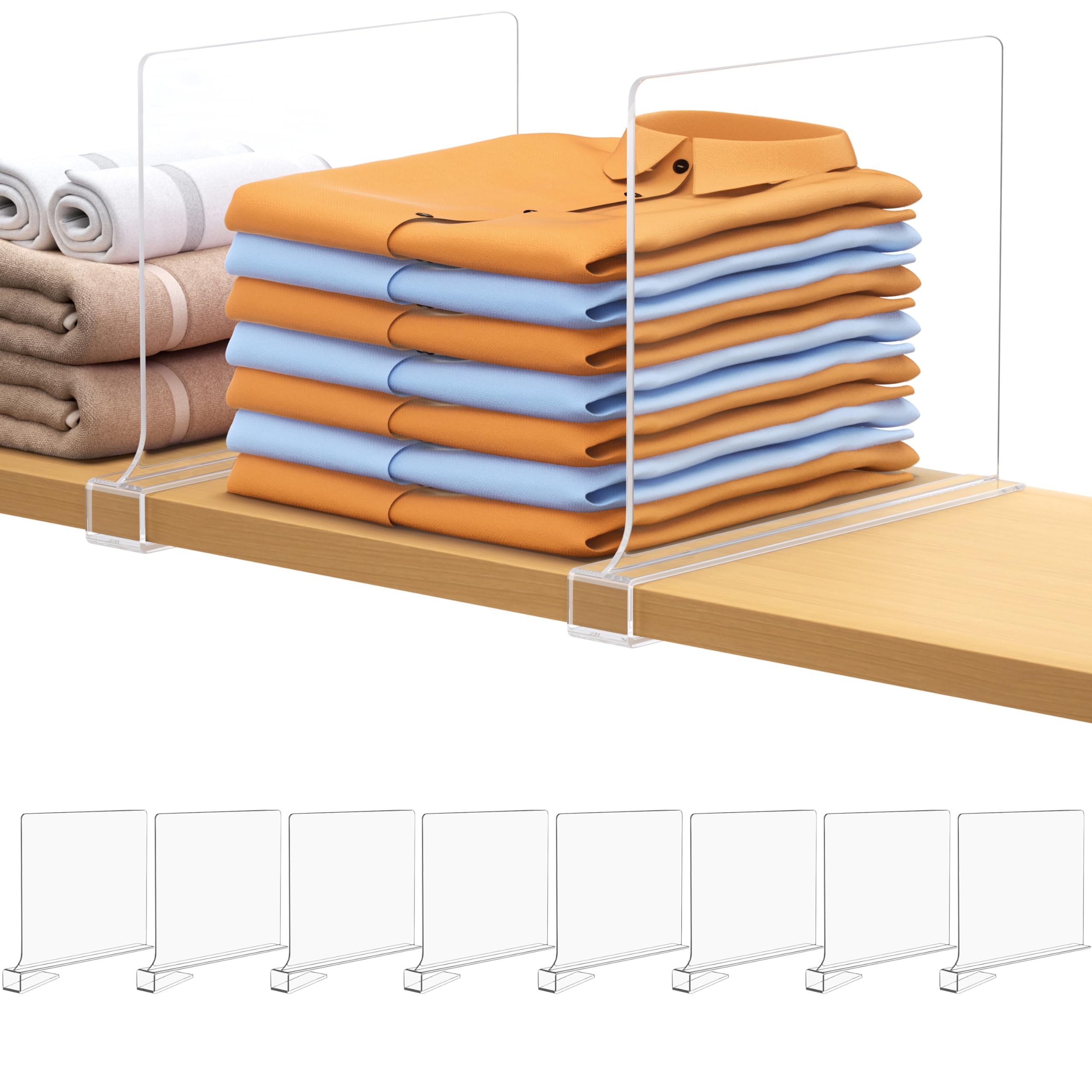
You can turn a wide shelf into defined vertical sections with these clear acrylic dividers. They slide onto a compatible shelf edge without drilling and help stop stacks of fabric, paper, folded linens, patterns, or project kits from leaning into one another.
The current listing describes each divider as about 11.7 inches long by 9.2 inches high and specifies compatibility with shelves roughly 0.4 to 0.95 inch thick. Measure the shelf itself rather than relying on the package dimensions shown elsewhere in the listing.
For daily use, vertical separation lets you pull one category from a shelf without disturbing everything beside it. The clear acrylic also keeps the organizer visually unobtrusive.
What People Say
The review snapshot used for this roundup is positive overall, with ease of installation, clear appearance, and support for upright stacks appearing as useful themes. Fit is the main consideration because clip-on shelf dividers depend on shelf thickness and access to the shelf edge.
Overall Sentiment: Positive

|
Pros |
Cons |
|---|---|
|
✅ Simple, tool-free clip-on setup |
❌ Requires a compatible shelf edge and thickness |
|
✅ Clear acrylic adds structure without much visual weight |
❌ Fit may be poor on shelves outside the listed 0.4–0.95 inch thickness range |
|
✅ Makes upright stacks easier to separate and view |
❌ Fixed divider dimensions may not suit every shelf depth or storage item |
|
✅ Works with materials ranging from folded fabric to paper and project folders |
Long-Term Cost Benefits
These dividers can reduce the need for a separate bin for every shelf category. Their main long-term value is keeping existing shelves functional as the type and amount of material stored on them changes.
Return on Investment
The benefit is strongest when leaning stacks repeatedly collapse or when pulling one item disrupts an entire shelf. Better separation can make supplies faster to retrieve and return without adding another piece of furniture.
Situational Benefits
|
Situation |
How It Helps |
|---|---|
|
Closet Shelves |
Separates folded fabric, clothes, towels, or other soft goods so one stack can be removed without collapsing its neighbor. |
|
Craft Shelving |
Creates dedicated vertical sections for paper, fabric, project folders, patterns, or lightweight kits. |
|
Kitchen or Pantry |
Can divide lightweight shelf contents where shelf construction and thickness fall within the product’s fit range. |
Versatility
These dividers can work in craft rooms, closets, offices, kitchens, and other shelf-based storage areas, but they are less universal than a freestanding bin. Check shelf thickness and edge access before buying.
Aesthetic Appeal
The transparent acrylic keeps attention on the stored materials instead of adding another strong color or pattern to the room. That makes it useful when open shelving is part of the room’s visual design.
Practicality
Installation is fast and the dividers can be repositioned as categories grow or shrink. That is helpful in a craft room where one month may involve sewing and the next may involve paper crafts.
Customization Options
|
Feature |
Customization Level |
|---|---|
|
Placement |
High |
|
Number of Dividers Used |
Moderate to high, depending on the purchased variation |
|
Material Finish |
Low |
Storage Efficiency
Dividing a long shelf into narrower upright sections can make materials easier to see, retrieve, and return. The dividers do not increase the physical volume of the shelf, but they can reduce wasted gaps caused by leaning stacks.
Key Benefits
- Tool-free clip-on installation on compatible shelves
- Clear acrylic design keeps open shelving visually light
- Helps keep stacks and flat materials separated by category
Amazon rating snapshot checked September 18, 2026: 4.5/5 from about 1,390 reviews. Ratings, review totals, and available pack variations can change.
Whitmor Organizer
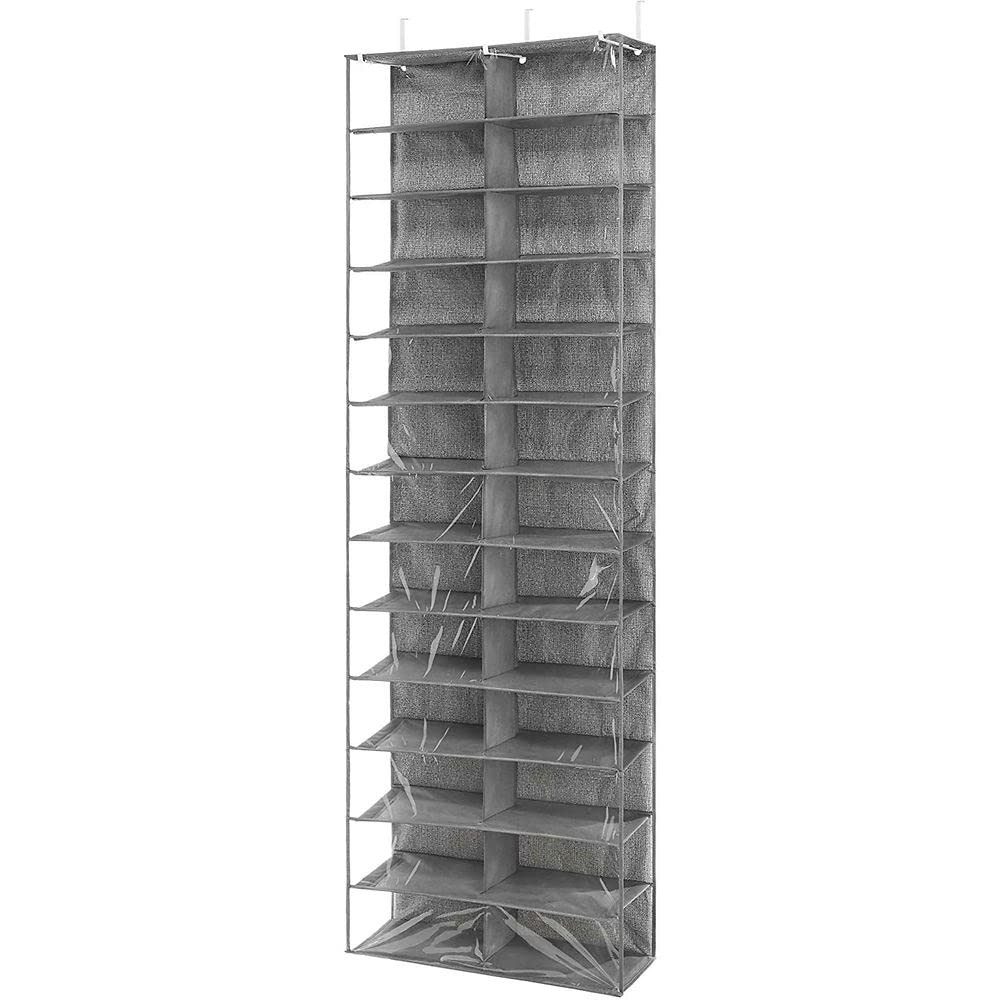
You can turn the back or front of a compatible interior door into vertical storage with this 26-section Whitmor organizer. The current listing gives assembled dimensions of about 63 inches by 22 inches by 6 inches and describes fabric construction with metal over-door hardware.
The organizer is designed for shoes, but its individual sections can also hold suitable lightweight craft supplies such as yarn, fabric scraps, small kits, ribbon, notions, or packaged accessories. A clear front makes contents easier to identify, while open access means it should not be treated as sealed or dustproof storage.
This is the most space-saving option of the three when your shelves are full but you still have usable door space.
What People Say
The review snapshot used for this roundup is positive overall. Ease of adding vertical storage and the number of compartments are common advantages, while door fit, hook clearance, and the limitations of fabric storage are the main trade-offs.
Overall Sentiment: Positive

|
Pros |
Cons |
|---|---|
|
✅ Uses vertical door space instead of shelf or floor space |
❌ Hook fit and door clearance can vary |
|
✅ 26 sections provide many separate storage zones |
❌ Fabric storage is better for light to moderate items than dense tools |
|
✅ Clear front makes stored items easier to identify |
❌ The organizer remains visually prominent on the door |
|
✅ No permanent wall shelving is required for typical over-door use |
Warning: After installing any over-door organizer, confirm that the door still closes and latches normally and that the hooks do not damage the door, frame, or weatherstripping. Keep dense or sharp tools in sturdier storage rather than overloading fabric compartments.
Long-Term Cost Benefits
Using existing door space can delay the need for another shelving unit or cart. The value depends on whether the compartment size matches supplies you already need to store.
Return on Investment
The practical benefit comes from reclaiming otherwise unused vertical space and giving many small items a consistent home. That can be especially useful in a shared room or small craft area where floor space is limited.
Situational Benefits
|
Situation |
How It Helps |
|---|---|
|
Closet Overflow |
Moves compatible lightweight items off shelves so shelf space can be reserved for larger bins and project boxes. |
|
Craft Supply Sorting |
Provides separate sections for notions, ribbon, packaged embellishments, yarn, small fabric pieces, and other light supplies. |
|
Kids’ Rooms |
Can hold lightweight toys or craft supplies at an accessible height when the stored items and installation are appropriate for the child and room. |
Versatility
Although designed for shoes, the divided layout also works for many lightweight household and craft items. Its main limits are compartment size, door compatibility, and the amount of weight you place in fabric storage.
Aesthetic Appeal
The crosshatch gray fabric has a neutral appearance, but any full-height over-door organizer changes the look of the door. It works best when maximizing storage matters more than keeping the door visually empty.
Practicality
Installation is straightforward on a compatible door, and the 26-section layout lets you assign separate areas to different supply categories. Because everything is vertical, frequently used items can be placed at the easiest height to reach.
Customization Options
|
Feature |
Customization Level |
|---|---|
|
Hook Positioning |
Limited by the supplied over-door design and door fit |
|
Compartment Use |
High |
|
Fit For Door Thickness |
Moderate; measure clearance before purchase |
Storage Efficiency
Turning a door into vertical storage can free shelf and floor space while keeping many small items visible. The biggest efficiency gain comes in small rooms where a new cabinet or cart would take up valuable working space.
Key Benefits
- Uses otherwise empty door space for 26 separate storage sections
- Clear front improves visibility of stored items
- Fabric construction and over-door hooks offer a lightweight alternative to permanent shelving
Amazon rating snapshot checked September 18, 2026: 4.4/5 from about 18,607 reviews. Ratings and review counts can change.
Frequently Asked Questions
How Do I Choose The Right Organizers?
Start with the projects you make most often and the supplies those projects require. Remove items you no longer use, measure the available shelves and doors, then choose storage based on access frequency. Keep daily-use tools closest to your work surface and use more distant storage for backups and occasional materials.
Will Over-Door Or Shelf Dividers Work In My Space?
They can work well, but fit should be checked first. Measure shelf thickness and edge access for clip-on dividers. For an over-door organizer, measure the door and check the gap above it so the hooks do not prevent normal closing or latching. Also match the organizer to the weight and size of the supplies you plan to store.
How Can I Keep Supplies Organized As Projects Change?
Use flexible zones instead of giving every inch of storage a permanent category. Keep current projects in portable bins or folders, use open or clear storage for frequently used materials, and keep reusable organizers such as cut-to-length straps available for temporary bundles. A short weekly reset prevents temporary project piles from becoming permanent clutter.
Should I Buy Storage Before Decluttering My Craft Supplies?
Usually, no. Sort what you own first so you know what actually needs a home. Removing unused or duplicate supplies can reduce the number of organizers you need and helps you choose containers based on real quantities instead of estimates.
How Should I Store Unfinished Craft Projects?
Give each active project a defined parking spot such as a bin, tray, folder, or portable kit. Keep the project materials, instructions, notes, and small tools together. That lets you clear the work surface without losing the context you need when you return to the project.
Customer Preferences
Choose between these options based on the storage problem you actually need to solve. VELCRO Brand ONE-WRAP straps are the most flexible choice for cords and bundles. Aolloa dividers are better when a compatible shelf needs upright separation. The Whitmor organizer makes the most sense when door space is available and you need many lightweight compartments without adding another cabinet or cart.
Fit, weight, visibility, and how often you rearrange the room matter more than choosing a single organizer for every type of supply.
Sources
- Velcro Companies — VELCRO Brand ONE-WRAP Heavy Duty Rolls — manufacturer specifications, size options, reuse, applications, and breaking-strength information.
- Velcro Companies — Trademark Guidelines — correct VELCRO Brand and ONE-WRAP product terminology.
- Whitmor — Shoe Storage — manufacturer information on shoe-storage products and intended organization use.
- Utah State University Extension — Spring Clean Your Life: Less Is More — decluttering before buying additional storage and assigning belongings a home.
- Federal Trade Commission — Endorsement Guides FAQ — clear and conspicuous affiliate-disclosure guidance.
- Amazon Associates Program Operating Agreement — required Amazon Associate identification language.
Wrapping Up
Choose organization tools that match the way you use your craft room. If you frequently switch projects or need to keep cords and rolled materials together, a reusable bundling system can be more useful than another fixed container.
For open shelves, clear dividers can keep fabric, paper, patterns, and project folders upright without hiding what you own. When shelves and floor space are already full, a compatible over-door organizer can turn unused vertical space into many lightweight storage sections.
The VELCRO Brand ONE-WRAP Heavy Duty Roll is the most flexible of the three for cable and bundle management. Aolloa Dividers provide clear vertical separation on compatible shelves. The Whitmor Organizer provides 26 sections of over-door storage for suitable lightweight supplies.
Prices, ratings, review totals, and marketplace variations can change, so check the current product listing before buying. More importantly, measure first and choose the organizer that solves a specific problem in your own workflow rather than adding storage simply because space looks cluttered.
| VELCRO Brand Cut to Length Straps Heavy Duty | Aolloa Acrylic Shelf Dividers | Whitmor Over The Door Shoe Shelves – 26 Sections | |
|---|---|---|---|
|
|
|
|
|
| Rating Snapshot | 4.7/5 (about 1,961 reviews; checked Sept. 18, 2026) | 4.5/5 (about 1,390 reviews; checked Sept. 18, 2026) | 4.4/5 (about 18,607 reviews; checked Sept. 18, 2026) |
| Material | Polyester | Acrylic | Fabric with metal over-door hardware |
| Dimensions / Fit | 45 ft × 3/4 in roll | About 11.7 × 9.2 in per divider; listed for shelves 0.4–0.95 in thick | About 63 × 22 × 6 in assembled |
| Weight | Not needed for fit comparison; roll size is the more useful specification | Current Amazon listing gives 3.76 lb item weight | Check the current listing if product weight is important to your installation |
| Shop Now | Shop Now | Shop Now |
This roundup is reader-supported. When you click through qualifying links, we may earn a referral commission at no extra cost to you. As an Amazon Associate I earn from qualifying purchases.