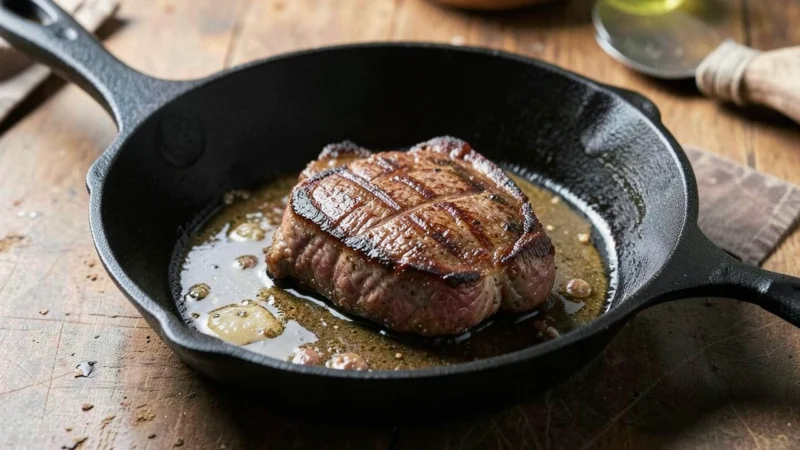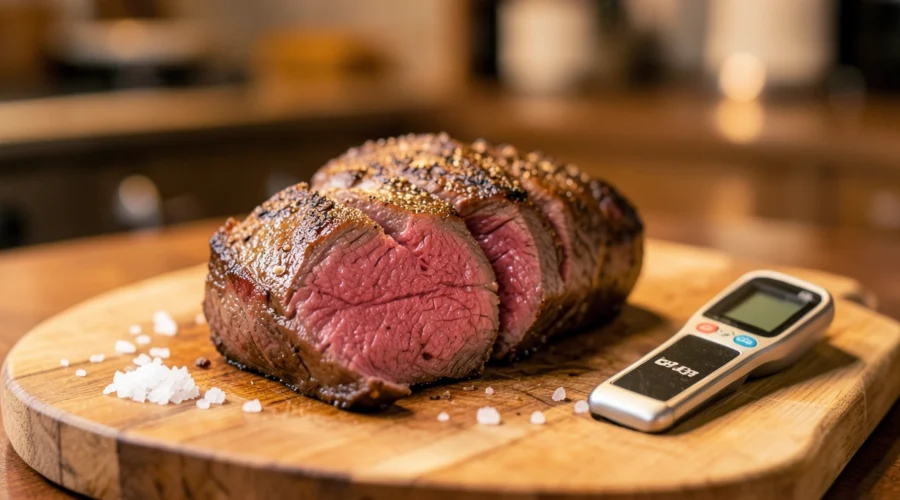
A steak temperature chart is the only reliable way to hit the doneness you want, because color and poke tests vary from cut to cut. A thick ribeye can look medium rare on the outside while the center is still rare, and a thin sirloin can overshoot in seconds. A thermometer removes the guesswork, and a chart tells you what the number on the screen actually means.
Below you will find the temperatures for each doneness level, the temperature to pull the steak off the heat, how much carryover cooking to expect, and how the USDA safe minimum fits in. The chef temperatures are about taste. The USDA figure is about food safety, and the two are not the same thing.
Quick Answer
Steak doneness by final temperature: rare 125°F, medium rare 135°F, medium 145°F, medium well 150°F and well done 160°F or higher. Pull the steak 5 to 10 degrees below your target, because it keeps rising while it rests. The USDA lists 145°F, followed by at least three minutes of rest, as the safe minimum for whole cuts of beef. Anything cooked below that is a personal choice that carries more risk.
Key Takeaways
- Chef doneness temperatures are a matter of taste, not food-safety standards.
- The USDA safe minimum for whole beef steaks is 145°F with a three-minute rest.
- Pull the steak 5 to 10 degrees before the target to allow for carryover cooking.
- Insert the thermometer into the thickest part, away from bone and fat.
- Ground beef is different: it should reach 160°F because bacteria can be mixed through the meat.
Steak Doneness Temperature Chart
| Doneness | Pull from heat | Final temp after rest | What the center looks like |
|---|---|---|---|
| Rare | 120–125°F | 125°F | Cool, bright red |
| Medium rare | 130–135°F | 135°F | Warm, red-pink center |
| Medium | 135–145°F | 145°F | Warm pink center |
| Medium well | 145–150°F | 150°F | Slightly pink |
| Well done | 155–160°F | 160°F and above | Little or no pink |
For the best balance of flavor and juiciness, many cooks aim for a final temperature between 130°F and 140°F. That range keeps the fat soft and the meat tender. Leaner cuts like sirloin and flank dry out faster, so stopping at the lower end helps.
What the USDA Says About Safe Steak Temperatures
The USDA Food Safety and Inspection Service lists 145°F as the safe minimum internal temperature for whole cuts of beef, pork, lamb and veal, with a rest time of at least three minutes. Ground meats, including ground beef, should reach 160°F. Poultry should reach 165°F. The FDA publishes the same figures in its Food Code guidance.
The rest time counts as part of the safety step. During those minutes the temperature stays high enough to continue destroying bacteria, so the full number is both the reading and the time.
The chart above shows rare and medium rare steaks below the 145°F line. Many restaurants serve steak that way, and many home cooks prefer it, but you should know that this is a choice outside the official guidance. Children, older adults, pregnant women and anyone with a weakened immune system should stick with the safe minimum.
Carryover Cooking and Resting
A steak keeps cooking after you take it off the heat because the hot outer layer continues to transfer heat toward the cooler center. The rise is usually 5 to 10 degrees, and it is larger for thick cuts and high heat. That is why the chart has a lower pull temperature than final temperature.
Rest the steak on a plate or rack for five to ten minutes before slicing. Resting lets the juices spread back through the meat, so less runs onto the board, and it also gives you the three-minute rest the USDA lists for whole cuts. Do not wrap tightly in foil, because the steam softens the crust.
How to Take a Steak’s Temperature
- Use an instant-read digital thermometer. Dial thermometers are slower and less accurate.
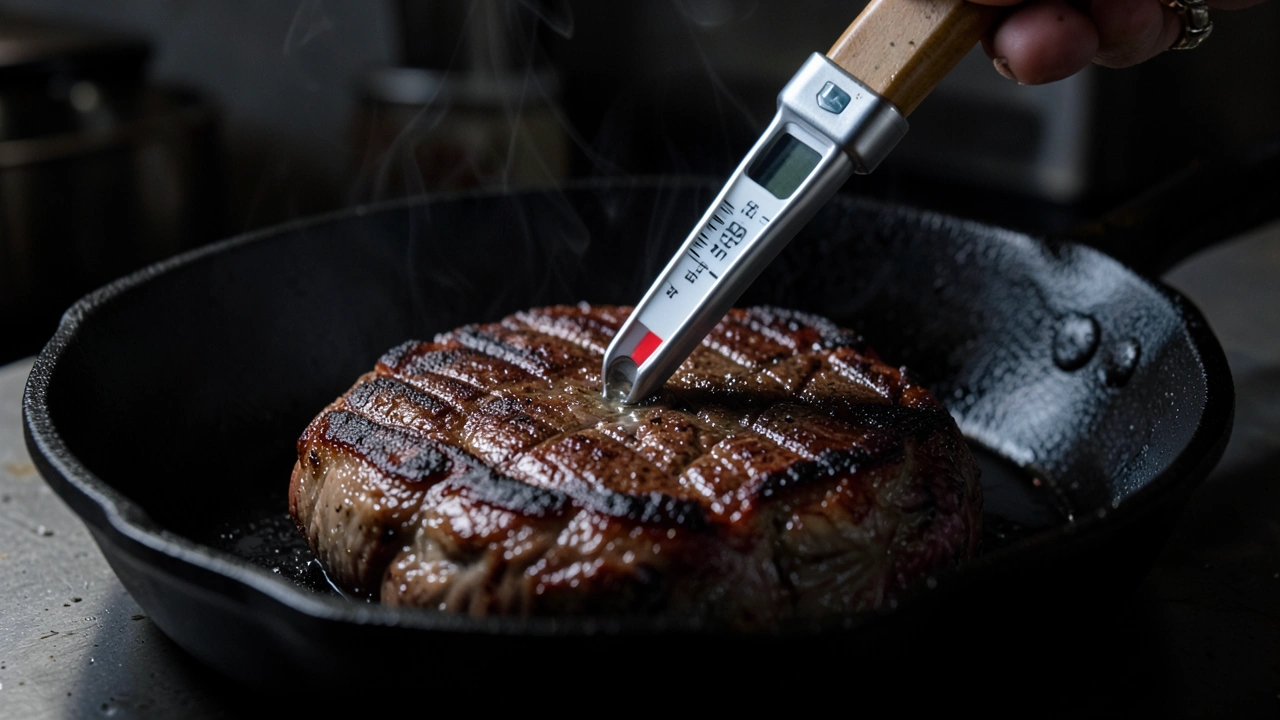
- Insert the probe through the side of the steak so the tip lands in the center of the thickest part.
- Stay away from bone and large pockets of fat, which read differently from the meat.
- Wait for the reading to settle, usually two to four seconds.
- For thin steaks, tilt the probe sideways so more of the sensor sits in the meat.
- Check a few minutes before you expect it to be done, then recheck.
Test your thermometer occasionally in a glass of ice water. It should read about 32°F. If it is off by a few degrees, adjust your pull temperatures to match.
Does the Cut Change the Temperature
The temperature numbers stay the same, but the best target changes with the cut. Fat-rich steaks like ribeye and strip benefit from the 130°F to 140°F range because the fat has time to soften. Lean cuts such as filet mignon and sirloin are best at the lower end of that range. Tough cuts, like chuck steak or flank, are usually better sliced thin against the grain, or cooked low and slow to a much higher temperature to break down connective tissue.
Thickness also matters. A one-inch steak cooks quickly and gains less carryover, while a two-inch steak can rise 10 degrees or more during the rest. Use a thermometer for each steak rather than relying on time alone.
Ground Beef and Burgers Are Different
Ground beef should reach 160°F with no exception, even if it started as a fresh steak. Grinding moves surface bacteria into the center of the patty, so cooking only the outside does not make it safe. The same applies to meatloaf and meatballs. Use a thermometer and check the center of the thickest patty.
Storing and Reheating Cooked Steak
Refrigerate cooked steak within two hours and eat it within three to four days. How long does cooked steak last in the fridge gives the full storage timeline. Reheat leftovers to 165°F, which is the USDA figure for leftovers. A skillet greased lightly with tallow works well, and seasoning cast iron with beef tallow explains how to build a non-stick surface that gives steak a good crust.
Frequently Asked Questions
What temperature is a medium rare steak?
Medium rare steak reaches 135°F after resting. Pull it from the heat at 130°F to 135°F, depending on the thickness, and let carryover cooking bring it the rest of the way.
What is the safe internal temperature for steak?
The USDA lists 145°F with a three-minute rest for whole cuts of beef. Ground beef should reach 160°F.
Is it safe to eat a rare steak?
Rare steak is below the USDA minimum. Bacteria sit mostly on the surface of a whole cut, and searing helps, but it is still a risk you take on yourself. Avoid it for children, older adults, pregnant women and anyone with a weakened immune system.
How much does a steak rise while resting?
Typically 5 to 10 degrees. Thick steaks and very hot cooking methods can rise even more.
Should I check the temperature in the middle or the edge?
In the center of the thickest part. The edge cooks first and will give you a misleadingly high reading.
What if my steak is overcooked?
Slice it thin against the grain and serve it with butter or a pan sauce. Next time, pull it 10 degrees earlier.
Conclusion
A steak temperature chart turns a guessing game into a repeatable process. Choose your doneness, pull the steak 5 to 10 degrees early, rest it and slice it. Keep in mind that the USDA minimum is 145°F with a three-minute rest, and that ground beef needs 160°F. With a good thermometer, every steak comes out the way you intended.
Keep Reading
- How Long Does Cooked Steak Last in the Fridge? Safe Limits: Storage times for cooked steak
- How to Season Cast Iron With Beef Tallow for a Slick Finish: Build a non-stick, steak-ready pan
Sources
- USDA FSIS. Safe Minimum Internal Temperature Chart: 145°F with a three-minute rest for whole cuts, 160°F for ground meats
- FDA. Safe Minimum Internal Temperatures: Matching Food Code temperatures