Fatty liver disease is common, often silent, and responsive to lifestyle change, so a carnivore diet for fatty liver attracts people looking for a strict, simple plan. The idea is that cutting carbohydrates and sugar lowers liver fat. Whether an all-meat diet does that safely is a different question. This article reviews what guidelines say, what low-carb studies show, and the risks to weigh with a liver specialist.
Quick Answer
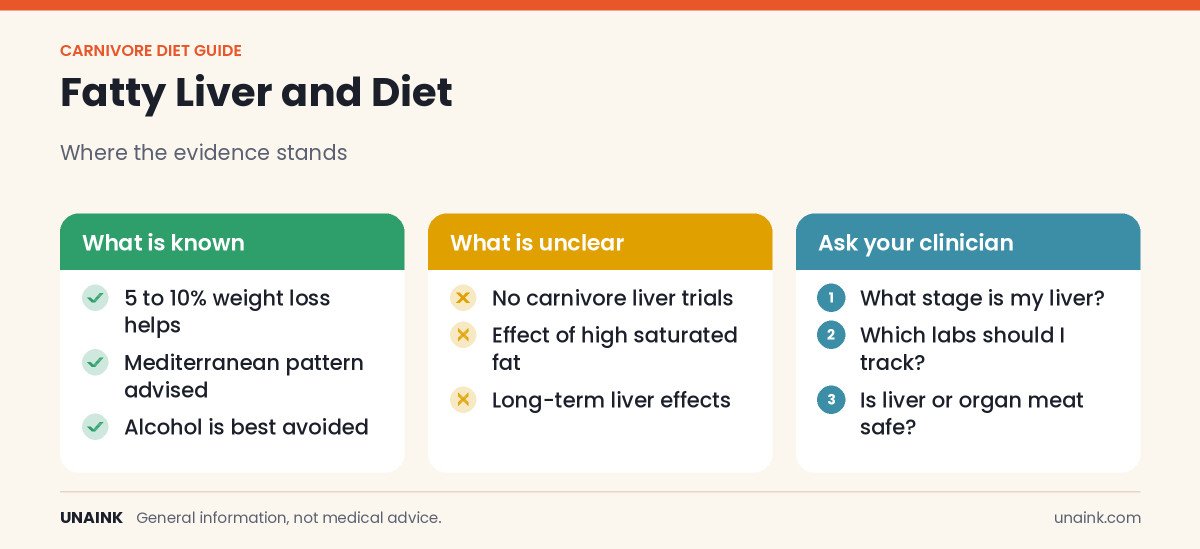
There are no trials of a carnivore diet for fatty liver, so nobody can say it protects the liver. Weight loss of 5 to 10 percent is the best-established way to improve the condition, and Mayo Clinic’s guidance favors a Mediterranean-style pattern while advising limits on red and processed meat, saturated fat, and alcohol. A meat-only diet runs against much of that advice.
Key Takeaways
- Fatty liver (MASLD) is linked to excess weight, insulin resistance, and other metabolic risk factors.
- Losing 5 to 10 percent of body weight can meaningfully improve it, according to Mayo Clinic.
- Low-carb diets may lower liver fat in short studies, mostly alongside weight loss, but a carnivore diet is untested.
- Guidance advises limiting red and processed meat and saturated fat, which conflicts with carnivore eating.
- People with advanced liver disease need specialist nutrition advice, and alcohol should generally be avoided.
What Fatty Liver Disease Is
Metabolic dysfunction-associated steatotic liver disease, or MASLD, formerly called NAFLD, means excess fat is stored in the liver in people who drink little or no alcohol. In some people it progresses to MASH, with inflammation and scarring that can lead to cirrhosis. It often causes no symptoms, so it is found through blood tests or imaging (Cleveland Clinic overview).
What Guidelines Recommend
Mayo Clinic says losing 5 to 10 percent of body weight can meaningfully improve MASLD, and that a Mediterranean diet can help even without weight loss. It advises limiting highly processed foods, sugary foods and drinks, refined carbohydrates, high-saturated-fat foods, red and processed meats, and alcohol (Mayo Clinic MASLD diet).
It also says supplements such as omega-3 and vitamin E have inconclusive evidence and should be taken only if a healthcare professional prescribes them.
What Low-Carb Research Suggests
Studies of low-carbohydrate and ketogenic diets have reported lower liver fat over weeks to months, usually alongside weight loss. Those diets typically include vegetables and other plant foods, so they do not test a meat-only plan (PMC review of diet and lifestyle in fatty liver).
Because most of the benefit appears to track weight loss, how long you can sustain a plan matters more than its label. An eating pattern you can follow for years may do more for your liver than a strict one you drop after a month.
Carnivore Diet for Fatty Liver: What People Report
Online accounts describe weight loss and improved liver enzyme results on meat-only eating. These are self-reported, and the improvement may come from weight loss itself or from stopping alcohol and sugar at the same time. The 2021 survey of 2,029 carnivore followers (2021 survey) and the 2026 scoping review (Nutrients review) did not study liver disease directly.
Where Carnivore Eating and Standard Advice Differ
| Topic | Standard MASLD guidance | Carnivore diet |
|---|---|---|
| Weight loss | 5 to 10 percent helps | May happen, not guaranteed |
| Overall pattern | Mediterranean, with plants, fish, legumes, whole grains | No plant foods |
| Red and processed meat | Limit | Central to the diet |
| Saturated fat | Limit | Often high |
| Sugar and refined carbs | Limit | Eliminated, so this overlaps |
| Alcohol | Generally avoid | Same advice applies |
Special Cautions
- Liver and other organ meats are very high in vitamin A, and excess preformed vitamin A can itself injure the liver, so ask before eating them often.
- Advanced fibrosis or cirrhosis needs individualized protein and nutrition advice from a specialist.
- LDL cholesterol can rise on high-saturated-fat diets, and fatty liver already comes with metabolic and heart risk.
- Do not stop or change diabetes, blood pressure, cholesterol, or liver medicines because of a diet.
A Practical Path
- Ask your clinician about your liver stage and which tests, such as enzymes or elastography, to follow.
- Set a gradual weight goal of 5 to 10 percent if you have overweight.
- Work with a dietitian to build an eating pattern you can keep.
- Avoid alcohol unless your clinician says otherwise.
- Recheck labs after a few months and adjust the plan with your team.
Carnivore Diet for Fatty Liver: The Short Version
A carnivore diet for fatty liver has no trial support, and it conflicts with standard advice to limit red meat and saturated fat. If you are considering a carnivore diet for fatty liver, discuss it with your liver specialist first and keep monitoring your labs.
Frequently Asked Questions
Can a carnivore diet reverse fatty liver?
No evidence shows that it does. Weight loss helps fatty liver, but a meat-only diet has not been tested, and it conflicts with guidance to limit red and processed meat.
Does low-carb help fatty liver?
Some short studies report lower liver fat, mostly alongside weight loss. Those diets generally include vegetables, unlike a carnivore diet.
Is eating liver good for fatty liver?
Liver is a concentrated source of vitamin A, and too much preformed vitamin A can harm the liver. Ask your clinician before eating it regularly.
Can I drink alcohol on a carnivore diet with fatty liver?
Mayo Clinic says people with MASLD should generally avoid alcohol. Ask your clinician about your situation.
Which tests track fatty liver?
Clinicians use liver enzymes, imaging, and sometimes elastography or biopsy. Ask which are right for you.
Conclusion
Fatty liver responds to gradual weight loss, better food quality, and metabolic care, and many paths can get there. A carnivore diet for fatty liver may help some people lose weight, but it has not been studied for the liver and it departs from current guidance. Make the choice with a clinician and keep your labs in view.
Medical note
This article is for general education and is not medical advice. Talk with a doctor or registered dietitian before making major diet changes, especially if you have a health condition, take medication, or are pregnant or breastfeeding.
Keep Reading
- Carnivore Diet and Insulin Resistance: Insulin, blood sugar, and meat-only eating.
- Carnivore Diet High Cholesterol: LDL changes and what to monitor.
- Beef Liver Benefits: Nutrients in liver and why amounts matter.
- Carnivore Diet and Heart Health: Cardiovascular questions.
Sources
- Fatty liver disease (MASLD) diet (Mayo Clinic): Weight loss targets and foods to limit.
- MASLD overview (Cleveland Clinic): What the condition is.
- Diet and Lifestyle Interventions in MAFLD: A Comprehensive Review (PMC): Review of diet research.
- Nutrients scoping review of carnivore diets (PMC): Evidence on carnivore diets is very limited.