If you are stuck with carnivore diet not losing weight after a promising start, you are not alone, and it rarely means the diet has failed. Stalls usually come from calories, hidden extras, water shifts, sleep, or a medical factor. A few checks will usually tell you which one applies.
Quick Answer
Weight often stalls on a carnivore diet because calories in have caught up with calories out, because fatty extras like cream, cheese, and bacon add up, or because water, stress, sleep, hormones, medicines, or a thyroid problem are in the way. Track intake and waist size for two weeks, tighten the obvious gaps, and see a clinician if weight will not move or you gain without explanation.
Key Takeaways
- Early drops often include stored glycogen and water, so a slowdown after a few weeks is normal.
- Energy balance still applies; very fatty, calorie-dense meals can erase a deficit.
- The scale is a blunt tool. Waist, clothes, and strength tell you more.
- Medicines, thyroid disease, PCOS, and menopause can slow progress and deserve a clinician conversation.
- Harvard Health’s author would not recommend this diet for weight loss, and evidence for long-term results is thin.
Is It a Real Plateau or Just Noise?
Mayo Clinic explains that rapid early loss comes largely from glycogen and the water stored with it, so it is temporary. Metabolism can also slow when muscle is lost along with fat. Day-to-day weight swings of a few pounds from water, salt, and digestion are normal. Judge progress across two to three weeks, not two to three mornings. A self-selected 2021 survey of 2,029 carnivore dieters reported a median BMI drop from 27.2 to 24.3, but those were self-reports from people who stayed with the diet, so they do not predict your result.
Carnivore Diet Not Losing Weight: 9 Common Reasons
| Reason | What to check |
|---|---|
| 1. Calories add up | Fat, cream, cheese, and nuts-free snacks still count |
| 2. Eating when not hungry | Meal habit versus real hunger |
| 3. Hidden carbs and extras | Sauces, flavored meats, drinks, sweeteners |
| 4. Too much dairy | Cheese and cream are dense in calories |
| 5. Alcohol | Adds calories and affects appetite |
| 6. Sleep and stress | Poor sleep and high stress may raise appetite |
| 7. Gaining muscle or holding water | Waist and strength can improve while scale holds |
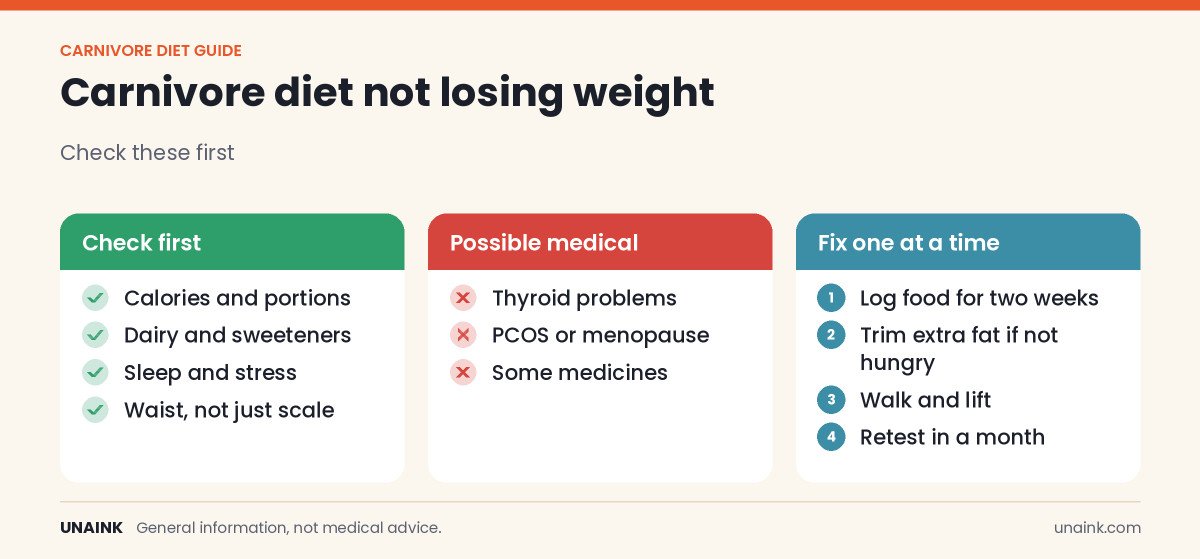
| 8. Medicines and hormones | Thyroid, PCOS, menopause, some prescriptions |
| 9. Starting weight reached its range | Goal may be unrealistic |
Calories Still Count, Even on Meat
Meat is filling, and many people eat less without counting. That is not guaranteed. Mayo Clinic notes that weight stops changing when calories burned equal calories eaten. Fattier cuts, butter, tallow, bacon, and cream can bring a large number of calories into one meal. If you are no longer losing, estimate your intake for a week. You may find you are eating more than your hunger requires. For ideas about portions, see how many calories on carnivore and how much meat per day.
Habits, Dairy, and Sleep
Look at snacks, creamy coffee, cheese plates, and late-night eating. Mayo Clinic says loosened habits, like bigger portions or less activity, contribute to stalls. Alcohol adds calories. Poor sleep and chronic stress may increase hunger for some people. A short written log of meals, sleep, and activity beats guessing. Our guide to gaining weight on carnivore covers the same culprits.
Fixes to Try, One at a Time
- Log food for one to two weeks and measure your waist weekly.
- Shift toward leaner cuts a few days a week and pull back extra fat if you are not hungry.
- Cut dairy and sweeteners for two weeks as a test.
- Add walking and strength training. Mayo Clinic suggests 150 minutes of moderate activity a week and strength work.
- Protect sleep and plan for stress.
- Do not drop to extreme low calories; Mayo Clinic says under 1,200 a day may not be enough to prevent constant hunger.
When a Medical Cause Is Possible
Consider a visit if you have unexplained weight gain, constant fatigue, cold intolerance, irregular periods, hair thinning, or swelling. Underactive thyroid, PCOS, and menopause can all affect weight, and some medicines promote weight gain. Ask about bloodwork. Related reading: thyroid health and PCOS. If you take insulin, a sulfonylurea, or blood pressure drugs, weight change can alter your dose needs, so tell your prescriber instead of adjusting on your own.
Who Should Not Chase the Scale
People with a history of disordered eating, kidney disease, pregnancy, or breastfeeding, and teens, should avoid restrictive weight-loss diets without medical guidance. People using GLP-1 drugs have their own concerns; see carnivore on GLP-1 medications. Rapid loss, dizziness, fainting, a racing heart, or severe fatigue needs a medical review.
Carnivore Diet Not Losing Weight: The Short Version
When you have carnivore diet not losing weight, start with calories, habits, and measurements before blaming the diet. If carnivore diet not losing weight persists with fatigue, cold intolerance, or other symptoms, ask a clinician about thyroid, hormones, and medicines.
Frequently Asked Questions
Why did I stop losing weight after a few weeks?
Early loss includes water and glycogen. After that, loss depends on calories and body composition changes.
Do I need to count calories on carnivore?
Not always, but if you stall, counting for a short period can reveal hidden calories.
Can I lose fat but not weight?
Yes. Gaining muscle or holding water can hide fat loss on the scale. Track your waist and strength.
Does more protein or more fat help?
Neither is guaranteed. Total intake and hunger cues matter, and reliable long-term data are lacking.
When should I see a doctor?
If weight rises without explanation, or you have fatigue, cold intolerance, missed periods, or swelling.
Conclusion
A stall is information, not failure. Measure honestly, remove obvious extras, and give any change a few weeks before judging. If nothing works, a clinician can check for medical causes that no diet can fix.
Medical note
This article is for general education and is not medical advice. Talk with a doctor or registered dietitian before making major diet changes, especially if you have a health condition, take medication, or are pregnant or breastfeeding.
Keep Reading
- Weight Loss on Carnivore in a Month: What to realistically expect.
- Gaining Weight on Carnivore: Common culprits.
- How Many Calories on Carnivore: Intake ranges and hunger cues.
- Carnivore vs Calorie Deficit: Two approaches compared.
Sources
- Mayo Clinic: Weight-loss plateau: Why weight loss stalls and what to try
- Harvard Health: What is the carnivore diet?: Risks and weight-loss view
- Self-reported survey of 2029 adults consuming a carnivore diet: BMI and lipid self-reports
- Cleveland Clinic: The carnivore diet: Dietitian view on the diet