A carnivore diet for muscle gain sounds like a perfect match: meat is rich in protein, and building muscle needs lots of it. The reality is more complicated, because muscle growth also depends on calories, training quality, and recovery. This guide covers what research shows and how a lifter can eat and train sensibly if they choose this route.
Quick Answer
A carnivore diet for muscle gain can work if you eat enough calories and protein and train with progressive overload. The only controlled trial of a ketogenic diet in trained lifters found no lean-mass benefit compared with a higher-carb diet. Meat is a convenient tool, not a requirement.
Key Takeaways
- Muscle gain needs a calorie surplus, enough protein, progressive training, and sleep.
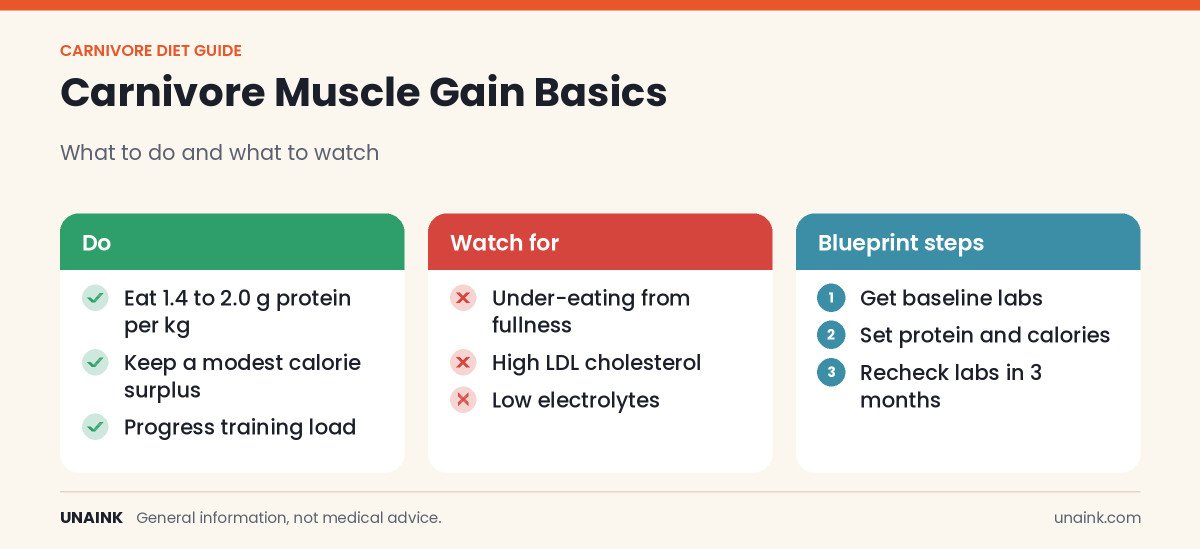
- The ISSN says 1.4 to 2.0 g of protein per kg daily is generally enough for most lifters.
- An 8-week trial found trained men gained lean mass on a higher-carb diet but not a keto one.
- Meat-only meals are filling, which can make eating a surplus hard.
- Check lipids, kidney markers, and uric acid if you plan to stay on high intakes for months.
What Builds Muscle in the First Place
Three things drive growth: mechanical tension from lifting, enough protein to supply amino acids, and enough total energy to support new tissue. Diet style matters less than hitting those targets consistently. The International Society of Sports Nutrition says 1.4 to 2.0 grams of protein per kilogram daily is generally enough for exercising people.
What the Evidence Says About Keto and Lifting
A 2018 randomized trial followed 24 trained men for 8 weeks of resistance training in a calorie surplus. The ketogenic group lost fat but gained no lean mass, while the non-ketogenic group added about 1.3 kg. It was small, strength was not measured, and keto is not the same as carnivore, so treat it as a caution rather than a verdict.
No controlled trial has tested a meat-only diet for muscle gain. Reports from lifters are anecdotal.
Where Meat Helps
- High-quality protein with all essential amino acids
- Natural creatine, iron, zinc, and B12
- Simple meals that are easy to measure
- Fatty cuts that raise calories without much volume
Where It Can Hold You Back
- Very low carbohydrate may reduce the energy for high-volume training in some people
- Filling food makes a calorie surplus harder to reach
- Limited variety can leave gaps in potassium, magnesium, and calcium
- High saturated fat can raise LDL cholesterol, as Harvard Health notes
A Practical Blueprint for Lifters
- Get baseline labs: lipids, kidney function, and uric acid.
- Set protein at 1.4 to 2.0 g per kg of body weight, spread over 3 to 4 meals.
- Add a modest calorie surplus using fattier cuts, eggs, and tallow. See how to get more fat on carnivore.
- Train each muscle group about twice a week and add load or reps gradually.
- Weigh yourself weekly and adjust portions if weight stalls for two to three weeks.
- Replace sodium and fluids, using carnivore diet electrolytes as a guide.
- Recheck labs after about three months.
For meal ideas, see carnivore recipes with ground beef.
Safety Notes
Very high protein intakes are not suitable for people with kidney disease, and gout can flare with large amounts of red meat and organ meats. Anyone on diabetes or blood pressure medicine should talk to a prescriber before cutting carbohydrate. Teens, pregnant people, and anyone with an eating disorder history should not use this approach on their own.
Carnivore Diet for Muscle Gain: The Short Version
A carnivore diet for muscle gain delivers abundant protein, but calories and training still decide results. If you try a carnivore diet for muscle gain, measure progress and keep your labs on track.
Frequently Asked Questions
Can you build muscle on a carnivore diet?
Yes, if you train progressively and eat enough calories and protein. Evidence for it being better than other diets is lacking.
How much protein do I need to gain muscle?
The ISSN says 1.4 to 2.0 g per kg of body weight daily is generally enough for most exercisers.
Do I need carbohydrates to lift?
Not strictly, but very low intake may affect training energy for some people. Individual responses vary.
Is red meat safe in large amounts?
Long-term effects are unknown. Check cholesterol and kidney markers, and discuss your plan with a clinician.
Should I use supplements?
Creatine monohydrate and electrolytes are common. Ask a clinician or dietitian what fits your health history.
Conclusion
Muscle is built by effort, calories, protein, and time. Meat can be a strong ally, but the strongest evidence does not show that cutting every other food helps you grow, so train hard and stay flexible.
Medical note
This article is for general education and is not medical advice. Talk with a doctor or registered dietitian before making major diet changes, especially if you have a health condition, take medication, or are pregnant or breastfeeding.
Keep Reading
- Carnivore Diet for Athletes: Fuel, protein, and recovery.
- How to Get More Fat on Carnivore: Easy ways to add calories.
- Carnivore Recipes With Ground Beef: Simple high-protein meals.
- Carnivore Diet Electrolytes: Salt, potassium, and magnesium.
Sources
- ISSN position stand: protein and exercise: Protein recommendations
- Efficacy of ketogenic diet on body composition during resistance training in trained men (2018): Randomized trial
- Harvard Health: What is the carnivore diet?: Saturated fat and LDL
- Nutrients 2026 scoping review of carnivore diets: Evidence is very limited