If you live with itchy, cracked skin, a search for carnivore diet and eczema is easy to understand. Online communities are full of people who say their flare-ups calmed down after they cut plants, dairy, and processed food. Those stories are real experiences, but they are not clinical trials. This guide covers what eczema is, what research says about food and flare-ups, and where an all-meat diet does and does not fit.
Quick Answer
No clinical trials have tested the carnivore diet and eczema together, so nobody can say it helps. Some people report fewer flares, which may come from dropping a personal trigger food or processed food rather than from eating only meat. Standard eczema care, such as moisturizers and prescribed skin treatments, should stay in place, and any big diet change is best planned with a clinician.
Key Takeaways
- Eczema is a long-term skin condition with many triggers, and food is a trigger for only some people.
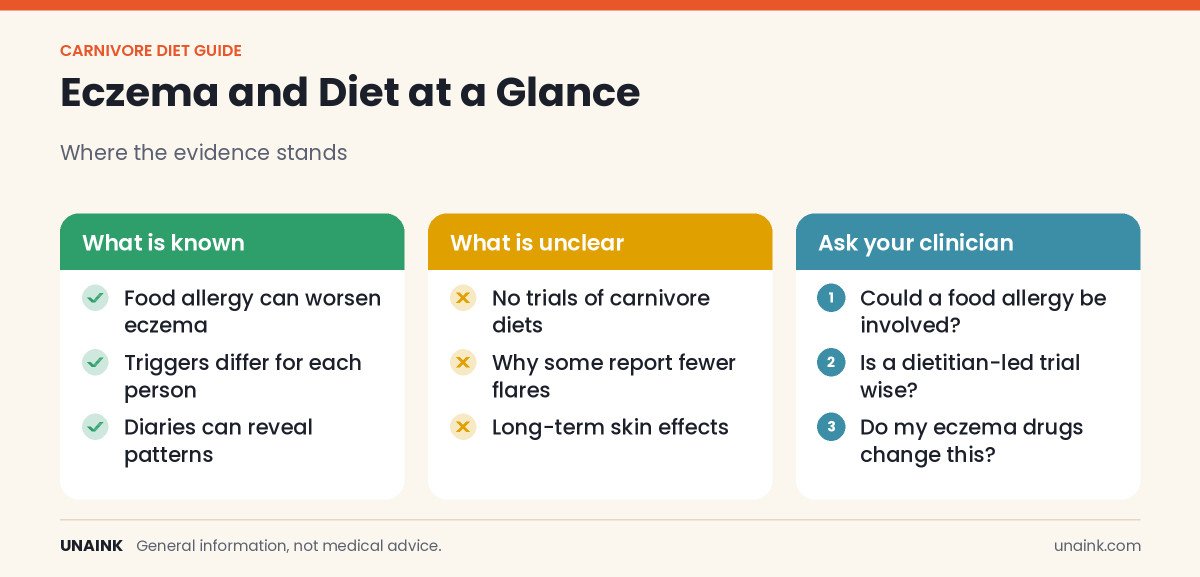
- No trials of a carnivore diet in eczema exist; reports are anecdotal.
- A true food allergy can worsen eczema, and that needs proper testing, not guesswork.
- Unplanned elimination can cause nutrient gaps and make real triggers harder to find.
- Children, pregnant women, and anyone on eczema medicine should involve a clinician first.
What Eczema Is and Why Food Gets the Blame
Eczema, also called atopic dermatitis, is a long-term condition that causes dry, itchy, inflamed patches of skin. It tends to come and go. Flares can be set off by a weakened skin barrier, allergies, stress, irritants, weather changes, and skin infections.
Because flares are so unpredictable, it is natural to look for the cause in the last thing you ate. Sometimes that link is real. Often it is coincidence, which is one reason food diaries and professional testing matter.
What Research Says About Food and Eczema
Food allergy and eczema often overlap, especially in children, and in a minority of people a specific food does worsen skin symptoms. A medical review of the topic describes the relationship as complicated and still being studied (PMC review on atopic dermatitis and food allergy).
Cleveland Clinic explains that triggers vary from person to person and that an elimination diet should not be started unless a healthcare provider prescribes one. Cutting foods without a reason can cause nutrient gaps and make real triggers harder to spot (Cleveland Clinic eczema diet guide).
Carnivore Diet and Eczema: What People Report
Many online accounts describe calmer skin after moving to meat, salt, and water. The largest survey of carnivore eaters, with 2,029 adults, relied on self-reported answers from people who were already following the diet and mostly happy with it (2021 survey). It was not designed to measure skin outcomes.
A 2026 scoping review of nine human studies concluded that the evidence is very limited and that long-term use cannot be recommended (Nutrients review). None of that research focused on eczema.
Why Skin Might Change on a Meat-Only Diet
If someone following a carnivore diet and eczema flares settle down, several explanations are possible, and most have little to do with meat itself:
- Dropping a personal trigger such as wheat, dairy, egg, or an additive.
- Eating far less sugar and ultra-processed food.
- Weight, sleep, or stress changes that come with a new routine.
- The natural ups and downs of eczema, plus the placebo effect.
Others report no change or even a worse flare, for example if dairy or eggs are their trigger. There is no evidence for the idea that skin first gets worse because the body is detoxing.
Risks and Trade-Offs to Weigh
| Concern | Why it matters |
|---|---|
| Missed real trigger | Cutting many foods at once hides which one actually mattered. |
| Nutrient gaps | Very restrictive diets can fall short on vitamin C, calcium, magnesium, and fiber unless carefully planned. |
| Cholesterol | The 2021 survey reported raised LDL cholesterol in some people, so lab monitoring is wise. |
| Adjustment symptoms | Headache, fatigue, and digestive changes are commonly reported in the first weeks. |
| Delayed care | Skipping prescribed treatment can let flares and skin infections worsen. |
Who Should Not Do This Alone
A carnivore diet is not recommended for children, and it lacks safety evidence in pregnancy and breastfeeding. Anyone with kidney disease, a history of disordered eating, or a need for tight medical monitoring should work with a clinician first.
If you use steroid creams, other topical medicines, or stronger prescription treatment, do not change or stop them because of a diet. Diet changes are an add-on to your care plan, not a replacement.
A Safer Way to Test Food Triggers
- Keep a food and skin diary for two to four weeks, noting flares and what you ate.
- If a reaction happens soon after eating, such as hives, swelling, or vomiting, see a doctor or allergist for testing rather than guessing.
- Ask about a dietitian-guided trial of removing one suspected food, with a planned reintroduction.
- Keep moisturizing and prescribed treatment steady so you can judge the diet fairly.
- Review results with your clinician after a set period instead of extending the restriction indefinitely.
Carnivore Diet and Eczema: The Short Version
The story of carnivore diet and eczema rests on personal reports, not trials, so it cannot be called a proven approach. Anyone weighing carnivore diet and eczema together should keep standard skin care in place and test suspected triggers with professional guidance.
Frequently Asked Questions
Does a carnivore diet get rid of eczema?
There is no evidence that it does. Eczema is a long-term condition that is managed over time. Some people notice fewer flares after removing a specific trigger food, but that is different from a diet that works for everyone.
Which foods most often trigger eczema?
Common food allergens include milk, egg, peanut, tree nuts, wheat, soy, fish, and shellfish. Many people with eczema have no food trigger at all, so testing guided by a clinician is better than assuming.
Is it normal for skin to get worse when starting carnivore?
Some people report this, but there is no evidence it is a detox. Stress, routine changes, and skin infections can all cause flares. See a clinician if you notice oozing, crusting, fever, or fast-spreading redness.
Should children with eczema try a carnivore diet?
No. Growing children have high nutrient needs, and elimination diets are generally not advised for children unless a pediatrician or allergist guides them.
Can I stop my eczema medicine if my skin looks better?
Do not stop or change prescribed treatment on your own. Ask your clinician before adjusting anything, especially if you also change your diet.
Conclusion
Eczema is complicated, and food plays a role for some people but not most. A meat-only diet has not been tested for eczema, and its limits and risks are well documented. If you suspect a food is hurting your skin, track it, get tested where appropriate, and work with a clinician or dietitian on a structured, time-limited plan.
Medical note
This article is for general education and is not medical advice. Talk with a doctor or registered dietitian before making major diet changes, especially if you have a health condition, take medication, or are pregnant or breastfeeding.
Keep Reading
- Carnivore Diet Rash: Why some people report skin rashes after switching.
- Carnivore Diet for Psoriasis: Another skin condition people try diet for.
- Carnivore Diet and Inflammation: What is known about diet and inflammation markers.
- Who Should Not Do the Carnivore Diet: Groups who need medical guidance first.
Sources
- Eczema Diet: Foods To Eat, Avoid and More (Cleveland Clinic): Triggers vary and elimination diets need provider guidance.
- Atopic Dermatitis and Food Allergy: A Complex Interplay (PMC): Medical review of food allergy and eczema.
- Nutrients scoping review of carnivore diets (PMC): Evidence on carnivore diets is very limited.
- Self-reported survey of 2,029 carnivore adults (PMC): Self-reported outcomes, not a trial.
- What is the carnivore diet? (Harvard Health): General overview and cautions.