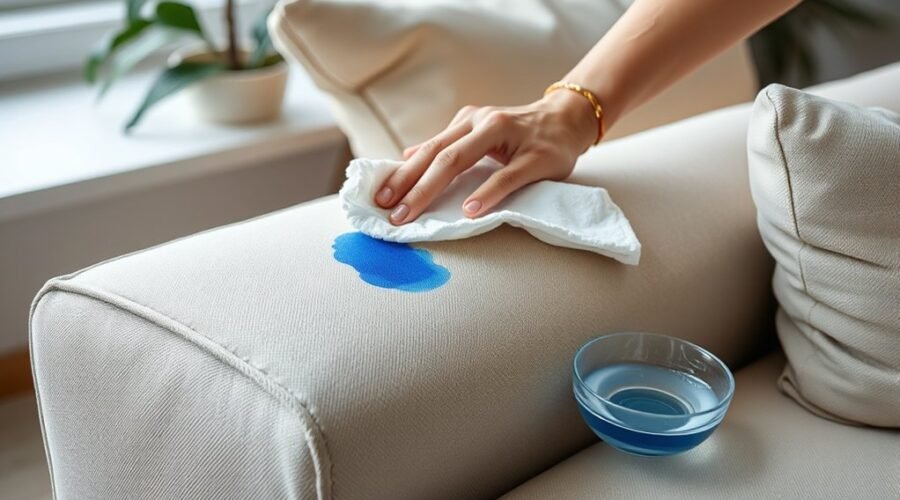
Fresh ink on upholstery should be treated right away to keep it from setting into the fibers. He or she should blot the spot gently with a clean cloth, never rub or wipe. After testing a hidden area, a cloth dampened with rubbing alcohol can be dabbed on the stain to lift pigment. Fresh cloth sections should be used as needed, and the area should be kept only lightly damp. More methods can help if the stain resists.
Act Fast When Ink Hits Upholstery
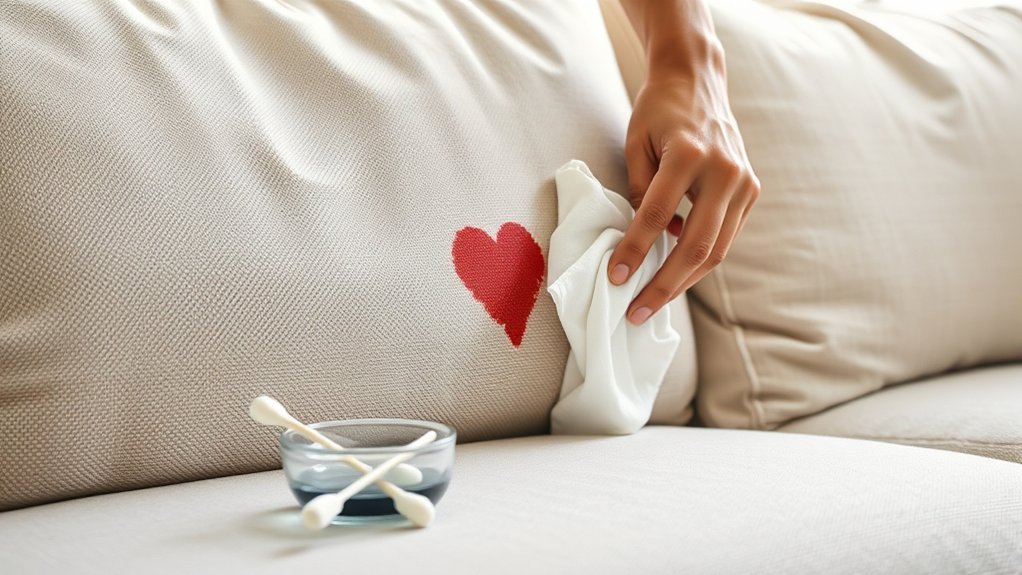
When ink lands on upholstery, speed matters because the sooner the stain is treated, the better the chances of removing it completely. Quick action gives the best chance to remove ink stains before they settle into upholstery fabric.
A clean cloth should be used to blot the area lightly, lifting excess ink without delay. The goal is to clean the surface methodically, not to let the mark spread. A common household solution such as rubbing alcohol may be applied sparingly after testing on an inconspicuous spot, since color and texture must remain intact.
If the stain persists, repeat the process with steady patience and controlled pressure. This approach supports effective stain removal while protecting the fabric from unnecessary damage.
With disciplined response and careful handling, the fabric can regain its clean appearance and the stain’s hold can be weakened before it becomes permanent.
Blot Ink Out Without Pushing It Deeper
Once the ink has been addressed promptly, the next step is to lift it out without driving it deeper into the upholstery. A clean cloth should be placed on the ink stain and used to blot excess ink, not wipe it across the fabric.
The blotting technique depends on steady pressure around the edges of the stain, drawing the ink outward while keeping the center from spreading. It is important to avoid rubbing, because friction forces pigment into the fibers and makes the stain harder to release.
If an ink remover is used, it should be applied to the cloth first, then blotted onto the area in controlled amounts. This limits liquid exposure and helps protect the upholstery padding beneath.
The fabric should stay only lightly damp, with good air circulation supporting a cleaner, safer result.
Lift Fresh Ink With Rubbing Alcohol
Rubbing alcohol can lift fresh ink from upholstery because it is a strong solvent that helps break down the stain before it sets. For removing ink stains, the first step is to test the stain on an inconspicuous spot to confirm the fabric resists discoloration.
Next, use a clean cloth to blot away excess fresh ink. Then apply rubbing alcohol to another cloth. Dab the area gently, and avoid rubbing so the ink does not spread deeper into the upholstery.
- Test the stain first.
- Blot with a clean cloth.
- Dab with rubbing alcohol.
- Rinse the area after the stain lifts.
Repeat with a fresh section of cloth as needed until the stain remover effect is complete.
When the ink lifts, rinse the area with a damp cloth to remove residue and leave the upholstery ready for a cleaner, freer finish.
Try Hairspray or Dish Soap for Stubborn Stains
For stubborn ink stains that resist initial treatment, hairspray can provide another solvent-based option because its alcohol content helps break down the mark. It should be sprayed directly onto the upholstery stain, then left for a few minutes so the solvent can work.
Afterward, a clean cloth should gently blot the area; rubbing can drive ink deeper into the fabric and slow recovery. Quick action remains essential for stubborn stains, since fresh ink lifts more readily than settled residue.
Before any treatment, test on an inconspicuous area of the fabric to confirm the cleaning solution will not discolor or damage it.
If hairspray is unavailable, dish soap mixed with vinegar can serve as a careful alternative. A ratio of one part dish soap to two parts vinegar creates a practical cleaning solution for upholstery.
Applied sparingly and blotted methodically, it supports clean removal without unnecessary force or dependence.
Keep Ink From Soaking Into the Foam
After the surface stain has been treated, attention should shift to preventing the ink from reaching the foam beneath the upholstery. Quick action helps prevent ink stains from sinking deeper and making removal harder.
After the surface stain has been treated, quickly prevent ink from sinking deeper into the foam beneath the upholstery.
- Use a clean cloth to blot the area gently, applying light pressure instead of rubbing.
- If needed, use a suction method with the clean cloth or a specialized tool to lift ink out rather than drive it inward.
- Apply any cleaning solution only to the stained area, limiting excess moisture and protecting the foam from mold or mildew.
- Avoid excessive liquid; if moisture remains, dust on absorbent powder to draw it out before more cleaner is used.
This method keeps the focus on control, not saturation, and helps remove the stain without causing soaking into foam.
Frequently Asked Questions
What Will Take Ink Out of Upholstery Fabric?
Rubbing alcohol often takes an ink stain out of upholstery fabric, especially with prompt upholstery care. It should be blotted, not rubbed, to protect upholstery fabrics and prevent spread.
Hairspray and a dish soap-vinegar mix are useful DIY solutions, though results vary by ink types. A hidden-area test supports fabric protection before treatment.
These home remedies follow practical cleaning techniques, aid stain prevention, and offer clear removal tips for careful upholstery care.
Does Dawn Dish Soap Remove Ink?
Yes, Dawn dish soap can remove ink, lift grease, and loosen residue.
For an ink stain, practical cleaning techniques in upholstery care begin with matching fabric types and ink types to the right DIY solutions. A small amount mixed with warm water improves detergent effectiveness.
Blot with upholstery tools, avoid rubbing, rinse well, and dry fully. Such household remedies support stain prevention, though older marks may need stronger treatment.
What Is the Best Ink Remover for a Sofa?
Rubbing alcohol is typically the best ink remover for a sofa, because it supports effective ink stain removal while respecting fabric care when used carefully.
In upholstery cleaning, it outperforms many DIY solutions and home remedies, though results vary by fabric types and ink types. Testing cleaning products first helps with stain prevention.
For delicate materials, professional services may be wiser, but a cautious dish soap and vinegar blend remains a practical alternative.
Can Old Ink Stains Be Removed From Fabric?
Yes, old ink stains can sometimes be removed from fabric, like a shadow being coaxed back from a wall.
Success depends on fabric types and ink absorption properties, so careful cleaning techniques matter.
Ink stain prevention and upholstery care begin with testing DIY solutions first, while stain removal myths should be ignored.
For stubborn marks, professional cleaning may help.
Regular upholstery maintenance tips and fabric protectants support lasting freedom.
Conclusion
Swift, steady action is the surest safeguard when ink strikes upholstery. By blotting gently, lifting with rubbing alcohol, and testing tougher treatments like hairspray or dish soap, the stain stands little chance of settling in. Careful restraint prevents deeper damage, while prompt protection keeps foam from absorbing the mess below. In the end, small, smart steps stop a simple spill from becoming a stubborn scar, preserving both fabric and finish.