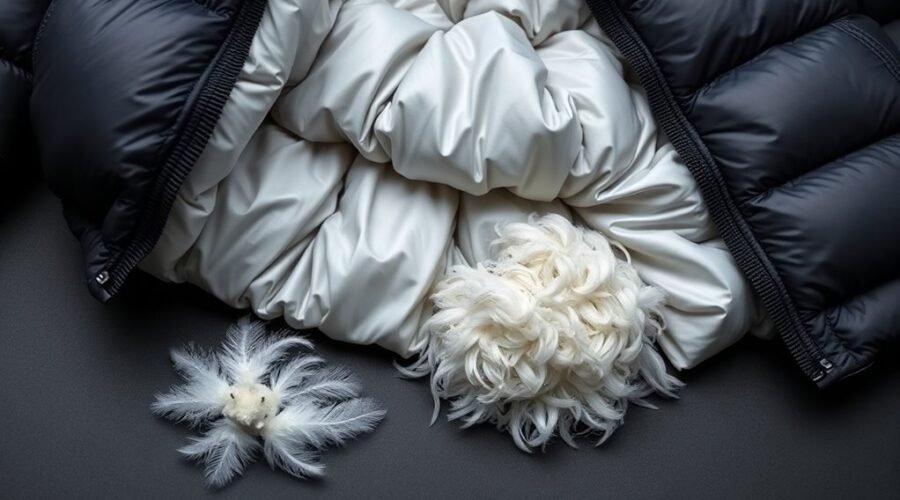
Like a clever stand-in on a cold stage, synthetic down fill uses polyester fibers to imitate the loft and thermal trapping of natural down. You get a structured cluster of short and continuous fibers that holds air, resists moisture, and keeps insulating when conditions turn damp. It’s engineered to balance softness, durability, and low maintenance, but the real tradeoff becomes clear when you compare its performance, weight, and recovery against natural down.
Key Takeaways
- Synthetic down fill is made from engineered polyester fibers designed to imitate the loft and warmth of natural down.
- Its fiber structure traps air in many small pockets, creating insulation and a fluffy feel.
- Some versions use short-staple fibers for softness and continuous filaments for added durability.
- It keeps insulating performance better than natural down when wet, making it reliable in damp conditions.
- It is usually heavier and bulkier than real down, but easier to clean and maintain.
What Synthetic Down Fill Is Made Of
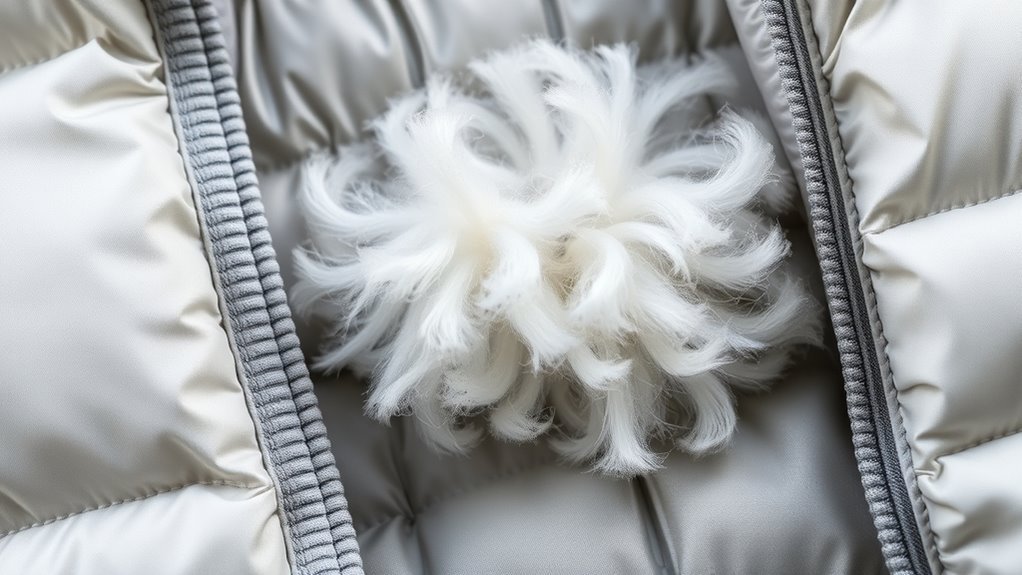
Synthetic down fill is primarily made of engineered polyester fibers designed to mimic the loft, air-trapping structure, and insulating performance of natural down.
You get synthetic insulation built from polyester fibers that engineers shape into branching forms to trap air and preserve loft. This structure gives synthetic down fill its insulating properties by slowing heat loss and maintaining warmth without relying on animal materials.
Manufacturers may use short-staple fibers for softness or continuous filament constructions for added durability and shape retention. Many products are water-resistant, so moisture won’t collapse the fiber matrix as quickly as it can with untreated fill.
You can also find recycled polyester in some blends, offering a more sustainable insulation path without sacrificing performance.
In practice, synthetic down fill gives you a precise, adaptable material system that supports comfort, mobility, and thermal control.
How Synthetic Down Mimics Natural Down
You’ll notice synthetic down uses engineered polyester fibers with varied filament sizes to build loft that closely resembles natural down’s structure.
This loft creates numerous small air pockets, and those pockets trap heat to provide insulation.
Because the fiber network is controlled, you get a consistent balance of fluffiness and air retention across the fill.
Fiber Loft Structure
A synthetic down fill uses polyester fibers engineered to reproduce the lofty, branching structure of natural down, creating numerous air pockets that trap warm air and improve heat retention.
You get a synthetic insulation fill that relies on controlled loft, where fine polyester filaments split and interlock to mimic down’s compressed, resilient matrix. That architecture lets you move freely without sacrificing performance, because the structure stays light, compressible, and stable.
When conditions turn wet, the fibers keep their insulating form instead of collapsing, so warmth remains predictable. Higher-durability constructions also resist clumping and preserve loft through repeated compression.
Advanced blends, such as Thermarator™, vary filament sizes to raise warmth-to-weight efficiency while keeping the fill’s branching geometry precise and liberated from dependence on fragile natural clusters.
Air-Trapping Warmth
At the core of synthetic down’s performance are countless branched polyester fibers that form stable air pockets, mimicking the loft and cluster structure of natural down to trap warm air efficiently. You get synthetic down fill that preserves insulating properties through moisture, unlike natural down. The result is reliable warmth-to-weight ratio in compact layers.
| Trait | Synthetic Down | Natural Down |
|---|---|---|
| Air pockets | Stable | Lofty |
| Warmth retention | Consistent | Reduced when wet |
| Moisture response | Quick-drying | Slow |
| Weight efficiency | High | High |
| Use case | Freeing mobility | Premium loft |
Because the fibers rebound fast, you regain insulation sooner after damp exposure, so you stay mobile, dry, and free.
Synthetic Down vs Natural Down
Synthetic down and natural down differ most in how they manage moisture, weight, and maintenance.
You get synthetic down, built from polyester fibers that imitate down clusters and trap air for insulation. It keeps its insulating properties when wet, so your loft stays functional in damp conditions.
Natural down still delivers a superior warmth-to-weight ratio, meaning you need less material for the same warmth. But it’s sourced from geese or ducks, so it’s not hypoallergenic for everyone.
Synthetic down is manmade, more durable, and easier to clean, so you can avoid special care routines that natural fill often demands.
It’s usually heavier and bulkier, yet that tradeoff can be worth it when you want practical, low-friction gear.
If you value reliable performance without dependence on delicate maintenance, synthetic fill gives you more control over use, cleaning, and everyday wear.
Where Synthetic Down Works Best
You’ll get the best performance from synthetic down in cold, wet conditions because it retains loft and insulation even after moisture exposure.
It also works well for active outdoor use, where it dries quickly and keeps trapping warmth during high-output movement.
If you need reliable thermal control in variable weather, synthetic fill gives you a practical, moisture-tolerant option.
Cold, Wet Conditions
In cold, wet conditions, synthetic down fill often outperforms natural down because its polyester fiber structure traps air for insulation while retaining thermal efficiency even after moisture exposure.
You get synthetic insulation that can trap heat inside insulated jackets when humidity rises and moisture threatens loft. Because the fibers don’t collapse like natural clusters, your layer keeps working with less performance loss in rain, sleet, or damp air.
It also dries faster, so you regain usable warmth sooner after exposure. Despite this resilience, it stays lightweight and compressible, letting you pack it without sacrificing freedom of movement or storage space.
If you need reliable thermal efficiency in unstable weather, synthetic fill gives you a controlled, technical solution that supports comfort without dependence on dry conditions.
Active Outdoor Use
During high-output outdoor activity, synthetic down fill stays effective because its polyester fiber network traps air for insulation while handling sweat, condensation, and intermittent moisture better than natural down.
You get reliable warmth in active outdoor scenarios like hiking, climbing, and skiing, where moisture exposure is constant and conditions shift fast.
Because it’s engineered to mimic down, it preserves insulating properties even when damp, so your performance doesn’t collapse when weather turns.
Many garments add quick-drying capabilities, letting you recover comfort sooner after exertion or precipitation.
If you want freedom to move without paying premium prices, synthetic down fill is an affordable option that balances thermal efficiency, durability, and wet-weather resilience.
It lets you stay mobile, protected, and independent in demanding terrain.
Pros and Cons of Synthetic Down Fill
Synthetic down fill offers a practical balance of insulation, moisture resistance, and ease of care, though it comes with trade-offs in bulk and compressibility.
You get synthetic down fill made from polyester fibers that trap air and preserve insulating properties in wet conditions, so your performance doesn’t collapse when moisture rises.
It’s less compressible than natural down, so you’ll need more material to reach the same warmth, which raises bulk and lowers warmth-to-weight efficiency.
That cost in compactness can limit packability, but it also gives you a reliable, affordable insulation option when you value function over premium loft.
You’ll also benefit from its hypoallergenic profile and straightforward cleaning, which support a low-maintenance system.
If you want freedom from weather volatility and high price tags, synthetic down can deliver solid thermal security, even if you accept a larger profile and reduced compression.
How to Care for Synthetic Down Gear
To keep synthetic down gear performing well, you should wash it only when necessary, using a gentle cycle with cold water and a mild detergent, since frequent laundering can shorten its service life. This washing approach protects synthetic insulations and helps keep the insulation from collapsing.
Wash synthetic down only when needed, on a gentle cold cycle with mild detergent, to protect loft and extend service life.
Avoid fabric softeners; they coat fibers and reduce thermal efficiency. For minor soil, use spot cleaning with a damp cloth and mild detergent, so you don’t overprocess the garment.
When you dry it, tumble dry on low heat with dryer balls or clean tennis balls; this helps maintain its insulating loft, prevents clumping, and dries quickly. Verify the item is fully dry before use or storage, because trapped moisture can cause mildew.
For storage, hang it or place it loosely in a breathable bag, never compressed. Control washing frequency carefully, and you’ll extend performance, preserve shape, and protect your gear’s autonomy.
Frequently Asked Questions
Is Synthetic Down as Good as Real Down?
No, you won’t get identical performance, but synthetic down can be nearly as good for many uses.
In a performance comparison, you’ll see strong insulation properties and better moisture resistance, while weight differences usually favor real down.
Your cost analysis often benefits with synthetic, and ethical considerations may too.
Longevity factors, though, often favor down.
You’ll also notice lower environmental impact only when you choose durable, responsibly made synthetic gear.
What Are the Best Synthetic Down Jackets?
You’ll find the best synthetic down jackets are ThermoBall Eco, PrimaLoft Gold, and Patagonia Nano Puff: like armored clouds, they balance insulation technology with breathability factors.
You should compare weight comparison, moisture resistance, price point, durability concerns, and ethical considerations to choose eco friendly options.
They’re efficient, light, and freer than bulky alternatives, and you can trust them when wet weather tries to chain your movement.
What Temperature Is 700 Fill Down Good For?
You’ll find 700 fill down good for about 20°F to 32°F, though your insulation properties depend on layers, activity, and wind.
Its fill power gives you a strong warmth-to-weight ratio, so you’ll get efficient performance in cold, dry conditions.
For a performance comparison, factor in moisture resistance, weight difference, cost analysis, and environmental impact.
In harsher weather, you should add a shell or extra insulation.
What Does “Synthetic Down” Mean?
Synthetic down means you’re using engineered polyester fill, a modern Prometheus of insulation technology, designed to trap air and mimic down’s loft.
You get eco friendly materials, strong moisture resistance, and reliable warmth retention, often with a favorable durability comparison and no ethical sourcing concerns from animal products.
You’ll also find easier maintenance tips and good cost effectiveness, especially if you need dependable performance in wet, demanding conditions.
Conclusion
In the end, you can see synthetic down fill as a practical echo of natural down: engineered fibers trap air, retain loft, and keep insulating even when damp. Unlike the fabled “golden fleece,” it trades rarity for consistency, durability, and easier care. You’ll get dependable warmth with less maintenance, especially in wet or variable conditions. If you want insulation that performs with scientific reliability, synthetic down gives you that balance of comfort, resilience, and efficiency.