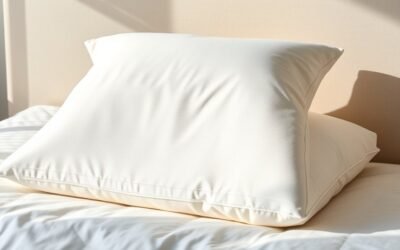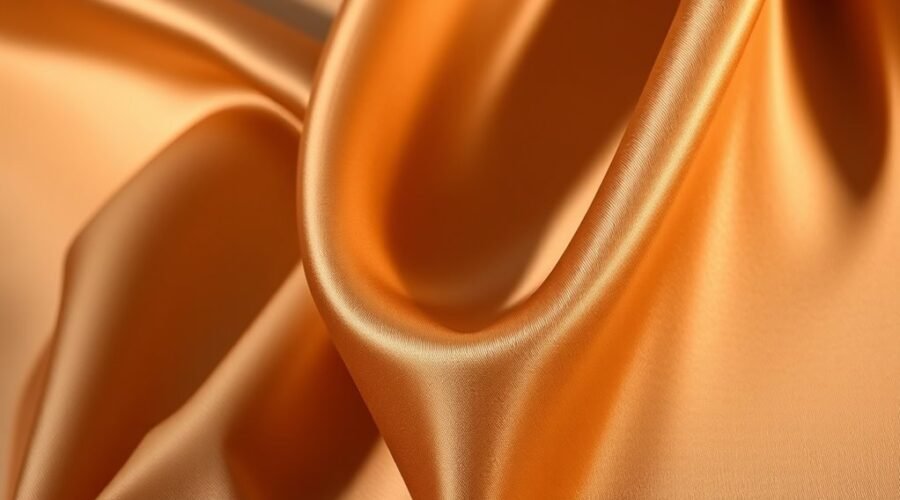
Sateen is a smooth, lustrous weave commonly used for cotton bed sheets. Its signature feel comes from longer yarn floats and fewer interlacing points than a plain weave, leaving more yarn exposed on the fabric face. The result is a soft, drapey surface with a subtle sheen that usually feels warmer and silkier than crisp percale.
Quick Answer
Sateen is a satin-family weave that uses long yarn floats to create a smooth, softly lustrous surface. Cotton sateen sheets commonly use a three-over-one or four-over-one style construction. They feel silkier and warmer than percale, but the exposed floats can make sateen more prone to snagging, pilling, and surface wear.
Key Takeaways
- Sateen belongs to the satin-weave family and gets its smooth surface from long yarn floats with relatively few interlacing points.
- Cotton sateen is especially common in bedding and typically feels soft, drapey, slightly lustrous, and warmer than percale.
- Four-over-one construction is common in sateen sheets, although three-over-one and other satin-family constructions also exist.
- A thread count around 300 to 600 can be a useful shopping range for cotton sateen, but fiber quality and honest yarn counting matter more than chasing the highest number.
- Long-staple or extra-long-staple cotton can produce finer, smoother yarns, while gentle laundering helps protect sateen’s exposed floats from abrasion and snagging.
What Is Sateen Weave?
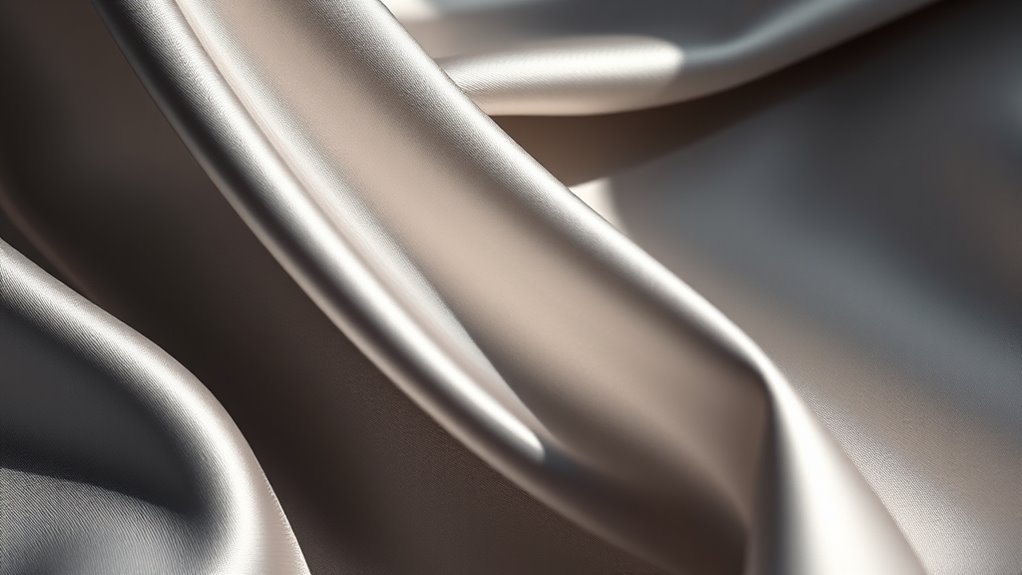
Sateen is a smooth, lustrous fabric construction from the broader satin-weave family. Instead of crossing over and under at nearly every yarn, as a plain weave does, sateen uses longer floats. Those floats reduce the number of visible interlacing points and create a flatter, smoother face.
In consumer bedding, cotton sateen is often described as a four-over-one construction, although three-over-one and other variations are also used. The practical point is the same: more yarn remains exposed across the surface before it is bound into the weave, producing the characteristic smoothness and gentle sheen.
Note: Textile terminology can be confusing. CottonWorks notes that traditional terminology may describe warp-faced constructions as satin and filling- or weft-faced constructions as sateen. Bedding brands also use “sateen” more broadly for cotton satin-style weaves, so the fiber label and actual construction matter more than the name alone.
Sateen is strongly associated with cotton bedding, but the weave name does not automatically mean that a fabric is cotton. Cotton is simply the most familiar version in sheets because spun cotton yarn combines the smooth weave with the absorbency and comfort associated with cotton.
The reverse side of sateen normally looks less lustrous because the longer floats are concentrated on the intended face. That difference makes it easier to distinguish the finished side from the back of the fabric.
Sateen’s smooth feel and soft sheen come mainly from its long surface floats and reduced number of interlacing points—not from a glossy coating applied to ordinary cloth.
Why Sateen Sheets Feel So Silky
Sateen feels silky because its yarns remain on the fabric surface for longer distances before passing under another yarn. Fewer crossover points interrupt the surface, so your hand moves across a flatter and smoother fabric than it would on a basic plain weave.
The longer floats also reflect light more evenly, which creates sateen’s characteristic low-gloss sheen. CottonWorks’ weaving guidance explains that satin-family weaves are known for a smooth, lustrous surface created by long floats.
Fiber quality changes the result considerably. Long-staple and extra-long-staple cotton can be spun into finer, smoother yarns. CottonWorks notes that fiber length affects yarn strength and evenness, and that extra-long-staple cotton can be used to make finer premium textiles with added drape and shine.
That does not mean every long-staple sateen sheet will resist pilling or last indefinitely. Pilling and wear also depend on yarn construction, fabric density, finishing, abrasion, laundering, and how the sheets are used.
Sateen also tends to feel more substantial and warmer than percale. The denser, smoother construction can reduce the airy, crisp sensation associated with plain-weave percale, which is why people who sleep cool often enjoy sateen while consistently hot sleepers may prefer percale.
Sateen vs. Satin vs. Percale
Sateen, satin, and percale can all make smooth fabrics, but they differ in construction, typical fiber choice, feel, temperature, and durability. The fiber label is especially important because weave and fiber work together to determine how a fabric performs.
| Feature | Sateen | Satin | Percale |
| Typical construction | Long-float satin-family weave; cotton bedding often uses 3-over-1 or 4-over-1 descriptions | Satin-family weave with long floats | 1-over-1-under plain weave |
| Common fibers | Cotton is especially common in bedding | Often silk or smooth filament fibers such as polyester or nylon | Usually cotton in bedding |
| Feel | Smooth, soft, drapey | Very smooth and often more slippery | Crisp, light, structured |
| Appearance | Subtle luster | Often higher shine | Matte |
| Sleep feel | Usually warmer and cozier | Depends strongly on fiber | Usually cooler and airier |
| Wear considerations | Long floats can snag or pill | Long floats may snag; durability varies greatly by fiber | Stable plain weave generally tolerates abrasion well |
Sateen Vs. Satin
Sateen and satin belong to the same broad family of long-float weaves, which is why both can look smooth and lustrous. The practical difference shoppers often encounter is fiber: bedding labeled sateen is commonly made from spun cotton, while products labeled satin often use silk or smooth filament fibers such as polyester or nylon.
Traditional textile terminology can distinguish satin and sateen by which yarn system dominates the face, but retail naming is not perfectly consistent. That is why you should read both the fiber-content label and the product’s weave description instead of relying on the words “satin” or “sateen” alone.
Cotton sateen generally feels less slippery than many filament satins and often gives bedding a softer, more substantial hand. Satin made from silk or synthetic filament can look glossier and feel slicker, but durability cannot be predicted from the weave name alone.
Sateen Vs. Percale
Percale uses a one-over-one-under plain weave. That gives it many more interlacing points than sateen, producing the familiar crisp, matte, lightweight feel. Sateen uses longer floats, so its surface feels smoother and drapes more closely around the body.
- Sateen: smooth, soft, drapey, subtly lustrous, and usually warmer.
- Percale: crisp, matte, airy, and usually cooler.
- Sateen: tends to resist visible wrinkling better but can be more vulnerable to snags and surface wear.
- Percale: usually wrinkles more readily but its plain weave is very stable.
- Best choice: depends on sleep temperature, preferred texture, laundering habits, and how much sheen you want.
If you regularly sleep hot or live in a hot, humid climate, percale is often the safer choice. If you prefer a softer, warmer sheet with fluid drape and a polished surface, sateen may suit you better.
What Thread Count Is Best for Sateen Sheets?
For cotton sateen, roughly 300 to 600 thread count is a practical shopping range, with many well-made products falling around 300 to 500. That range is guidance rather than a quality rule. A lower-count sheet made with fine, strong yarn can outperform a higher-count sheet made with coarse or misleadingly counted multi-ply yarn.
Thread count is the number of warp ends and filling picks within a square inch of woven fabric. It should be considered alongside fiber length, yarn quality, ply, fabric weight, finishing, and workmanship.
Ideal Thread Count Range
A sateen sheet around 300 to 600 thread count can provide a useful balance of smoothness, structure, weight, and airflow. You do not need an extreme number to get a silky surface because the sateen weave itself already contributes much of the smooth feel.
- 300-500: a common range for balanced cotton sateen bedding.
- 500-600: can still work well when made with fine, properly counted yarns.
- Fiber quality: long- or extra-long-staple cotton can support finer, smoother yarn.
- Ply: single-ply construction makes thread-count comparisons easier to understand.
- Weave and weight: affect warmth and drape as much as the headline thread-count number.
CottonWorks’ home-textile guidance explains that extra-long-staple cotton fibers are longer and stronger and can produce smoother, finer premium fabrics. It also notes that geographic names such as “Egyptian cotton” do not by themselves guarantee extra-long-staple fiber; Egyptian cotton can include different cotton types.
Why Higher Isn’t Better
Very high thread-count claims do not automatically mean a better sheet. One reason is the way plied yarns can be counted.
In an August 2, 2005 Federal Trade Commission staff opinion, the FTC discussed the industry practice of counting individual warp yarns and filling yarns as single units regardless of whether they contain one or several plies. The agency said that multiplying the actual count by the number of plies could mislead consumers.
Pro Tip: When two sateen sets have dramatically different thread counts, compare the fiber, yarn ply, fabric weight, return policy, and weave details before assuming the larger number is better.
A well-made 300- or 400-count sheet can therefore be a better purchase than an aggressively marketed four-digit thread count. Treat thread count as one specification, not a standalone quality score.
How to Choose Quality Sateen Sheets
To judge sateen sheets, look beyond the biggest number on the package. Fiber quality, honest construction information, finishing, certifications, and the way the fabric feels all matter.
- Fiber: Look for clearly stated fiber content. Long-staple or extra-long-staple cotton can support smoother, finer yarns.
- Thread count: Roughly 300-600 is a practical range for cotton sateen; do not assume four-digit counts are superior.
- Ply: Single-ply yarn makes thread-count comparisons more meaningful.
- Weave: Expect a satin-family construction with long floats; four-over-one is common in cotton bedding.
- Feel: Good sateen should feel smooth and supple rather than stiff, overly slick, or heavily coated.
- Temperature: Hot sleepers should consider whether they would be happier with lighter percale.
- Certification: Use certifications for the specific claims they actually verify rather than treating them as a general quality guarantee.
If organic textile processing matters to you, the Global Organic Textile Standard is more meaningful than an unsupported “organic” marketing phrase. GOTS sets requirements for certified organic fiber content, processing, environmental and social criteria, chemical inputs, and labeling.
Note: GOTS does not mean a textile is manufactured without chemicals. GOTS explicitly regulates which chemical inputs may be used and prohibits or restricts specified substances. Products labeled “Organic” under GOTS require at least 95% certified fiber content, while the standard also provides a “Made with … organic materials” grade beginning at 70% certified fiber content.
Also remember that no certification, cotton name, or thread-count figure can guarantee how a sheet will feel to you personally. Whenever possible, check fabric weight, customer care instructions, return terms, and a physical swatch or sample.
Who Should Choose Sateen Sheets?
Sateen works best for people who prioritize smoothness, drape, and a softly polished look over the crisp, airy feel of percale.
- Choose sateen if you like sheets that feel soft and smooth immediately.
- Choose sateen if you prefer a slightly warmer, cozier sleep surface.
- Choose sateen if you like a subtle sheen and fluid drape.
- Consider percale instead if you regularly sleep hot or prefer a light, crisp sheet.
- Consider a more tightly interlaced weave if pets, rough laundering, or frequent abrasion make snag resistance a top priority.
Neither weave is universally better. The right choice depends on the way you sleep and the texture you want against your skin.
How to Care for Sateen Bedding
Always follow the manufacturer’s care label first because fiber blends, dyes, finishes, and construction can change the safest laundering method. For many cotton sateen sheets, a gentle wash with mild detergent and low dryer heat is a sensible approach.
- Wash gently: Use the recommended cold or warm-water setting and avoid aggressive cycles unless the care label allows them.
- Use mild detergent: Excess detergent can leave residue and make fabric feel less comfortable.
- Avoid unnecessary abrasion: Wash sheets separately from rough garments, zippers, hooks, and other items that can catch the long floats.
- Be cautious with fabric softener: Many bedding manufacturers advise against it because residues can build up on fibers.
- Dry on low heat: Excessive dryer heat can increase shrinkage and fabric wear.
- Remove promptly: Taking sheets out of the dryer soon after the cycle helps reduce wrinkles.
- Iron only if needed: Follow the product label and use the lowest effective temperature, preferably from the reverse side if the manufacturer permits ironing.
Sateen may become more relaxed and supple after repeated laundering, but its longevity cannot be reduced to a fixed number of years. Yarn quality, weave density, finishing, washing frequency, heat exposure, abrasion, and the number of sheet sets you rotate all affect how long it remains comfortable and presentable.
Warning: Long surface floats can catch on sharp objects. Wash sateen away from exposed zippers, hooks, rough hardware, and other items that may snag the fabric.
Frequently Asked Questions
What Are the Disadvantages of Sateen Fabric?
Sateen’s long surface floats can make it more vulnerable to snagging, pilling, and visible surface wear than a stable plain weave such as percale. It also tends to feel warmer, which may be uncomfortable for some hot sleepers. Durability varies with fiber quality, yarn construction, finishing, use, and laundering.
Do Luxury Hotels Use Sateen or Percale?
Hotels can use either. Percale is popular when a crisp, light, matte feel and durable plain weave are priorities. Sateen is used when a smoother hand, softer drape, reduced visible wrinkling, and subtle sheen are preferred. There is no single weave used by every luxury hotel.
Is Satin Silk Fabric Good or Bad for You?
Silk satin can provide a very smooth, low-friction surface, but whether it is a good choice depends on your comfort preferences, budget, care routine, and the specific product. Avoid treating “satin” as a health claim: satin describes a weave family, and products sold as satin may use silk, polyester, nylon, or other fibers with different properties.
What’s Better, Satin or Sateen?
Neither is automatically better. Cotton sateen is a strong choice if you want soft, smooth, relatively easy-care bedding with a subtle sheen. Satin made from silk or filament fibers may feel slicker and look glossier. Compare fiber content, warmth, care needs, snag resistance, price, and preferred texture rather than choosing by the name alone.
Is Sateen Good for Hot Sleepers?
Some hot sleepers are comfortable in lightweight cotton sateen, but sateen generally feels warmer and more substantial than percale. If maximum airflow and a cool, crisp feel are your priorities, cotton percale is usually the better starting point.
Does Sateen Pill or Snag Easily?
Sateen can be more prone to snagging and surface wear because its yarns float across longer sections of the fabric face. Pilling is also influenced by fiber length, yarn quality, finishing, friction, and laundering, so not every sateen sheet performs the same way.
Conclusion
Sateen gets its smooth hand and quiet sheen from long yarn floats, not simply from a glossy surface treatment. In cotton bedding, that construction creates a soft, drapey sheet that usually feels warmer and more polished than crisp percale. Quality depends on more than thread count, so look at fiber length, yarn construction, weave, certifications, care instructions, and overall fabric feel. If you want a smooth sheet with gentle luster and do not mind giving the surface a little extra care, sateen can be an excellent everyday bedding choice.
Sources
- CottonWorks — Basic Woven Fabric Designs — satin/sateen terminology, long floats, surface luster, weave construction, and snagging considerations.
- CottonWorks — Cotton Home Buyer’s Guide — cotton fiber quality, extra-long-staple cotton, and home-textile material guidance.
- U.S. Federal Trade Commission — Thread Count Staff Opinion — proper thread-count representation and misleading multi-ply count inflation.
- Global Organic Textile Standard Version 8.0 — organic-fiber label grades, certification requirements, and chemical-input restrictions.
- North Carolina State University Textile Research — technical discussion of satin and sateen face orientation and long-float weave structure.