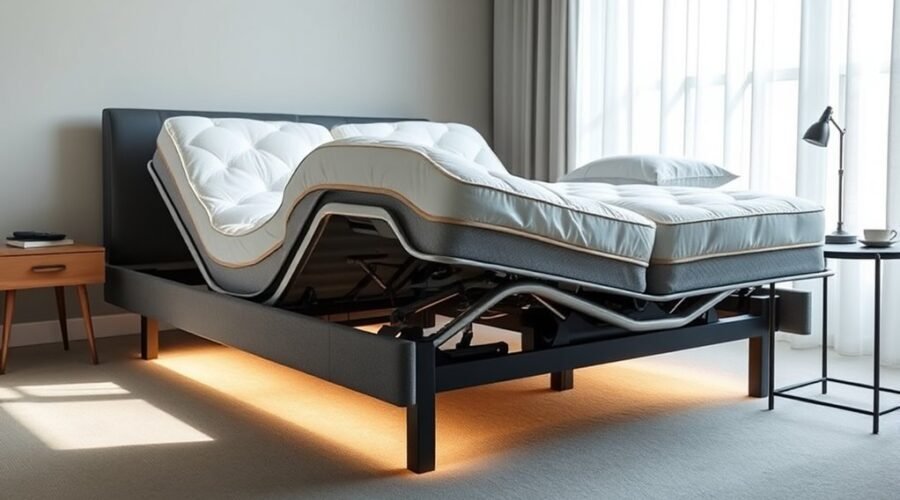
An adjustable bed base is a motorized foundation that lets you raise or lower parts of your mattress for a better fit to your body. You control it with a remote or app, and quiet electric motors bend the frame at key points to create different positions. That simple motion can change how you sleep, sit, and relax, but the real value depends on what the base can do next.
Key Takeaways
- An adjustable bed base is a motorized foundation that raises or lowers mattress sections for customized sleeping positions.
- It moves with quiet electric motors that bend the frame at hinge points for smooth, stable adjustment.
- Wireless remotes or mobile apps control positions like head elevation, foot elevation, Zero Gravity, and Anti-Snore.
- These positions can improve spinal alignment, reduce pressure, and help breathing by elevating the head and feet.
- It works best with compatible mattresses such as memory foam, latex, or hybrid models.
What Is an Adjustable Bed Base?
An adjustable bed base is a motorized foundation that lets you raise or lower the head and feet of your mattress for a more customized sleep position.
A motorized foundation that raises or lowers your mattress for a more customized sleep position.
You use it to create customizable sleeping positions that support comfort, rest, and greater control over how you sleep. Unlike standard frames, adjustable beds adapt to you, not the other way around.
You can often manage settings with a wireless remote or mobile app, and many models include presets like Zero Gravity and Anti-Snore for quick relief.
Mattress compatibility matters: memory foam, latex, and hybrid mattresses usually work best, while stiff innerspring designs may resist the flex.
Many bases also offer USB ports and under-bed lighting, giving you practical access without dependence.
Because the frame moves in sections, it can suit couples who want different positions at the same time.
How Does an Adjustable Bed Base Move?
Powered by electric motors, an adjustable bed base moves the head and foot sections of your mattress smoothly and with controlled precision. You control the motion with a wireless remote or app, so you can raise and lower each section without leaving bed. This gives you direct command over your comfort, letting the adjustable base respond instantly to your needs.
The articulated platform is built in segments that bend at hinge points, creating stable support while the surface shifts. Because the motors work quietly, changes feel discreet, not disruptive. You’ll hear little as the frame shifts to a new angle, which helps preserve rest.
Some models include preset settings, such as Zero Gravity, so you can reach a balanced position quickly. Whether you want support for relaxation or a more open posture, the system moves with purpose.
It’s a practical design that gives you freedom, control, and precision.
What Positions Can an Adjustable Bed Base Use?
You can adjust the head and foot sections independently to find a position that fits your comfort and support needs.
Common settings include Zero Gravity, which helps relieve pressure by distributing your weight more evenly, and Anti-Snore, which raises your head to help open your airway.
Many bases also include Lounge presets for reading or watching TV, giving you a more comfortable alternative to lying flat.
Head And Foot Elevation
Adjustable bed bases let you raise the head and foot sections to improve comfort, sleep posture, and support during activities like reading or watching TV.
With an adjustable bed frame, you control head and foot angles to improve comfort and fit your sleep position.
- Head elevation often reaches 30 to 90 degrees.
- Foot elevation can rise to about 45 degrees.
- Separate controls let you and your partner choose different settings.
- Presets can reduce pressure and support alignment.
Raise the head to ease reflux or breathing strain. Lift the feet to reduce swelling and improve circulation.
This freedom helps you shape the bed to your body, not the other way around.
Zero Gravity Position
Beyond head and foot elevation, many adjustable bed bases offer a Zero Gravity position that raises the legs and upper body into a neutral, weightless-feeling posture.
You can use this preset on an adjustable frame to reduce pressure on your spine, ease back and joint tension, and support better circulation.
By lifting your legs, the zero gravity position may also help reduce swelling and enhance sleep quality.
Many models let you choose customizable angles within this setting, so you can fine-tune comfort without guessing.
Because the bed stores this posture as a quick-access option, you can return to it fast whenever you want ergonomic support.
This position gives you a freer, more balanced way to rest and recover.
Anti-Snore And Lounge
Another useful preset on an adjustable bed base is Anti-Snore, which raises the head slightly to help open airways and reduce snoring during sleep. You can use it to support your sleep needs without giving up comfort or control.
Lounge mode lifts both the head and feet, creating a relaxed angle for reading, streaming, or resting while helping relieve pressure on your back.
- Anti-snore targets airway support.
- Lounge improves upright comfort.
- Split adjustable bases let each side move independently.
- Custom angles let you fine-tune support.
With adjustable bases, you’re not locked into one position. You can choose a preset or adjust beyond it, so your bed works for your body, not against it.
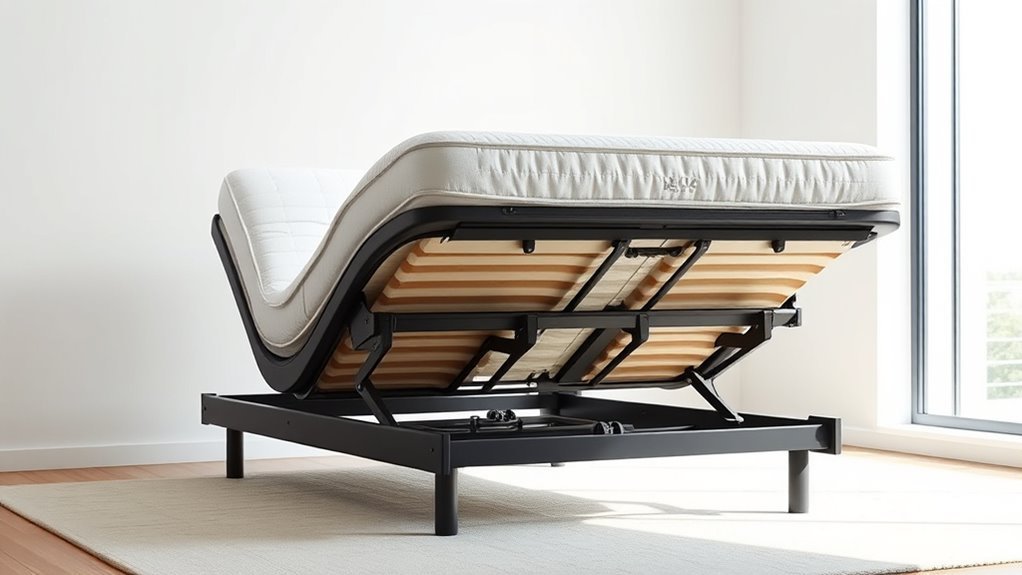
What’s Inside an Adjustable Bed Base?
Inside an adjustable bed base, quiet electric motors drive the head and foot sections so you can raise or lower them smoothly.
These adjustable bed frames use articulated sections and hinge points to bend where you need support, giving you customizable positioning without forcing you into one static posture.
Articulated sections and hinge points let the frame bend where you need support, creating customizable comfort and alignment.
You can control the movement with wireless remote controls, and some models add app access for even faster adjustments.
Built-in safety features help keep motion controlled and the structure reinforced, so each change feels secure.
The design also works with many mattress types, helping your body stay aligned while the base shifts.
That means you’re free to sit up, recline, or elevate your legs with precision and ease, not compromise.
Inside, the system is simple: power, joints, controls, and protection all work together so you can reshape your rest on your terms.
Which Mattresses Work With an Adjustable Bed Base?
Which mattresses work best with an adjustable bed base? You’ll want flexible mattresses that move with the frame, not against it. An adjustable bed base works well with memory foam, latex, and many hybrid mattresses because they bend easily and keep supporting you in different positions.
Choose mattresses made for adjustable use if you want steady spinal alignment and pressure relief without fighting the frame.
- Memory foam adapts smoothly to movement.
- Latex offers flexibility and durable support.
- Hybrid models can work if they’re not too rigid.
- Avoid thick, heavy designs over 14 inches.
Innerspring mattresses usually resist bending, so they can damage or limit motion on an adjustable bed base.
If you want freedom and comfort, check the mattress specs before you buy. Some brands, like Purple, design mattresses for this setup, giving you better compatibility, comfort, and control every night.
What Are the Benefits of an Adjustable Bed Base?
An adjustable bed base lets you fine-tune your head and feet positions, so you can sleep in a more supportive, comfortable posture.
You’ll also get better pressure relief, which can improve spinal alignment and reduce strain on your body.
Improved Sleep Positioning
Improved sleep positioning is one of the biggest benefits of an adjustable bed base, because you can raise your head or feet to support better spinal alignment and relieve pressure points.
With an adjustable bed, you can change your sleeping position to improve sleep quality and wake less strained.
- Raise your head to ease breathing and support a calmer night.
- Lift your feet to encourage circulation and reduce heaviness.
- Find a posture that helps with reflux or indigestion.
- Set a comfortable angle for reading or watching TV before sleep.
This flexibility gives you control over how you rest, so your bed adapts to you, not the other way around.
That freedom can make bedtime feel more restorative, more personal, and more effective.
Pressure Relief Support
Pressure relief support is one of the standout benefits of an adjustable bed base, because elevating your head and feet can ease strain on your spine and joints.
With adjustable beds, you can shift weight away from sore spots, which helps reduce pressure and supports better spinal alignment. That matters if you wake up stiff, numb, or aching after a night in one position.
By changing angles, you can also relieve tension on your lower back and shoulders, especially if you sleep on your side. This customizable comfort helps you move beyond cramped, fixed sleeping postures and improve sleep with less pain.
When your body gets better pressure relief, you rest more deeply and wake with more freedom to move.
Snoring And Reflux Help
If snoring or acid reflux keeps you awake, an adjustable bed base can help by letting you raise your head for better airflow and less airway obstruction.
With an adjustable bed, you can elevate the head to reduce snoring and ease acid reflux, so you’re not trapped by restless nights.
- You open your airway for easier breathing.
- You keep stomach acid lower in the night.
- You can improve their sleep with preset positions.
- You gain comfort without extra effort.
Research shows an incline can also support breathing patterns for sleep apnea.
That means you get a practical, personalized solution that helps you rest more deeply and wake less often.
What Are the Downsides of an Adjustable Bed Base?
Adjustable bed bases have a few important drawbacks to contemplate before you buy.
First, the costs are usually higher than a standard frame, often running from $899 to $3,000, so you’re making a real investment. You may also need specialized mattresses, and many innerspring models won’t work, which adds more expense.
Mechanical parts bring maintenance, and repairs can cost more over time. During adjustments, noisy motors can interrupt sleep, especially if you’re a light sleeper or share your bed. That matters when you want rest on your own terms, not a machine’s schedule.
Finally, not everyone gains enough benefit to justify the purchase. If you sleep well on a flat bed, an adjustable base may offer limited value.
Weigh these downsides carefully so you can choose with clarity, protect your budget, and keep control over your comfort.
How Do You Choose the Right Adjustable Bed Base?
Choosing the right adjustable bed base starts with your needs, not the price tag. You should begin with your health goals: if you deal with back pain or reflux, pick an adjustable bed base that supports relief and better sleep.
A mattress for back pain should match the base, so check compatibility before you buy. Memory foam, latex, and many hybrids work well; innersprings often don’t.
- Look for dual adjustability if you share the bed.
- Choose preset positions like Zero Gravity for easier comfort.
- Check key features such as massage settings.
- Verify the weight limit for you and your mattress.
Compare price and warranty, since most models run from $899 to $1,599.
When you match features to your body, you don’t just buy furniture—you claim more control, more rest, and better quality of life.
How Do You Care for an Adjustable Bed Base?
To keep your adjustable bed base working safely and smoothly, inspect it regularly for loose connections, worn parts, or signs of strain.
You should clean the frame and moving parts with a damp cloth, and avoid harsh chemicals that can damage finishes or electronics.
Don’t place heavy objects on the base, and never force a position change; that protects the motor and preserves freedom of movement.
Keep remote controls or app controls dry and free of debris so you can operate the bed without interruption.
Follow the manufacturer’s maintenance schedule, including any lubrication steps for moving joints, to support peak performance.
If you notice unusual noise, slow motion, or uneven lifting, stop using the adjustable bed base and check it before continuing.
Consistent care helps you protect your investment, extend service life, and keep control over your rest.
Frequently Asked Questions
What Are the Downsides of Adjustable Beds?
You’ll face higher costs, often $899 to $1,599, so a clear price comparison matters.
You may also need a new mattress, because mattress compatibility isn’t guaranteed.
Noisy motors can hurt sleep quality, and repairs can add up over time.
User reviews often mention mixed durability.
Health benefits vary, so you shouldn’t assume the investment will transform your rest.
Assess your needs before you buy an adjustable bed.
Is It Okay to Sleep on Your Side on an Adjustable Bed?
Yes, you can sleep on your side on an adjustable bed.
You’ll often get side sleeping benefits like better spinal alignment and pressure relief at the shoulder and hip.
To keep sleep quality high, choose a mattress compatibility match that flexes with the base.
You can also use gentle head or leg elevation to ease breathing and circulation.
If a preset side-sleeper mode exists, try it for comfort.
Can a Regular Mattress Work on an Adjustable Base?
No, a regular mattress usually won’t work well on an adjustable base because mattress compatibility is limited by its rigid coils.
You’ll get better sleep quality with flexible mattress types like memory foam, latex, or many hybrids, which bend without damage. These options improve pressure relief and let you use adjustable base benefits fully.
Always check the manufacturer’s guidelines, and avoid mattresses thicker than 14 inches for better movement.
What Do Doctors Say About Adjustable Beds?
Doctors say adjustable beds can support your health benefits by letting you change your sleep position for pain relief, better breathing, and less acid reflux.
You can also use elevation for circulation improvement, especially if you deal with swelling or varicose veins.
Many clinicians note improved sleep quality, too.
If you want more control over comfort and recovery, an adjustable bed gives you a practical, body-led way to rest.
Conclusion
An adjustable bed base gives you more control over how you sleep and relax. You can raise your head, feet, or both with a quiet motor system that bends the frame at key points. When you choose the right mattress and care for the base properly, you’ll get comfort, support, and convenience that can be a real game changer. If you’re ready for better rest, this setup can help you hit the ground running.