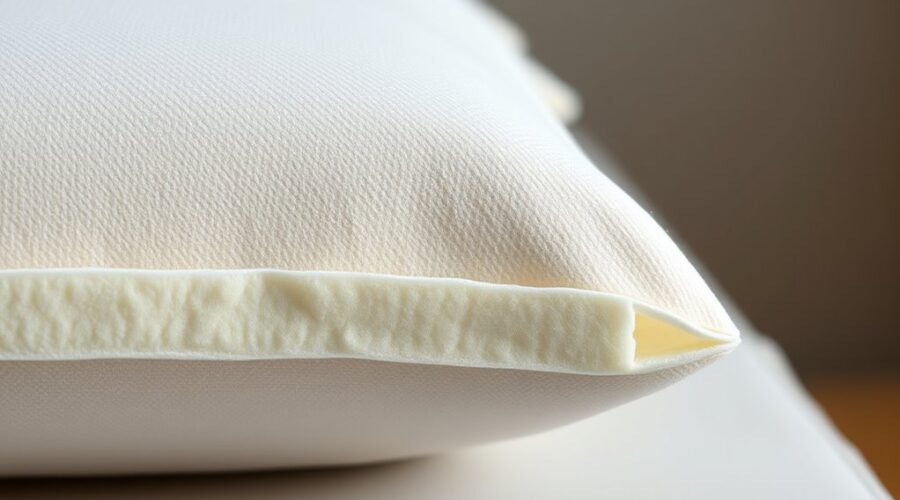
High-density foam can be a strong choice for sofa and chair cushions, but the label is easy to misunderstand. Density tells you how much a foam weighs per unit volume and is closely tied to durability; it does not tell you whether the cushion will feel soft or firm. For seating, 1.8 lb/ft³ is a useful industry performance benchmark, not a universal definition of “high density.”
Quick Answer
For seating, flexible polyurethane foam with a polymer density of about 1.8 lb/ft³ or higher generally performs better than lower-density foam, but density is not firmness. Choose firmness separately using IFD/ILD, then consider thickness, support factor, foam type, cushion construction, and how heavily the seat will be used.
Key Takeaways
- Density is mass per unit volume. In flexible polyurethane foam, higher polymer density generally improves durability and support retention.
- Firmness is measured by indentation force deflection (IFD), also commonly called ILD. A high-density foam can be soft or firm.
- For seating, 1.8 lb/ft³ (about 29 kg/m³) polymer density is a useful baseline because industry testing has found better performance at or above that level.
- There is no reliable universal “7–10 year” lifespan for cushion foam. Service life depends on foam formulation, density, fatigue performance, thickness, cushion design, load, environment, and use.
- Yellowing can occur with age and UV exposure, but color alone does not tell you whether a cushion has lost support.
What Is High Density Foam?
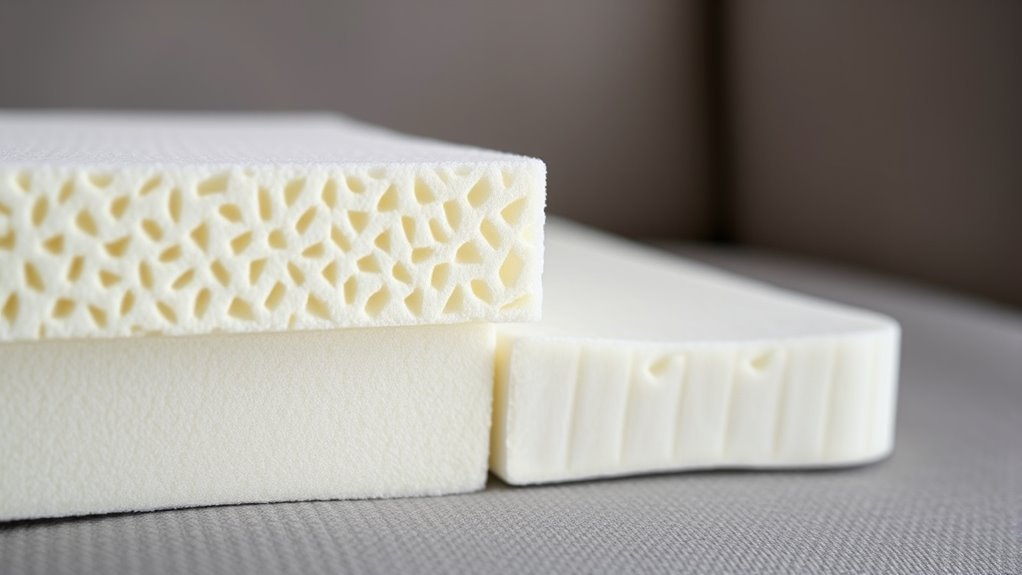
In furniture, “high-density foam” usually refers to a denser grade of flexible polyurethane foam used where durability and support retention matter. Density is expressed as pounds per cubic foot (lb/ft³ or pcf) in the United States or kilograms per cubic meter (kg/m³) elsewhere.
The Polyurethane Foam Association (PFA) explains that density is the foam’s mass per unit volume and that higher polymer density generally helps foam retain its original properties. PFA also recommends paying attention to polymer density rather than simply assuming every added filler improves performance.
For seating, PFA’s industry guidance says flexible polyurethane foams with polymer densities of 1.8 pcf or higher have shown better performance than lower-density foams. That makes 1.8 pcf a useful seating benchmark, but it is not a universal legal or technical cutoff that defines every product sold as “high density.”
For seating, think of 1.8 lb/ft³ as a performance baseline—not as a guarantee of comfort, firmness, or a fixed number of years of life.
Note: Do not identify foam by color. Many foam grades look similar, and manufacturers may use colorants for identification or branding. Ask for the density and firmness specifications instead.
How High Density Foam Differs From Firmness
Density and firmness answer two different questions. Density tells you how much foam material exists in a given volume and is strongly related to durability. Firmness tells you how much force is needed to compress the foam and describes surface feel.
The current industry term is IFD (Indentation Force Deflection); you may also see the older or commonly used term ILD (Indentation Load Deflection). PFA describes 25% IFD as the force required to indent a foam sample to 25% of its original height. A larger value means a firmer surface feel under the specified test conditions.
Density Vs Firmness
When you choose a denser foam, you are mainly choosing a material with better potential to retain height, firmness, and support over repeated use. You are not choosing a specific feel. A high-density foam can be made plush, medium, or firm, while a low-density foam can be manufactured to feel firm at first.
That is why a showroom squeeze test is not enough. If durability matters, ask for the density specification. If comfort matters, ask for the IFD/ILD specification too.
ILD Measures Feel
IFD/ILD is useful when you compare foams of similar construction because it describes resistance to indentation. Higher numbers generally feel firmer; lower numbers generally feel softer. However, the number is meaningful only when you know the test method and sample conditions, because thickness, sample size, temperature, and foam formulation can affect the result.
There is no single “correct” 35–50 IFD range for all high-density foam. The right firmness depends on cushion thickness, the support deck or springs below it, the sitter’s preferences, the intended posture, and whether the cushion is a seat, back, arm, topper, or another component.
- Density helps you compare durability potential.
- IFD/ILD helps you compare firmness or surface feel.
- Support factor helps describe how strongly the foam pushes back as it is compressed more deeply.
Support Factor Matters Too
Support factor, also called compression modulus, adds information that density and 25% IFD do not provide by themselves. PFA calculates it from the relationship between deeper and shallower indentation measurements. A higher support factor generally means the foam becomes more supportive as it is compressed, which can help reduce bottoming out.
This matters because two foams can have similar surface firmness but feel very different once you sit deeply into them. For a seat cushion, ask the supplier about support factor or compression modulus when that specification is available.
Durability Is Density Driven
Higher polymer density generally improves durability, but density is not the only variable. PFA uses measures such as flex fatigue, firmness loss, and height loss to evaluate how foam changes after repeated compression. Foam chemistry, formulation, support factor, cushion thickness, foundation design, and loading also affect long-term performance.
So, instead of assuming every 1.8 pcf foam will last a fixed number of years, compare the supplier’s density and fatigue data and buy for the actual application.
Why High Density Foam Lasts Longer
Denser flexible polyurethane foam generally contains more polymer material per unit volume. PFA reports that, as polymer density increases, foam tends to retain its original firmness, height, support, and other properties better during fatigue testing.
This is why denser foam is commonly used in seat cushions that receive repeated loading. The important correction is that density should not be confused with cell size or a “tighter cell structure.” Two foams can have different formulations and cell structures while still having similar density.
- Higher polymer density generally reduces firmness loss during repeated use.
- Higher density can help reduce compression set and permanent height loss.
- Good support factor can reduce the feeling of bottoming out.
- Foam type and formulation can change performance even when density is similar.
There is also no universal service-life clock. A lightly used guest-room cushion and a family-room seat used for hours every day can age very differently even if they start with the same foam.
Best Uses for High Density Foam
High-density flexible polyurethane foam is most useful where repeated loading and shape retention matter. Common applications include sofa seats, dining-chair pads, benches, office seating, upholstered furniture components, and some bedding layers.
Do not apply a seating rule blindly to every foam product. Memory foam, high-resilience foam, conventional polyurethane foam, and other foam families can use different density ranges and are engineered for different performance goals.
Heavy Daily Use
Daily-use seats benefit most from a durable foam specification because repeated compression is what exposes weak fatigue performance. For frequently used seating, start by asking whether the foam’s polymer density meets or exceeds the 1.8 pcf seating benchmark, then compare IFD/ILD, support factor, and fatigue data.
For a very thin cushion, firmness and support factor become especially important because there is less material available before the sitter reaches the hard deck or frame. For a thicker cushion, the same IFD can feel different because the cushion has more travel.
Long-Lasting Cushion Support
Long-lasting support comes from the complete cushion system, not density alone. The foam core, fiber wrap, springs or webbing, seat deck, cover tension, and cushion dimensions all influence how the seat feels and wears.
For replacement cushions, match the original shape and thickness unless you have a clear reason to redesign the seat. A denser replacement foam can improve durability, but an unsuitable firmness or thickness can still make the finished cushion uncomfortable.
How to Choose the Right High Density Foam
Start with the application and ask for specifications rather than relying on marketing labels. For seating, density, firmness, support factor, foam family, and fatigue performance are more useful than color or a generic “high density” description.
- Confirm the foam type. Ask whether it is conventional flexible polyurethane foam, high-resilience (HR) foam, viscoelastic/memory foam, or another formulation.
- Check density. For polyurethane seating foam, 1.8 pcf polymer density is a useful performance baseline; heavier-use seating may justify a denser grade if the supplier’s performance data supports it.
- Choose firmness separately. Select IFD/ILD for the feel you want rather than assuming dense foam must be firm.
- Ask about support factor and fatigue testing. These can tell you more about bottoming-out resistance and how the foam changes with repeated compression.
- Match the cushion design. Thickness, the support deck, and any fiber or softer comfort layers affect the final feel.
- Check certification when relevant. CertiPUR-US technical guidelines cover content, emissions, and physical-performance criteria for certified flexible polyurethane foam, but certification is not a substitute for choosing the right density and firmness.
Pro Tip: Ask the seller for a written spec showing both density and IFD/ILD. If only “soft,” “medium,” “firm,” or a color name is provided, you still do not have enough information to compare durability and feel accurately.
How to Choose High Density Foam Thickness
Thickness should match the furniture design rather than a universal 2-to-4-inch rule. Dining-chair pads may be thin, while sofa seats are often substantially thicker. A cushion that fits the cover but is too soft, too thin, or poorly supported can still bottom out.
Use these checks before ordering replacement foam:
- Measure the existing cushion’s width, depth, and finished thickness.
- Inspect the support system below the cushion; broken springs or stretched webbing can mimic failed foam.
- Consider the sitter’s weight and how deeply the cushion is expected to compress.
- Use a firmer or higher-support-factor foam when a thin profile must resist bottoming out.
- If possible, test a sample at the intended thickness before ordering all cushions.
Thickness and firmness interact. A thick cushion with a given IFD can feel different from a thinner cushion of the same foam because the available compression travel is different.
Why High Density Foam Yellows Over Time
Polyurethane can change color as it ages. UV exposure can drive photochemical reactions and photo-oxidation that produce yellowing at the surface. Heat, oxygen, and the specific foam formulation can also influence discoloration.
- UV exposure can accelerate surface yellowing.
- Oxidative aging can change color even when the foam is not in direct sunlight.
- Different formulations and additives can discolor at different rates.
A peer-reviewed study in Polymer Degradation and Stability documented polyurethane yellowing during UV irradiation and linked it with photodegradation and photo-oxidation. That means the statement “yellowing is never damage” is too broad. At the same time, color alone does not tell you whether a cushion has lost useful support.
Judge replacement by performance: permanent compression, loss of height, crumbling, tearing, loss of recovery, or repeated bottoming out matter more than a cosmetic color shift.
How to Care for High Density Foam
Care depends on the cushion cover, foam formulation, adhesives, and furniture maker’s instructions. For removable cushions, follow the furniture or foam supplier’s cleaning directions first. Avoid saturating bare foam unless the manufacturer specifically permits it, and allow any damp foam to dry completely before covering or using it again.
| Care task | Practical action |
|---|---|
| Routine inspection | Check for permanent impressions, edge tears, crumbling, or loss of recovery. |
| Spills | Follow the upholstery and foam supplier’s cleaning instructions; blot rather than aggressively soaking the cushion. |
| Drying | Let damp foam dry fully before reinstalling it in a cover or using the cushion. |
| Sunlight | Limit unnecessary UV exposure if appearance and surface aging matter. |
| Rotation | If the furniture design allows it, rotate or swap reversible cushions periodically to spread wear. |
Do not assume ordinary indoor upholstery foam is suitable for wet or outdoor conditions. If a cushion will regularly get wet, choose a foam and cover system specifically designed for that environment.
How to Read a Foam Spec Sheet Before Buying
A useful foam specification gives you more than a marketing name. Look for the following:
- Foam family: conventional polyurethane, high-resilience, viscoelastic/memory, molded foam, or another type.
- Density: preferably the polymer density when the supplier provides it.
- 25% IFD/ILD: the surface-firmness measure.
- Support factor/compression modulus: how strongly the foam supports deeper compression.
- Fatigue or compression-set data: evidence of how height and firmness change after repeated loading.
- Intended application: seat, back, bedding layer, packaging, outdoor/marine, or another use.
- Certification: when important to you, verify a certification in the certifier’s current directory rather than relying only on a product badge.
PFA notes that most foam grades can look alike, so specifications are more dependable than visual cues. If a seller cannot provide basic density and firmness information, comparison shopping becomes much less reliable.
When to Replace High Density Foam
Replace a cushion when it no longer performs its job, not simply because it reaches a certain age. Useful warning signs include:
- the cushion stays visibly compressed after the load is removed;
- you regularly feel the frame, deck, or springs through the cushion;
- the foam has torn, crumbled, powdered, or split;
- one seating area has lost much more height or firmness than the rest;
- the foam no longer returns close to its original shape after normal use.
Before blaming the foam, inspect the support system beneath it. A sagging spring unit, damaged deck, or stretched webbing can make good foam feel worn out.
Safety and Storage
Warning: Flexible polyurethane foam is combustible. Keep exposed foam away from cigarettes, open flames, sparks, heaters, hot work, and other ignition sources. Do not assume a foam that meets a flammability requirement is noncombustible.
The PFA handling and storage bulletin emphasizes that flexible polyurethane foam can burn rapidly once ignited and should be kept away from direct and indirect high-temperature ignition sources. Store replacement foam in a clean, dry place away from heat and flame, and follow local fire-safety requirements when storing large quantities.
Frequently Asked Questions
What are the disadvantages of high-density foam?
A denser foam weighs more for the same volume and may cost more because it contains more material. It can still soften, lose height, or fail if the formulation or cushion design is poor. Density also does not guarantee a firm or cool feel; those characteristics depend on other foam and upholstery properties.
What density foam is best for seat cushions?
There is no single best density for every seat, but PFA industry guidance indicates that flexible polyurethane foams with polymer density of 1.8 lb/ft³ or higher generally perform better in seating than lower-density foams. For heavy daily use, compare higher-density options along with IFD/ILD, support factor, thickness, and fatigue data.
What is the lifespan of cushion foam?
There is no reliable universal lifespan in years. Cushion life varies with density, formulation, fatigue performance, thickness, body load, support system, environment, and hours of use. Replace foam when it develops permanent height loss, poor recovery, crumbling, tearing, or repeated bottoming out.
What is the best foam density for sofa cushions?
For conventional flexible polyurethane sofa seating, 1.8 lb/ft³ polymer density is a practical baseline rather than a universal optimum. A more demanding sofa may benefit from a denser or higher-performance foam, but the finished feel also depends on IFD/ILD, support factor, cushion thickness, wraps, and the deck underneath.
Is high-density foam always firm?
No. Density and firmness are independent properties. A high-density foam can be soft, medium, or firm depending on its IFD/ILD specification, while a lower-density foam can be manufactured to feel firm at first.
Does yellow foam need to be replaced?
Not automatically. Yellowing can result from UV exposure and oxidation, but color alone does not measure cushion performance. Replace the foam when you see functional problems such as permanent compression, poor recovery, crumbling, tearing, or bottoming out.
Conclusion
High-density foam can be an excellent choice when you need a cushion to hold its shape and support through repeated use, but density is only one part of the specification. For seating, use 1.8 lb/ft³ polymer density as a practical performance baseline, choose IFD/ILD separately for comfort, and consider support factor, thickness, foam type, and the condition of the seat deck. Yellowing alone is not a failure test; judge the cushion by recovery, height retention, and support.
Sources
- Polyurethane Foam Association — Foam Performance — density, IFD, support factor, and fatigue testing.
- Polyurethane Foam Association — Furniture Case Study — the 1.8 pcf seating-performance benchmark and furniture applications.
- CertiPUR-US — Technical Guidelines — current certification criteria for slabstock and molded flexible polyurethane foam.
- Polymer Degradation and Stability — UV Irradiation and Polyurethane Yellowing — UV-driven yellowing, photo-oxidation, and degradation.
- Polyurethane Foam Association — Proper Handling and Storage of Flexible Polyurethane Foam — combustibility and ignition-source safety.