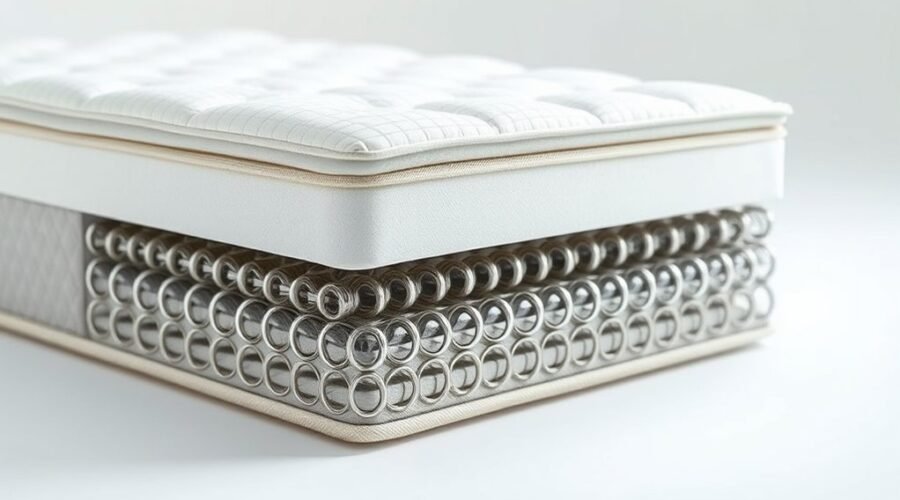
If you like the pressure relief of foam but do not want the deep, slow-moving feel of many all-foam beds, a hybrid mattress may offer a useful middle ground. Hybrids combine a coil support core with thicker comfort layers made from materials such as memory foam, polyfoam, or latex. The result can be a responsive, cushioned bed, but firmness, cooling, motion isolation, and durability still vary significantly from one model to another.
Quick Answer
A hybrid mattress combines a substantial foam or latex comfort system with a coil support core, usually pocketed coils. Compared with many all-foam beds, hybrids tend to feel more responsive and allow more airflow. They can suit many sleepers, but the best choice depends on firmness, body size, sleeping position, motion sensitivity, and construction quality.
Key Takeaways
- A hybrid mattress combines a coil support core with thicker foam, latex, or other comfort layers.
- Pocketed coils add responsiveness and can limit movement spreading from one coil to the next.
- The open coil core generally allows more airflow than a solid foam support core.
- Hybrids usually isolate motion better than traditional interconnected-coil beds, but all-foam mattresses often absorb movement more effectively.
- Firmness, comfort-layer thickness, edge support, foundation requirements, trial terms, and warranty details matter more than the word “hybrid” alone.
What Is a Hybrid Mattress?
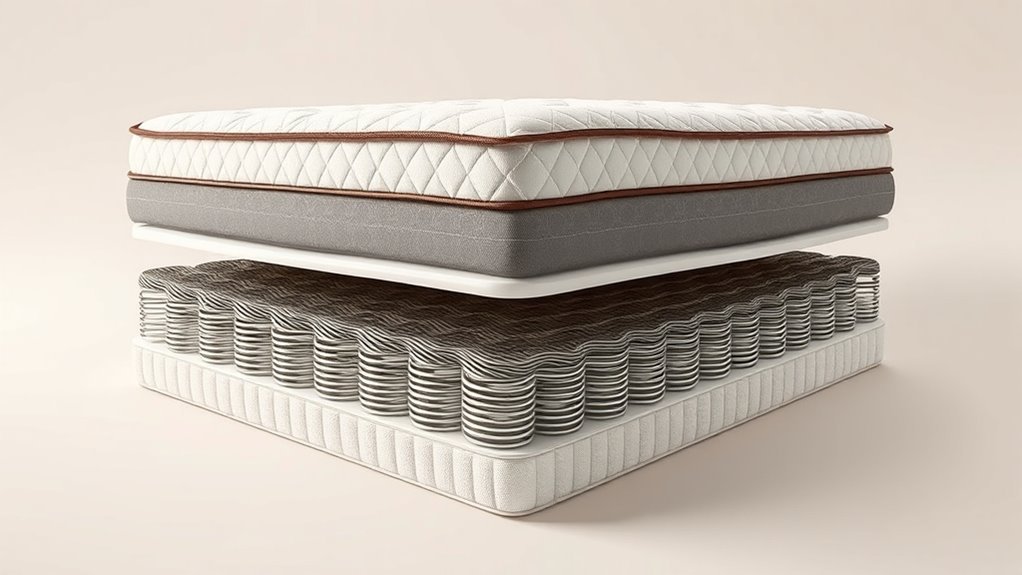
A hybrid mattress combines an innerspring-style support core with a substantial comfort system made from foam, latex, or similar cushioning materials. Most modern hybrids use individually wrapped or pocketed coils, although construction varies by manufacturer.
The coils provide the main structural support and add bounce and responsiveness. Above them, the comfort layers contour around the body to reduce concentrated pressure at areas such as the shoulders and hips. This combination usually creates a feel that is more responsive than an all-foam mattress but more cushioned than a traditional thin-comfort-layer innerspring.
Pocketed coils move more independently than interconnected springs. That can reduce how much movement travels through the coil unit when a partner changes position, although a hybrid will not necessarily isolate motion as well as a highly conforming all-foam mattress.
The spaces around the coils also allow air to circulate through the support core. This is one reason hybrids often retain less heat than dense all-foam designs, though the cover, foam thickness, bedding, bedroom temperature, and sleeper all affect actual cooling performance.
Note: “Hybrid” describes a construction category, not a standardized firmness or quality level. Two hybrid mattresses can feel completely different depending on their foams, latex, coil design, zoning, thickness, and edge reinforcement.
How a Hybrid Mattress Feels
The feel of a hybrid mattress comes from the interaction between its comfort layers and coil system. In many models, the top layers cushion the body while the coils push back quickly as your weight shifts.
That responsiveness can make it easier to roll over, sit up, or change sleeping positions than on slow-response memory foam. A thick memory-foam hybrid may still provide noticeable sink and contouring, while a latex hybrid can feel springier and more buoyant.
Firmness also changes the experience. A plush hybrid can allow substantial shoulder and hip sinkage, while a firm hybrid may keep the body much closer to the surface. Because firmness scales are not standardized across mattress brands, one company’s “medium” can feel different from another’s.
Motion isolation is usually moderate rather than absolute. Pocketed coils reduce movement spreading through the coil core, while foam above the coils can absorb additional vibration. However, very bouncy hybrids may still transmit more partner movement than many all-foam beds.
Hybrid Mattress Benefits
The main appeal of a hybrid mattress is balance. A well-matched model can provide cushioning without eliminating bounce, support without feeling excessively rigid, and more internal airflow than many solid-foam designs.
Balanced Support and Comfort
Hybrid mattresses pair a supportive coil core with comfort layers that can conform around the body. This makes it possible to combine surface cushioning with a more responsive base.
The exact balance depends on firmness and construction. Side sleepers often need enough cushioning for the shoulders and hips, while many back and stomach sleepers prefer stronger resistance against excessive midsection sinkage. Combination sleepers may value a responsive surface that does not make position changes difficult.
Some models also reinforce the perimeter with thicker coils or denser foam. Stronger edge support can make the usable sleep surface feel larger and can make sitting or getting out of bed easier.
Pressure Relief for Sleepers
The comfort layers of a hybrid can spread load across a wider area instead of concentrating pressure at the shoulders, hips, and other prominent areas. The coil system underneath helps prevent the entire body from sinking without support.
| Component | What It Does | Why It Matters |
|---|---|---|
| Foam or latex comfort layers | Cushion and contour | Can reduce concentrated pressure |
| Pocketed coils | Compress individually | Provide responsive support |
| Zoned support | Changes resistance by area | May improve support for certain sleepers |
| Reinforced perimeter | Reduces edge collapse | Improves usable surface area |
| Comfort-layer quality | Influences softening and wear | Affects long-term feel |
Pressure relief is not determined by construction type alone. A mattress that is too firm for a particular side sleeper can create pressure even if it is a hybrid, while an overly soft model may allow uncomfortable sinkage for someone who needs stronger support.
Cooler Sleep and Moderate Motion Isolation
Pocketed coil systems leave more open space inside the mattress than a solid foam support core. That can improve airflow and give heat another path away from the sleeping surface.
The comfort system still matters. Thick layers of close-conforming foam can retain warmth, while breathable covers, thinner foams, latex, phase-change materials, and other designs may change how warm the mattress feels. Cooling claims should therefore be judged model by model rather than by the “hybrid” label alone.
Individually wrapped coils can also reduce vibration compared with interconnected spring systems. Foam above the coils absorbs additional movement. For couples, that usually means better motion isolation than a traditional bouncy innerspring, though many all-foam mattresses remain stronger at dampening movement.
Why Hybrid Mattresses Often Sleep Cooler
If you sleep hot, a hybrid mattress may be worth considering because the coil core has open spaces that allow air to move through the mattress more freely than through a solid foam core.
The coil core is the main structural reason many hybrids ventilate better than dense all-foam beds, but no construction type guarantees a cool night’s sleep.
Heat can still build up in a hybrid if the upper comfort layers are thick, dense, and highly conforming. Sheets, mattress protectors, room temperature, humidity, clothing, and individual physiology also influence how warm a bed feels.
Some manufacturers add breathable covers, perforated foam, latex, gel infusions, phase-change materials, or other cooling features. Treat these as additional design features rather than a guarantee. The complete mattress construction matters more than any single cooling label.
Hybrid Mattress Drawbacks
Hybrid mattresses have several practical trade-offs to consider before buying.
- Higher weight: Steel coils plus multiple comfort layers can make a hybrid heavy and awkward to move, rotate, or carry upstairs.
- Potentially higher price: More complex construction often costs more than a basic innerspring or budget foam mattress.
- Some motion transfer: Pocketed coils reduce movement better than many interconnected springs, but responsive hybrids can still transfer more motion than highly absorbent all-foam beds.
- Cooling varies: The coil core encourages airflow, but thick foam layers can still feel warm.
- More bounce: Responsiveness is useful for movement but may not suit sleepers who want a deeply cradled, nearly motionless surface.
- Model-to-model variation: A hybrid can be plush, medium, or very firm, so the category alone tells you little about whether it matches your sleep position.
These are not automatic deal-breakers. They simply make it important to compare the actual materials, firmness, return terms, and construction rather than assuming every hybrid performs the same way.
Hybrid Mattress vs. Memory Foam
The main construction difference is the support core. A hybrid uses coils beneath its comfort layers, while an all-foam mattress uses foam throughout the support system.
| Feature | Hybrid | All-Foam / Memory Foam |
|---|---|---|
| Responsiveness | Usually higher | Often lower with slow-response memory foam |
| Airflow | Usually better through the coil core | Depends heavily on foam and cover design |
| Motion isolation | Often good with pocketed coils | Frequently stronger |
| Edge support | Can be strong with reinforced perimeter coils | Varies; some foam edges compress more |
| Ease of movement | Usually easier | Deep contouring can make movement slower |
| Weight | Often heavy | Also varies widely |
A memory-foam mattress can provide close contouring and strong motion dampening. A hybrid generally adds more bounce and airflow. Neither construction is universally more comfortable; the better choice depends on your pressure-relief needs, movement preferences, temperature sensitivity, and firmness preference.
Who Should Buy a Hybrid Mattress?
A hybrid can be a good fit if you want some of the cushioning associated with foam plus the quicker response and airflow of a coil system.
Combination Sleepers
Combination sleepers frequently change positions, so they may prefer a mattress that responds quickly instead of holding the body in a deep impression. A hybrid’s coils can make rolling between the back, side, and stomach easier, while the comfort layers add cushioning.
The right firmness still matters. Someone who spends most of the night on their side may need more surface cushioning than a sleeper who spends most of the night on their stomach.
Hot Sleepers
Hot sleepers may benefit from the open coil structure because it permits more internal airflow than a solid foam core. However, the upper layers still determine much of what you feel directly beneath your body.
| Feature | Likely Effect | What to Check |
|---|---|---|
| Pocketed coil core | Creates internal airflow space | Coil height and surrounding materials |
| Comfort foam | Adds contouring | Thickness and how deeply you sink |
| Latex | Often feels more responsive | Type and thickness |
| Breathable cover | Can improve surface ventilation | Fabric and quilting |
| Cooling additives | Performance varies by design | Do not rely on a “cooling” label alone |
Couples and People Who Use the Edge
Couples may like hybrids because pocketed coils provide a compromise between responsiveness and motion isolation. If one partner is particularly sensitive to movement, however, test the mattress during the trial period because a bouncy hybrid may still transmit noticeable vibration.
People who sleep close to the side of the bed, sit on the edge while getting dressed, or have difficulty getting up may also appreciate reinforced perimeter support. Edge performance varies widely, so it is worth testing rather than assuming all hybrids have strong edges.
What to Check Before Buying
Before buying a hybrid mattress, look past the marketing name and compare the construction, firmness, return policy, warranty, and required foundation.
Choose the Right Firmness
Firmness should match your body and dominant sleeping position. Side sleepers often prefer more cushioning around the shoulders and hips, while back and stomach sleepers commonly need stronger resistance against excessive midsection sinkage. Heavier sleepers may perceive the same mattress as softer than lighter sleepers because they compress the layers more deeply.
There is no universal firmness scale across brands. Use labels such as “medium” or “firm” as a starting point, then rely on detailed specifications and the sleep trial.
Research on mattress firmness and nonspecific low-back pain has generally favored medium-firm sleep surfaces over very firm ones for many participants, and a randomized trial found better outcomes with a medium-firm mattress than a firm mattress in adults with chronic nonspecific low-back pain. That evidence concerns firmness rather than proving that hybrid construction itself treats back pain.
Warning: A mattress is not a substitute for medical evaluation. Seek appropriate medical care for severe, persistent, worsening, traumatic, or neurologically associated back pain.
Check the Comfort Layers
Look at what is above the coils and how thick those layers are. Memory foam tends to contour closely, latex is usually more responsive, and conventional polyfoam can vary widely in feel and quality.
Foam density can influence durability, but density is not the same as firmness. A dense foam can still be formulated to feel soft, and manufacturers do not always publish enough specifications for meaningful cross-brand comparisons.
If a product advertises CertiPUR-US® foam, remember that the program certifies the flexible polyurethane foam, not the whole mattress. The program’s current guidelines cover content, emissions, and durability testing. You can verify the program details through CertiPUR-US.
Evaluate the Coil System
Pocketed coils are common in hybrids because each coil can compress with less direct influence on neighboring coils. Some mattresses also use firmer coils around the perimeter or different coil resistance through the center for zoned support.
Do not judge quality by coil count alone. Coil gauge, coil height, zoning, layout, tempering, edge reinforcement, mattress size, and the comfort layers above the coils all influence performance.
Test Motion Isolation and Edge Support
If you share a bed, pay attention to how much movement reaches the other side when someone rolls over or gets up. If you sleep near the perimeter, also check whether the edge collapses noticeably under your hips or while sitting.
These characteristics are difficult to predict from basic product descriptions, which makes an at-home trial especially useful.
Read the Trial, Return, and Warranty Terms
A long trial period is helpful only if you understand the conditions. Before ordering, check:
- How many nights the trial lasts.
- Whether a minimum break-in period applies.
- Whether return pickup or shipping costs money.
- Whether exchanges restart the trial.
- What body impressions or defects the warranty covers.
- Which foundation or frame requirements must be followed.
Pro Tip: Save the warranty and support-base instructions when you buy the mattress. Improper slat spacing or an unsupported frame can contribute to sagging and may affect warranty coverage.
Check Foundation Compatibility
You generally should not assume that a traditional box spring is appropriate for every hybrid. Mattress manufacturers specify their own requirements for platforms, slats, flat foundations, center supports, and adjustable bases.
For example, current Sealy warranty guidance specifies support and slat requirements, while other manufacturers publish different limits. Follow the instructions for the exact mattress you buy rather than applying a universal rule.
Check Safety and Material Information
Mattresses sold in the United States are subject to federal flammability requirements. The U.S. Consumer Product Safety Commission explains that 16 C.F.R. Part 1632 addresses smoldering ignition and Part 1633 addresses open-flame performance.
Also read the law label, care instructions, and manufacturer’s description of the cover and fire-barrier materials. Do not remove or unzip a mattress cover unless the manufacturer specifically says the cover is designed to be removed.
How Long Hybrid Mattresses Last
There is no fixed expiration date for every hybrid mattress. Material quality, sleeper weight, nightly use, foundation support, moisture exposure, and care all affect how long a mattress remains comfortable and supportive.
Current consumer guidance from the Sleep Foundation places the average hybrid lifespan at roughly 6.5 to 7.5 years, though an individual mattress may wear out sooner or remain comfortable longer.
| Factor | Possible Effect | What to Do |
|---|---|---|
| Comfort-layer quality | Softening can change support and pressure relief | Compare materials and warranty terms |
| Sleeper load | Greater compression can increase wear | Choose appropriate support |
| Foundation | Inadequate support can contribute to sagging | Follow manufacturer requirements |
| Rotation | May help even out wear on some models | Rotate only as recommended |
| Spills and moisture | Can damage materials | Use a suitable protector and clean promptly |
Age alone should not decide when to replace the mattress. Pay attention to persistent sagging or impressions, loss of support, damaged components, new discomfort, or a noticeable decline in sleep comfort.
Frequently Asked Questions
What are the downsides of a hybrid mattress?
Hybrids can be heavy, expensive, and more responsive than sleepers who prefer a motionless foam feel may want. Although pocketed coils can reduce motion transfer, many all-foam beds isolate movement more strongly. Thick foam layers can also retain heat despite the airflow through the coil core. Performance varies significantly by model.
Do you need a box spring with a hybrid mattress?
Not necessarily. Many modern hybrids are designed for a firm platform, approved slatted frame, flat foundation, or compatible adjustable base rather than a traditional springy box spring. Requirements vary, so follow the mattress manufacturer’s exact foundation, center-support, and slat-spacing instructions to protect performance and warranty coverage.
Is it better to get a foam or hybrid mattress?
Choose based on the feel and performance you need rather than assuming one construction is universally better. All-foam beds often provide deeper contouring and stronger motion isolation. Hybrids usually offer more responsiveness, easier movement, and more airflow through the core. Firmness, materials, body size, sleep position, and trial terms should decide the final choice.
Is a hybrid mattress better for back pain?
Hybrid construction itself has not been shown to be universally better for back pain. Research more consistently supports choosing an appropriate firmness, with medium-firm mattresses performing well in studies of adults with nonspecific low-back pain. The best mattress should keep you comfortable and supported in your normal sleep position without excessive pressure or sinkage.
Are hybrid mattresses good for side sleepers?
They can be. A side sleeper usually needs enough cushioning around the shoulders and hips to avoid excessive pressure while still receiving adequate support underneath. Softer or medium-feel hybrids with substantial comfort layers may work well, but body size and personal preference affect the ideal firmness.
Should you rotate a hybrid mattress?
Many one-sided hybrids can be rotated head-to-foot periodically to help distribute wear, but not every mattress has the same care instructions. Do not flip or rotate a mattress unless the manufacturer recommends it, especially if it uses zoned support or different head and foot construction.
Conclusion
A hybrid mattress combines a cushioned comfort system with a coil support core, giving it a mix of contouring, responsiveness, and airflow. That balance can work particularly well for combination sleepers, people who dislike deep foam sinkage, and sleepers who want more ventilation through the mattress core.
The word “hybrid” alone does not tell you whether a bed will be comfortable or durable. Before buying, compare firmness, comfort-layer materials, pocketed-coil design, edge support, motion isolation, foundation requirements, trial terms, and warranty coverage. If back discomfort is part of your decision, focus on comfortable support and appropriate firmness rather than assuming that one mattress construction is a treatment.
Sources
- PubMed — Systematic review of mattress design, sleep quality, pain, and spinal alignment — supports evidence regarding medium-firm mattress surfaces and the limits of mattress-specific health claims.
- PubMed — Randomized trial of mattress firmness and chronic nonspecific low-back pain — supports the comparison of medium-firm and firm mattresses.
- U.S. Consumer Product Safety Commission — Mattresses, Mattress Pads & Mattress Sets — explains federal mattress flammability standards.
- Sealy — Mattress and Foundation Warranty Requirements — illustrates why frame, foundation, center-support, and slat requirements must be checked by model.
- CertiPUR-US — About Certified Foam — explains what CertiPUR-US certification covers and what it does not certify.
- Sleep Foundation — How Long Should a Mattress Last? — provides current consumer guidance on average hybrid mattress longevity and replacement factors.