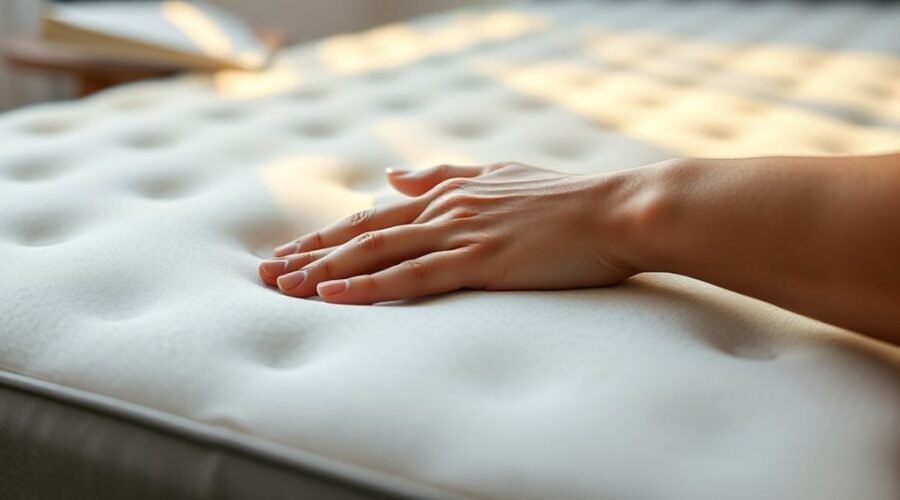
You might not know that memory foam was originally developed to absorb impact, not just to support sleep. When you lie on it, the foam reacts to your body heat and pressure, then slowly softens where you press most. That lets it mold to your shape, reduce strain on joints, and limit motion transfer. But not all memory foam feels the same, and the differences can change how you sleep.
Key Takeaways
- Memory foam mattresses use viscoelastic polyurethane that softens with body heat and pressure.
- They contour by molding closely to your body, creating a personalized cradle instead of a flat surface.
- This contouring improves pressure relief at shoulders, hips, and lower back.
- Even weight distribution helps support spinal alignment and reduce strain while sleeping.
- Memory foam also absorbs movement, reducing motion transfer for a steadier sleep surface.
What Is a Memory Foam Mattress?
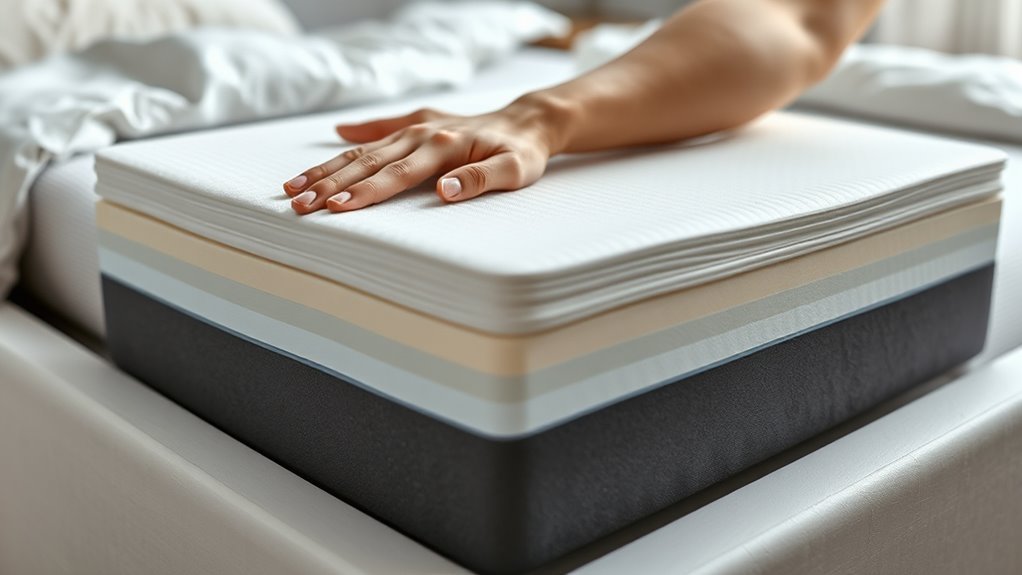
A memory foam mattress is a bed made primarily from viscoelastic polyurethane, a material designed to respond to your body’s heat and pressure by contouring to your shape. You get a supportive surface that can adapt to your body shape, offering targeted pressure relief at contact points.
Because the foam can conform gradually, it helps you sleep with steadier comfort and less strain than many spring designs.
Because the foam gradually conforms, it can deliver steadier comfort and reduce strain more than many spring mattresses.
Originally developed in the 1960s for NASA and later popularized in the 1990s, the memory foam mattress became a practical option for people who want more control over rest. You can choose from traditional, gel-infused, plant-based, or open-cell versions, each built to suit different sleeping preferences and thermal needs.
Its motion isolation also matters if you share a bed, since movement travels less across the surface. This makes the mattress useful when you want quieter, more independent sleep.
How Memory Foam Contours Your Body
Memory foam contours your body by responding to heat and pressure, so it gradually softens where you press into it and supports you where you need it most.
As you lie down, the material’s viscosity lets it slowly contour to your body shape, creating a personalized cradle instead of a flat surface. That close fit improves pressure relief at your hips, shoulders, and lower back, while helping keep spinal alignment steady through the night.
As your body warms the foam, it becomes more pliable, so side sleepers often get deeper, more supportive cushioning around curved areas. The foam also promotes even weight distribution, which reduces pressure points and can lower discomfort when you rest.
Because it absorbs movement, it limits motion transfer, so your position stays more stable if someone else shifts nearby. That’s how Memory foam helps you sleep with less strain and more freedom.
Memory Foam vs. Spring Mattress
When you compare memory foam and spring mattresses, the biggest difference is how they support your body: memory foam responds to heat and pressure to contour closely and relieve pressure points, while spring mattresses rely on coils for a more uniform, bouncy feel.
With memory foam, you get even body weight distribution, which can improve spinal alignment and reduce stress on hips and shoulders. A spring mattress, by contrast, often feels more responsive, so you can move easily and change positions without much resistance.
Memory foam distributes weight evenly for alignment, while spring mattresses feel more responsive and easier to move on.
If you share a bed, memory foam also offers stronger motion isolation, so one person’s movement won’t disturb the other as much. Spring models usually allow more airflow, while memory foam may need better temperature regulation to stay comfortable.
Your best choice depends on whether you value close body-hugging support and pressure relief or a firmer, livelier sleep surface that feels more open and easy to move on.
Main Benefits of Memory Foam Mattresses
You’ll notice pressure relief benefits right away because memory foam spreads your weight evenly and reduces stress on your shoulders and hips.
It also supports spine alignment by contouring to your body, which can help ease back pain and stiffness, especially if you sleep on your side.
Together, these features make memory foam a practical choice when you want more consistent comfort and support through the night.
Pressure Relief Benefits
One of the standout benefits of a memory foam mattress is pressure relief, especially for areas like your shoulders, hips, and lower back.
Memory foam’s contouring ability lets it mold to your shape, spread weight evenly, and reduce pressure on sensitive areas and pressure points. That means you can rest with less strain, whether you sleep on your side or shift often at night.
By cushioning contact zones, it can also support your spine in a more neutral position and help improve sleep by limiting aches and stiffness. If you deal with chronic pain, such as arthritis or fibromyalgia, this focused support can feel especially freeing.
Because the foam absorbs movement, you’re less likely to wake from pressure build-up when you change positions during the night.
Spine Alignment Support
Because memory foam contours closely to your body, it can help keep your spine in a more natural alignment while you sleep. Its adaptive properties respond to your heat and pressure, so the surface adjusts to your contour instead of forcing you into one fixed position.
That support helps distribute body weight more evenly, which can reduce pressure points at your hips and shoulders, especially if you’re a side sleeper. When your spine alignment stays neutral, you’re less likely to wake with stiffness or back pain.
Memory foam also limits sagging and uneven support, so you can rest without constantly shifting for relief. Over time, this balanced feel can improve sleep quality and give you a more comfortable, liberated way to recover each night.
Common Types of Memory Foam
When you compare common memory foam types, traditional foam gives you the classic slow-sinking contour and pressure relief that many sleepers expect.
If you want better temperature control, cooling variants like gel, air-cooling, open-cell, and plant-based memory foam can improve breathability and reduce heat retention.
Your choice comes down to whether you value foundational comfort, cooler sleep, or a more eco-conscious material.
Traditional Foam Styles
Traditional memory foam delivers the classic slow-sinking, body-cradling feel most people associate with this material, offering dependable contouring support that can ease pressure points.
With Memory foam, traditional memory foam molds to your unique shape, helping absorb pressure and provide support for your spine without feeling rigid.
If you prefer a more enveloping surface, this style can feel reassuring and steady, especially when you want consistent support through the night.
Other foam styles suit different preferences: gel-infused options can reduce heat-related restlessness, plant-based foams add breathability, and copper or graphite blends improve hygiene and heat transfer.
Testing in person helps you compare response, firmness, and recovery, making finding the right balance easier for your body and sleep goals.
Cooling Foam Variants
Cooling foam variants are designed to make memory foam feel less warm and more breathable, which can be a major advantage if you sleep hot.
You can choose cooling foam variants like gel memory foam, which uses cooling beads to lower heat retention and stabilize temperature.
Plant-based memory foam replaces petroleum oils with plant-derived oils, helping you get a cooler, more breathable surface.
Open-cell memory foam adds internal pockets that improve airflow for a more temperature-neutral sleep.
Copper-infused memory foam disperses heat and adds antimicrobial benefits, so your bed stays cooler and cleaner.
Air-cooling memory foam often uses copper or similar materials to draw heat away from your body, helping you stay comfortable all night.
Do Memory Foam Mattresses Sleep Hot or Cool?
Memory foam mattresses can sleep hot, but the degree of warmth depends largely on the foam’s construction and any added cooling features. Traditional Memory foam may trap body heat, so you can notice more heat retention and less temperature regulation on simpler models.
If you want a cooler feel, look for gel-infused foams, air-cooling designs, and other cooling technologies that move heat away from your body. Open-cell memory foam also improves breathability and airflow, helping reduce buildup that can make you sweat.
Look for gel-infused foams, airflow designs, and open-cell memory foam to help keep you cooler at night.
In practice, these upgrades can make a real difference; some users report less tossing and turning after switching to better-engineered foam. Still, not every mattress performs the same, so hot sleepers should test different options and compare how each one feels through the night.
When you choose a formulation that supports comfort, you claim more restful sleep and more freedom from overheating.
Who Sleeps Best on Memory Foam?
Beyond temperature, memory foam’s real strength is how well it matches different sleep styles and needs. Memory foam mattresses give you targeted pressure relief, so you can rest without fighting your bed.
- Side sleepers: you’ll usually feel the best benefits of memory foam, since it cushions hips and shoulders and supports spinal alignment.
- Back sleepers: you get steady support that helps keep a neutral spine and reduces pressure along your back.
- Stomach sleepers: you may sleep better on firmer options, which limit sinking and protect spinal alignment.
- Couples and sensitive sleepers: you’ll notice strong motion isolation, so your sleep comfort stays intact when someone shifts beside you.
If you live with chronic pain, the contouring can also ease stress on sore joints and muscles.
How to Choose a Memory Foam Mattress
Choosing the right memory foam mattress starts with how you sleep and what kind of support your body needs. Your sleep position matters: side sleepers often do better with softer memory foam, while back and stomach sleepers may need more firmness to keep spinal alignment steady.
Your body weight also shapes the right feel; lighter bodies usually sink in more easily, while heavier bodies often need a firmer mattress for support. Test firmness in person, because personal preference can override any label.
If a retailer offers the bedMATCH® diagnostic system, use it to narrow choices based on your measurements and sleep needs. That can help you choose the best mattress faster, with less guesswork.
Also look for newer memory foam designs that reduce heat retention and off-gassing odors. A higher-quality mattress can deliver more consistent comfort, better contouring, and long-term satisfaction without forcing you to settle.
Where to Buy Memory Foam Mattresses in Albany
In Albany, you can shop for memory foam mattresses at local stores like Mancini’s Sleepworld, which offers a broad selection of premium models along with personalized sleep matchmaking.
In Albany, Mancini’s Sleepworld offers premium memory foam mattresses with personalized sleep matchmaking.
Alternatively, you can visit Tip Top Furniture, where you can test different foam types and firmness levels in person.
When you buy, compare local retailers that use bedMATCH® technology to align mattresses with your body measurements and sleep preferences.
Ask about mattress testing, financing, comfort guarantees, and delivery services so you can choose with confidence and move toward better rest without pressure.
- Mancini’s Sleepworld: personalized fitting
- Tip Top Furniture: hands-on mattress testing
- Online retailers: Albany delivery services
- Local stores: comfort guarantees and financing
Frequently Asked Questions
What Are the Downsides of Memory Foam Mattresses?
Like quicksand, memory foam can trap you. You may feel heat retention, odor issues, and an odd sinking sensation, especially with initial firmness that eases slowly.
While it offers pressure relief, you can face motion transfer tradeoffs, durability concerns, weight limitations, and higher cost factors.
If you sleep hot or move often, you mightn’t love the stuck feeling or delayed rebound that can limit your freedom at night.
Why Are People No Longer Buying Memory Foam Mattresses?
You’re seeing fewer people buy memory foam mattresses because memory foam alternatives now offer better temperature retention, less sinking sensation, and quicker support.
You may also worry about durability concerns, chemical odors, and the sleep health impact of heat buildup.
Industry trends favor hybrids, natural materials, and adjustable beds, while price variations and mixed customer reviews push you to compare options more carefully before you commit to a mattress that feels limiting.
What Mattress to Stay Away From?
You should stay away from cheap, low-density memory foam and overly firm traditional mattresses.
Avoid innerspring mattresses that sag, hybrid options with weak comfort layers, and latex alternatives unless they use certified organic materials.
Skip beds that trap heat, smell strongly, or ignore your budget considerations.
Also, don’t chase waterbeds pros, airbeds comfort, or adjustable beds if they feel gimmicky rather than supportive, durable, and truly contouring.
Are You Supposed to Flip a Memory Foam Mattress?
No—you usually shouldn’t flip a memory foam mattress. Its cloudlike layers are built for one-way use, so flipping can upset support zones, pressure relief, and body alignment.
Instead, you should rotate it every 3–6 months to improve mattress maintenance, mattress hygiene, and lifespan concerns.
Keep the sleep surface clean, follow the maker’s care guide, and check hybrid models, since some can be double-sided.
Conclusion
If you’re considering a memory foam mattress, remember that its real advantage is how it responds to your body’s heat and pressure to contour more closely than a traditional spring bed. One useful statistic to note: about 8 in 10 sleepers say pressure relief strongly affects mattress satisfaction, which helps explain why memory foam remains so popular. If you want targeted comfort, reduced motion transfer, and better support, memory foam is a practical option to compare.