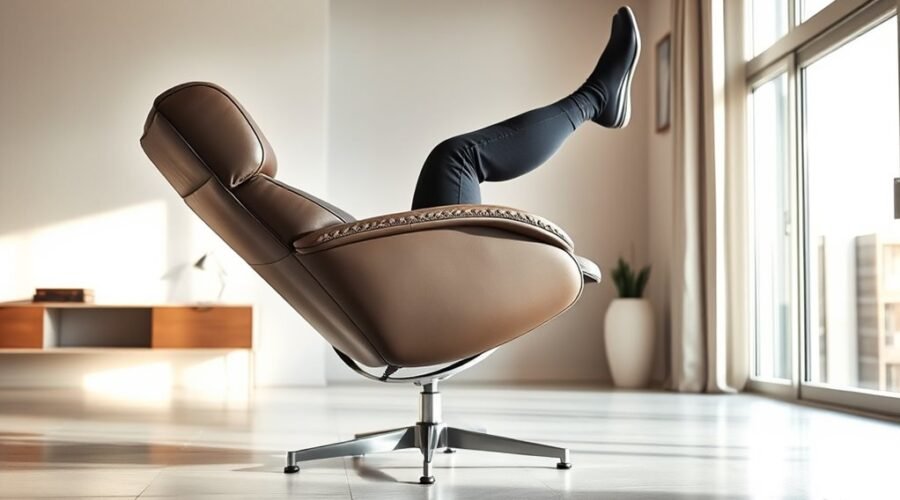
A zero gravity recliner is like a launch pad for your spine, tilting you into a position where your legs rise above your heart. You shift body weight across multiple support points, which can reduce spinal compression and improve circulation. That geometry can ease back pressure and swelling while keeping you aligned. The real question is which design features make that effect feel truly effective.
Key Takeaways
- A zero gravity recliner elevates your legs above heart level to create a neutral, weight-distributing position.
- This position reduces spinal compression and pressure on the lower back and joints.
- It improves circulation by promoting venous return and reducing fluid pooling in the legs.
- Adjustable mechanisms let you customize recline angle, lumbar support, and comfort settings.
- Many models add heat, massage, and high-density support for better relaxation and pain relief.
What Is a Zero Gravity Recliner?

A zero gravity recliner is a chair engineered to elevate your legs above heart level, creating a neutral body position that reduces spinal compression and encourages relaxation.
You use a zero gravity recliner to mimic a posture that spreads your weight across multiple contact points, which can lower pressure on joints and muscles. Its ergonomic design supports better alignment, and it often improves blood circulation by helping venous return from the lower body.
Because you can elevate the legs, the chair may also reduce swelling and support comfort during extended sitting. Many models include heat or massage functions, but the core value is positional support.
Leg elevation may reduce swelling and improve comfort during long periods of sitting.
If you live with chronic pain, this type of seating can help you manage discomfort without forcing your body into strain. In practice, the recliner aims to improve posture, reduce fatigue, and support overall well-being through efficient, body-conscious seating.
How a Zero Gravity Recliner Works
By elevating your legs above heart level, a zero gravity recliner redistributes body weight and reduces pressure on your spine and joints.
You recline into a zero gravity position that aligns your torso and thighs to approximate neutral posture. This angle shifts load away from the lower back, reducing spinal compression while supporting a more even pressure distribution across the chair.
The elevated legs also help with enhancing blood circulation and limiting fluid pooling in the lower limbs.
Inspired by NASA’s research, the design uses adjustable mechanisms so you can fine-tune backrest and legrest angles through customizable settings.
Built-in ergonomic support, such as lumbar contouring and breathable materials, keeps contact points stable and comfortable during extended use.
As your body settles into this supported posture, the chair promotes relaxation without requiring muscle effort.
Why It Helps Back Pain
When you recline in a zero gravity position, your legs rise above heart level and your spine settles into a more neutral alignment, which reduces spinal compression and eases back pain.
The Zero Gravity posture helps you elevate your lower body so gravity no longer loads the lumbar area as heavily. It evenly distributes weight across multiple contact points, so you can reduce pressure on your lower back, hips, and surrounding tissues.
This mechanical unloading improves posture by limiting lumbar strain and supporting better spinal alignment. You also get muscle relaxation, because your back muscles don’t need to work as hard to stabilize your torso.
That reduced effort can help calm tension and stress in the region. The design can enhance circulation and support comfort, which may lessen inflammation linked to chronic back pain.
How It Improves Circulation
With your legs elevated above heart level, a zero gravity recliner promotes venous return by helping blood flow back to the heart more efficiently and reducing pressure on the veins.
In this Zero gravity position elevates your lower body, you improve blood flow through the legs and abdomen, which enhances circulation and supports cardiovascular function.
Even weight distribution across your body reduces pressure points, so tissues don’t compress vessels as much and circulation stays more effective.
This setup can also reduce swelling in your feet and ankles by limiting fluid buildup.
When you sit this way regularly, you may alleviate discomfort from prolonged sitting and support circulation during long work or rest periods.
Better circulation can help you feel more energetic and may speed recovery from fatigue.
Over time, consistent use can reduce pressure on blood vessels and help prevent circulatory issues linked to extended immobility.
Best Features for Comfort and Support
You can fine-tune adjustable recline positions to reach the angle that best reduces pressure and supports a neutral spine.
Built-in lumbar support helps preserve the lower-back curve and maintain posture during extended use.
If you want more relief, heat and massage options can target key muscle groups and improve overall comfort.
Adjustable Recline Positions
Adjustable recline positions let you elevate your legs above heart level, helping promote neutral spine alignment and reducing pressure on your lower back.
With zero gravity positioning, you can shift through multiple recline angles, usually from 90° to about 127°, so you can customize your seating experience for reading, resting, or recovery.
Powered recline mechanisms make these adjustments smooth and let you fine-tune posture at the touch of a button. If your model includes memory settings, you can return to your preferred angle quickly without repeated adjustments.
These controls give you precise positional control, helping you match support to your activity and comfort needs.
You’ll also notice that adjustable headrest and lumbar support options often work with the recline range to improve overall fit, though their details vary by model.
Lumbar Support Features
Lumbar support is one of the most important comfort features in a zero gravity recliner, because it conforms to the spine’s natural curve and helps keep your posture aligned. You get adjustable lumbar support that matches your comfort preferences and reduces lower-back strain during long sessions.
| Feature | Benefit |
|---|---|
| Customizable lumbar support | Fits your body weight and posture |
| Memory foam padding | Cushions pressure points without sagging |
| Heat therapy option | Supports enhanced circulation and relaxation |
When the recliner distributes weight evenly, your lower back carries less stress and you feel steadier in a reclined position. High-density materials also maintain support over time, so you don’t sink unevenly. This precise balance helps you stay comfortable, focused, and properly supported.
Heat And Massage Options
Heat and massage options add another layer of support in a zero gravity recliner by easing muscle tension and improving overall comfort.
You can use heat therapy to penetrate deep muscle layers, relax tight joints, and reduce muscle soreness after activity.
Massage options target specific tension areas, so you get customizable relief where you need it most.
Advanced models often include kneading, rolling, and tapping modes, letting you match the massage pattern to your needs.
These functions also improve circulation, which can support recovery and reduce stiffness.
With adjustable settings, you can fine-tune intensity, speed, and zone selection for personalized comfort.
In practice, this combination gives you precise control over relaxation and support without adding complexity.
Zero Gravity Recliner vs. Traditional Recliner
A zero gravity recliner differs from a traditional recliner by elevating your legs above heart level to support a neutral spine, while a standard recliner mainly tilts the backrest and extends the footrest without the same body alignment.
With Zero Gravity, you get body positioning that can better support the body, reduce pressure, and limit strain on the spine. Traditional recliners usually offer simpler positioning, so they may concentrate load on your hips and lower back.
The Zero Gravity design can deliver more health benefits because elevating the legs helps distribute weight across multiple contact points. By contrast, traditional recliners often focus on comfort alone, not alignment.
You’ll also notice practical differences: zero gravity models often include adjustable headrests, heat, and massage, and need more space for their deeper recline.
Traditional recliners are typically more compact and less expensive, with fewer advanced features overall.
How to Choose the Best One for You
To choose the best zero gravity recliner, you should first assess comfort and support by checking adjustable headrests, lumbar support, weight capacity, and materials that suit your body.
Next, verify the recline features, including whether the chair reaches the ideal 127° angle and offers extras like heat or massage.
Finally, confirm the space and fit so the recliner works in your room and matches your body size without sacrificing stability.
Comfort And Support
For the best comfort and support, choose a zero gravity recliner with a recline angle near 127°, which helps place your spine in a neutral position and reduces compression.
In Zero Gravity recliners, comfort depends on fit, materials, and stability. You should check these points:
- adjustable features: headrests and lumbar support
- breathable upholstery for long-term comfort
- weight capacity matched to your body
- firm frame support for stability
- additional features like heat or massage
These details help reduce muscle tension and improve support during extended use.
Pick fabrics that resist wear and stay cool, such as Batyline®. If you need targeted relief, select additional features that address tension without adding complexity.
The right chair should feel balanced, secure, and precise, not oversized or loose.
Recline Features
When you compare zero gravity recline features, start with the angle: the best models reach about 127°, which helps distribute body weight evenly and keep your spine aligned.
Check the Recline Angle and confirm it lets your legs rise high enough to reduce pressure on your lower back.
Prioritize Adjustability, including multiple position settings and adjustable headrests, so you can fine-tune support for your torso and legs.
Next, evaluate Mechanism Type: powered systems offer easy control, while manual mechanisms usually feel simpler and more reliable.
Verify Weight Capacity matches your body weight with a safe margin; many chairs support 250 to 400 pounds.
If you need a chair for back pain, choose one with smooth motion, stable support, and precise locking positions.
Space And Fit
Space and fit matter just as much as cushioning, because zero gravity recliners need more depth and rear clearance than standard chairs to reach their full recline.
Measure your space and compare dimensions before you buy, so the chair won’t block traffic or walls. Check the 127° recline angle, since it supports even weight distribution and comfort.
Prioritize adjustable features that match your body.
- Verify rear clearance and seat depth
- Confirm weight capacity for safe use
- Test lumbar and headrest adjustment
- Choose a design that suits your room
- Consider portability if you’ll move it
A compact foldable model can improve flexibility without sacrificing support.
When you match clearance, dimensions, and comfort needs, you’ll pick a recliner that fits your space and routine.
Frequently Asked Questions
What Are the Pros and Cons of a Zero Gravity Chair?
You get health benefits like ergonomic support, stress relief, and better blood circulation, plus muscle relaxation from the reclined design.
You’ll also appreciate design features such as heat and massage, and some portability options for easy moving.
On the downside, you may need time to adjust, and the price range can be high, often $900 to $3,000+.
That cost can limit accessibility compared with standard chairs.
How Long Should You Sit in a Zero Gravity Chair?
You should sit for 15 to 30 minutes at a time, even if you think longer seating duration sounds better; your comfort levels should guide you.
This ergonomic design supports posture benefits, blood circulation, muscle relaxation, and stress relief.
For daily usage, you can extend sessions gradually, but stand or stretch every hour to avoid stiffness.
If you’re pregnant or have health concerns, consult a clinician before prolonged use.
Do Doctors Recommend Zero Gravity Chairs?
Yes, doctors often recommend zero gravity chairs for their health benefits.
You get ergonomic design, back support, and posture correction that can reduce spinal load and joint pressure.
You may also notice circulation improvement, muscle relaxation, and stress relief from the reclined position.
Many providers view them as a useful noninvasive option for chronic pain.
You should still ask your clinician first if you’re pregnant or have serious conditions.
Can You Sleep All Night in a Zero Gravity Chair?
Yes, you can sometimes sleep all night in a zero gravity chair, though it depends on your sleep quality needs.
Like a well-tuned cradle, its ergonomic design supports posture support, improves blood circulation, and offers pressure relief for your joints.
You may get strong relaxation benefits, but your personal comfort and night routine matter.
If the chair has good lumbar support and headrest, you’re more likely to rest soundly.
Conclusion
If you’re worried a zero gravity recliner is just another oversized chair, it isn’t. It positions your legs above your heart, distributes your weight more evenly, and reduces spinal and joint load. That means less pressure on your back, better circulation, and more support during long sitting periods. If you want a practical way to improve comfort and recovery, choose a model with adjustable angles, firm lumbar support, and durable padding.