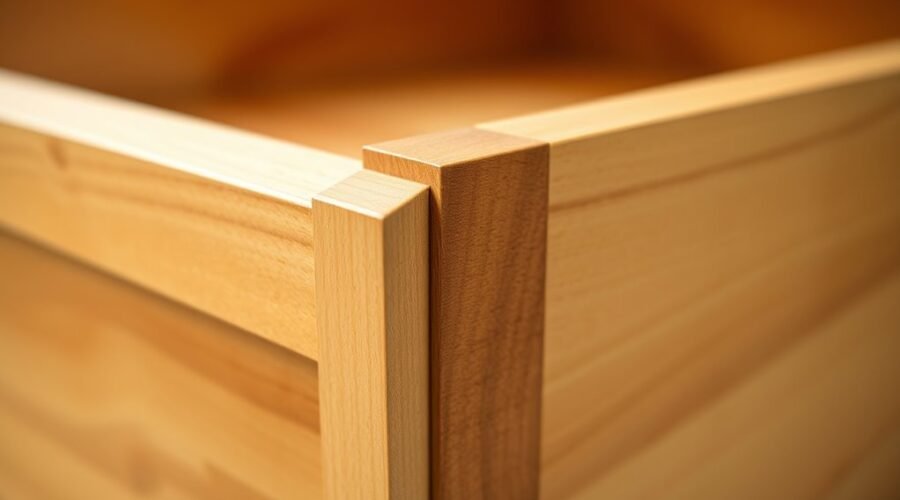
You might notice, almost by accident, that the drawers built for the roughest use are often the ones with dovetail joints. You get interlocking, trapezoidal fingers that lock the front and side panels together, which resists pullout and racking far better than basic fasteners. Because the joint spreads stress across a wide glue surface and uses hardwood well, it can keep a drawer serviceable for years—if you know what details make the difference.
Key Takeaways
- A dovetail joint uses interlocking trapezoidal fingers to create a strong, tight connection in drawer corners.
- Its design resists pullout and spreads stress over a large glue surface, improving durability.
- Dovetail drawers often use hardwood and precise craftsmanship, which helps them withstand heavy daily use.
- The joint keeps drawers square and stable, reducing racking, loosening, and seasonal movement problems.
- Though costlier to build, dovetail drawers usually last longer than standard drawers and need fewer repairs.
What Is a Dovetail Joint in Drawers?
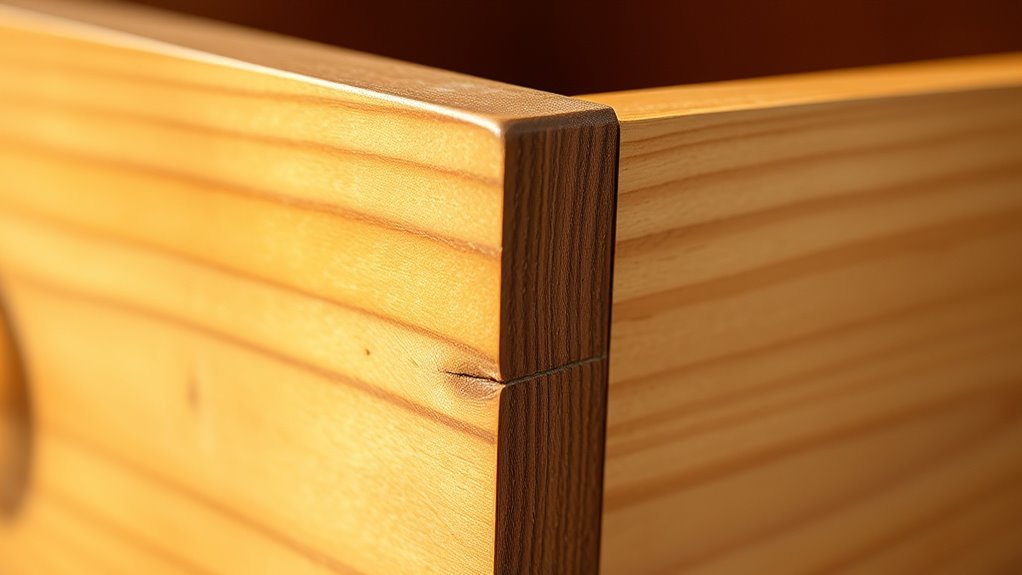
A dovetail joint in drawers uses interlocking, trapezoidal-shaped fingers to form a tight, durable connection between the drawer’s sides and front.
You get dovetail joints because their interlocking design resists pullout and spreads stress across a broad glue line, which supports reliable drawer construction. This method lets you use thinner stock without losing strength and aesthetic value, so your furniture can stay light, precise, and useful.
You’ll often see it in premium pieces, where high-quality craftsmanship signals careful fabrication and respect for material. The joint also comes in types of dovetail, including English and French forms, each fitting different styles and applications.
When you specify this joinery, you choose a proven structure that balances durability, clean geometry, and efficient use of wood. It’s a practical way to build drawers that work hard while keeping a refined profile and a liberated sense of design.
Why Dovetail Drawers Last Longer
Dovetail drawers last longer because their interlocking trapezoidal joints lock the sides and front together with exceptional mechanical strength.
You get better durability because the dovetail joints spread stress across a large gluing surface, so the bond can outlast the surrounding wood. When you choose high-quality hardwoods, you add resistance to wear, impact, and seasonal movement, which supports long-lasting performance.
Dovetail joints spread stress across a wide gluing surface, while hardwoods resist wear and seasonal movement for lasting durability.
This construction method also lets you use thinner material without losing structural integrity, so the drawer stays rigid under repeated use. Compared with butt or rabbetted joints, dovetail joints fail less often and need minimal maintenance, giving you a reliable system that doesn’t demand constant repair.
For you, that means less downtime, fewer replacements, and more freedom from fragile furniture. In practical terms, the joint’s geometry and material quality work together to preserve strength over time, keeping the drawer serviceable through heavy daily loading and making the drawer a durable asset in any demanding space.
How Dovetail Drawers Are Built
Skilled woodworkers shape dovetail drawers by cutting matching trapezoidal pins and tails into the drawer sides and front, then fitting them together so the joints lock tightly against pulling forces.
You see the construction process start with careful layout, accurate marking, and clean cuts in solid hardwoods or quality plywood. Each set of tails and pins must meet with tight tolerance, because interlocking joints depend on exact geometry, not force.
After dry fitting, you apply glue to the mating surfaces, clamp the box square, and let the bond cure. This method increases the gluing area, which strengthens the drawer box and helps you use storage space efficiently.
You can choose English or French forms to match style and function, but both show the same craftsmanship.
The advantages of dovetail construction are clear: lasting strength, repairable joints, and a durable drawer that supports independent, high-quality furniture making.
Dovetail Drawers vs Standard Drawers
When you compare dovetail drawers with standard drawers, the difference comes down to joint geometry, material quality, and load capacity.
Dovetail drawers use interlocking joints that lock mechanically and spread stress across a larger gluing surface, so you get stronger, longer-lasting construction. Standard drawers rely on butt or rabbetted joints, which are quicker to build but more vulnerable when loads rise.
- Strength: Dovetail joints resist pullout and racking better.
- Materials: Dovetail drawers often use high-quality hardwoods; standard drawers usually use MDF or similar stock.
- Production: The construction process for dovetail drawers takes more skill and time, while standard drawers assemble fast and cheaply.
If you want furniture that supports heavier use and stays stable, dovetail drawers give you more structural freedom.
Standard drawers can work for lighter tasks, but their joints and lower load capacity make them easier to repair or replace under stress.
When Dovetail Drawers Are Worth It
For high-end furniture that has to handle heavy use, dovetail drawers are often worth the added cost. You get dovetail joints with superior durability because the interlocking geometry resists pullout and spreading under load. If you store kitchen utensils, tools, or dense linens, that strength matters.
In kitchens and storage cabinets, frequent opening and closing won’t quickly loosen the drawer box, so you keep alignment and function longer. Hardwood construction also adds longevity and supports clean, precise craftsmanship, which shows in the finished piece.
Although the upfront price is higher, you can recover value through reduced repairs, fewer replacements, and real cost savings over time. Choose dovetail drawers when you want both utility and beauty, especially in furniture you plan to keep, use hard, and trust daily.
Frequently Asked Questions
What Are the Disadvantages of Dovetail Drawers?
Dovetail drawers can cost you more because manufacturing costs rise with skilled labor and slower drawer construction techniques.
You’ll face repair challenges if a joint fails, and poor execution can weaken dovetail joint durability and reduce aesthetic appeal.
They’re often limited to solid wood, so your design choices narrow.
In a wood joint comparison, you may find faster, cheaper options.
Their historical significance doesn’t erase practical limits for your project.
What Are the Disadvantages of Using Dovetail Joints?
Dovetail joints can feel like a lock with no spare key: they demand precision, cost time, and resist easy repair. You’ll need advanced woodworking techniques, careful material selection, and exact assembly methods, or the joint aesthetics suffer.
Their historical significance doesn’t offset limits in joint variations, especially with engineered stock. Dovetail joint durability is high, but poorly cut joints weaken strength and complicate liberation from costly, rigid craftsmanship.
What Is the Best Type of Joint for Drawers?
You’ll usually get the best results from a dovetail joint for drawers. It offers superior furniture durability, strong drawer construction, and great aesthetic appeal.
Among joint types, it outperforms butt or rabbetted options because its interlocking shape resists pullout. You can choose hand cut joints for custom work or machine made joints for efficiency.
In woodworking techniques, this joint gives you strength, precision, and long-term freedom from failure.
Are Dovetail Drawers Worth It?
Yes—when you open one and the drawer glides flawlessly, you’ll feel the match between effort and endurance.
You’re paying for dovetail joint benefits: stronger drawer construction techniques, better furniture durability, and refined design aesthetics.
Compared with joinery alternatives, dovetails offer more glue area and superior woodworking craftsmanship.
If you value liberation from constant repairs, the cost considerations often justify the higher price.
For heavy use, they’re worth it.
Conclusion
If you want a drawer that can take daily abuse, you’ll see why a dovetail joint lasts: its interlocking fingers resist pullout, spread load, and keep the box square. For example, a kitchen drawer built with hardwood dovetails can handle years of heavy pots without loosening, while a stapled joint may start racking much sooner. In practice, you’re buying durability, fewer repairs, and longer service life when you choose dovetail construction.