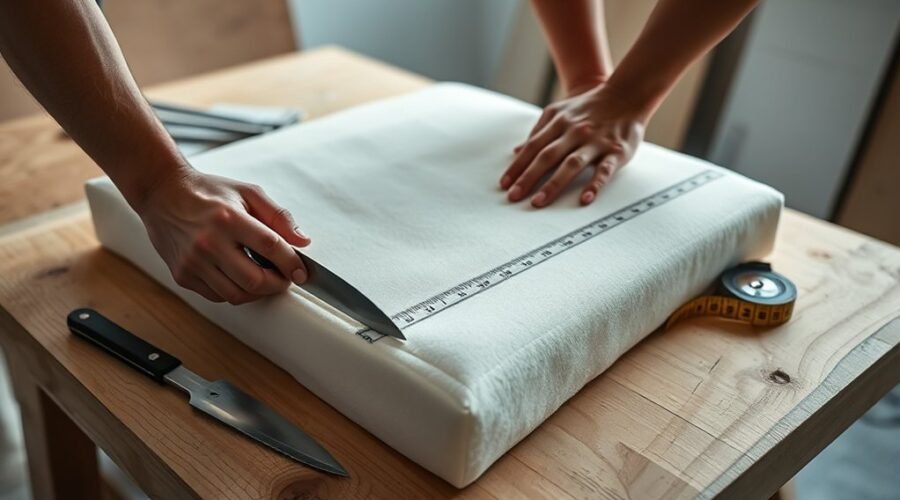
Replacing sofa cushion foam starts with measuring the old cushion’s length, width, thickness, and any curves or angled corners. A serrated bread knife works best for clean cuts, and the foam should be marked clearly with a Sharpie before cutting. Light, short strokes help avoid tearing, while a straightedge keeps edges square. Gentle nibbles shape curves and tight turns. Batting can smooth the finished cushion, and a test fit confirms firmness and comfort, with more refinements ahead.
Measure Your Sofa Cushion Foam
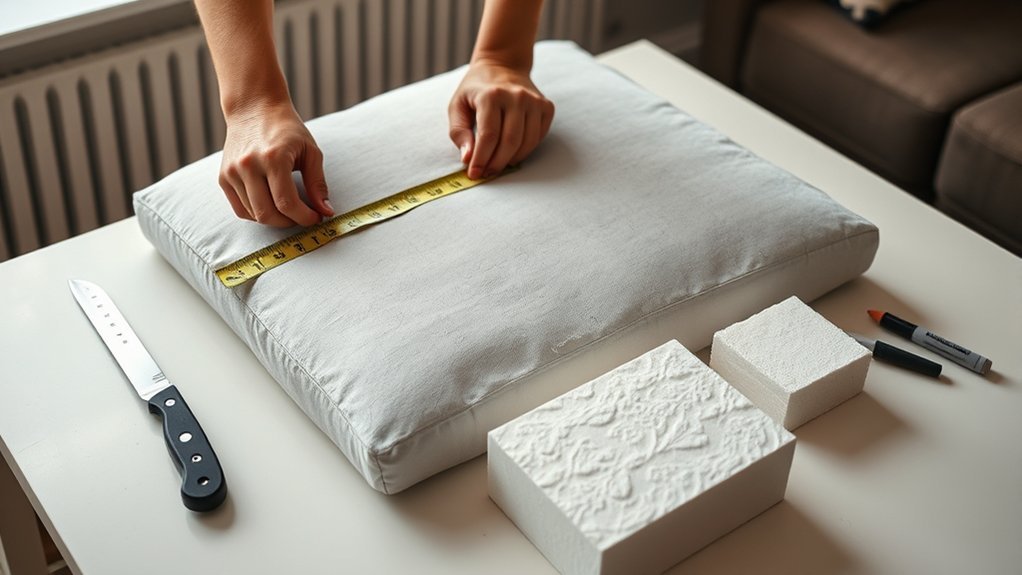
Begin by measuring the existing sofa cushion foam carefully, noting the length and width in inches for an accurate replacement fit. He or she should use a tape measure to check the foam’s thickness, since depth influences both comfort and support. Each dimension should be recorded in inches to keep the purchase clear and exact.
If the cushion has curves, angled corners, or other irregularities, those features should also be documented so the replacement can match the original form without compromise. Make sure the measurements are taken twice before any foam is ordered or cut, because small errors can limit freedom of fit and force unnecessary repetition.
A precise record helps guide selection and preserves the intended feel of the sofa. This careful approach reduces waste, supports self-reliance, and gives the person replacing the foam more control over the result.
Choose a Serrated Knife for Foam
A serrated knife, such as a bread knife, offers a clean, even cut through foam without compressing the material, which makes it well suited to cushion replacement.
A longer blade is especially useful for thicker foam, since it improves control and speeds the cut.
Bagel knives or cake knives can also serve as practical alternatives when they better match the project’s needs.
Serrated Blade Benefits
A serrated knife, especially a bread knife, is well suited for cutting sofa cushion foam because its teeth grip the material and help produce clean, even edges instead of tearing it. This advantage supports precise foam cutting techniques and reduces waste during DIY cushion upgrades.
A dedicated bread knife is often the best choice, though bagel or cake knives can also work when needed. The blade’s serrations help maintain control through dense foam, allowing more accurate dimensions and a smoother finish.
Serrated knife maintenance is simple: keep the blade clean, dry, and sharp enough to avoid snagging. These tools are affordable and widely available, making them a practical option for anyone replacing cushion foam without unnecessary expense or dependence on costly specialty equipment.
Longer Knife Advantages
Longer serrated knives make foam cutting noticeably easier, especially when replacing thicker sofa cushion inserts. Their extended reach supports steady cutting techniques, letting the blade glide through varied foam types with less pressure and fewer jagged edges. The serrated teeth grip resilient material, reducing tearing and helping maintain a straight line from start to finish.
| Advantage | Effect |
|---|---|
| Longer blade | Straighter cuts |
| Serrated edge | Better grip |
| Less pressure | Cleaner slices |
| Affordable options | Easy access |
A bread knife is often sufficient, and basic knife maintenance keeps the edge effective for repeated DIY use. For those seeking practical freedom in home repair, the right knife improves efficiency, producing smoother, more precise foam pieces for sofa cushions without unnecessary strain or waste.
Bagel And Cake Alternatives
Serrated bagel knives and cake knives can both work well for cutting sofa cushion foam, since their teeth help the blade grip the material and slice more smoothly than a straight edge.
A bagel knife offers reliable control, making it one of the practical bagel knife benefits for users seeking clean lines without excess force. A cake knife adds cake knife versatility, especially when a longer blade is needed to pass through thicker foam in fewer strokes.
These foam cutting techniques reduce tearing and help preserve the foam’s shape. Affordable serrated options are often available at stores such as Target, so replacing cushion foam does not require specialized tools.
For those pursuing independent home repair, these everyday knives provide accessible, effective cutting choices.
Mark Clean Cut Lines on the Foam
A Sharpie marker should be used to trace the cutting lines on the foam so each edge stays precise and easy to follow.
The marks need to remain clearly visible throughout the cut, especially where curves or repeated passes are required.
Clear lines give the serrated knife a reliable guide for light scoring and controlled, even cuts.
Trace Cutting Lines
Using a Sharpie marker, clean cutting lines are traced lightly onto the foam so the marks stay visible without leaving deep impressions that could affect the cut.
Accurate tracing begins with measured placement, confirming dimensions before any line is drawn so the cushion will fit the cover without strain. A steady 90° angle keeps edges square and supports reliable cutting techniques across different foam types.
When working with curves, the line is built in short sections, allowing smoother shifts and better control. Marking tools should be held with enough firmness to define the path, but never pressed so hard that the foam compresses.
This careful method preserves freedom from guesswork and prepares the material for a precise, clean cut.
Keep Marks Visible
Clear cutting lines should remain visible from start to finish, so a Sharpie marker is used to draw straight, precise marks on the top surface of the foam where they can be followed easily during cutting.
These marking techniques preserve foam visibility and support cutting precision, especially when dimensions must stay true. A cardboard template can be placed over complex curves before tracing, allowing the outline to stay clean and controlled.
The marks should never be erased or smudged, because any loss of clarity can weaken the final fit.
- Clean lines protect confidence
- Accurate edges reduce waste
- Visible marks help freedom from guesswork
Cut Foam With Light Strokes
Mark the cutting lines with a Sharpie marker before any blade touches the foam, then score along them with a serrated bread knife using light, controlled strokes rather than heavy sawing. This method improves scoring techniques, steadies cutting angles at 90°, and protects foam integrity.
| Step | Action | Result |
|---|---|---|
| 1 | Trace the line clearly | Better accuracy |
| 2 | Hold the knife upright | Even slicing |
| 3 | Use short strokes | Cleaner edge |
| 4 | Nibble curves gently | Better shaping |
| 5 | Repeat patiently | Less damage |
Multiple passes let the blade do the work, reducing tearing and preserving the cushion’s structure. On straight sections, the knife should advance in small increments, never forced. On curves, it should shift slightly to the side and remove material gradually. This restrained pace supports a smoother final cut and gives the renovator more control, making replacement work more precise and more freeing.
Keep Foam Edges Square
Once the foam has been scored cleanly, the next goal is to keep every cut edge square so the cushion fits snugly inside the cover and presents a neat, finished look. Precise foam edge techniques begin with a straight edge or ruler, which keeps marking lines true and prevents drifting angles. Among the best tools for cutting, a sharp serrated knife makes controlled passes that reduce tearing and preserve crisp corners.
- A square edge supports a liberated, polished seat.
- Accurate lines help the cover close without strain.
- Clean cuts reduce waste and frustration.
Scoring lightly in several strokes can improve control, ensuring precision without compressing the foam unevenly. Measurements should be checked repeatedly against the cushion cover so the shape remains true from start to finish.
With disciplined cuts and steady guidance, the foam keeps its geometry, and the finished cushion feels orderly, durable, and ready for renewed use.
Cut Gentle Curves in Foam
Gentle curves in foam are best cut with a serrated bread knife, lightly scoring the surface first to reduce tearing and keep the edge clean. Mark the line with a Sharpie before cutting, then use precision cutting tools with steady, patient control. Curve cutting techniques work best when the blade is angled slightly to the side while the hand preserves a 90° relationship for even removal. Small nibbles, not long sweeps, let the cutter follow the line without forcing the foam. These foam shaping methods support clean results and practical freedom from wasted material.
| Step | Action |
|---|---|
| 1 | Trace the curve clearly |
| 2 | Score lightly, then cut |
| 3 | Move in small bites |
Patience matters throughout. A slow pass keeps the shape true to the project’s requirements and helps the foam release its new form with minimal distortion.
Trim Tight Curves Carefully
For tight curves, the foam should be trimmed with the same light scoring method used on straight cuts, then shaped gradually with controlled strokes. This approach in curve cutting techniques preserves control and keeps the edge clean. The knife should stay at a 90° angle so the cut remains even, while the hand moves slowly and deliberately.
When the curve turns sharply, the blade can be turned slightly to the side and advanced in small nibbles instead of forcing a deep slice. These foam shaping tips reduce tearing and support liberation from uneven, restrictive edges.
- Patience protects the shape and the worker’s confidence.
- Small corrections restore freedom where a curve looks imperfect.
- Precision trimming methods reward steady hands with consistent results.
Minor flaws may remain, yet they can often be adjusted to suit the final application. The essential task is to keep each movement measured, exact, and calm.
Wrap Foam in Batting
Batting should be wrapped around the foam to create a softer, smoother finish and improve overall cushion comfort during reupholstering. It also acts as a protective barrier, reducing abrasion and extending foam life. Proper foam layering begins with a batting cut large enough to overlap each edge by at least one inch, which helps keep the wrap secure.
| Step | Purpose |
|---|---|
| Select batting types | Match density and intended use |
| Cut oversized batting | Allow edge overlap |
| Wrap evenly | Create smooth contours |
| Secure with staples or adhesive | Prevent shifting |
| Trim excess carefully | Remove bulk without stress |
For comfort enhancement, the material should complement the foam rather than overpower it. Polyester, cotton, and blended batting each serve different needs, so selection should follow the cushion’s firmness and expected wear. A careful wrap supports a clean finish and a more durable, liberated seating surface.
Test the Cushion Fit and Firmness
Once the foam is wrapped and ready, the next step is to verify that it matches the sofa’s dimensions and support needs.
Measure the old cushions again, then place the new insert in the cover to confirm a clean fit without strain or gaps.
Sit on it and assess cushion comfort, noting whether the surface feels too soft, too rigid, or balanced for daily use.
Sit on the cushion and judge comfort—too soft, too firm, or just right for daily use.
Examine any sagging or uneven wear in the original cushions, since these clues reveal the thickness and support the replacement should provide.
A firmness scale helps narrow density preferences: soft foam types suit gentle lounging, while firmer options offer clearer lift and structure.
Sample several foam types in-store to compare support before buying.
- Relief when the seat no longer sinks.
- Confidence when the fit feels exact.
- Freedom when comfort supports movement.
Frequently Asked Questions
Can I Replace My Sofa Foam Myself?
Yes—he or she can replace sofa foam themselves with basic tools and patience.
DIY upholstery tips include buying cut-to-size foam or trimming larger sheets, then marking lines with a Sharpie and using a serrated bread knife for clean cuts.
The foam density importance is significant, since it determines support and comfort.
For lasting results, cushion maintenance advice should include checking fit, keeping edges even, and test-pressing before final assembly.
What Type of Foam Is Best for Replacing Sofa Cushions?
High density foam is generally the best choice for replacing sofa cushions because it balances support, durability, and shape retention.
For a firmer seat, foam grades around 1.8 to 2.5 pounds per cubic foot work well.
Memory foam adds plush comfort but may feel too soft alone.
A layered approach can free cushions from sagging, pairing a supportive core with a softer top for lasting comfort and control.
Where Can I Get Foam Cut for Couch Cushions?
Foam can be cut for couch cushions at local upholstery shops, fabric stores, and home centers offering foam cutting services.
Retailers such as Joann Fabrics, Home Depot, Target, Foam Factory, and My Foam may provide custom sizes or pre-cut options.
Specialty foam shops often supply cushion firmness options suited to DIY upholstery projects.
Measurements should be taken carefully, and local stores checked for personalized cutting, better fit, and practical value.
How Can I Replace the Foam in My Sofa Cushions?
He removes the old foam, measures the cushion cover, and installs new high-density foam cut to fit; studies suggest worn cushions can lose up to 30% of support over time.
For practical cushion maintenance tips, he checks zippers and seams first.
Foam density explained: higher density lasts longer and feels firmer.
In DIY upholstery projects, he slips the replacement into the cover, smooths edges, and restores comfort with clean, deliberate precision.
Conclusion
Replacing sofa cushion foam becomes straightforward when the foam is measured accurately, marked cleanly, and cut with controlled, light strokes. A serrated knife helps preserve square edges and shape gentle or tight curves with less tearing. Wrapping the foam in batting improves comfort and finish. With careful fitting and firmness checks, the result can be as crisp and polished as a showroom centerpiece, transforming a worn cushion into a perfectly tailored seat.