Carnivore diet poop changes surprise almost everyone at first. Without plant fiber, stools can become smaller, less frequent, darker, or oddly soft, and the smell can change too. Most of this is part of adjusting, but a few changes are worth taking seriously.
Quick Answer
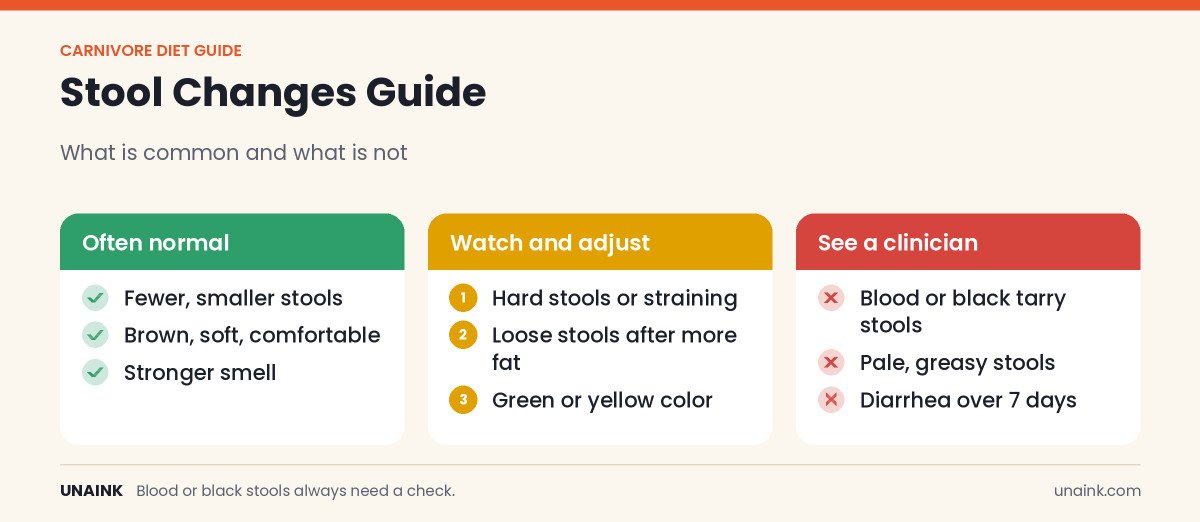
Carnivore diet poop changes are common in the first weeks: fewer bowel movements, smaller stools, and different color or smell. Constipation or loose stools can both happen, depending on fat and fluid intake. Comfortable, brown stools every day or two are generally fine. Blood, black tarry stools, pale or greasy stools, diarrhea lasting over a week, or unexplained weight loss need medical advice.
Key Takeaways
- Meat has no fiber, so stools often become smaller and less frequent, and some people also get loose stools.
- Frequency alone is less important than comfort: soft, easy stools every day or two are usually fine.
- Brown is the typical color. Black tarry or bloody stools, or pale, clay-colored stools, should be checked promptly.
- Fat intake that is too lean or too rich can push you toward constipation or looseness.
- Diarrhea beyond a week, ongoing constipation, or unexplained weight loss is a reason to see a doctor.
What Changes Are Common
The 2026 scoping review notes that fiber intake on carnivore diets was often under 1 gram a day, far below the Adequate Intake of 25 to 30 grams (Nutrients review). With so little residue, there is less bulk to move through. People commonly describe:
- Fewer trips to the bathroom, sometimes every two or three days.
- Smaller, denser, or very formed stools.
- Looser stools for some, especially after a jump in fat or fatty cuts.
- A different smell, often stronger or more sulfur-like.
- Occasional constipation or diarrhea during the first weeks. Cleveland Clinic lists both among keto flu symptoms (Cleveland Clinic).
There are no good studies of normal bowel patterns in people eating only animal foods, so these descriptions come from self-reports and clinical experience, not controlled data.
Carnivore Diet Poop Changes in Frequency
Going less often is not automatically constipation. The NHS lists low fiber, too little fluid, diet changes, little exercise, and ignoring the urge as common causes of constipation, and points out that straining, hard stools, or tummy pain are the signals to act on (NHS). If you strain or feel blocked, see carnivore diet constipation. If stools are watery and frequent, see carnivore diet diarrhea.
Color, Texture, and Smell
| What you see | Common explanation | What to do |
|---|---|---|
| Medium to dark brown | Normal bile pigment, sometimes darker on a heavy red meat diet | Nothing needed |
| Green or yellow and loose | Food moving through quickly, fat load, or bile | Ease back on fat for a few days and watch |
| Pale, clay-colored, greasy, or floating | Fat not being absorbed well, bile or pancreas issues | See a clinician, especially with yellow skin or dark urine |
| Black and tarry, or red | Possible bleeding in the digestive tract | Contact a clinician right away |
| Stronger smell | Protein breakdown by gut bacteria | Usually harmless if there is no pain or blood |
Iron supplements and some medicines can also darken stools, but black tarry stools should always be checked. MedlinePlus advises contacting a provider right away for black stools or blood or pus in the stools (MedlinePlus).
What Helps While You Adjust
- Give it two to four weeks before drawing conclusions. How long adaptation takes varies (see how long to adapt).
- Make the diet fattier if you are constipated and lean if you are loose, in small steps. See how to get more fat.
- Drink to thirst, salt your food, and keep a regular meal and toilet routine. The NHS suggests not delaying the urge and raising your knees on a low stool.
- Move daily. A walk can help gut motility.
- Add organ meats slowly. Liver can loosen stools in some people.
- Talk with a clinician before adding fiber supplements or laxatives if you want them.
When to See a Doctor
Seek advice for any of the following:
- Blood in the stool, or black and tarry stools. NHS guidance says to seek urgent medical advice for bloody diarrhea or rectal bleeding, and for diarrhea lasting more than 7 days (NHS).
- Pale or clay-colored stools, especially with yellowing of the skin or eyes, or dark urine.
- Constipation with weight loss you did not plan, tummy pain, or a sudden change in bowel habits, which the NHS says should prompt a GP visit.
- Signs of dehydration such as dark urine, passing less urine, dizziness, or being unable to keep fluids down.
- A family history of bowel cancer or inflammatory bowel disease. See carnivore diet and colon cancer risk.
Medicines matter too. Blood pressure drugs, diuretics, and diabetes medicines can interact with the fluid and salt shifts of low-carb eating, so ask your prescriber before relying on laxatives or electrolyte products and never change a dose on your own.
Carnivore Diet Poop Changes: The Short Version
Carnivore diet poop changes in frequency, size, color, and smell are common and often settle within weeks. If carnivore diet poop changes include blood, black or pale stools, or lasting diarrhea, stop guessing and get examined.
Frequently Asked Questions
Is it normal to poop less on carnivore?
Often yes, because there is less fiber and residue. It is fine if stools are comfortable and soft. Straining, pain, or hard stools suggest constipation.
Why is my poop dark on carnivore?
Dark brown can reflect a heavy red meat intake. If stools are black, tarry, and sticky, or you see blood, contact a clinician promptly.
Why is my poop pale or greasy?
It can mean fat is not being absorbed well. Reduce fat for a few days, and see a clinician if it continues, especially after gallbladder removal or with yellow skin.
Do I need fiber on carnivore?
The diet contains almost none, and evidence on whether that matters long term is limited. Talk with a clinician before adding supplements if you have symptoms.
How long do bowel changes last?
Many settle within a few weeks. Persistent changes beyond a month deserve a medical check.
Conclusion
Your gut needs time to adapt, and stool changes are the first place it shows. Track frequency, comfort, and color for a couple of weeks, adjust fat and fluids gently, and get checked for the red flags above.
Medical note
This article is for general education and is not medical advice. Talk with a doctor or registered dietitian before making major diet changes, especially if you have a health condition, take medication, or are pregnant or breastfeeding.
Keep Reading
- Carnivore Diet Constipation: Causes and fixes when things slow down.
- Carnivore Diet Diarrhea: What to do when stools are loose.
- Carnivore Diet Bloating: Gas and distension on a meat-based plan.
- Carnivore Diet and the Gut Microbiome: What is known about gut bacteria.
Sources
- Carnivore Diet scoping review (Nutrients, 2026): Low fiber intake and limited evidence.
- Constipation (NHS): Causes, self-help, and when to see a GP.
- Diarrhoea (NHS): Dehydration signs and urgent care advice.
- Keto Flu (Cleveland Clinic): Digestive symptoms during early adaptation.
- Diarrhea (MedlinePlus): Black stools and blood as reasons to contact a provider.