A meat-only plan is gluten-free on paper, so the carnivore diet for celiac disease can look like an easy fit. In practice, celiac disease is an autoimmune condition with a well-established treatment, and a strict gluten-free diet is the standard of care. This article explains where carnivore overlaps with that treatment, where it falls short, and what to do before changing how you eat.
Quick Answer
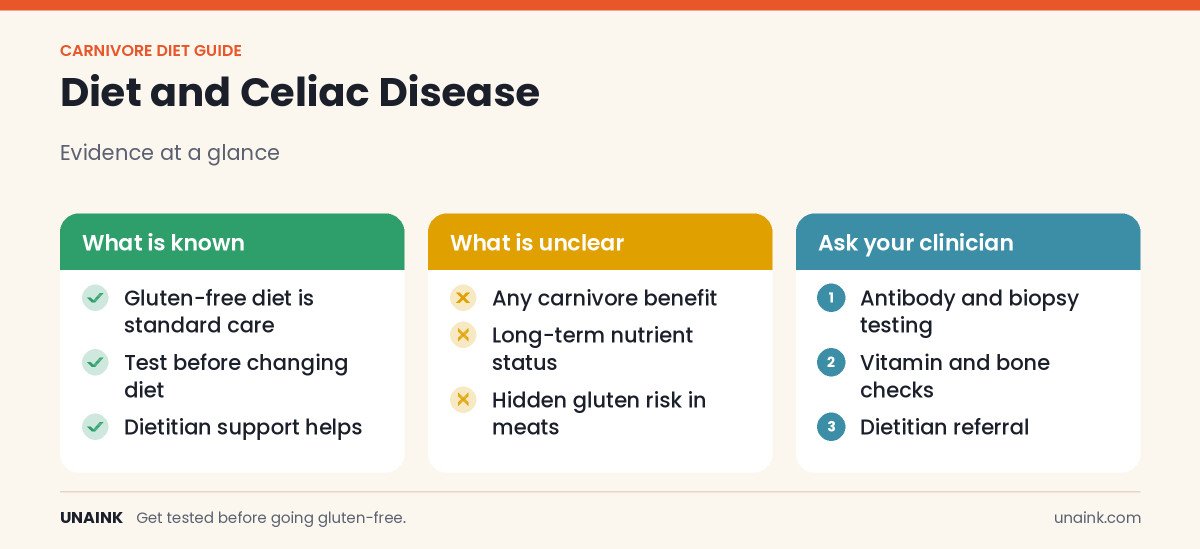
A carnivore diet is gluten-free if it is made of plain, unprocessed meat, but it is not a recommended treatment for celiac disease. The standard treatment is a gluten-free diet taught by a dietitian, and testing should happen before you stop eating gluten. Hidden gluten in sauces, seasonings, and processed meats can still cause harm.
Key Takeaways
- A strict gluten-free diet is the standard treatment for celiac disease.
- Do not go gluten-free before testing, because it can change test results.
- Plain meat contains no gluten, but processed meats, sauces, and seasonings can.
- No study has tested a carnivore diet in celiac disease.
- A dietitian who knows celiac can help you eat safely and fill nutrient gaps.
What Celiac Disease Is
In celiac disease, eating gluten, a protein in wheat, barley, and rye, triggers an immune reaction that damages the lining of the small intestine. That damage can cause diarrhea, bloating, anemia, weight loss, and poor absorption of nutrients. Some people have few digestive symptoms at all.
The NIDDK notes that a gluten-free diet is the main treatment and, for most people, heals intestinal damage, prevents further damage, and improves symptoms within days to weeks.
Test Before You Change Your Diet
Celiac disease is diagnosed mainly with blood tests for antibodies and, often, a small intestine biopsy. The NIDDK advises not starting a gluten-free diet before testing, because it can change the results and make the diagnosis harder to confirm or rule out.
This matters for carnivore dieters. If you already cut all grains, your clinician may need a plan to retest. Do not start eating gluten again without medical advice, since the right approach depends on your situation.
Carnivore Diet for Celiac Disease: Where It Helps and Where It Does Not
| Question | Gluten-free diet | Carnivore diet |
|---|---|---|
| Standard treatment? | Yes | No |
| Gluten-free? | Yes, with label checks | Only if foods are plain and unprocessed |
| Dietitian guidance available? | Widely | Rarely |
| Covers fiber and vitamins? | Can, with planning | Often limited |
| Studied in celiac? | Extensively | No studies found |
The upside is obvious: no bread, pasta, or beer. The downsides are hidden gluten in processed meats, marinades, broth, and seasoning blends, along with cross-contact in shared kitchens.
Hidden Gluten and Cross-Contact
- Sausages, deli meats, and meatballs may contain fillers or binders.
- Seasoning blends and rubs sometimes use wheat-based anti-caking agents.
- Stock cubes, gravies, and sauces can contain wheat.
- Medicines and supplements may contain gluten, so ask a pharmacist.
- In the U.S., a gluten-free label means fewer than 20 parts per million.
Nutrient Concerns
Untreated celiac disease can cause low iron, calcium, vitamin D, B12, and folate. Meat helps with iron and B12, but a zero-plant plan offers little fiber, folate, or vitamin C. See carnivore diet nutrient deficiency and fiber on the carnivore diet. Your clinician may check vitamin levels and bone density and advise supplements. Talk to them before taking any.
Follow-Up and When the Diet Is Not Working
The NIDDK reports that about 20 percent of people continue to have symptoms on a gluten-free diet, often due to small amounts of hidden gluten, other conditions, or, rarely, refractory celiac disease. A food journal can help. Regular follow-up with antibody tests shows whether the diet is working. Do not swap this for a different restrictive diet without medical input.
Carnivore Diet for Celiac Disease: The Short Version
The carnivore diet for celiac disease is gluten-free only when foods are plain and unprocessed, and it has not been studied as a treatment. If you are considering the carnivore diet for celiac disease, get tested first and let a clinician and dietitian guide your plan.
Frequently Asked Questions
Is the carnivore diet automatically safe for celiac disease?
Not automatically. Plain meat has no gluten, but processed meats, sauces, and seasonings can contain it.
Should I stop eating gluten before a celiac test?
No. NIDDK advises not starting a gluten-free diet before testing, since it can change results.
Can celiac disease be treated with a meat-only diet?
There is no evidence for that. The standard treatment is a gluten-free diet with dietitian support.
Do I need a dietitian for celiac disease?
NIDDK says a registered dietitian can teach label reading, meal planning, and gluten-free substitutes.
What if I still have symptoms on a gluten-free diet?
See your clinician. Hidden gluten, other conditions, or rarely refractory celiac disease can be the cause.
Conclusion
Plain meat may fit a gluten-free pattern, but celiac disease needs more than the absence of bread. Get tested, work with a dietitian, and check follow-up antibodies. If you still want to try a meat-focused way of eating, do it as an informed, monitored choice rather than a replacement for standard celiac care.
Medical note
This article is for general education and is not medical advice. Talk with a doctor or registered dietitian before making major diet changes, especially if you have a health condition, take medication, or are pregnant or breastfeeding.
Keep Reading
- Carnivore Diet for Autoimmune Disease: Autoimmune conditions and diet evidence.
- Carnivore Diet and IBD: Crohn’s disease, colitis, and diet.
- Carnivore Diet Nutrient Deficiency: Which nutrients can run low.
- Carnivore Diet for IBS: Digestive symptoms and diet.
Sources
- NIDDK: Treatment for Celiac Disease: Gluten-free diet, dietitian, and follow-up.
- NIDDK: Diagnosis of Celiac Disease: Testing before diet change.
- Scoping Review of the Carnivore Diet (Nutrients, 2026): Nine human studies, very limited evidence.