Many people pair a carnivore diet and intermittent fasting because meat is filling and long gaps between meals feel natural. The combination is popular online, but the research on it is almost nonexistent, and each approach has its own cautions. This guide explains how they overlap, what is known about each, and how to lower the risks if you decide to combine them.
Quick Answer
A carnivore diet and intermittent fasting can be combined by eating animal foods inside a limited daily window, and some people find the pairing easy. No studies have tested the two together, so safety and benefit are unproven. People with diabetes, a history of disordered eating, or certain life stages should not combine them without medical guidance.
Key Takeaways
- Carnivore meals are filling, so many people naturally eat once or twice a day.
- Trials of time-restricted eating show modest or no extra weight loss compared with regular meals.
- No research has tested a carnivore diet and intermittent fasting together.
- Longer fasts raise the risk of under-eating, dehydration, and low electrolytes.
- People on diabetes or blood pressure medicine need medical advice before fasting.
Why the Two Often Go Together
Protein and fat are satiating, and many carnivore dieters report less snacking and fewer cravings. That can shrink the eating window without any effort. Those on very low-carbohydrate plans may also produce ketones, a topic covered in carnivore diet and ketosis.
Naturally eating less often is not the same as a planned fast, though. The difference matters when appetite drops so far that total food intake becomes too low.
What Research Says About Fasting
Harvard T.H. Chan School of Public Health researchers describe daily time-restricted eating as helping people eat roughly 250 fewer calories a day, mostly by reducing appetite. That interview-based summary also notes that evidence on other benefits is still developing.
A 2020 randomized trial in JAMA Internal Medicine followed 116 adults for 12 weeks, comparing an eight-hour eating window with regular meals. Weight loss did not differ significantly between the groups, and lipids, glucose, and HbA1c were similar. The trial did not test a carnivore diet.
For the carnivore side, a 2026 scoping review of nine human studies found very limited evidence and could not recommend long-term use.
Carnivore Diet and Intermittent Fasting: Eating Windows Compared
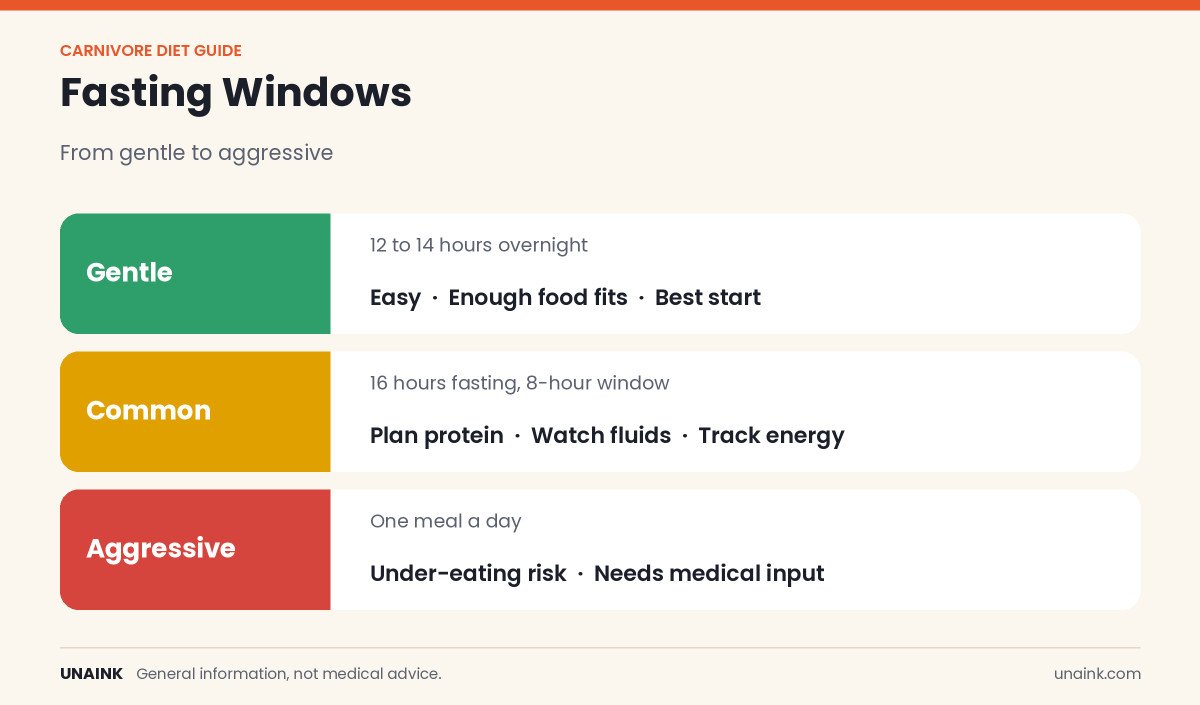
| Pattern | Typical window | Main consideration |
|---|---|---|
| Gentle | 12 to 14 hours fasting | Easy to sustain; usually enough food fits in |
| Common | 16 hours fasting, 8-hour window | Protein and calories need planning |
| Aggressive | One meal a day (OMAD) | Hard to eat enough; higher risk of fatigue and gaps |
Harvard Chan researchers suggest starting with a window of about ten hours and moving to eight at most. Multi-day fasts are not recommended as a routine plan.
Risks of Combining Them
- Under-eating: fullness from meat can stop you eating enough in a short window.
- Protein shortfall: one meal can miss the amount needed to protect muscle, especially in older adults.
- Dehydration and low sodium: fasting and very low-carb eating both raise fluid and salt losses. See carnivore diet electrolytes.
- Fatigue, dizziness, headaches, and poor sleep are common complaints.
- Gout and kidney stone risk: rapid weight loss and high animal protein can add to existing risk.
Who Should Not Combine Them
Fasting is risky for several groups, and carnivore eating adds to the concerns.
- People with diabetes who take insulin or sulfonylureas, because of low blood sugar risk
- Anyone using SGLT2 inhibitors, diuretics, or blood pressure drugs, because of dehydration risk
- Pregnant or breastfeeding people and children and teens
- Anyone with a history of disordered eating
- Older adults or anyone underweight or at risk of muscle loss
The NIDDK highlights hypoglycemia as the top danger for people with diabetes who fast, and notes that medicine doses often need to be adjusted by a clinician. Never change a prescription on your own.
Safety Tips If You Go Ahead
- Talk to your clinician and check baseline labs first.
- Start with a 12 to 14 hour overnight fast, not a long one.
- Make your first meal rich in protein and fatty cuts so calories stay adequate.
- Drink fluids through the day and replace salt as your clinician advises.
- Track energy, sleep, mood, and weight, and stop if you feel unwell.
- Take a break from fasting during illness, intense training, or high stress.
Carnivore Diet and Intermittent Fasting: The Short Version
The carnivore diet and intermittent fasting pair easily but have no joint research, so the combination remains an experiment. If you try the carnivore diet and intermittent fasting together, keep the fasting gentle, eat enough, and involve a clinician.
Frequently Asked Questions
Can you do intermittent fasting on a carnivore diet?
Yes, many people do, but no studies have tested the pairing. Start gently and watch for under-eating.
Does fasting make carnivore work better?
There is no evidence that it does. Trials of time-restricted eating show modest results at best.
Is one meal a day safe?
It can be hard to meet protein and nutrient needs in one meal. Anyone with a medical condition should ask a clinician first.
Will I lose muscle?
Muscle loss is more likely with large calorie deficits or prolonged fasts. Adequate protein and resistance training help protect it.
Should I fast if I take diabetes medicine?
Only with medical guidance. Fasting can cause dangerous lows, and doses may need to be adjusted by your prescriber.
Conclusion
Pairing meat-only meals with a shorter eating window can feel simple, but simple is not the same as proven. Keep fasting modest, eat enough, and let a clinician review your plan.
Medical note
This article is for general education and is not medical advice. Talk with a doctor or registered dietitian before making major diet changes, especially if you have a health condition, take medication, or are pregnant or breastfeeding.
Keep Reading
- Carnivore Diet and Ketosis: How ketones fit in.
- Carnivore Diet Electrolytes: Salt, potassium, and magnesium.
- How to Start the Carnivore Diet: A careful beginner guide.
- Carnivore Diet for Athletes: Fuel and recovery.
Sources
- Harvard T.H. Chan School of Public Health: The health benefits of intermittent fasting: Fasting types and cautions
- MDedge: Time-restricted eating shows no weight loss benefit in RCT: 2020 JAMA Internal Medicine trial
- NIDDK: Fasting safely with diabetes: Medication and hypoglycemia cautions
- Nutrients 2026 scoping review of carnivore diets: Evidence is very limited