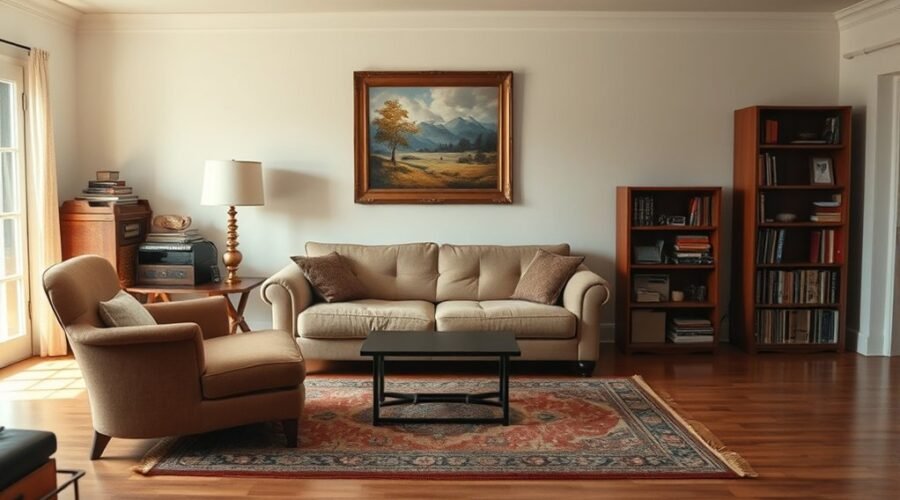
A room feels unbalanced after furniture is rearranged when visual weight, scale, and focal points no longer work together. Heavy pieces on one side, crowded corners, or a rug that is too small can make the layout feel lopsided and cramped. Misaligned anchors, such as artwork or a fireplace, can also disrupt flow and harmony. Careful placement of furniture, rugs, and accents can restore calm, and the next details explain how.
Why Your Room Feels Unbalanced
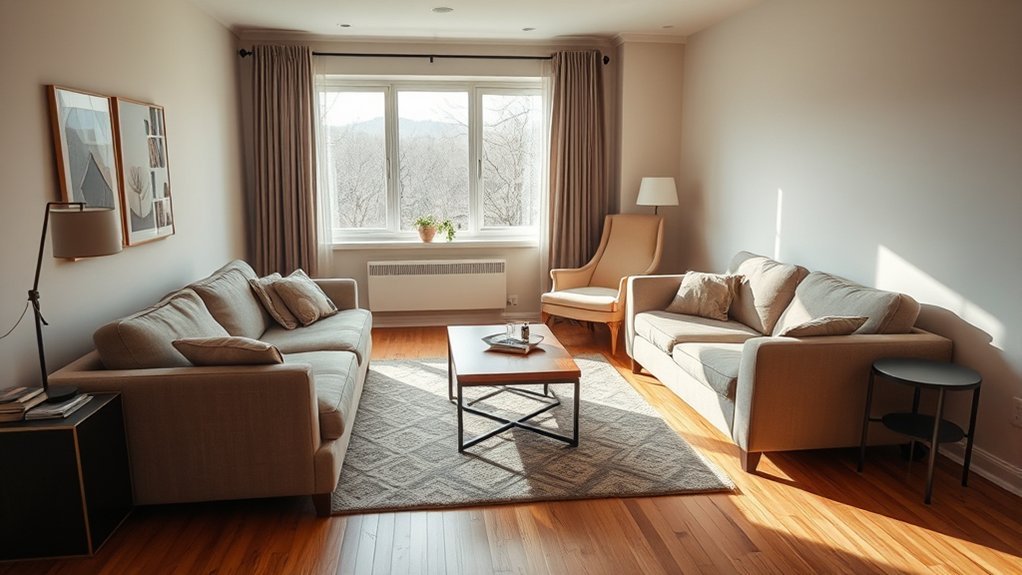
A room often feels unbalanced when its visual weight is distributed unevenly, with oversized furniture or dominant pieces pulling attention to one side. That imbalance can make the room feel less settled, as if the layout no longer supports easy movement or calm focus.
A room feels unbalanced when visual weight skews to one side, unsettling the layout and calm flow.
When furniture anchors and artwork fail to align, the eye reads the composition as crooked, weakening harmony. Scale matters as well: a tiny rug beneath a broad sofa can leave proportions looking strained rather than free. Even a large mirror, if placed without regard for surrounding forms, may amplify the lopsided effect instead of restoring balance.
Inefficient circulation paths add another layer of discomfort, compressing movement and making the space feel cramped or resistant. Color and texture also shape the result; uneven distribution can fragment the room’s character.
In combination, these factors reduce spatial clarity and deny the eye a balanced, breathable field.
Which Furniture Placements Make It Worse
Certain furniture placements intensify imbalance rather than correcting it: tall pieces grouped on one side of a room, for example, can leave the opposite side visually thin and unsettled.
When sofas or cabinets are pushed too close together, the result is overcrowding, and the room loses breathing room. Misaligned focal points, such as a couch placed away from a fireplace or TV, weaken orientation and create visual imbalance.
Heavy furniture clustered on one edge while lighter pieces are dispersed elsewhere can make the space feel top-heavy and lopsided. Blocking walkways with furniture adds another layer of awkwardness, interrupting movement and making the room feel less free.
These choices do not support a calm composition; they compress it. A better arrangement allows circulation, restores proportion, and lets each object occupy space with clarity.
When furniture placements respect openness and flow, the room feels steadier, more inviting, and easier to inhabit.
How Scale and Visual Weight Affect Balance
Scale sets the room’s basic proportion, and when a piece is too large for its surroundings, it can overpower the space and throw the composition off balance. In interior composition, scale determines whether furniture feels liberated or cramped within the room’s dimensions.
Oversized pieces command attention, while smaller accessories can disappear, leaving the eye unsettled. Visual weight adds another layer: dark color, dense texture, and mass all increase perceived heaviness. When heavy forms cluster on one side, balance weakens and the room reads as lopsided.
Uneven tall and short furniture can also interrupt visual flow, even when the layout functions well. Harmony returns when similar scale and visual weight are distributed with care. A substantial sofa, for example, feels more settled beside equally grounded decor.
Thoughtful placement lets each piece breathe, restoring balance and a sense of spacious ease throughout the room.
Use Anchors to Fix Awkward Flow
Balance does not come from furniture alone; it also depends on visual anchors that steady the room’s movement. Strong anchors, such as fireplaces, artwork, or substantial furniture pieces, give the room looks a clear center and help the eye settle. When anchors drift out of alignment, the flow can feel awkward, as if circulation has lost its path.
| Anchor | Effect | Placement |
|---|---|---|
| Fireplace | Grounds the room | Centered or offset |
| Artwork | Directs attention | Above a focal surface |
| Plant | Softens heavy mass | Corners or voids |
| Side table | Balances larger pieces | Beside seating |
| Console | Shapes entry flow | Along open walls |
Used well, anchors restore order without crowding freedom. They guide movement, protect entryways, and keep furniture pieces from reading as top-heavy or lopsided. Multiple smaller anchors can quietly support one dominant element, creating a spacious, composed room that feels open, legible, and easy to inhabit.
Furniture Moves That Restore Room Balance
Furniture placement can restore a room’s sense of order when visual weight is spread more evenly from one side to the other. Heavy furniture clustered on one wall often pulls the eye and disrupts balance; shifting a sofa, cabinet, or chair can release that pressure.
Clear circulation paths should be preserved so movement feels open and effortless rather than boxed in. Symmetry also helps: matching end tables, paired chairs, or mirrored lamps can calm an uneven composition.
When scale seems off, taller pieces may be traded for lower profiles to lighten one area and lift another visually. An area rug can anchor seating and define zones, giving each section equal presence.
These moves do not force rigidity; they create a room that feels composed, breathable, and free. With thoughtful furniture placement, the space regains balance, circulation improves, and the overall design settles into a more liberated rhythm.
Frequently Asked Questions
What Does It Mean When You Constantly Rearrange Your Furniture?
Constantly rearranging furniture often means the person is seeking clarity, control, or a more liberated relationship with space.
In furniture psychology, it can reflect a strong emotional response to imbalance and a developing design intuition.
It also suggests active spatial awareness, as the room is repeatedly tested for better flow, visual weight, and purpose.
The behavior usually points to a desire for a layout that feels more aligned, open, and intentional.
What Is the Biggest Mistake in Placement of Furniture?
The biggest mistake in furniture placement is ignoring furniture scale relative to room symmetry and visual weight.
A room can look out of whack when oversized pieces crowd smaller ones, or when flow dynamics are blocked by poor positioning.
Design succeeds when each item supports movement, balance, and purpose.
Space-conscious arrangement keeps anchors clear, preserves circulation, and lets the room breathe with liberated, intentional ease.
Is Rearranging Furniture ADHD?
Rearranging furniture is not inherently ADHD, though it can reflect ADHD-related needs for sensory stimulation, spatial awareness, and novelty.
In a design-focused sense, the behavior often signals a search for better furniture organization and visual balance. Design psychology suggests that restless layout changes may support some people’s sense of liberation in space, yet they can also reveal difficulty sustaining a settled arrangement.
Structure can help stabilize the room.
What Is the 2/3 Rule Furniture?
The 2/3 rule in furniture, like a quiet echo of classical proportion, suggests that furniture should occupy about two-thirds of a wall or space.
It guides furniture symmetry, sharpens spatial awareness, and supports design principles that produce aesthetic balance.
Conclusion
A room can feel unbalanced after a furniture rearrange when scale, visual weight, and circulation stop working together. Heavy pieces crowd one side, small items drift without anchors, and the eye senses the mismatch at once. Restoring balance is less about symmetry than about rhythm, proportion, and clear space. When furniture is repositioned with intention, the room settles into place like a frame finding its picture.