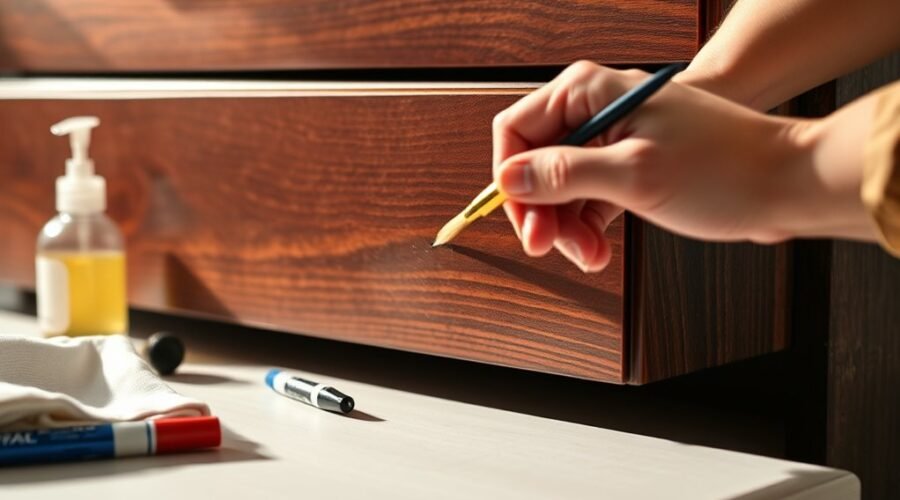
To touch up scratches on dark stained wood furniture, first test the finish in a hidden spot with rubbing alcohol and judge whether the scratch is only in the finish or into the wood. Light marks can be blended with walnut oil, a colored pencil, or a stain marker matched to the darkest tone. Deeper scratches need stainable filler, careful sanding, and color matching. Clean regularly and use coasters to limit future damage, with more methods below.
Identify Your Finish and Scratch Depth
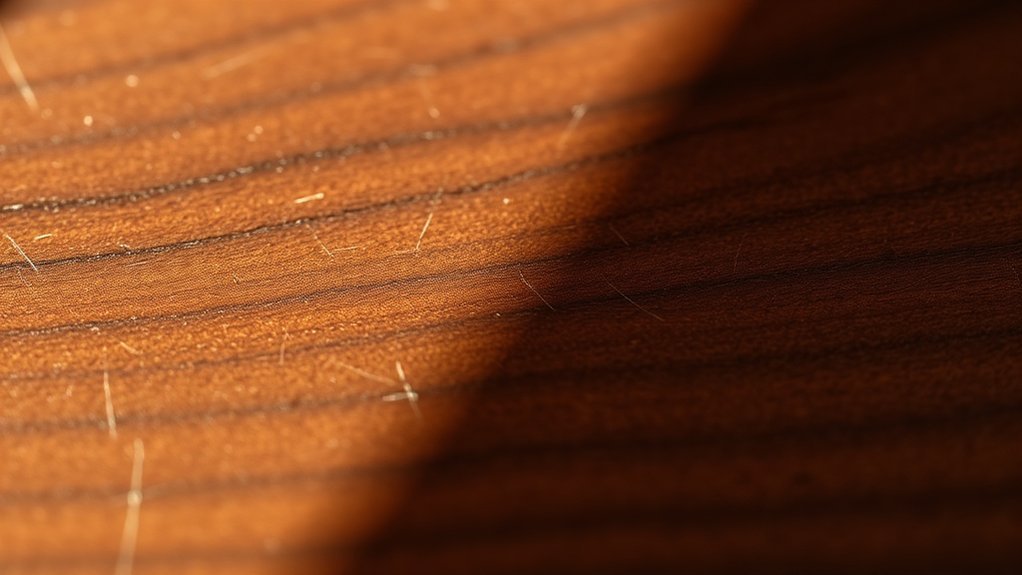
Before any touch-up begins, the finish and the scratch depth should be identified with care.
On dark stained wood, the coating governs every decision, because a mistaken approach can enlarge the flaw and dull the surface. To identify your finish, a hidden spot may be tested with rubbing alcohol: shellac and lacquer soften, while polyurethane and varnish remain stable. That result narrows the repair methods available and helps preserve the existing appearance.
Next, the scratch depth should be measured visually and by touch. Light marks often affect only the finish, while deeper cuts may expose raw wood and demand filling, staining, or gentle sanding with fine-grit paper. Each step should be matched to the damage, not forced upon it.
A small inconspicuous test is essential to test compatibility before broader application, ensuring the chosen repair methods support a clean, liberated result without unnecessary risk.
Fix Light Scratches on Dark Wood
Light scratches on dark wood should be checked first to confirm they are only surface-level marks, since deeper damage requires a different repair.
Once the depth is verified, gentle touch-up methods can be used to blend the scratch into the dark finish without changing the surrounding color.
Options such as hemp oil, a walnut rub, or a carefully matched colored pencil work best when applied with controlled, light pressure.
Assess Scratch Depth
A simple fingernail test helps determine whether a scratch on dark stained wood is only superficial or deep enough to need a stronger repair. When the nail glides over it without catching, the damage usually remains in the finish layer. This helps assess scratch depth with calm precision and guides the next step in scratch repair.
Minor surface scratches may respond to light treatment, while deeper gouges often demand a different method. A discreet test on an unseen spot should confirm compatibility with the wood stain and protect the existing surface.
Regular maintenance, including careful cleaning and oiling, can reduce visible wear and keep furniture looking composed, sturdy, and free from avoidable marks.
Blend With Dark Finish
Once a scratch is confirmed to be shallow, the next step is to blend it into the dark finish rather than rebuild the surface.
For light scratches on dark wood, a furniture marker matched to the stain can be drawn along the mark, then softened with a clean cloth so the repair merges with the surrounding grain. A small amount of hemp oil may also refresh the wood and mute the contrast without changing color.
Another option is 1 part mineral oil to 3 parts white vinegar, applied sparingly and wiped dry. Artist-quality colored pencils can trace grain lines before a shellac spray sets the result.
Each method should be tested on a hidden area first to protect the furniture and preserve freedom of choice.
Use Gentle Touch-Up Methods
For the smallest scratches on dark stained wood, gentle touch-up methods can restore visual continuity without disturbing the finish. A soft cloth may be used to apply hemp oil, which helps darken light scratches and blends them into the surrounding furniture grain.
Another option is a careful oil and vinegar mixture, one part mineral oil to three parts white vinegar, to refresh the surface and reduce visible marks while lifting grime.
Walnut meat rubbed lightly across the repair can release natural oils that deepen the scratch line. Dark furniture markers offer a precise, controlled fix for narrower defects.
Before any repair, test the method on an inconspicuous area to confirm compatibility and preserve the wood’s freedom from further damage.
Fill Deep Scratches With Wood Filler
Deep scratches in dark stained wood furniture are best repaired with a stainable wood filler that closely matches the surrounding finish, helping the repair blend in more naturally.
To fill deep scratches, a putty knife should be used to press the wood filler firmly into the damage, leaving it slightly overfilled for later leveling. A stainable formula is essential, because it accepts matching wood stain and supports a clean touch up after shaping.
Once applied, the filler must dry fully, usually 1 to 2 hours, or as directed by the manufacturer. After drying, the surface should be sanded carefully until it is flush with the surrounding wood.
Before staining, a hidden test spot should confirm color compatibility. Then a matching wood stain can be applied with a microfiber cloth and the excess wiped away, restoring visual continuity without excess effort.
Blend Repairs With Stain Markers
Selecting the right stain marker begins with matching the darkest tone in the wood and testing it on an inconspicuous area first.
Once the color is confirmed, the marker is applied directly to the scratch with controlled coverage.
A clean cloth then softens the repair, blending the pigment into the surrounding finish for a more seamless result.
Choosing the Right Marker
A stain marker should be matched to the darkest tone in the furniture so the repair blends into the existing finish rather than standing out. In choosing the right marker, careful color matching preserves the wood’s freedom from obvious damage. Testing first on an inconspicuous spot confirms compatibility before visible use.
| Step | Purpose | Result |
|---|---|---|
| Testing first | Verify color match | Safer selection |
| Application technique | Use small strokes | Natural grain fill |
| Wipe excess | Remove residue | Cleaner surface |
Apply the marker with controlled strokes, letting pigment settle into scratches. For deeper marks, add thin layers only after drying. Wipe excess promptly with a clean cloth to prevent dark halos. This methodical approach supports a refined repair while keeping the furniture’s character intact.
Blending the Repair Seamlessly
To blend the repair seamlessly, the stain marker should match the dark wood’s tone as closely as possible, and it should be tested first on an inconspicuous area to confirm the color.
Once verified, the stain marker is applied directly into each scratch, with a slight build above the surface so the repair can dry with full coverage. A clean cloth then removes any excess from the surrounding finish, preventing streaks or glare.
For a more natural result, the marker is layered in thin coats, and each coat is allowed to dry before the next. This measured process helps the repair merge with the furniture’s original character, preserving visual freedom from obvious damage while keeping the surface coherent, restrained, and discreet.
Use Walnut, Oil, or Pencils
For minor scratches on dark stained wood, a walnut meat rubbed directly over the blemish can transfer natural oils that darken the mark and restore some sheen. The method is simple: apply gentle pressure, then buff the area with a soft cloth.
A similar effect may be achieved with a small blend of olive oil and vinegar; the oil conditions the surface while the vinegar helps disperse residue, making the repair more even for minor scratches.
For deeper scratches, artist-quality colored pencils matched to the grain can be layered carefully to rebuild color and suggest texture, then sealed with clear shellac.
Furniture touch-up markers offer another controlled option, filling the scratch quickly and blending into dark finishes with minimal effort.
Each technique should first be tested on an inconspicuous spot, since finishes vary. Used methodically, these tools let wood retain dignity without demanding costly intervention.
Prevent Future Scratches
Once scratches have been corrected, the same dark stained surface benefits from routine habits that limit new damage. To prevent future scratches, the owner of wood furniture should place coasters and placemats beneath lamps, dishes, and other heavy objects.
Dust and grit should be removed often with a soft cloth, since loose debris can abrade the finish during movement. A protective wax or sealant made for dark stained wood adds a useful barrier against wear and wear and tear, supporting long-term furniture repair.
Items should never be dragged across the surface; they should be lifted, positioned, and set down carefully. Pets should be managed with the same discipline: nails trimmed, jumping discouraged, and contact controlled.
These measures preserve the finish, reduce avoidable damage, and help the furniture remain ready for free, unburdened use. Regular attention keeps the surface resilient, clean, and visually steady over time.
Frequently Asked Questions
How to Cover up Scratches on Dark Wood Furniture?
Dark wood scratches can be concealed with a matching stain marker, then softened with careful cleaning techniques.
For deeper marks, wood filler, sanding, and stain support precise wood restoration.
A light olive oil and vinegar blend may mask minor abrasions, while artist pencils can recreate grain before sealing.
This methodical furniture maintenance strengthens wood care and scratch prevention.
Testing first on an unseen area preserves autonomy and avoids costly mistakes.
How to Fix Scratches on Stained Wood?
He first evaluates scratch depth; coincidentally, the smallest mark often reveals the simplest cure.
For light damage, he blends 1 part mineral oil with 3 parts white vinegar, then buffs gently.
Deeper scratches receive fine sanding, matched wood stain options, or stain markers.
These furniture maintenance tips and DIY repair techniques support freedom through precise care.
He finishes by polishing wood finishes and applying scratch prevention methods after testing discreetly.
Does WD-40 Take Scratches Out of Wood?
WD-40 does not truly take scratches out of wood; it only masks light marks temporarily.
In scratch repair techniques, it may improve appearance by filling and lubricating the surface, but it is not real DIY wood restoration.
For better wood finish maintenance, deeper damage needs filler or stain.
Practical furniture care tips and scratch prevention methods help preserve surfaces.
It can leave residue, so cleaning remains necessary and methodical.
How to Touch up Imperfections on Stained Wood?
Evaluating the flaw is the first step; like a surgeon choosing a scalpel, the repair should match damage depth.
For minor marks, furniture maintenance tips include mineral oil and vinegar.
Deeper abrasions require matching stain or marker, then a cotton swab wipe-off.
Artist pencils can rebuild grain, followed by shellac.
These DIY wood repairs, informed by wood stain types, scratch prevention methods, and furniture restoration techniques, restore finish with control and freedom.
Conclusion
Could a few simple household fixes really make dark stained wood furniture look nearly untouched again? In many cases, the answer is yes. By identifying the finish and scratch depth first, then matching the repair method to the damage, small blemishes can be reduced with impressive precision. Light scratches often respond to gentle polishing, while deeper ones need filler or stain blending. Careful application, followed by preventive care, helps preserve both the color and the surface integrity.