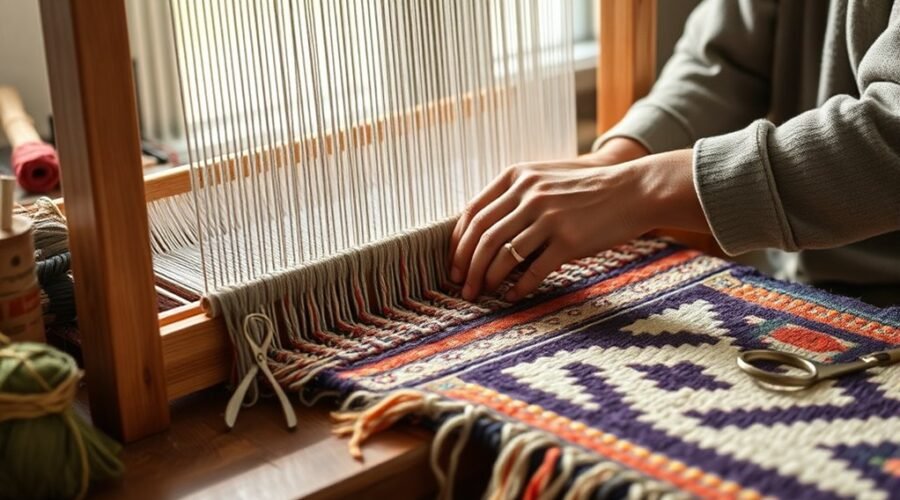
A single hand-knotted rug can hold hundreds of thousands of knots, each one tied by hand on a loom. You’ll notice the dense feel, the slight irregularities, and the depth that machine-made pieces can’t quite match. Artisans stretch the foundation, knot colored yarns row by row, then shear and finish the surface by hand. What seems simple at first soon reveals a craft with more to uncover.
Key Takeaways
- A hand-knotted rug is made by artisans tying individual knots onto a vertical loom, creating a durable, detailed textile.
- Its patterns appear on both sides, with the back showing a clear mirrored version of the front design.
- Materials usually include wool, cotton, and sometimes silk, chosen for strength, softness, and rich color.
- Making one rug can take months or years, since each row of knots is tied by hand with careful tension and precision.
- Finishing includes washing, shearing, and binding the edges, producing a long-lasting rug that can become an heirloom.
What Is a Hand-Knotted Rug?
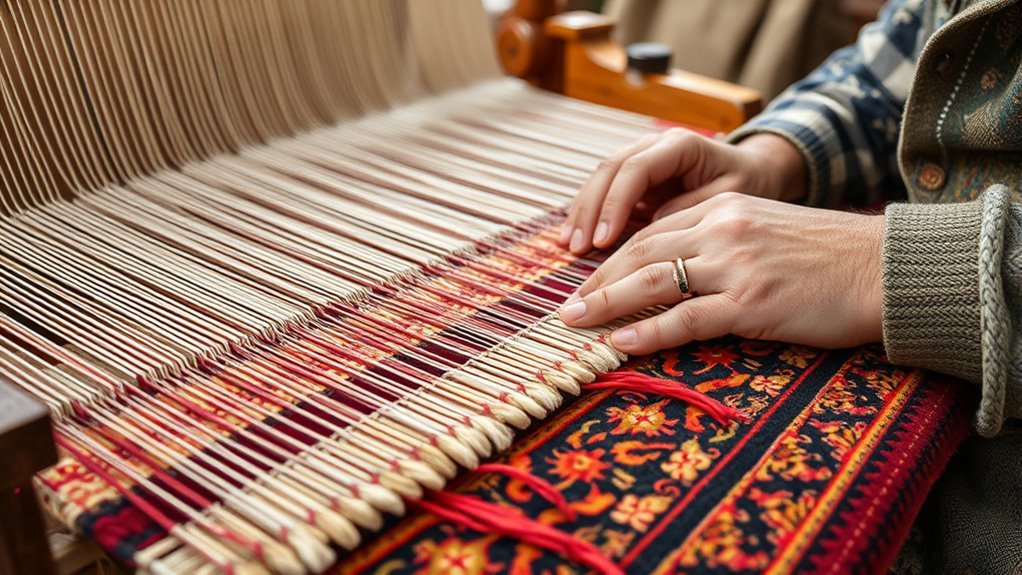
A hand-knotted rug is a true work of craftsmanship, made by skilled artisans who tie thousands or even millions of individual knots onto a foundation, usually on a vertical loom, until the full design takes shape over months of careful work.
You can feel the difference in its dense, tactile surface and see the pattern from both sides. Its quality often shows in knots per square inch, where a higher count means finer detail and stronger durability.
Because each knot is placed by hand, you get a rug with a durable pile, a firm backing, and a character that machine-made pieces can’t match. This traditional textile isn’t just decorative; it’s built to last.
With proper care, you can wash it repeatedly and still enjoy its rich texture, making it a practical heirloom that can stay in your home for generations.
How Are Hand-Knotted Rugs Made?
You’ll see the process start on a vertical loom, where artisans stretch the foundation tightly and begin tying each knot by hand, one by one.
Using time-honored methods like the Tibetan knot, they pack in wool or silk yarns that’ve been hand-dyed for rich color and lasting strength.
After the knotting’s done, the rug’s washed, sheared, and hand-bound at the edges, giving it a smooth finish while keeping every intricate detail intact.
Loom And Foundation
On the loom, a hand-knotted rug begins as a framework of vertical warp fibers stretched tight over a sturdy foundation, with horizontal weft threads locking that structure in place. You watch artisans work the loom patiently, tying knots by hand around each warp thread to build strength and pattern.
The foundation holds every row steady, so the pile grows dense and durable over months of careful labor.
- taut warp fibers forming the grid
- weft threads anchoring the base
- natural wool and silk adding a rich, tactile surface
As you study the underside, you can see the design echo through the back, evidence of precision and tradition.
Up to four weavers may share the task, keeping each hand-knotted rug even, resilient, and made to last.
Knotting And Finishing
With the loom set and the foundation firm, the rug takes shape knot by knot as artisans tie thousands of individual knots by hand around the warp threads. In this knotting, you’ll see handmade skill in every tug, whether they use a Tibetan knot or another traditional method. The process often spans months, with several weavers sharing the labor.
| Step | What You Notice | Result |
|---|---|---|
| Knotting | Dense, even ties | Strong pile |
| Patterning | Careful color changes | Clear design |
| Weaving | Shared handwork | Stable structure |
| Finishing processes | Washing, shearing, binding | Smooth surface |
| Inspection | Underside matches front | Unique craftsmanship |
Afterward, finishing processes refine the surface, soften the wool, and secure the edges. When you turn it over, the underside mirrors the face, proving authentic handmade quality.
What Materials Are Used in Hand-Knotted Rugs?
When you feel a hand-knotted rug underfoot, you’ll often find wool as the main fiber, with cotton forming the sturdy foundation that holds each knot firm.
You’ll notice silk in finer pieces, lending a soft sheen and crisp detail, while wool brings warmth, resilience, and stain resistance.
In the best rugs, these fibers blend in careful ratios, giving you the right mix of texture, strength, and lasting beauty.
Wool And Cotton Foundations
At the foundation of a hand-knotted rug, wool and cotton do the heavy lifting. You feel wool’s springy softness underfoot, while cotton gives the hand-knotted structure a firm backbone.
The warp and weft threads often rely on cotton for strength, and the weft can also be wool, shaping the rug’s texture and weight. In tribal pieces, wool on wool can look looser and more pliable; in city-style rugs, wool on cotton usually feels denser and more tailored.
- Wool adds plushness and durability
- Cotton strengthens the warp and weft
- Material choice changes the rug’s look and feel
When skilled makers pack up to 120 KPSI into wool, you get lasting detail, rich surface, and traditional durability.
Silk, Wool, And Blends
Beyond the wool-and-cotton foundation, the face of a hand-knotted rug often comes from wool, silk, or a blend of the two. You’ll feel wool’s springy resilience underfoot, and you’ll appreciate its natural stain resistance in busy rooms. Silk adds a smooth, luminous sheen and lets artisans draw tiny, precise motifs, though it asks for gentler care. Blends give you both softness and strength, so your rug can balance beauty with durability.
| Material | Key Benefit |
|---|---|
| Wool | Durable, resilient |
| Silk | Lustrous, detailed |
| Blends | Balanced beauty |
In hand-knotted weaving, material choice shapes texture, appearance, and longevity. Silk pieces often carry higher knots per square inch, so the pattern looks sharper, richer, and more traditional.
Why Do Hand-Knotted Rugs Take So Long?
Hand-knotted rugs take so long because every inch is built by hand, one knot at a time, by skilled artisans working on a vertical loom. You watch the hand-knotted production process unfold slowly as weavers build from the bottom up, and the pattern emerges only after countless knots.
High knots per square inch (KPSI) mean finer detail, stronger structure, and far more time at the loom. Many handmade rugs need four to five months, while the most intricate designs can stretch into years.
- wool and silk yarns are hand-dyed in small batches
- multiple weavers may sit in rhythm, knotting beside each other
- rich colors and crisp motifs develop gradually, row by row
Because every thread matters, artisans must work carefully, keep tension even, and follow the design exactly. That patient, tactile work gives you a rug with depth, durability, and a true traditional finish.
How Can You Spot a Hand-Knotted Rug?
One of the easiest ways to spot a hand-knotted rug is to turn it over and look closely at the back. You’ll see the pattern mirrored there, because each knot was tied by hand in a unique weaving technique.
On a hand-knotted rug, the design should stay clear and symmetrical, even if the knots look slightly uneven up close. That little irregularity is part of the artisan’s touch, unlike the flat, machine-perfect look of factory pieces.
Check the fringes too; they should grow from the rug itself, not seem stitched on later.
You can also judge knot density by measuring one inch vertically and one inch horizontally, then multiplying the counts. Higher KPSI usually means a more durable, intricate piece.
In rug showcases, these details often set fine wool rugs apart, and they help you recognize true craftsmanship before you bring one home.
What Are the Main Hand-Knotted Rug Weaves?
When you start looking at hand-knotted rug weaves, you’ll quickly notice that each tradition leaves its own tactile signature. In rug making, the Persian Weave gives you intricate motifs and tight knots, so you can trace delicate curves across fine Iranian pieces. The Senneh Knot, a Persian knot, lets weavers pack in crisp detail, especially when a high KPSI count calls for precision.
- The Turkish Weave feels sturdy and balanced, with a knotting style that builds clear, graphic patterns.
- Nepali Weave often shows mixed knotting approaches, giving Indo-Tibetan rugs a slightly varied surface and rich texture.
- Jufti Knot uses two yarns at once, so you’ll see a quicker, less dense structure.
As you compare these hand-knotted structures, you’re really reading a maker’s language: dense, floral, geometric, or textured, each weave tells you how the rug came to life under skilled hands.
Why Are Hand-Knotted Rugs So Durable?
Built knot by knot, these rugs gain their strength from thousands, sometimes millions, of knots tied directly to the foundation, which locks the structure tight and helps it hold up beautifully under daily wear.
You can feel that sturdiness in a hand-knotted weave: each thread grips the next, so the rug keeps its shape instead of loosening or fraying. Higher knots per square inch usually means tighter construction, and that dense packing boosts durability in busy rooms.
When you choose a wool rug, you’re getting fibers that naturally spring back and resist everyday staining, while silk adds a refined strength and sheen.
Wool naturally springs back and resists stains, while silk lends a refined strength and luminous sheen.
Because the rug is made by hand, artisans spend months or years building every line with care, creating a piece that can serve for generations. That patient craft gives hand-knotted rugs their lasting character and makes them a wise choice where feet tread often.
How Do You Care for a Hand-Knotted Rug?
Because a hand-knotted rug is made to last, a little steady care helps preserve its strength and beauty. You should vacuum it regularly with a vacuum that doesn’t use a beater bar, so the fibers stay intact and the weave keeps its soft, lived-in feel.
When spills happen, blot them at once with a clean, dry cloth; don’t rub, or you may push the stain deeper. Keep the rug in a dry room and away from dampness to prevent moisture damage.
- Place a high-quality rug pad underneath to reduce friction and protect the foundation.
- Arrange furniture carefully so heavy legs don’t grind into the surface.
- Schedule professional cleaning every few years to refresh the colors and maintain durability.
With these simple habits, your hand-knotted rug can keep its rich texture, steady body, and traditional character for years, even with daily use underfoot.
Are Hand-Knotted Rugs Worth the Price?
Yes—hand-knotted rugs are often worth the higher price if you want something that feels substantial underfoot and can stay in your home for decades. You’re paying for real hand-knotted craftsmanship, where skilled artisans tie each knot by hand over months or years. That labor gives the rug its durability and rich character.
Higher KPSI usually means finer detail, tighter weaving, and greater value; silk pieces can reach extraordinary densities. When you choose premium materials like wool or silk, you get a softer hand, deeper color, and better stain resistance. You’re also investing in ethical production, because fair trade practices help support artisans and their communities.
Unlike machine-made rugs that may wear out in 5 to 20 years, a well-made hand-knotted rug can become a family heirloom. If you want lasting beauty, texture, and tradition, the price often makes sense.
Frequently Asked Questions
Which Is Better, Hand-Tufted or Hand Knotted?
Hand-knotted is better if you want lasting quality.
For a durability comparison, you’ll get a tougher, reversible rug that can serve you for decades.
In cost analysis, hand-tufted wins upfront, but hand-knotted often saves money over time.
The craftsmanship differences show in richer texture and tighter detail, while design variety appears in both.
For maintenance tips, vacuum gently and rotate often to keep either rug looking its best.
How Long Do Hand-Knotted Wool Rugs Last?
You can expect hand-knotted wool rugs to last 50 years or more, and some reach a century with care. Their lasting power comes from durability factors like tight weaving techniques and dense knots.
Good wool quality helps them resist wear, while design variations often reflect skilled craftsmanship.
Follow rug maintenance tips: vacuum gently, avoid harsh sun, and schedule professional cleaning.
With proper care, you’ll enjoy a rich, tactile rug for generations.
Is a Hand-Knotted Rug Worth It?
Yes, it’s worth it if you value rug quality, craftsmanship techniques, and timeless design variations.
You’ll feel the dense weave, see the fine detail, and enjoy a piece that can last for generations. Its investment value grows when you follow simple maintenance tips like regular vacuuming and prompt spot cleaning.
You’re paying for tradition, skill, and durability, not just decoration, so the higher price can make real sense.
How Can I Tell if a Rug Is Hand Knotted?
You can tell a rug’s hand knotted by checking its rug features: flip it over and look for mirrored design patterns, slightly uneven knots, and fringes that come from the foundation.
Feel the back; it should be hard, while the front stays plush. Higher knot density often means better craftsmanship.
Also, inspect material quality closely.
For maintenance tips, vacuum gently and rotate it regularly to preserve its traditional beauty.
Conclusion
When you choose a hand-knotted rug, you’re bringing home more than a floor covering—you’re inviting in a story woven by patient hands. You can almost feel the dense knots beneath your feet, see the soft glow of wool or silk catching the light, and sense the quiet tradition in every thread. With proper care, it’ll age beautifully, grounding your space with warmth, texture, and craftsmanship that can last for generations.