Beef liver vs chicken liver: beef liver has more vitamin A, copper and B12, while chicken liver has more iron and folate and a milder taste. Neither is healthier for everyone. Cook beef liver to 160°F (71°C) and chicken liver to 165°F (74°C), and eat either one in modest amounts.
Quick Answer
Pick chicken liver if you want a gentler flavor and more iron. Pick beef liver if you like a bold taste and want the most B12 per bite. Both are very high in preformed vitamin A, so portion size and frequency matter more than which one you choose.
Key Takeaways
- Beef liver is more concentrated in copper, vitamin A and B12.
- Chicken liver has more iron and folate in the USDA cooked entries below.
- NHS guidance: liver no more than once a week, and none during pregnancy.
- Use a thermometer. Color, soaking or a quick sear cannot confirm safety.
Beef Liver vs Chicken Liver: Nutrition at a Glance
The table uses USDA FoodData Central entries for braised beef liver and simmered chicken liver. Values are rounded and per 100 g of cooked liver.
The two entries use different cooking methods, so treat the gaps as a guide, not exact differences. Raw liver, fried liver and pâté will differ.
| Nutrient | Beef liver, braised | Chicken liver, simmered |
|---|---|---|
| Energy | 191 kcal | 167 kcal |
| Protein | 29.1 g | 24.5 g |
| Carbohydrate | 5.1 g | 0.9 g |
| Vitamin A | 9,442 mcg RAE | 3,981 mcg RAE |
| Vitamin B12 | 70.6 mcg | 16.9 mcg |
| Folate | 253 mcg | 578 mcg |
| Iron | 6.5 mg | 11.6 mg |
| Copper | 14.3 mg | 0.5 mg |
How to read it: mcg means micrograms. RAE (retinol activity equivalents) is the unit for vitamin A. 100 g is a comparison basis, not a recommended portion.
Pros and Limitations of Each Liver
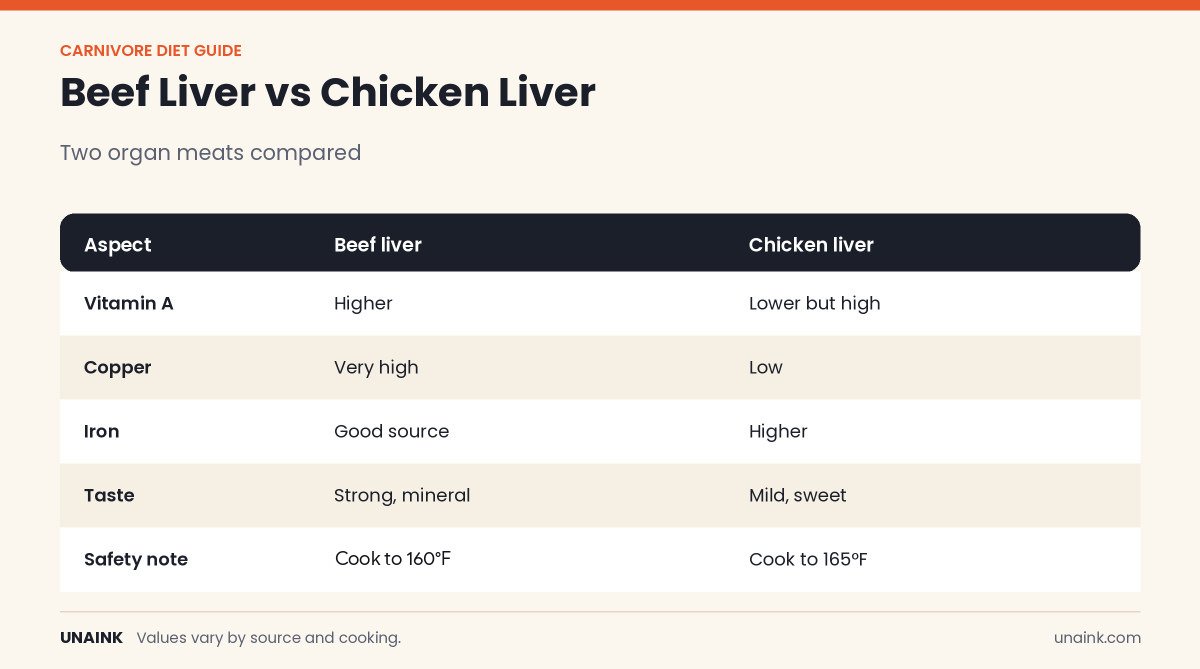
| Factor | Beef liver | Chicken liver |
|---|---|---|
| Vitamin A and B12 | Very high | High |
| Iron and folate | Good | Higher |
| Copper | Very high, a concern for some people | Low |
| Taste | Strong, mineral | Mild |
| Texture | Firm, dries out if overcooked | Soft, creamy |
| Safe internal temperature | 160°F (71°C) | 165°F (74°C) |
For a deeper look at the beef side, see our guide to beef liver benefits and risks.
How Much Liver Is Too Much?
Liver contains preformed vitamin A (retinol), which your body stores. The NIH upper limit for adults is 3,000 mcg RAE per day of preformed vitamin A from food and supplements combined.
A 100 g portion of either cooked liver in the table goes over that limit. One serving is not poisoning, but regular high intake is a concern.
- NHS guidance: no more than once a week.
- If you eat liver weekly, skip supplements that contain vitamin A, including fish liver oil.
- Switching between beef and chicken liver does not remove the vitamin A concern.
- People with Wilson disease are usually told to limit high-copper foods such as liver. Follow your clinician’s plan.
Pregnancy: NHS guidance advises avoiding liver and liver products, including pâté, because of their high vitamin A content. Chicken liver is included, even though it has less vitamin A than beef liver.
Safe Cooking Temperatures for Each Liver
USDA recommends cooking organ meats, including beef liver, to 160°F (71°C), as MSU Extension summarizes. CDC says chicken liver must reach 165°F (74°C), just like other chicken parts.
- Beef liver: check that the thickest part reaches 160°F.
- Chicken liver: check that the inside reaches 165°F, including liver for pâté.
- Mixed dishes: if the dish has chicken liver in it, cook the whole dish to 165°F.
- Thermometer: use a thin probe and check several pieces. You cannot tell by looking.
Campylobacter can live inside chicken liver. In a CDC-reported outbreak, people got sick from undercooked chicken liver pâté even though the livers had been rinsed. The same report describes illness from frozen raw liver eaten as “pills.” Washing, soaking or freezing does not replace full cooking.
Taste, Texture and How to Cook Them
In everyday cooking, the biggest beef liver vs chicken liver difference is flavor. Chicken liver usually tastes milder and feels softer. Beef liver is firmer with a stronger, mineral flavor. Batches vary, so treat these as general descriptions.
- Thaw in the fridge in a covered container that catches drips.
- Prep on a separate board. Trim tough tissue and cut even pieces. Do not rinse raw liver; splashes spread bacteria. For beef liver, see how to clean beef liver and remove the membrane.
- Optional soak. A milk soak can soften the flavor but does not sanitize the liver. Keep it in the fridge and discard the liquid. Here is why people soak liver in milk.
- Cook in small batches. Pan-frying, simmering or braising all work. Time depends on thickness and heat.
- Check the temperature: 160°F for beef liver, 165°F for chicken liver.
- Serve or chill promptly. Refrigerate leftovers within two hours, or one hour above 90°F (32°C).
Buying and Storing Liver
- Compare local prices by weight. Neither type is always cheaper.
- Choose cold, intact packages and keep raw liver away from ready-to-eat food.
- Use or freeze raw liver within 1 to 2 days at 40°F (4°C) or below.
- Eat cooked leftovers within 3 to 4 days and reheat to 165°F.
Storage times follow the FoodSafety.gov cold storage chart.
Beef Liver vs Chicken Liver: Which Should You Choose?
- New to organ meats: chicken liver is usually easier to enjoy.
- Want the most B12 per bite: beef liver, with careful portions because of its copper and vitamin A.
- Need more iron or folate: chicken liver has more, but the vitamin A limits still apply.
- Diagnosed deficiency: follow your clinician’s treatment plan rather than relying on liver.
- Dislike liver: you do not have to eat it. See other organ meats such as heart, which taste milder.
Frequently Asked Questions
Is beef liver healthier than chicken liver?
Neither is better for everyone. In the USDA cooked entries compared here, beef liver has more vitamin A, copper and B12, while chicken liver has more iron and folate. Your overall diet and health needs matter more than picking the most concentrated food.
Which liver has more iron?
Chicken liver. USDA lists about 11.6 mg of iron per 100 g of simmered chicken liver and about 6.5 mg per 100 g of braised beef liver. These are averages, not exact values for every serving.
How often can I eat liver?
NHS guidance says not to eat liver or liver products more than once a week because they are so rich in vitamin A. If you eat liver weekly, avoid supplements that contain vitamin A. Ask a clinician if you have a health condition.
What temperature should beef liver reach?
USDA recommends cooking beef liver and other organ meats to an internal temperature of 160°F (71°C), checked with a food thermometer.
Is pink chicken liver safe to eat?
No. Color cannot confirm safety. CDC says chicken liver must reach 165°F (74°C) inside, including when making pâté, because Campylobacter can live inside the liver.
Can I eat beef or chicken liver during pregnancy?
NHS guidance advises avoiding liver and liver products during pregnancy because of their high vitamin A content. This applies to both beef and chicken liver. Talk with your maternity care team about nutrition and supplements.
Medical note: This article is general food and nutrition information, not medical advice. A doctor or registered dietitian can advise on portions if you have a health condition, take supplements, or are pregnant or breastfeeding.
Related Organ Meat Guides
- Beef Liver Benefits: nutrients and risks of beef liver.
- How to Clean Beef Liver: trimming and peeling the membrane.
- Why Soak Liver in Milk?: what soaking does and does not do.
- What Are Organ Meats?: the main types and how they taste.
- Organ Meat vs Muscle Meat: a nutrient density comparison.
Sources
Nutrition figures come from USDA reference data, not a hands-on or lab test. Food composition varies by animal and cooking method.
- USDA FoodData Central: beef liver, braised (FDC 168626) and chicken liver, simmered (FDC 171061).
- NIH Office of Dietary Supplements: Vitamin A.
- NHS: Vitamin A.
- CDC: Cooking Chicken Liver.
- CDC MMWR: Campylobacteriosis outbreak linked to undercooked chicken liver pâté.
- MSU Extension: variety meats and USDA cooking temperature.
- FoodSafety.gov: Cold food storage chart.