Plant foods are the heart of the debate, so can you eat vegetables on carnivore diet plans and still call it carnivore? Not on a strict version. Still, many people add a few vegetables to a mostly animal diet, and the more useful question is what you lose or gain when you do. The research is very limited, so this guide stays careful.
Quick Answer
No on strict carnivore, it depends on relaxed carnivore, and yes on animal-based eating. Vegetables supply fiber, vitamin C and plant compounds that a meat-only plan lacks. Whether adding them improves how you feel is not settled, and people with digestive conditions should get individual advice instead of guessing.
Key Takeaways
- Strict carnivore excludes vegetables; animal-based eating includes them.
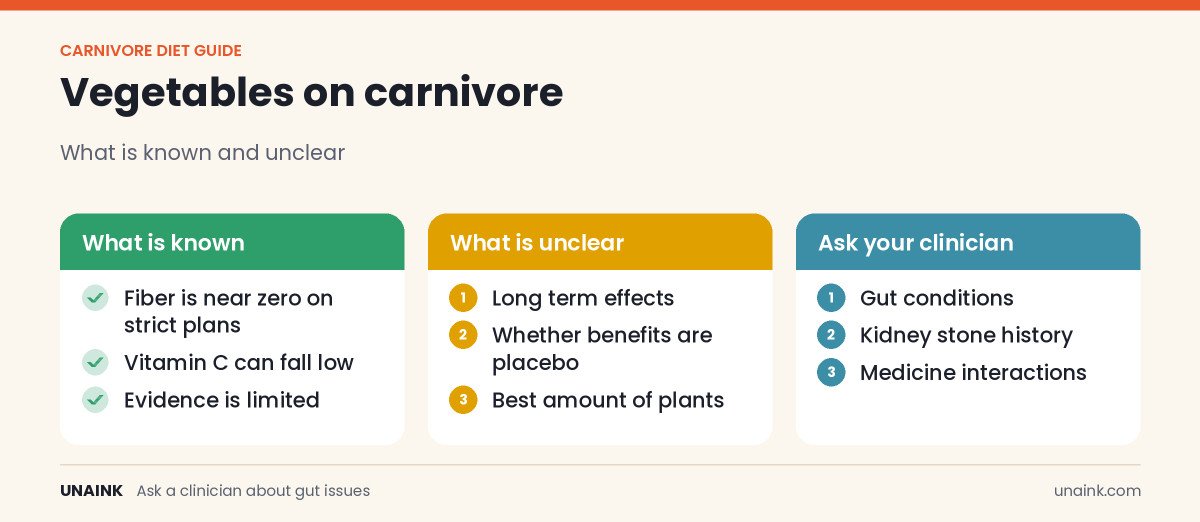
- Fiber on strict carnivore can fall under 1 g a day, versus 25 to 38 g recommended.
- Reported benefits of carnivore eating are mostly self-reported and may include placebo effects.
- Cooked, low-fiber vegetables are the usual first step for relaxed eaters.
- People with gut, kidney or medicine concerns should plan changes with a clinician.
Vegetables on Each Style of Carnivore
Strict carnivore excludes all plants. Relaxed carnivore sometimes adds small amounts of cooked vegetables as an exception, and animal-based eating includes vegetables and fruit alongside meat. The Harvard Health overview describes the diet as one that excludes all vegetables, which is why it is sometimes called zero carb.
| Style | Vegetable verdict | What it looks like |
|---|---|---|
| Strict carnivore | No | Animal foods only |
| Relaxed carnivore | Depends | Small portions of cooked, mild vegetables |
| Animal-based | Yes | Vegetables and fruit alongside meat |
What You Give Up Without Vegetables
Mayo Clinic recommends 25 grams of fiber a day for women and 38 grams for men up to age 50, and links fiber with easier bowel movements, lower LDL cholesterol and better blood sugar control. The 2026 scoping review reported fiber under 1 g a day on carnivore meal plans, and flagged vitamin C, magnesium, potassium and folate as possibly low.
The NIH lists cooked broccoli at about 51 mg of vitamin C per half cup and raw red bell pepper at about 95 mg. Those are examples of what vegetables bring that meat does not.
Can You Eat Vegetables on Carnivore Diet and Still Benefit?
This is the hard part. In a 2021 self-reported survey of 2,029 adults who already followed the diet, many said they felt better. Surveys like that cannot show cause and effect, because people who like the diet are the ones who answer. The 2026 review noted that reported gains may reflect perception, placebo effects or ketosis, not strong evidence.
If you add a few vegetables and feel fine, there is no proof you lose the benefits. If you feel worse, that is useful information too.
Who Should Be Careful
- Digestive conditions: Mayo Clinic notes that conditions such as Crohn’s disease may need a lower-fiber diet, so ask a clinician before adding fiber.
- Kidney stones: one case report in the review linked a carnivore diet with worsening stone markers; ask your doctor before changing diet.
- Medicines: warfarin users should keep vitamin K intake steady, and diabetes or blood pressure drugs may need adjusting.
- Pregnancy, children, seniors and eating disorders: a carnivore diet is not recommended without medical guidance.
If you are trying plant exclusion to manage symptoms, a dietitian-guided elimination plan is safer than cutting everything at once.
A Careful Way to Add Vegetables
- Start with cooked, mild options such as zucchini or cucumber in small portions.
- Add one new vegetable at a time and wait two or three days.
- Increase fiber slowly and drink enough water to limit bloating.
- Track digestion and energy, and stop if symptoms worsen.
Our ketovore diet explained guide shows how meat and low-carb plants can work together.
Can You Eat Vegetables on Carnivore Diet: The Short Version
Can you eat vegetables on carnivore diet plans? Not strictly, though relaxed and animal-based eaters do. If you eat vegetables on carnivore diet menus, go slowly, favor cooked mild options, and watch how your body responds.
Frequently Asked Questions
Is it okay to eat no vegetables at all?
Some people do, but the evidence on long term safety is limited and fiber and vitamin C intake can fall short. A clinician can check your labs.
Which vegetables are easiest to start with?
Cooked, mild options like zucchini and cucumber are common starting points, though tolerance is individual.
Do vegetables kick you out of ketosis?
Small portions of low-carb vegetables may not, but larger portions can add enough carbs to matter.
Do I need fiber?
Mayo Clinic recommends 21 to 38 grams a day depending on age and sex. Some people feel fine without it, but research is limited.
Can I take supplements instead?
Supplements can fill specific gaps, but ask a clinician which ones, since doses and interactions vary.
Conclusion
Vegetables are optional on a carnivore plan and can be a useful, low-risk addition for many people. Because evidence on long term meat-only eating is thin, a flexible approach with regular check-ups is a reasonable middle ground.
Medical note
This article is for general education and is not medical advice. Talk with a doctor or registered dietitian before making major diet changes, especially if you have a health condition, take medication, or are pregnant or breastfeeding.
Keep Reading
- Ketovore Diet Explained: Low-carb eating with some plants.
- What Is the Animal-Based Diet?: Meat, fruit and vegetables.
- Carnivore Diet Food List: Core foods and optional extras.
- Can You Eat Fruit on Carnivore Diet?: Where the line falls.
Sources
- Mayo Clinic: Dietary fiber: Fiber recommendations and benefits
- NIH ODS: Vitamin C fact sheet: Vitamin C food sources
- Nutrients scoping review of carnivore diets (2026): Nutrient adequacy and limits of evidence
- Self-reported survey of 2,029 carnivore adults (2021): Self-selected, self-reported data
- Harvard Health: What is the carnivore diet?: Foods and risks