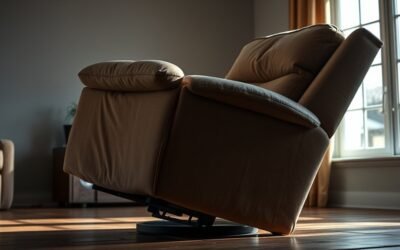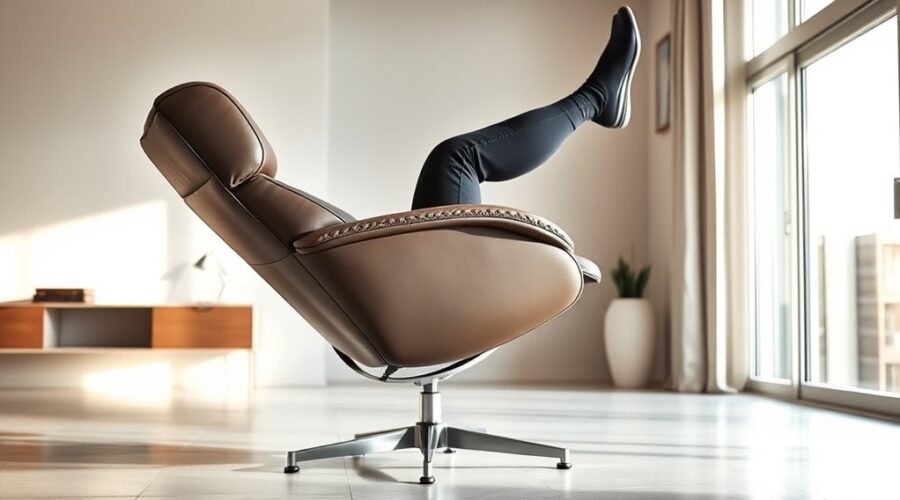
A zero gravity recliner is a reclining chair that raises your legs and supports your torso in a relaxed, semi-reclined position inspired by NASA research on neutral body posture. The position can redistribute pressure and may make prolonged sitting more comfortable, but it is not true weightlessness and it is not a medical treatment for back, circulation, or swelling problems.
Quick Answer
A zero gravity recliner supports your back while elevating your legs, which can redistribute body weight and reduce mechanical strain compared with some upright sitting positions. Leg elevation may also help some people with dependent leg swelling. The ideal position varies by person and chair, so there is no universal 127° setting that everyone should use.
Key Takeaways
- Zero gravity recliners are inspired by NASA’s neutral-body-posture research, but there is no single NASA-approved chair angle.
- Supported recline can redistribute body weight and may reduce spinal loading compared with some unsupported sitting positions.
- Elevating the legs may help reduce fluid pooling and swelling for some people, but regular movement is still important.
- Lumbar support, head support, seat fit, stability, weight capacity, and easy controls matter more than chasing one specific recline angle.
- Heat, massage, memory presets, and powered adjustments are optional comfort features, not requirements for a zero gravity recliner.
What Is a Zero Gravity Recliner?

A zero gravity recliner is a chair designed to support your torso while elevating your legs into a relaxed reclining position. The name is inspired by the neutral body posture studied by NASA in astronauts exposed to microgravity.
The term can be confusing. A recliner does not remove gravity, and NASA does not certify one exact chair position as the universal “zero gravity” angle. NASA’s research shows a range of relaxed joint positions rather than one posture that fits every person.
On Earth, manufacturers use the idea to create seating that supports the back, bends the hips and knees, and raises the legs. Depending on the chair and your body proportions, your feet may sit near or above heart level.
This positioning can spread contact pressure across the back, seat, and legs. It may also feel more comfortable than sitting upright when your lower back or legs are tired.
“Zero gravity” describes an Earth-based seating position inspired by relaxed body posture in microgravity; it does not mean the chair eliminates gravity or provides a medically standardized angle.
How a Zero Gravity Recliner Works
A zero gravity recliner works by supporting more of your body while reclining your torso and raising your legs. This changes how your weight is distributed across the chair.
Research measuring spinal loads in supported sitting has found that leaning against a backrest can reduce spinal loading compared with some upright positions. That does not prove that every zero gravity chair “decompresses” the spine, but it helps explain why a well-supported reclined posture can feel easier on the lower back. A peer-reviewed study indexed by the U.S. National Library of Medicine found lower spinal implant loads with supported backrest positions under several sitting conditions.
The legrest supports your lower legs so they do not hang downward in the normal seated position. For people who develop mild dependent swelling after long periods of sitting or standing, raising the legs may help reduce fluid pooling.
Most recliners let you alter the backrest and legrest positions. Some have a single synchronized mechanism, while others allow independent adjustment of the headrest, lumbar area, backrest, and footrest.
The best position is the one that supports your head, back, hips, and legs without creating pressure behind your knees, forcing your neck forward, or making it difficult to get out of the chair.
Why It May Feel Better on Your Back
A supported reclined position may reduce mechanical strain on your back by allowing the backrest to carry part of your upper-body weight.
When your torso is supported, your back muscles may not need to work as hard to hold you upright. Research on seated biomechanics has also found that backrest support and reclined postures can reduce spinal loading under certain conditions.
That makes a zero gravity recliner potentially useful for temporary comfort when upright sitting aggravates your lower back. Good lumbar support can also help prevent you from collapsing into a rounded posture while reclined.
However, comfort should not be confused with treatment. A chair cannot diagnose or correct conditions such as a herniated disc, spinal stenosis, arthritis, nerve compression, or another cause of persistent back pain.
Note: If back pain is severe, follows an injury, causes new weakness or numbness, or continues despite changing your sitting position, get medical advice rather than relying on a recliner alone.
How Leg Elevation Affects Swelling and Blood Flow
Raising your legs changes the effect of gravity on fluid in the lower body. For some people with dependent swelling, keeping the legs elevated while sitting or lying down can help reduce fluid buildup.
Cleveland Clinic guidance on edema recommends leg elevation as one measure that may help control swelling. It also recommends movement and avoiding long periods of sitting or standing without changing position.
That distinction matters. A recliner may put your legs in a more favorable position, but it does not make prolonged immobility harmless or prevent blood clots.
The CDC’s blood-clot guidance recommends getting up and walking every one to two hours during prolonged periods of sitting, such as long-distance travel.
Think of leg elevation as a comfort and positioning tool rather than a substitute for movement, medical evaluation, or treatment of an underlying circulation problem.
Warning: Do not assume unexplained leg swelling is simply from sitting. Sudden, severe, painful, red, hot, or one-sided swelling needs medical evaluation. Seek urgent care for leg swelling accompanied by chest pain, trouble breathing, coughing up blood, fainting, or other serious symptoms.
Best Features for Comfort and Support
The most useful zero gravity recliner features are the ones that help the chair fit your body securely. Prioritize supportive positioning before extras such as massage or heat.
Look for a stable frame, appropriate seat depth, adequate head and lumbar support, smooth controls, and a manufacturer-rated weight capacity that gives you a comfortable margin.
Adjustable Recline Positions
Adjustable recline positions let you change the relationship between your torso, hips, knees, and legs until the chair supports you comfortably.
You may see approximately 127° or 128° mentioned in zero gravity marketing. That figure is often linked to historical NASA posture measurements, including a roughly 128° trunk-to-thigh angle. It should not be treated as a universal backrest setting or a medically required recline angle.
NASA’s later discussion of neutral body posture makes clear that astronauts do not assume one identical position in microgravity. Body proportions and joint angles vary.
Powered recliners make small adjustments easier, while manual chairs can provide a simpler mechanism. Neither type is automatically better; choose the control system you can operate comfortably and safely.
If a chair includes memory settings, they can be convenient when several positions work for different activities such as reading, resting, or watching television.
Lumbar Support Features
Lumbar support helps fill the space behind your lower back so you can recline without collapsing into an uncomfortable rounded posture.
| Feature | What to Look For |
|---|---|
| Adjustable lumbar support | Enough adjustment to support your lower back without pushing it excessively forward |
| Supportive padding | Comfortable cushioning that does not bottom out or create hard pressure points |
| Head and neck support | A headrest that keeps your neck relaxed instead of forcing your chin toward your chest |
| Leg support | A footrest or legrest long enough to support you without concentrating pressure behind the knees |
High-density foam or another resilient cushioning material may help the chair maintain support over time, but foam density alone does not determine comfort. Seat width, depth, contour, suspension, and your body size also matter.
Heat And Massage Options
Heat and massage are optional comfort features rather than defining features of a zero gravity recliner.
Gentle heat may help relax tense muscles and reduce stiffness. Make sure the heat level is comfortable, especially if you have reduced skin sensation or another condition that could make burns harder to notice.
Massage functions may use vibration, kneading, rolling, tapping, or other patterns depending on the chair. They can feel relaxing and may temporarily reduce muscle tension for some people.
Evidence for massage as a treatment for back pain is mixed. The National Center for Complementary and Integrative Health notes that studies suggest possible short-term benefits for some pain conditions, but the strength of evidence for low-back pain is limited.
Choose heat and massage because you enjoy the features, not because a chair claims they will cure pain or circulation problems.
How to Use a Zero Gravity Recliner Safely
Start in an upright or lightly reclined position and adjust the chair gradually. Your head should feel supported, your lower back should not be sharply arched, and your legs should rest without hard pressure behind the knees.
- Sit fully back in the seat before reclining.
- Adjust the headrest so your neck stays neutral rather than pushed forward.
- Set lumbar support so it feels supportive instead of forceful.
- Raise the legrest until your calves and heels are comfortably supported.
- Stop at a recline angle that feels stable and comfortable rather than aiming for a specific number.
- Change position periodically and get up to move during long sitting sessions when you can do so safely.
- Return the chair toward upright before standing so you can exit without twisting or overreaching.
Pro Tip: Before buying, test how easily you can enter, recline, return upright, and stand up. A chair can feel excellent while reclined yet still be a poor fit if its seat is too deep or its controls are difficult to reach.
Who Should Be Extra Cautious?
Most healthy adults can use a properly sized recliner for ordinary relaxation, but certain situations deserve more caution.
Speak with a healthcare professional about positioning if you are recovering from surgery or a significant injury, have persistent or unexplained swelling, have a condition that affects safe body positioning, or are pregnant and unsure which positions are appropriate for you.
People with limited mobility should also consider transfer safety. Deep recline, a low seat, unstable armrests, or controls that are difficult to reach can make standing up harder.
If you use a powered recliner, confirm that you can return it to an upright position reliably. Battery backup can be useful in homes where a power outage could otherwise leave someone unable to exit the chair comfortably.
Zero Gravity Recliner vs. Traditional Recliner
A zero gravity recliner generally coordinates the backrest and legrest to support a more reclined, legs-up position. A traditional recliner may simply tilt the back and extend the footrest without emphasizing a neutral-body-posture-inspired position.
That does not mean every zero gravity model provides better ergonomics than every traditional recliner. Fit, lumbar support, seat geometry, padding, stability, and adjustability matter more than the label printed on the product.
Zero gravity models often offer powered positioning, adjustable headrests, lumbar adjustments, heat, massage, or memory settings. These features vary widely by model.
Traditional recliners may be simpler, easier to operate, more compact, or less expensive. Some traditional recliners can also provide excellent supported positioning if they fit your body well.
How to Choose the Best One for You
To choose a zero gravity recliner, focus on body fit, adjustability, stability, controls, and available room rather than relying on one advertised angle.
Check the manufacturer’s dimensions in both upright and fully reclined positions. Then compare those measurements with your body size and the space around the chair.
Extras such as heat or massage can improve enjoyment, but they should come after the fundamentals of fit and support.
Comfort And Support
A good zero gravity recliner should support your head, lower back, hips, thighs, and legs without creating concentrated pressure points.
Check these factors when you sit in the chair:
- adjustable head and lumbar support where available
- seat depth that lets your back reach the backrest comfortably
- enough seat width without excessive side-to-side movement
- breathable or temperature-appropriate upholstery
- stable armrests that help you enter and leave the chair
- manufacturer-rated weight capacity suitable for the intended user
- supportive padding that does not collapse beneath you
Materials vary from breathable mesh on patio-style zero gravity chairs to woven fabric, faux leather, and leather on indoor powered recliners. Choose based on comfort, cleaning requirements, durability, and your room environment.
The right chair should feel balanced and secure rather than oversized, cramped, or difficult to control.
Recline Features
Look for a recline range that lets you support both your torso and legs comfortably. Do not reject an otherwise comfortable chair because its advertised angle differs from 127°.
Prioritize adjustability. Independent headrest, lumbar, backrest, or legrest controls can help accommodate different body shapes and activities.
Next, evaluate the mechanism type. Powered systems can provide precise push-button control, while manual mechanisms avoid dependence on a motor or electrical outlet.
Verify the exact weight capacity in the manufacturer’s specifications rather than relying on a typical category range.
If back comfort is your main goal, pay special attention to smooth motion, lumbar support, stable positioning, and whether the chair maintains support at the angles you actually use.
Space And Fit
Zero gravity recliners can require substantial depth when fully reclined, although some wall-hugger designs reduce rear-clearance requirements.
Measure the available floor area and check both the chair’s upright dimensions and its fully reclined dimensions before buying.
Also consider:
- rear and front clearance
- seat height and depth
- overall width
- footrest length
- rated weight capacity
- doorway clearance for delivery
- ease of entering and leaving the chair
- control location and accessibility
- portability if you plan to move it regularly
Foldable patio-style zero gravity chairs are more portable than large indoor powered recliners, but they usually provide fewer adjustments and less cushioning.
Matching the chair’s dimensions and controls to your body and room is more useful than choosing solely from marketing terms.
Frequently Asked Questions
What Are the Pros and Cons of a Zero Gravity Chair?
The main advantages are supported recline, elevated legs, adjustable positioning, and potential relief from pressure or muscle effort while sitting. Depending on the model, you may also get heat, massage, powered controls, and memory settings. Downsides include size, cost, reliance on power in some models, difficulty getting out of deep recline for some users, and the fact that health benefits are sometimes exaggerated in marketing.
How Long Should You Sit in a Zero Gravity Chair?
There is no evidence-based 15-, 30-, or 45-minute limit that applies specifically to zero gravity recliners. Let comfort guide short sessions, but do not treat a comfortable recline as a reason to remain motionless indefinitely. During prolonged sitting, change position and get up to move regularly when you can do so safely. The CDC recommends walking every one to two hours during prolonged sitting situations such as long-distance travel.
Do Doctors Recommend Zero Gravity Chairs?
There is no universal medical recommendation that everyone should use a zero gravity chair. A clinician may recommend leg elevation, supported reclining, mobility changes, or particular positioning for an individual condition. If you have persistent back pain, unexplained swelling, recent surgery, an injury, or another medical concern, ask your clinician whether a recliner and a particular position are appropriate for you.
Can You Sleep All Night in a Zero Gravity Chair?
Some people can sleep comfortably in a recliner, but that does not make overnight use ideal for everyone. Make sure your head, back, and legs remain supported and that you are not developing pressure points or remaining completely immobile for unusually long periods. If you routinely need to sleep upright because lying flat causes breathing difficulty, major swelling, or significant pain, discuss the symptom with a healthcare professional.
Sources
- NASA — Neutral Body Posture Specifications — supports the explanation of NASA’s neutral-body-posture research.
- NASA Spinoff — Zero-Gravity Body Posture — explains that neutral body posture represents a range rather than one universal posture.
- PubMed — Measured Loads on a Vertebral Body Replacement During Sitting — supports cautious discussion of backrest use and spinal loading.
- Cleveland Clinic — Pitting Edema — supports leg elevation and movement guidance for swelling.
- CDC — About Venous Thromboembolism — supports advice to move regularly during prolonged sitting.
- NCCIH — Massage Therapy: What You Need to Know — supports evidence-based limits on massage-related pain claims.
Conclusion
A zero gravity recliner can be a comfortable way to support your back, raise your legs, and redistribute pressure while resting. Supported reclining may reduce mechanical spinal loading compared with some upright positions, and leg elevation may help some people with dependent swelling.
The benefits should stay in perspective. There is no universal 127° zero-gravity setting, the chair does not prevent circulatory disease, and it should not replace movement or medical treatment. Choose a model that fits your body, supports your lumbar area and head, operates smoothly, fits your room, and lets you get in and out safely.