

Carnivore diet constipation surprises many people who expect meat to keep things moving. With no plant fiber, less stool bulk, and sometimes too little fluid or fat, bowels can slow down. The good news is that most cases respond to a few practical changes, and a handful of symptoms tell you when to stop self-treating.
Quick Answer
Seven approaches usually help: drink enough fluid, add salt and electrolytes, eat enough fat, eat enough food overall, move daily, respond to the urge to go, and, if nothing works, talk with a clinician about whether adding some fiber makes sense. Constipation with blood in the stool, severe pain, unexplained weight loss, or lasting more than three weeks should be evaluated by a doctor.
Key Takeaways
- Mayo Clinic defines constipation as fewer than three bowel movements a week or trouble passing stool.
- Cleveland Clinic notes that this diet has essentially no fiber and that meat can digest slowly.
- Fluids, fat, enough total food, and daily movement are the first low-risk fixes.
- Strict carnivore may not fix it; some people need to add fiber foods, which is a personal decision.
- Blood in stool, black stool, severe pain, or weight loss without trying needs a doctor.
Why Carnivore Diet Constipation Happens
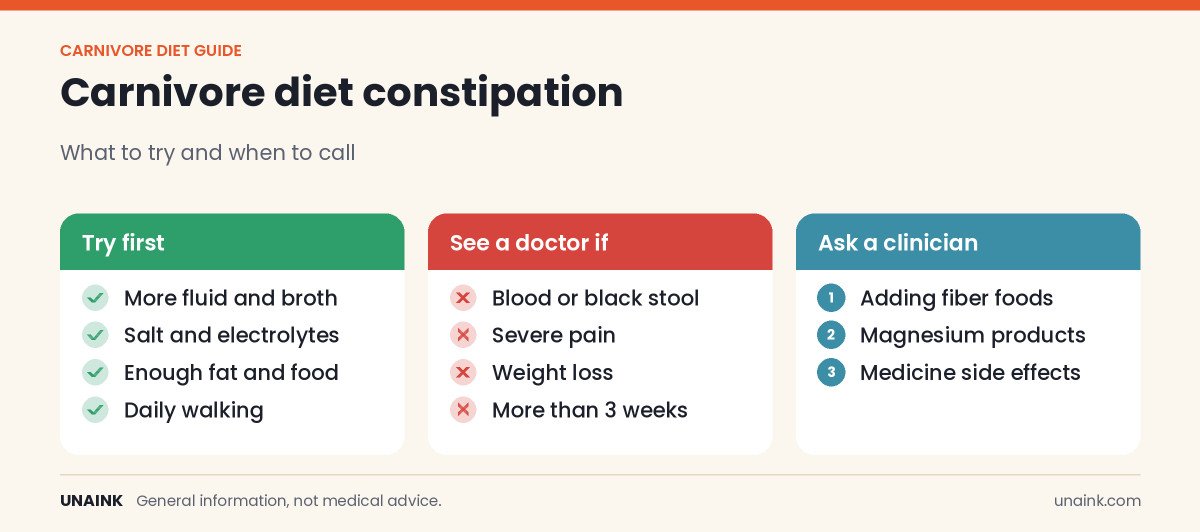
Mayo Clinic names low fiber, low fluids, little exercise, and ignoring the urge to go as common causes. Eating only animal foods removes fiber entirely. Cleveland Clinic also points out that meat takes longer to digest. Early on, you may be eating less than you think, drinking less, or fearing loose stools and keeping fat low. Medicines such as opioids, some blood pressure drugs, and antidepressants can also slow the gut, so mention them to your clinician.
7 Ways to Relieve It
- Drink more fluid. Water, broth, and mineral water all count. Dehydration hardens stool.
- Replace sodium and other electrolytes. Low sodium and magnesium intake may contribute. See electrolytes.
- Eat enough fat. Lean-only meals can stall some people. Fattier cuts, tallow, or butter may help; see more fat.
- Eat enough overall. Small portions mean small stools and fewer movements.
- Move daily. Mayo Clinic lists regular activity as a prevention step. A walk after meals is enough to start.
- Do not hold it in. Ignoring the urge is a recognized cause.
- Consider changing the diet itself. If simple fixes fail, a clinician or dietitian may suggest adding some fiber foods.
A Closer Look at Fat, Fluids, and Salt
Think of these three as a package. Fat adds lubrication and stimulates digestion, fluids soften stool, and sodium helps your body hold on to water. If you only fix one, results may be partial. Try changing a single variable for several days, then reassess. Add fat gradually to avoid the opposite problem; see carnivore diet diarrhea.
What About Fiber and Supplements?
Mayo Clinic recommends more high-fiber foods, fluids, and activity for constipation in general. That advice conflicts with a strict carnivore plan, and the evidence for a fiber-free diet staying regular long term is thin. Some people choose to add a small amount of low-fiber plant food, and some take magnesium or other products. Those can cause loose stools or interact with medicines, so check with a pharmacist or doctor. For background, read do you need fiber on carnivore.
| Approach | Fits strict carnivore? | Note |
|---|---|---|
| Water, broth, salt | Yes | First step |
| More fat or fattier cuts | Yes | Increase gradually |
| Eating more total food | Yes | Often overlooked |
| Walking, movement | Yes | Free and low risk |
| Magnesium supplement | Depends | Can loosen stools; ask first |
| Adding fiber foods | No | Personal choice with guidance |
When Constipation Is a Red Flag
- Blood in the stool, on the toilet paper, or black, tarry stool.
- Persistent stomach pain, or severe pain with vomiting and a swollen belly.
- Unexplained weight loss.
- Changes in stool shape or color.
- Constipation lasting more than three weeks, or that interferes with daily life.
- No stool or gas for a day or more with nausea or vomiting: seek urgent care.
Those first five come straight from Mayo Clinic guidance. Do not use laxatives regularly or stop a prescribed medicine without talking to a clinician. Long-term constipation can also relate to thyroid, diabetes, or pelvic floor problems that diet will not fix.
Carnivore Diet Constipation: The Short Version
Carnivore diet constipation is common and usually improves with fluids, salt, enough fat and food, and daily movement. If carnivore diet constipation lasts beyond three weeks or comes with blood, severe pain, or weight loss, it needs a medical workup.
Frequently Asked Questions
Why am I constipated on carnivore?
Common reasons are no fiber, too little fluid or fat, eating too little overall, and medicines or conditions that slow the gut.
Does more fat help?
It helps some people, but too much too fast can cause diarrhea. Add it in steps.
Can I take magnesium?
Some people do, but magnesium can cause loose stools and interact with medicines or kidney conditions. Check with a clinician first.
Is fiber necessary?
Fiber helps stool bulk in most people. Whether a fiber-free diet is sustainable is not well studied.
How long should I wait before seeing a doctor?
Mayo Clinic suggests seeing one if symptoms last more than three weeks or if any red flag appears.
Conclusion
Constipation on a meat-only diet is common and often manageable. Work through the seven steps one at a time, keep notes, and treat red-flag symptoms as a reason to see a clinician promptly.
Medical note
This article is for general education and is not medical advice. Talk with a doctor or registered dietitian before making major diet changes, especially if you have a health condition, take medication, or are pregnant or breastfeeding.
Keep Reading
- Do You Need Fiber on Carnivore?: What is known about a fiber-free diet.
- Carnivore Diet Diarrhea: The opposite digestive problem.
- How Much Water to Drink: Fluid needs on a low-carb diet.
- Carnivore Diet Poop Changes: Stool changes explained.
Sources
- Mayo Clinic: Constipation: Definition, causes, red flags
- Cleveland Clinic: The carnivore diet: Fiber and digestion on the diet
- Cleveland Clinic: Keto flu: Digestive symptoms and electrolytes
[…] Constipation: hard stools and straining are common without fiber. See carnivore diet constipation. […]
[…] gain in the scale can reflect muscle and stored water. Constipation adds weight inside the gut; see carnivore diet constipation. Salt shifts hold fluid. Waist measurement and how clothes fit tell the story better than the […]
[…] hard stools, or tummy pain are the signals to act on (NHS). If you strain or feel blocked, see carnivore diet constipation. If stools are watery and frequent, see carnivore diet […]