A carnivore diet for women over 50 sits at the crossroads of two big shifts: the hormonal changes of menopause and an all-animal way of eating that has little formal research behind it. Bones, muscle, cholesterol, and medicines all matter more after 50, so the usual online promises deserve a closer look. Here is what is known, what is not, and what to check with your doctor before you begin.
Quick Answer
There is no trial showing that a carnivore diet for women over 50 is safe or helpful long term. Animal foods supply plenty of protein, which suits aging muscle, but the diet can fall short on calcium and may raise LDL cholesterol in some people. Anyone with bone loss, heart risk factors, or regular medicines should get medical guidance first.
Key Takeaways
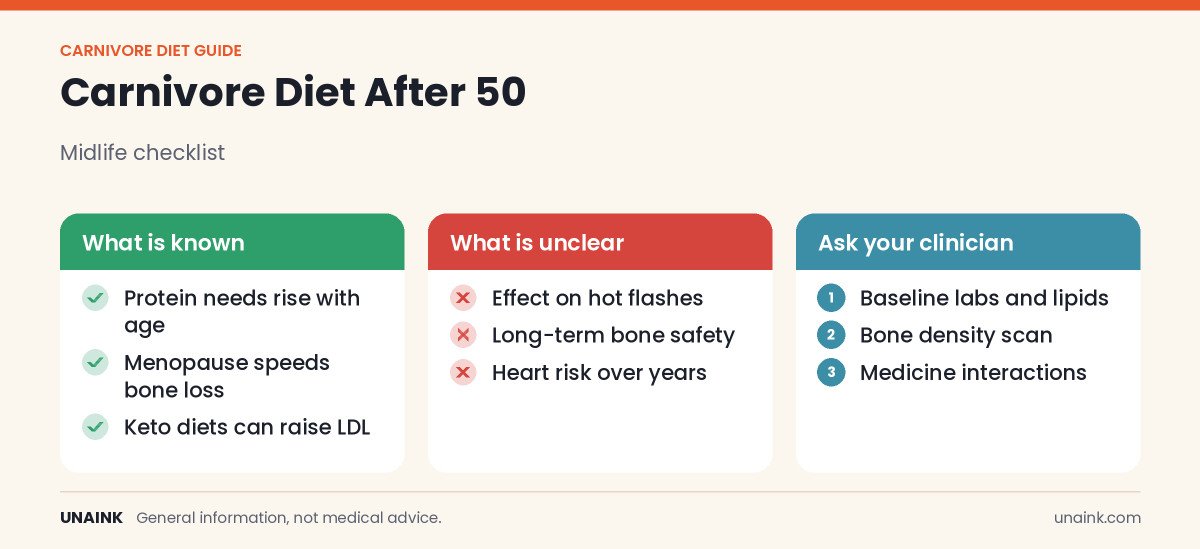
- Menopause speeds up bone loss, so calcium, vitamin D, and strength training deserve attention.
- Protein needs rise with age, and meat is a high-quality source, but protein alone does not protect bone.
- Animal fat is mostly saturated, and keto-style diets tend to raise LDL in many people.
- Reports of fewer hot flashes or better energy are anecdotal, not proven.
- Get baseline labs and review medicines with a clinician before changing how you eat.
What Changes in Your Body After Menopause
Falling estrogen affects far more than periods. It is linked to faster bone loss, shifts in body fat toward the middle, and less favorable cholesterol numbers. The American Heart Association has described menopause as a cardiovascular risk factor in its 2020 scientific statement, discussed in a Cleveland Clinic Journal of Medicine review.
Those changes are the reason a diet that worked at 35 may need a second look at 55. Any plan, carnivore or not, should be judged by how it treats bone, muscle, and the heart.
Protein and Muscle: The Strongest Argument for Meat
Muscle declines with age, and protein helps slow that loss when paired with resistance exercise. An expert position paper published in 2013 recommended at least 1.0 to 1.2 grams of protein per kilogram of body weight daily for adults over 65. Beef, fish, and eggs deliver that easily.
The catch is that you can reach those targets without cutting out every plant food. Meat is a convenient protein source here, not proof that the whole carnivore pattern is needed. Lifting weights two or three days a week matters at least as much as the menu.
Bone Health and Calcium
According to the Office on Women’s Health, low estrogen is the main cause of the bone loss behind osteoporosis, and some women lose up to 25% of bone mass in the first 10 years after menopause. About one in four women 65 and older has osteoporosis.
The NIH recommends 1,200 mg of calcium daily for women 51 to 70. Without dairy, that is hard to meet from meat alone. Bone-in canned sardines or salmon help, and a clinician can advise on supplements. Harvard Health also lists osteoporosis among long-term concerns with this diet.
Cholesterol and Heart Health
Harvard Health notes that animal fat is mostly saturated and that keto diets tend to raise LDL cholesterol. Some carnivore followers see their LDL climb sharply, and it is not yet known what that means for long-term risk on this diet. After menopause, when baseline risk is already rising, that uncertainty counts for more.
- Get a lipid panel before starting and again after about three months.
- Share family history of early heart disease with your doctor.
- Ask whether other tests, such as apoB or a calcium score, make sense for you.
What Women Over 50 Report
Online accounts mention steadier appetite, easier weight loss, less bloating, and sometimes fewer hot flashes. The 2021 survey of 2,029 adults was self-reported and recruited online, so it cannot confirm cause and effect. No controlled study has examined hot flashes, sleep, or mood on this diet. Constipation, fatigue, and hair shedding also show up in anecdotes.
Medicines and Conditions to Review
| Medicine or condition | Why diet changes matter |
|---|---|
| Insulin or sulfonylureas | Low-carb eating can lower blood sugar, raising hypoglycemia risk |
| Blood pressure drugs or diuretics | Weight and fluid loss can lower pressure and shift electrolytes |
| SGLT2 inhibitors | Combining with very low carbohydrate intake raises ketoacidosis concerns |
| Thyroid medicine | Dose needs can shift with weight and diet changes |
| Warfarin | Vitamin K intake changes can affect blood thinning |
| Kidney disease | High protein may add strain; kidney function often declines with age |
Never stop or adjust a prescription yourself. Bring your medicine list to the appointment.
If You Still Want to Try It
- Book a check-up with labs: lipids, A1c, kidney function, ferritin, vitamin D.
- Ask about a bone density scan if you are postmenopausal and have risk factors.
- Keep strength training and weight-bearing exercise in your week.
- Track energy, sleep, and symptoms, and recheck labs after about three months.
- Stop and call your doctor for chest pain, severe fatigue, dizziness, or new bone pain.
Dietitian-guided approaches with more variety, such as a Mediterranean-style or elimination plan, have more research behind them for most midlife goals.
Carnivore Diet for Women Over 50: The Short Version
The carnivore diet for women over 50 offers high-quality protein but raises open questions about bone, cholesterol, and long-term safety. If you test a carnivore diet for women over 50, do it with baseline labs, strength training, and a clinician who knows your medicines.
Frequently Asked Questions
Is a carnivore diet safe after menopause?
Long-term safety is unknown. Concerns include calcium intake, LDL cholesterol, and kidney load, so medical guidance is wise.
Can it help with hot flashes?
Some women say so, but no controlled studies support it. Hot flashes have proven treatments you can discuss with a clinician.
How much protein do women over 50 need?
Experts suggest at least 1.0 to 1.2 g per kg daily for adults over 65, and individual needs vary. A dietitian can personalize it.
Will I lose muscle on this diet?
Muscle depends on total calories, protein, and resistance training. A diet that leads to under-eating can cost muscle.
Do I need supplements?
Calcium and vitamin D are common gaps. Ask your clinician to test levels and advise before you buy anything.
Conclusion
Midlife is a time to protect bone, muscle, and the heart. Meat can play a useful part, but the evidence does not yet support a meat-only diet as the best route, so keep your clinician involved and your labs current.
Medical note
This article is for general education and is not medical advice. Talk with a doctor or registered dietitian before making major diet changes, especially if you have a health condition, take medication, or are pregnant or breastfeeding.
Keep Reading
- Carnivore Diet for Women: Hormones, cycles, and nutrient gaps.
- Carnivore Diet for Seniors: Muscle, bones, and safety later in life.
- Carnivore Diet for Muscle Gain: A look at lifting and protein.
- Carnivore Diet Electrolytes: Salt, potassium, and magnesium basics.
Sources
- Harvard Health: What is the carnivore diet?: Risks of saturated fat and long-term concerns
- Office on Women’s Health: Osteoporosis fact sheet: Menopause and bone loss
- NIH ODS: Calcium fact sheet: Recommended calcium intakes
- PROT-AGE position paper on protein for older adults: Protein per kg for adults over 65
- Cleveland Clinic Journal of Medicine: menopause and cardiovascular risk: AHA 2020 statement on menopause
- Self-reported survey of 2,029 carnivore dieters: Survey limits