

Gluconeogenesis is the body’s way of making new glucose, and it matters more on a carnivore diet than almost anywhere else. When you eat no carbohydrate, your brain and red blood cells still need some sugar. The liver supplies it by building glucose from other materials, mostly amino acids from protein. This guide explains gluconeogenesis on a carnivore diet, what feeds it, why it can limit ketosis, and what the research shows.
Quick Answer
Gluconeogenesis is the process by which the liver, and to a lesser extent the kidneys, makes glucose from non-carbohydrate sources such as amino acids and glycerol. On a carnivore diet it keeps blood sugar steady without carbs. It is regulated by hormones and the body’s needs, so eating protein does not simply spike blood sugar, but very high protein with little fat can keep insulin and glucose higher and reduce ketones.
Key Takeaways
- Gluconeogenesis makes new glucose from amino acids, glycerol and lactate, mainly in the liver.
- Even in ketosis the brain and red blood cells need some glucose, so the process never fully switches off.
- Most of the fatty acids in dietary fat cannot be turned into glucose, so protein is the main raw material on carnivore.
- The body adjusts gluconeogenesis to its needs. A small study found it was higher on a zero-carb diet but total glucose production was lower.
- Very lean, high-protein eating can keep ketones low, as covered in our ketosis guide.
What Is Gluconeogenesis?
The word means making new glucose. It happens mostly in the liver, with some help from the kidneys, and it supplies glucose to tissues that depend on it. The main raw materials are amino acids from protein, glycerol from the breakdown of fat and lactate from working muscles.
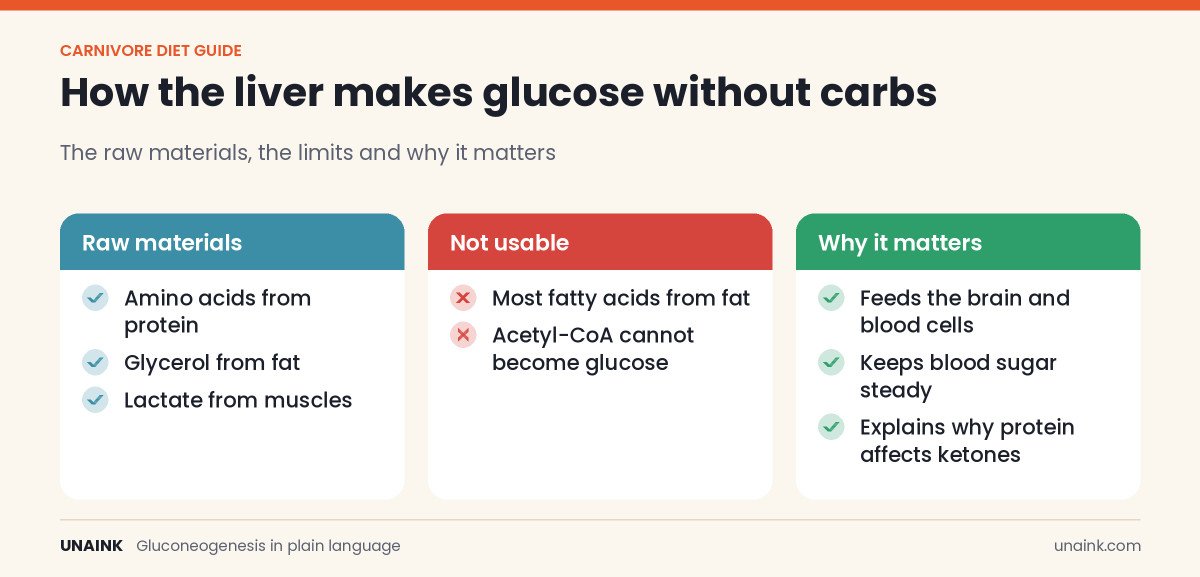
Fatty acids, the larger part of dietary fat, are broken down into acetyl-CoA, which the body cannot convert back into glucose. That is why protein carries so much of the load on a carnivore diet.
Why Gluconeogenesis Matters on a Carnivore Diet
- It keeps blood sugar stable. With no carbs, the liver supplies glucose steadily, which is why most healthy people do not become hypoglycemic.
- It feeds glucose-dependent tissues. The brain can run largely on ketones, but red blood cells and parts of the brain still need glucose.
- It uses protein. Amino acids from meat, fish and eggs supply the raw material, and skimping on protein could force the body to draw on muscle.
Does Protein Turn Into Sugar?
This is the most common worry, and the simple answer is no, not in a one-to-one way. Gluconeogenesis responds to hormones such as glucagon and insulin and to the body’s need for glucose. Eating more protein does not automatically push the same amount of glucose into the blood.
A controlled study in the American Journal of Clinical Nutrition followed ten healthy men for a day and a half on a high-protein, carbohydrate-free diet (30 percent protein, 70 percent fat) and on a normal diet. Gluconeogenesis was a larger share of glucose production on the zero-carb diet, but total glucose production was lower. The study was tiny and short, so it shows the body adapts, not what happens over months.
Gluconeogenesis and Ketosis
Gluconeogenesis does not strictly stop ketosis, but a very high protein, low fat pattern can keep insulin and glucose higher and ketones lower. Keto-Mojo notes that many carnivore eaters rely on lean meat, which can lead to low ketones. Our guide on carnivore diet ketosis explains how to test and adjust your fat and protein balance.
How Much Protein Is Enough?
There is no carnivore-specific number. Enough protein protects muscle, and enough fat provides energy so that protein is not your only fuel. Eating very lean meat only is the extreme case, and it is discussed in our article on rabbit starvation. A practical approach is to eat fatty cuts, eat to appetite and let a clinician review your labs.
Diabetes and medication
If you have diabetes or take glucose-lowering medicine, very low carb eating can change your needs quickly. Do not adjust your diet or doses without medical guidance.
Frequently Asked Questions
What is gluconeogenesis in simple terms?
It is the liver making new glucose from materials such as amino acids and glycerol when you do not eat carbohydrate.
Does gluconeogenesis kick you out of ketosis?
Not by itself. Ketosis depends on low insulin. Very high protein with little fat may keep insulin and glucose higher and ketones lower in some people.
Does eating protein raise blood sugar on carnivore?
Usually only a little. The body regulates gluconeogenesis to its needs, so protein does not convert one-to-one into blood glucose.
Do you need carbs because of gluconeogenesis?
Healthy people can make the glucose they need from protein and glycerol. That does not mean a zero-carb diet is right for everyone, and people with diabetes or kidney disease need advice.
Is gluconeogenesis bad?
No. It is a normal, essential process that keeps blood sugar stable during fasting and low carb eating.
Conclusion
Gluconeogenesis is what lets a carnivore diet work at all: the liver makes the glucose your brain and blood cells need from protein and fat. It is regulated, not runaway, and it does not mean protein is the same as sugar. What it does mean is that protein and fat need to be in balance, which helps ketosis and energy.
Medical note
This article is for general education and is not medical advice. Talk with a doctor or registered dietitian before making major diet changes, especially if you have a health condition, take medication, or are pregnant or breastfeeding.
Keep Reading
- Does the Carnivore Diet Put You in Ketosis?: what to know before you test
- What Is Rabbit Starvation?: and can it happen on carnivore
- How to Get More Fat on the Carnivore Diet: without nausea
- What Is the Carnivore Diet?: the main overview
Sources
- Veldhorst et al. Gluconeogenesis and energy expenditure after a high-protein, carbohydrate-free diet. Am J Clin Nutr, 2009: the controlled study on gluconeogenesis
- Keto-Mojo. Carnivore ketosis: a data approach: protein, fat and ketone levels
- Harvard Health Publishing. What is the carnivore diet?: carnivore diet and ketosis background
[…] not settled, but the practical lesson is consistent: protein works best alongside fat. Our guide to gluconeogenesis on a carnivore diet explains how the body uses protein for […]
[…] Cutting carbs does not switch off this liver output. Your body can also make glucose from protein and other building blocks, a process covered in our guide to gluconeogenesis on carnivore. […]