
If you need to get rid of an old mattress, you’ve got better options than leaving it at the curb. You can often recycle its parts, arrange a special pickup, or even use a retailer take-back program when you buy a replacement. The right choice depends on the mattress’ condition and your local rules, and a few simple prep steps can make the process much easier.
Key Takeaways
- Check your city’s mattress recycling, bulky-item pickup, or municipal drop-off options first.
- If available, use retailer take-back or junk removal services that partner with recycling facilities.
- Prepare the mattress by removing bedding, keeping it clean, and checking for mold, bed bugs, or damage.
- Avoid illegal dumping; mattresses can be recycled into steel, foam, and textiles, reducing landfill waste.
- If the mattress is contaminated or unaccepted, use a specialized disposal service or permitted landfill.
Your Mattress Disposal Options
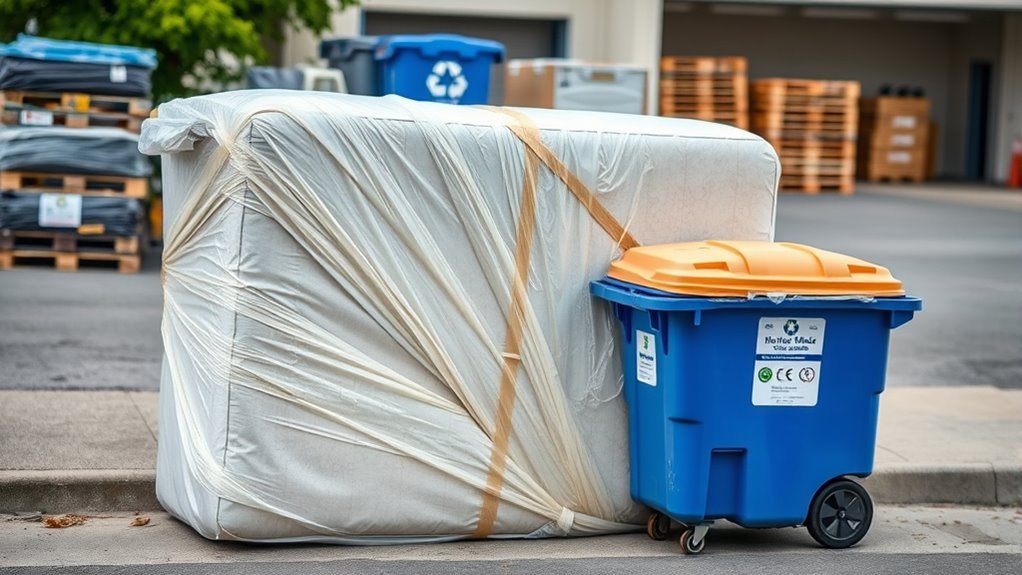
When it’s time to get rid of an old mattress, your best options usually involve reuse, recycling, or proper municipal pickup. Start by checking your city’s disposal options, because many areas offer mattress recycling or special curbside pickup for bulky items.
Check your city’s disposal options—many areas offer mattress recycling or special pickup for bulky items.
With mattress recycling, you can recover steel, foam, and textiles, and up to 80–95% of the material may get reused. That means you’re choosing responsible disposal and cutting waste while keeping useful resources in circulation.
Next, look for local recycling facilities or retailer take-back programs when you buy a new bed. In states like California, Connecticut, Oregon, and Rhode Island, mattress recycling programs can make the process easier and more affordable.
If reuse is possible, donate a clean mattress only where accepted. You’re not stuck with one path—you can make a smart, liberated choice that fits your home, your budget, and the planet.
Why You Shouldn’t Put It in the Trash
You shouldn’t toss an old mattress in the trash because it can waste a huge amount of landfill space and quickly add to overcrowding.
Many cities also limit mattress disposal in regular garbage because bulky mattresses can damage equipment and raise costs.
Recycling is the smarter option since it can recover most of the materials and keep them out of landfills.
Landfill Space Waste
Putting an old mattress in the trash might seem easiest, but it creates a major landfill burden. You add nearly a cubic yard of landfill waste, and that bulky frame won’t compress well. That means you’re using valuable landfill space that could hold more compact refuse.
| Mattress issue | Result |
|---|---|
| Bulky size | Wastes space |
| Steel coils | Can jam equipment |
| Slow decay | Lasts centuries |
| Chemical leaks | Risks soil, water |
When you skip proper recycling, you also raise the environmental impact for your community. Springs can damage equipment, causing delays and repair costs that ripple through waste services. Over 20 million mattresses enter landfills each year, and they linger for generations. Choose mattress recycling instead; it helps you move with care, protect land, and reduce landfill waste without giving up convenience.
Recycling Program Benefits
Even if the trash bin seems convenient, mattress recycling is the smarter choice because many municipalities ban regular disposal and recycling programs can recover 80% to 95% of the materials.
You can choose recycling options that turn an old mattress into valuable materials like steel, foam, and textiles instead of sending them to landfill. That means less waste, lower pressure on local systems, and real environmental benefits.
Each recycled mattress keeps about one cubic yard of debris out of the dump, helping you cut pollution and protect soil and groundwater from harmful leaching.
Responsible mattress disposal also can save you money on fees while backing local recycling programs. When you recycle, you act with purpose, reduce waste, and reclaim your freedom to live lighter.
How to Recycle Your Mattress Near You
Recycling your old mattress is one of the best ways to keep bulky waste out of landfills, and many local programs can divert 80% to 95% of its materials for reuse. You can claim that impact through mattress recycling by checking local resources first. Call your waste authority, visit Bye Bye Mattress, or ask nearby recycling facilities about accepted drop-off times. In California, Connecticut, Oregon, and Rhode Island, statewide programs make responsible disposal easier. Retailers may also offer take-back when you buy a replacement, which saves you a separate trip.
| Option | Best use |
|---|---|
| Municipal program | Low-cost local pickup or drop-off |
| Retail take-back | New purchase, easy removal |
| Junk removal service | No nearby recycling facilities |
If you can’t find a program, use disposal services that partner with recycling facilities so your mattress stays in the reuse stream. You deserve a cleaner home and a lighter footprint.
Which Mattress Parts Can Be Recycled?
Which parts of your mattress can actually be reused? In mattress recycling, you’ll find more value than you might expect.
Steel coil springs are high-value components, and a recycling facility can process them efficiently into new metal goods. Your foam layers don’t have to become waste; recyclers can mechanically or chemically turn them into fresh products, cutting demand for virgin materials.
Textile covers and batting can be repurposed for industrial uses, keeping useful fibers in circulation instead of the landfill. If your mattress has a wooden frame, that wood can become mulch, biomass fuel, or engineered wood products.
When these parts are separated and recovered, you help protect valuable resources and support a cleaner materials loop. In fact, proper recycling can divert about 80–95% of a mattress from landfill.
That means your old bed can still serve a purpose, and you get to make a choice that’s practical, responsible, and freeing.
How to Prepare Your Mattress for Pickup
Start by removing all bedding, mattress protectors, and any personal items so your pickup can go smoothly.
Next, check the mattress for bed bugs, mold, stains, or other damage, since those issues can affect recycling or disposal options.
If rain’s in the forecast, wrap it in plastic sheeting and follow your local labeling or wrapping rules to keep it clean and compliant.
Clear Bedding First
Before pickup day arrives, strip off all bedding so the mattress is ready to handle and recycle safely. Remove sheets, pillowcases, mattress protectors, and any other layers, then vacuum the surface to lift dust and allergens.
Keep your old mattress clean and free of stains, odors, and bed bug signs, because many facilities accept mattresses only when they meet strict recycling standards. Check the surface for personal items or debris, and clear them out so your disposal methods don’t contaminate the load.
If rain’s in the forecast, wrap the mattress in plastic sheeting to keep it dry until pickup. Taking these simple steps protects workers, supports recycling, and helps you release the mattress responsibly without burdening the environment.
Check For Damage
Inspect your mattress for damage before pickup, since rips, tears, and sagging can affect whether it’s recyclable. You should also check for stains, odors, mold, or bodily fluid contamination, because these issues can push your mattress out of recycling programs.
Keep it clean and dry so the facility can handle it safely and fairly. Look closely for bed bugs too; dark spots or rust-colored stains may mean infestation, and then you’ll need another disposal route.
When you spot damage, note it before scheduling pickup so you don’t waste time or resources. A careful check helps protect workers, supports responsible recycling, and gives your old mattress the best chance at a second life instead of a landfill.
Wrap For Pickup
Once your mattress is ready for pickup, strip off all bedding, protectors, and personal items so it can be handled cleanly and efficiently. Inspect it for bed bugs or stains before you proceed, because only a clean mattress should move toward recycling or donation.
Next, wrap it in plastic sheeting or a mattress bag to protect it from moisture during pickup and transport. Keep the wrap snug, but don’t trap loose debris inside.
Check local municipal guidelines so you place it correctly and avoid fines or delays. Set the mattress curbside or in your waste service’s designated area, where crews can access it easily.
When you prepare with care, you support safer handling, cleaner recovery, and a more liberated, low-waste path forward.
Can You Use Retailer Take-Back Services?
Yes—many mattress retailers offer take-back services when you buy a new bed, which can make getting rid of your old mattress much easier. When you choose retailer take-back services, you’re often free from heavy lifting, and the crew may remove the old mattress from your home at no extra charge, supporting responsible disposal.
- Check whether your retailer includes pickup with delivery.
- Ask if there’s a small fee and compare it with other options.
- Confirm they work with recycling facilities, not just trash haulers.
- Make sure the service matches your schedule and access needs.
These services help you keep materials in circulation and cut landfill waste. By using retailer take-back services, you reduce the environmental impact of mattress disposal while saving time and effort.
It’s a practical move that supports sustainable living and gives you more freedom to act without chasing separate disposal options.
What If Your Mattress Can’t Be Recycled?
If your mattress can’t be recycled, don’t force it into the wrong stream—infested, moldy, waterlogged, or severely damaged mattresses may be refused by recycling facilities and need a different disposal route.
You can protect people and the planet by choosing the right next step for contaminated mattresses. If bed bugs, mold, or other hazards are present, contact a specialized disposal service or a hazardous waste facility that can handle the material safely.
Choose the right disposal route for contaminated mattresses to protect people and the planet.
For some mattresses, professional sanitization may make responsible recycling possible, but only if a facility approves it.
Also check local rules: air mattresses and futons may face restrictions, so you may need another option.
When recycling truly isn’t possible, use permitted landfills and follow local regulations and fees. That way, your disposal stays legal, your impact stays lower, and you keep control without wasting energy on a dead-end path.
How to Avoid Illegal Dumping
Illegal dumping of a mattress may seem like a quick fix, but it can trigger fines, harm local ecosystems, and leave your community with a costly cleanup. You can protect your freedom and your neighborhood by choosing proper disposal instead. Over 20 million mattresses hit landfills each year, so every responsible choice matters.
- Check local bulk waste pickup or mattress recycling programs.
- Ask your city about drop-off sites with clear environmental benefits.
- Share community awareness tips so others avoid illegal dumping.
- Report dumped mattresses so authorities can act fast.
When you use legal options, you cut pollution, support cleaner streets, and reduce the burden on public services.
Many municipalities make proper disposal affordable, so you don’t need to risk penalties. Choose the route that respects people, land, and future generations.
How to Make Your Mattress Last Longer
A little routine care can help your mattress stay comfortable longer and keep it out of the landfill for years. You can protect your investment and your freedom from waste by building simple habits that matter. Use a mattress protector to block spills, stains, and dust mites. Practice regular cleaning by vacuuming and spot cleaning, which helps with preventing allergens and odors. Rotate your mattress every three to six months to spread wear evenly and extend its lifespan.
| Action | Why it matters |
|---|---|
| Vacuum weekly | Cuts dust and buildup |
| Rotate often | Prevents sagging |
| Use a protector | Guards against damage |
| Follow guidelines | Supports durable use |
Keep your mattress in a dry, ventilated room so mold and mildew don’t take hold. Check the manufacturer’s maintenance guidelines and use the right foundation. These choices keep your sleep space healthier, reduce replacement pressure, and honor the planet.
Frequently Asked Questions
Can I Cut up a Mattress to Throw It Away?
Yes, you can cut up a mattress, but you shouldn’t assume you can toss it out afterward. You’ll need to check local disposal regulations first, since rules vary.
Use safety precautions cutting with gloves and a mask, and look into mattress recycling options for springs, foam, and wood.
If it’s clean, follow donation guidelines for mattresses.
For eco-friendly disposal, dismantling helps, but contamination or pests may require special handling.
How to Get Rid of Bed Mattress for Free?
You can get rid of your bed mattress for free by checking curbside pickup services, local donation centers, and mattress recycling options in your area.
If it’s clean and undamaged, you can donate it. You can also watch for a community clean up or retailer haul-away offer with a new purchase.
Always confirm landfill regulations first, since some cities ban mattress dumping and offer free drop-off events instead.
Where Can I Dispose of My Mattress in Williamson County, TN?
You can dispose of your mattress in Williamson County, TN through local disposal facilities, curbside bulk pickup services available on designated days, or the county recycling center.
You’ve also got mattress recycling options through retailers’ take-back programs and eco-friendly alternatives like community donation programs if your mattress is clean and undamaged.
Check with the Williamson County Solid Waste Department for guidelines, fees, and the best liberating choice.
Where Can I Dispose of a Mattress for Free in Providence, RI?
You can often dispose of a mattress for free in Providence through bulk waste pickups, city curbside programs, or mattress recycling options with the Rhode Island Resource Recovery Corporation.
You should also check local donation centers like Salvation Army or Habitat for Humanity if it’s usable.
Ask about landfill regulations, since some sites charge fees.
Community cleanups and retailer take-back programs can also give you a no-cost, eco-conscious exit.
Conclusion
When you’re ready to say goodbye to your old mattress, choose the option that keeps waste out of landfills and benefits your community. Recycling, donation, and retailer take-back programs can turn a bulky problem into a responsible solution. Think of proper disposal as a compass for cleaner habits—it points you toward a healthier planet. By checking local rules and preparing your mattress correctly, you’ll make the process easier, safer, and more sustainable.