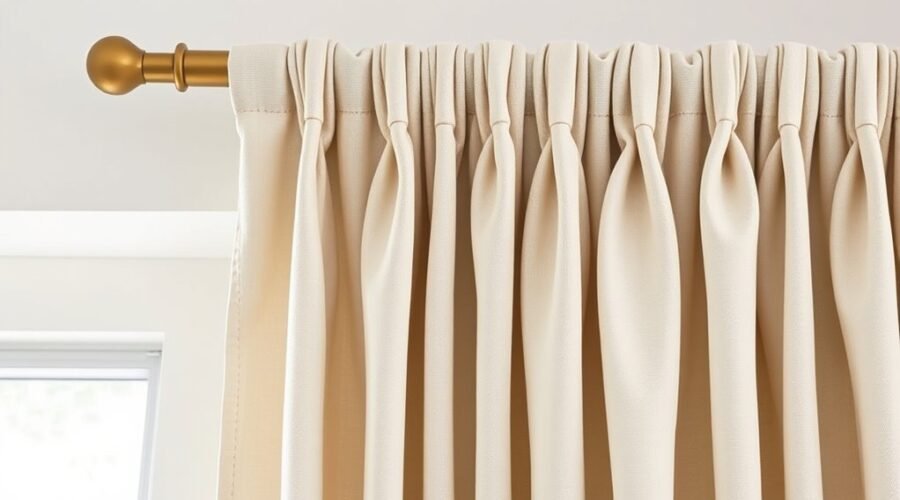
Could it be that a pinch pleat curtain is the easiest way to make a window look tailored without seeming fussy? You get those crisp, hand-finished V-shaped folds by gathering fabric into pleat tape, then securing each section with stitches and hooks. The result feels formal, structured, and quietly polished. But the differences between double, triple, and Euro pleats can change the whole look.
Key Takeaways
- Pinch pleat curtains are drapes with hand-sewn pleats that create crisp V-shaped folds and a tailored, formal look.
- The pleats are formed by gathering fabric and stitching it at regular intervals along the top edge.
- Pleat tape is sewn across the full width of the panel to keep folds even and structured.
- Hooks are inserted into the pleat tape or pockets to align the pleats and help the curtain hang neatly.
- Double, triple, and Euro pinch pleats offer different levels of fullness and formality.
What Is a Pinch Pleat Curtain?
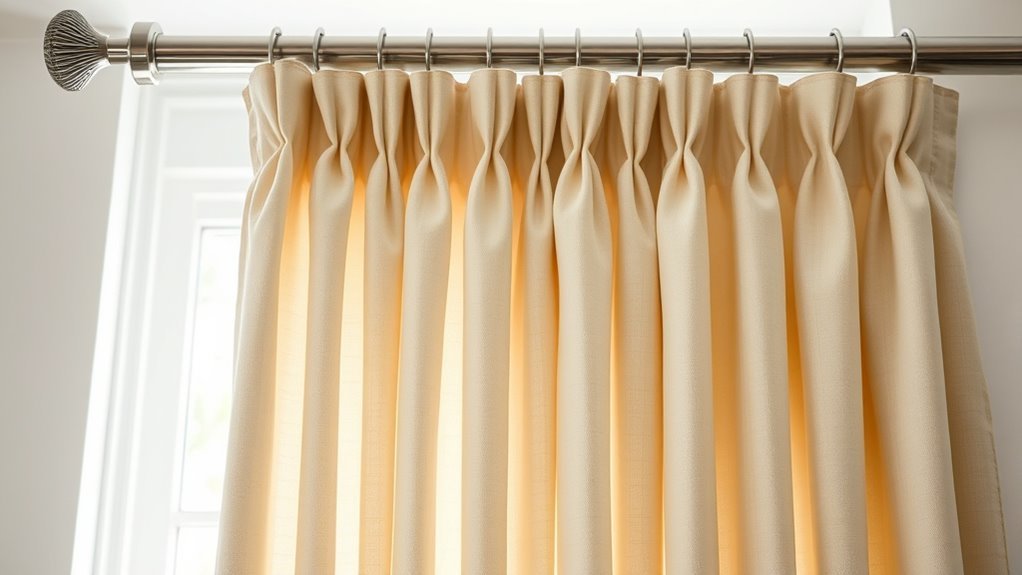
A pinch pleat curtain is a polished header style defined by hand-sewn pleats that form crisp V shapes, giving your windows a formal, tailored look.
When you choose pinch pleat curtains, you’re choosing structure with style: the pleats formed at the top hold their shape whether you draw the panels open or keep them closed, so your room always feels composed. This makes them especially smart for bay windows and sliding doors, where clean lines matter.
Pinch pleat curtains bring tailored structure that stays composed open or closed, making windows feel polished and intentional.
You can also personalize the look with buttons, lace, or other decorative details that reflect your taste, not a rulebook.
Double pleats give you a balanced drape, while triple pleats create a richer, fuller silhouette.
Pair them with Roman shades when you want extra depth and function, and you’ll create a window treatment that feels elevated, flexible, and completely yours.
How Pinch Pleats Are Formed
You start by placing pleat tape along the top edge, marking where each fold should sit for a clean, tailored look.
Then you stitch the gathered fabric at those points so the pleats hold their crisp V-shaped structure.
Finally, you insert hooks into the tape to keep each double or triple pleat aligned and beautifully defined.
Pleat Tape Placement
To form crisp pinch pleats, position pleat tape so its holes face upward and align the tape with the top edge of the curtain fabric, making sure it spans the full width of the panel, typically about 52 inches.
You’ll want the pleat tape to sit straight and flush, because that clean placement sets the rhythm for every fold. Keep the curtain fabric smooth and untwisted as you secure the tape, so the finished drape feels tailored, not fussy.
Once the tape is set, pleat hooks can slip into the pockets and guide the fabric into elegant pinches.
Stitching The Pleats
Pinch pleats take shape when you gather the fabric at regular intervals and stitch it into crisp, structured folds that form those clean V-shaped peaks at the top of the panel. You shape each fold with intention, then secure it with pleat tape so the line stays polished and free-flowing.
- Use two or three folds for the look you want
- Keep pleats evenly spaced for balanced fullness
- Sew a straight stitch along the pleat tape
- Let the stitching hold the silhouette without stiffness
When you handle the fabric this way, you create drapery that feels tailored, modern, and liberated.
The right pleats give your window a confident finish, adding texture, rhythm, and a sense of effortless order to the room.
Hook Insertion Method
A well-placed hook is what gives pinch pleats their tailored architecture. You slide a long-neck hook with four prongs into the pleat tape, then pinch the fabric into a clean V. One prong enters the first pocket; after that, you add the next hooks, skipping every three pockets for poised, even spacing.
| Step | Action | Effect |
|---|---|---|
| 1 | Insert hook | Starts structure |
| 2 | Pinch fabric | Shapes pleat |
| 3 | Skip pockets | Balances drape |
| 4 | Adjust fullness | Fits window |
| 5 | Press iron | Sharpens finish |
You can tune fullness by changing pleat count and hook distance, so your curtains feel liberated, not rigid. Finish with a crisp press, and the pleats will read polished, elegant, and effortlessly composed.
Double vs. Triple Pinch Pleats
When you’re choosing between double and triple pinch pleats, the main difference is how much fullness and formality you want the curtains to have.
With double pinch pleats, you get two structured folds in each pleat, so your drapery feels clean, balanced, and quietly modern. They usually need 2 to 2.3 times the fabric width, which keeps the look relaxed without losing polish.
Triple pinch pleats add three folds per pleat, so your curtains fall richer and more tailored, often using 2.5 to 3 times the fabric width.
- Double pinch pleats suit casual, airy rooms.
- Triple pinch pleats elevate dressier, upscale spaces.
- Both pleat styles hold their shape when open or closed.
- You can match the level of drama to your room’s mood.
Choose the version that supports your space and lets your style feel free, intentional, and unmistakably yours.
Pinch Pleat Styles: Double, Triple, and Euro
When you choose pinch pleat curtains, the pleat style shapes both the look and the drape.
Double pleats give you a crisp, modern-classic V. Triple pleats add richer fullness and a more formal W. Euro pleats bring a softer, tailored finish.
Each option lets you refine the room’s style with the right balance of structure, volume, and polish.
Double Pinch Pleat
Double pinch pleat curtains bring a crisp, tailored rhythm to a room, with two structured folds forming a clean V-shape that feels polished without reading too formal.
You’ll like how the double pinch pleat balances ease and structure, especially when the pleats sewn in create tailored folds that still drape softly.
- Use 2 to 2.3 times panel width for pleasing fullness.
- Choose fabrics and colors that flex with your style.
- Measure pleat spacing and stack-back width carefully.
- Place them in casual or semi-formal spaces.
This look gives you control without stiffness, so your windows feel composed, current, and free.
Triple Pinch Pleat
Triple pinch pleat curtains add a richer, more formal rhythm to your windows, with three folds at the top that create a fuller, more tailored silhouette than a double pinch pleat.
You get a polished triple pinch look that elevates a curtain in dining rooms and formal living spaces, where structure feels chic and intentional.
Because the pleats are hand-sewn, the shape stays crisp whether you draw them open or let them fall closed.
Expect to use about 2.5 to 3 times the fabric width, which gives you that lush, luxurious drape.
This style asks for more material and cost, but it rewards you with elegance, control, and a liberated sense of design confidence.
Euro Pleat Style
Euro pleat curtains bring a softer, more relaxed take on pinch pleat styling, with fabric gathered near the top to create a tailored look that still feels easy and fluid.
You get an inverted pleat effect that feels modern, not stiff, and your drapery falls in clean, elegant lines. Unlike double or triple pleats, a Euro pleat uses less fabric, so the finish feels lighter and more open.
- Softer than structured pinch pleat styles
- Ideal for contemporary and evolving rooms
- Works with casual or formal decor
- Delivers polish without heaviness
Choose Euro pleat when you want freedom, texture, and visual calm.
It lets your windows look refined while your room keeps its relaxed edge.
Best Fabrics for Pinch Pleat Curtains
When you choose the right fabric, pinch pleat curtains can shift from simple window coverings to a defining design feature.
You can lean into velvet or damask for a rich, tailored fall, or pick cotton and linen when you want a lighter, freer mood. Bold patterns and saturated colors turn your windows into the room’s statement piece, while neutral tones keep the look serene.
For texture variety, mix a smooth satin with a linen weave to create depth and movement. If you value durability, choose silk or suede for polished beauty that resists everyday wear.
Heavy drapes or blackout lining also help with insulation, so your space feels more private, comfortable, and energy-wise.
The best fabric balances style, function, and texture, giving you curtains that feel intentional, elevated, and completely yours.
Pinch Pleat Hardware Basics
When you’re choosing pinch pleat hardware, the right setup shapes both the look and the ease of use, so you’ll want to match your rods, rings, and hooks carefully.
Traverse rod systems give you smooth cord-and-pulley operation, while a hook-and-ring setup offers a more decorative finish with graceful movement.
Pay close attention to drapery pin placement, because the spacing and alignment will determine how cleanly your curtains hang and how polished they feel.
Hook And Ring Setup
A polished pinch pleat setup starts with the right hardware: long neck pleat hooks with four prongs, which you insert into the curtain’s pleat pockets to shape crisp, tailored folds.
For your pinch pleat drapes, use Drapery pins to anchor each pleat neatly, then pair them with eyelet rings on the curtain rod for effortless movement.
- Skip three pockets between hooks.
- Keep each prong seated cleanly.
- Align hooks and rings precisely.
- Let the fabric glide with ease.
This spacing keeps the pleats balanced and the silhouette refined.
When you install the hooks evenly, you free the fabric to fall with elegant structure, giving your room a polished, intentional finish that feels as confident as it looks.
Traverse Rod Systems
Traverse rod systems give your pinch pleat curtains a smooth, tailored draw, using a cord-and-pulley mechanism that lets the fabric open and close with ease.
You can mount a traverse rod on the wall or ceiling, so your room’s architecture stays free to lead the look. Gliders or carriers balance the weight, helping your drapery move gracefully instead of dragging.
That means your pinch pleat panels feel polished, not fussy. Most systems suit double and triple header styles, so you can choose the fullness that matches your aesthetic.
If you want more ease, add motorization for automated control and a cleaner, more liberated daily rhythm.
With the right hardware, your curtains don’t just hang—they perform beautifully.
Drapery Pin Placement
For crisp, elegant pinch pleats, you’ll need the right drapery pins—most often long-neck pleat hooks—to secure each fold and shape the fabric with precision. You insert each hook into the pleat pocket, and you’ll usually space them so every three pockets support one pleat for balanced fullness.
- Pin the fabric before you hook it.
- Keep hook placement even across the panel.
- Adjust depth for cleaner drape and stronger lines.
- Fine-tune after hanging for a polished finish.
This simple hardware choice keeps your curtains structured, stylish, and free-flowing, so your room feels composed without looking stiff.
When you place the drapery pins carefully, you guide the pleats into a graceful rhythm that lets your design breathe.
How to Measure for Pinch Pleat Curtains
Before you order pinch pleat curtains, measure the window or rod width carefully and plan for extra fullness—usually 2 to 3 times the width—to achieve that tailored, draped look. This ratio lets each pleat fall gracefully and keeps the top edge looking polished, not skimpy.
Next, measure the finished length from the rod’s top edge to your sill, floor, or preferred stop, and add hem allowance so the curtain lands exactly where you want. If you’re adding a valance or decorative treatment, include its height in the total.
Don’t forget stack-back width; when panels open, they need wall space to breathe and frame the view. Measure twice, then think about how often you’ll draw them open or closed, because daily movement affects the length and width you’ll love living with.
With precise measurements, your windows can feel free, balanced, and beautifully dressed.
How to Hang Pinch Pleat Curtains
With your measurements set, you can hang pinch pleat curtains by gathering curtain rings or gliders, then steaming or ironing out any wrinkles so the panels look crisp from the start.
Mount the pinch pleat drapery on your drapery rod with confidence, setting the hook height before you begin. Work from the center outward to keep the layout balanced and chic.
- Attach pleat hooks to the rings for clean support.
- Keep spacing even so each fold reads intentional.
- Adjust the width for fullness; extra pleats reduce span.
- Step back and fine-tune until the lines feel airy.
When you hang pinch pleat curtains, you’re shaping more than coverage—you’re framing light, texture, and ease.
Let the fabric fall freely, but don’t skip alignment; the smallest shift can change the whole mood. Once everything sits right, your room feels composed, expressive, and fully yours.
Pinch Pleat vs. Other Curtain Headers
While pinch pleat curtains bring a tailored, V-shaped fold that feels formal and polished, other headers set a very different tone.
When you compare pleat vs casual pencil pleat, you’ll notice the pinch pleat reads sharper and more composed, while pencil pleat softens the look with easy gathers.
With pinch pleat, you also control fullness: double pinch pleat uses about 2 to 2.3 times the fabric width, and triple pinch pleat asks for 2.5 to 3 times for a richer drape.
Double pinch pleat needs about 2 to 2.3 times the fabric width, while triple pleat calls for 2.5 to 3.
Grommet curtain headers lean sleek and modern, thanks to exposed metal rings, while ripple fold drapery creates smooth S-waves with a contemporary rhythm.
If you want structure, elegance, and a more traditional finish, pinch pleat gives you that freedom with precision.
Each header shapes the room’s mood differently, so you can choose the silhouette that matches your style and the atmosphere you want to claim.
Best Rooms for Pinch Pleat Curtains
Pinch pleat curtains work beautifully in rooms where you want the windows to feel intentional and polished, especially living rooms, dining rooms, and primary bedrooms.
In living rooms, their tailored folds draw the eye upward and make the space feel taller, more open, and more composed.
In dining rooms, they add a refined, upscale note that suits both everyday dinners and formal gatherings.
In primary bedrooms, they bring structure and softness, helping you create a cocoon-like retreat that still feels elevated.
- Living rooms: add height and visual polish
- Dining rooms: create a graceful, formal mood
- Primary bedrooms: support a cozy, personal sanctuary
- Any style: move easily from modern to traditional
Because pinch pleat curtains control light while adding texture, you can shape the atmosphere without sacrificing comfort.
That flexibility lets you design boldly and live beautifully.
Frequently Asked Questions
Are Pinch Pleat Curtains Outdated?
No, you don’t need to see pinch pleat curtains as outdated. You can style them with trendy curtain styles, fresh pleat variations, and modern fabric choices to make them feel current.
Their tailored shape adds polish, while lighter textiles or bold patterns keep your space free, expressive, and refined. You’ll get a look that works in formal rooms, yet still feels relaxed, versatile, and beautifully intentional.
What Is the Formula for Pinch Pleat Curtains?
You’ll usually need 2 to 3 times your panel width for pinch pleat curtains.
For a tailored look, choose about 2 to 2.3 times for double pleats; for richer fullness, go 2.5 to 3 times for triple pleats.
Your fabric selection, pleat spacing, and curtain length should work together so the drape feels intentional, luxurious, and free.
Measure carefully, then customize the finish to suit your room.
Can I Turn My Curtain Into a Pinch Pleat Curtain?
Yes, you can turn your curtain into a pinch pleat style. As the saying goes, “measure twice, cut once.”
For smart curtain transformation tips, choose a sturdy fabric selection guide, then add pleat tape, stitch it straight, and set the hooks for clean DIY pinch pleats.
You’ll create elegant, tailored folds that free your room from plain, loose drapery and give your windows a polished, custom look.
What Is the Most Modern Curtain Pleat?
The most modern curtain pleat you can choose is the Euro pleat.
You’ll get a relaxed, tailored look that suits minimalist design and feels fresh in any room. It works beautifully with thoughtful fabric choices and pairs easily with sleek curtain hardware.
You can use it to keep your windows light, fluid, and stylish while still adding structure, freedom, and a polished, contemporary finish.
Conclusion
So, when you choose pinch pleat curtains, you’re choosing more than a header—you’re choosing structure, elegance, and a tailored finish that instantly elevates your room. Yes, they take a little more planning than simpler styles, but that extra effort pays off in crisp folds and a polished look that lasts. If you want your windows to feel intentional and refined, pinch pleats give you that composed, designer touch every time.