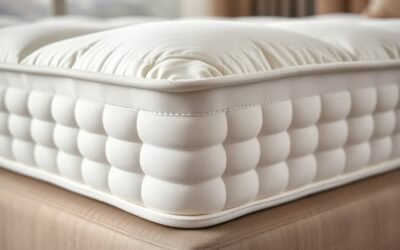
When you shop for a duvet, fill power tells you how much space one ounce of down can occupy, which helps you judge loft and insulation. A higher number usually means a fluffier, warmer duvet that still feels light, while a lower number can feel denser and less insulating. But the number alone doesn’t tell the whole story, and that’s where things get more useful.
Key Takeaways
- Fill power measures how many cubic inches one ounce of down occupies, showing how lofty and insulating the duvet is.
- Higher fill power numbers mean fluffier down, more trapped air, and better warmth with less weight.
- Around 400 fill power suits milder temperatures, while 600 is a balanced option for everyday comfort.
- Fill power differs from fill weight; both affect warmth, because enough down is needed for the duvet to perform well.
- Construction and care matter too: baffle box design improves loft, and proper storage helps preserve fill power over time.
What Is Duvet Fill Power?
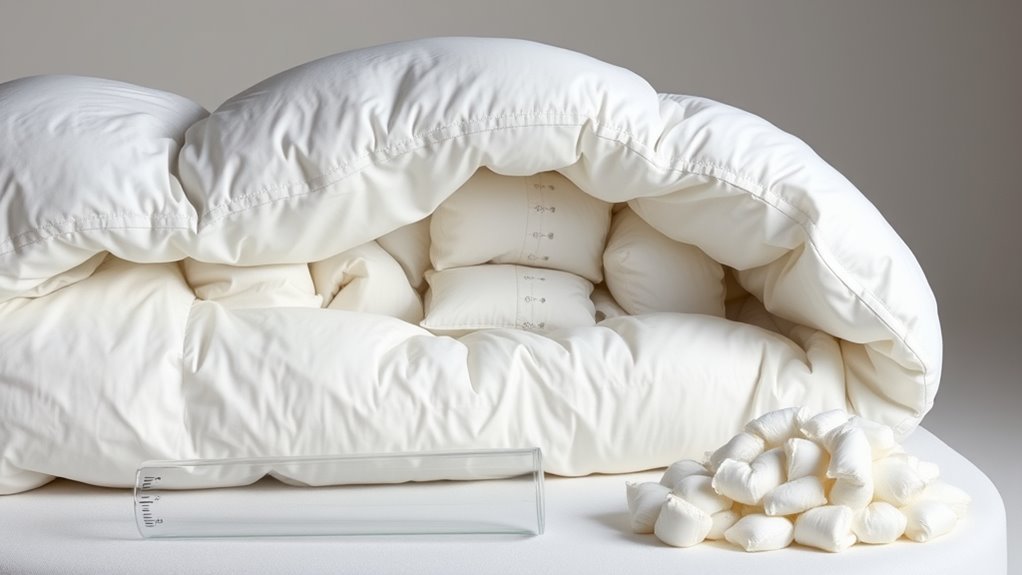
Duvet fill power tells you how fluffy and insulating the down is by measuring how many cubic inches one ounce of it occupies; the higher the number, the more loft and warmth you get.
When you ask what fill power means, you’re really asking how much space the down can claim and how well it can support your comfort. A higher fill power usually signals stronger loft and insulating efficiency, so you can judge whether a duvet fits your climate and sleep style.
Ratings often run from 400 to 800+, with 600 fill power offering a balanced mix of lightness and quality and warmth.
You don’t need to guess at comfort; the number gives you a practical guide. Use it to choose bedding that respects your body, your budget, and your need for restful, self-directed sleep.
How Fill Power Affects Warmth and Loft
When you choose a duvet with higher fill power, you get more loft, and that loft traps more air for better insulation.
In practical terms, a 600 to 800 fill power duvet usually gives you strong warmth, while 800 and above is ideal when you need maximum heat retention.
Just remember that fill power works best with enough fill weight, so a lofty duvet can still feel underwhelming if it doesn’t contain enough down.
Loft Increases Insulation
Higher fill power means the down clusters take up more space, creating more loft and more tiny air pockets that trap heat.
When you compare fill power, you’re really comparing how much volume one ounce of down can occupy, and that volume shapes insulation. A duvet with 600 to 800 fill power gives you strong warmth because it holds more still air, which slows heat loss.
You don’t need a heavy cover to feel protected; higher loft can deliver the same warmth with less material, so the duvet feels lighter and more free.
For moderate rooms, 400 to 600 may be enough. For colder climates, 800+ gives you the extra insulation you need for restful sleep.
Higher Fill Warms More
More loft usually means more warmth because the down can trap more air and hold in your body heat.
When you compare fill power, you’re really comparing how efficiently the down creates loft. A higher fill power means each ounce swells more, so you get stronger insulation with less material. That can make your duvet lighter, more breathable, and still cozy.
For colder climates, fill power in the 600-800 range often gives you practical warmth, while ratings above 800 can suit very cold spaces.
Don’t look at fill power alone, though; fill weight matters too. If the duvet doesn’t contain enough down, even high loft won’t deliver the warmth you need.
Choose the balance that frees you from cold nights.
What Fill Power Numbers Mean
Fill power tells you how much space one ounce of down takes up, so 600 fill power means that ounce fills 600 cubic inches.
When you see numbers from 400 to 600, you can expect a good option for cooler weather, while 700 and above gives you more loft and better insulation.
If you’re shopping for a duvet, higher fill power usually means more warmth with less down, especially when the down itself is high quality.
Fill Power Basics
Down loft is what fill power measures: how many cubic inches one ounce occupies, and the higher the number, the fluffier and more insulating the duvet. You use fill power to judge higher quality down, because loft higher means better air trapping and stronger down’s warmth with less weight.
| Fill power | What you feel |
|---|---|
| 400 or below | Light coverage for milder nights |
| 600–800 | Cozy comfort for colder sleep |
| 800+ | Maximum insulation for extreme chill |
When you understand fill power, you can choose a duvet that matches your body, room, and freedom to sleep without being boxed in by guesswork. Pick the level that serves your comfort, not someone else’s standard.
Number Ranges Explained
Once you know what fill power measures, the numbers become easier to read: they usually run from about 400 to 900+.
Fill power tells you the number of cubic inches one ounce of down occupies, so a higher number means the down is fluffier and more efficient.
In the 400-600 range, you’ll usually get lighter, cooler options.
Around 600-800, you can expect a balanced duvet that works well across seasons.
At 800+, you’re looking at premium loft and strong insulating performance for very cold conditions.
When you understand these ranges, you can choose a duvet that fits your comfort needs, budget, and climate without guesswork.
That kind of clarity helps you make a confident, independent choice.
Warmth And Loft Impact
Higher fill power means the down holds more air, so it traps heat more efficiently and creates a loftier, lighter duvet.
When you compare fill power, you’re really judging how much warmth and loft you’ll get from each ounce of down. A 400-600 fill power duvet works well in cooler climates, while 700-800 suits moderately cold nights.
If you face very cold weather, 800+ gives stronger insulating performance. Because higher fill power stores more air, a 900 fill power duvet can feel warmer than a 450 fill power duvet, even with the same fill weight.
That means you can choose comfort without extra bulk and match your duvet to your climate and freedom to sleep your way.
Which Fill Power Works for Your Climate?
Which fill power works best for your climate depends on how much warmth you need and how you sleep.
If you live in a mild climate, lower fill power can give you comfort without overheating. In a moderate climate, you can choose a balanced option for steady insulation through the year.
If winter hits hard, higher fill power helps you hold in more warmth with less weight, so you rest easier and move freely under the duvet.
- 400 and below: Best for cool nights and warmer seasons.
- 400 to 600: A practical middle ground for many homes.
- 600 to 800: Strong insulation for colder weather.
- 800 and above: Maximum warmth for very cold climates.
Your comfort matters most, so trust your climate, your body, and your preference.
Pick the fill power that lets you sleep well, stay free, and wake up ready.
Fill Power vs. Fill Weight in Duvets
Fill power and fill weight aren’t the same thing, and knowing the difference helps you choose a duvet that feels right and performs well.
Fill power tells you how much space one ounce of down fills, while fill weight tells you how many ounces the duvet contains. A higher fill power usually means larger, more efficient clusters that trap air better and improve insulating performance.
Fill weight, on the other hand, shapes how heavy and plush your duvet feels.
You can use this to make smarter choices. For example, an 800 fill power duvet may need less down than a 600 fill power duvet to deliver similar warmth.
That means you don’t have to accept extra bulk to stay comfortable. The best duvet balances both numbers, so you get enough loft, warmth retention, and comfort without unnecessary heaviness.
Focus on the combination, not just one metric.
How Baffle Box Construction Changes the Feel
Beyond fill power and fill weight, the duvet’s construction also shapes how it feels and performs. With baffle box design, you get internal walls that create separate chambers, so the down can expand fully and keep its loft. That means your duvet feels puffier, more supportive, and less flat over time.
Baffle box construction lets down fully loft, creating a puffier duvet with lasting support and less flatness over time.
- Down stays evenly spread, not bunched at the edges
- Cold spots stay minimal for steadier comfort
- Trapped air boosts insulation and heat retention
- Better airflow and movement make sleep feel freer
Compared with sewn-through construction, baffle boxes can hold higher fill power down, giving you a warmer, fluffier bed without extra weight.
If you want a duvet that feels light yet enveloping, this construction helps you claim more comfort from every inch.
Down vs. Down-Alternative Fill Power
When you compare down and down-alternative duvets, the biggest difference is that down has a true fill power rating, while many synthetic options don’t.
With down, the number tells you how loftily the clusters trap air and how well they hold warmth. For example, 800 fill power down insulates more than 600 fill power because it packs in more air with less weight.
A down-alternative can still feel soft and insulating, but it usually relies on synthetic fibers that mimic loft rather than a standardized fill power scale. That means you’ll often need to look at fill weight and material composition instead of a single number.
High-quality down, especially 700 fill power and above, often gives you more warmth with less bulk, while down-alternative may need more material to reach similar comfort.
How to Choose the Right Fill Power
Choosing the right fill power comes down to where you sleep and how warm you like to feel at night. If your climate stays cool, a 400-600 fill power duvet can serve you well.
Fill power should match your sleep space and comfort level—cool climates often do well with 400-600.
For moderately cold rooms, look for 700-800. In very cold environments, 800+ gives you more loft and insulation with less weight. That’s the freedom fill power offers: warmth that matches your life.
- Check your room temperature first.
- Pick higher fill power if you want more warmth without bulk.
- Compare fill weight too; more down can boost warmth.
- Choose the right hypoallergenic or down-alternative option if allergies matter.
How to Keep Your Duvet Lofty
Keeping your duvet lofty starts with simple habits that protect the down inside. To maintain its fill power and loftiness, store it in a breathable cotton bag, not plastic, so moisture can escape and the fill won’t get crushed.
Fluff it often by shaking it and running your hands through it; this redistributes the down and helps it rebound. Skip frequent washing, because too much agitation can weaken the down clusters. Spot clean small stains instead.
When you do wash it, use a gentle cycle and a down-specific detergent, then dry it completely so clumps don’t form and loft stays strong.
Duvet covers help too. They shield the duvet from body oils, dirt, and daily wear, so you can maintain comfort with less cleaning.
Treat your duvet well, and it’ll keep delivering light, breathable warmth on your terms.
Frequently Asked Questions
Is 800 Fill Down Warmer Than 600?
Yes, 800 fill down is usually warmer than 600. You get better down insulation, so each ounce traps more air and boosts warmth comparison.
That means your duvet can feel loftier, lighter, and more efficient in cold rooms. Higher duvet quality often helps with temperature regulation too, since it holds heat without adding bulk.
If you want stronger winter comfort, you’ll usually prefer 800 fill over 600.
What Is a Good Fill Power for a Duvet?
A good fill power for a duvet is usually 600 to 800.
That range gives you strong warmth without feeling heavy, so you can stay comfortable through cold nights.
With fill power explained, you’ll see the impact on warmth clearly: higher numbers mean more loft and less fill needed.
Choose natural down among the best materials, and keep your climate in mind when choosing warmth for your bed.
Is 600 Fill Power Good for a Down Comforter?
Yes, 600 fill power is good for a down comforter if you want balanced down insulation, solid warmth retention, and a comfortable loft.
You’ll usually get a medium comfort level that works well in many homes and across seasons. It’s not the warmest choice for severe cold, but it can fit your needs without excess bulk.
You may also notice pricing differences compared with higher-fill options.
Is 650 Fill Power Good?
Yes—650 fill power is a strong choice. Think of it like a well-trained flock that lifts your bedding into a warm, airy shelter.
You’ll get solid down insulation, better warmth retention, and a cozy feel without too much weight. If you value comfort preferences that lean breathable yet snug, it works well.
Check durability factors too, but for most people, 650 balances comfort and performance nicely.
Conclusion
Now you know what fill power means, you can choose a duvet with confidence. A higher number gives you a loftier, airier cloud of warmth, while a lower number offers a flatter, denser feel. Match the fill power to your climate, your sleep style, and the construction of the duvet. When you pick well, your bed feels like a soft, insulating cocoon, keeping you comfortable through chilly nights and helping you sleep better.