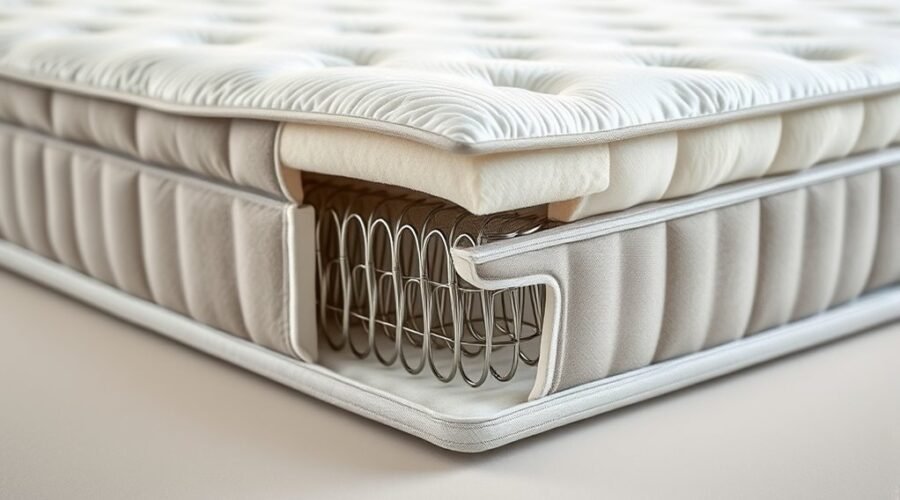
You may not realize that an innerspring mattress isn’t just a coil grid with padding on top. You’re really looking at a layered system, where the coil unit, border support, and comfort materials work together to shape feel, support, and durability. The coil type, gauge, and layer build all change how it performs, and the details behind those choices can determine whether it suits you or not.
Key Takeaways
- An innerspring mattress uses a steel coil system as its main support core.
- Coils distribute weight evenly and create a responsive, traditional mattress feel.
- Open coils are linked together, while pocketed coils move independently for better contouring and motion isolation.
- Comfort layers of foam, latex, or quilting sit above the coils to add cushioning and pressure relief.
- Its breathable coil structure promotes airflow, and coil count, gauge, and materials affect support and durability.
What Is an Innerspring Mattress?
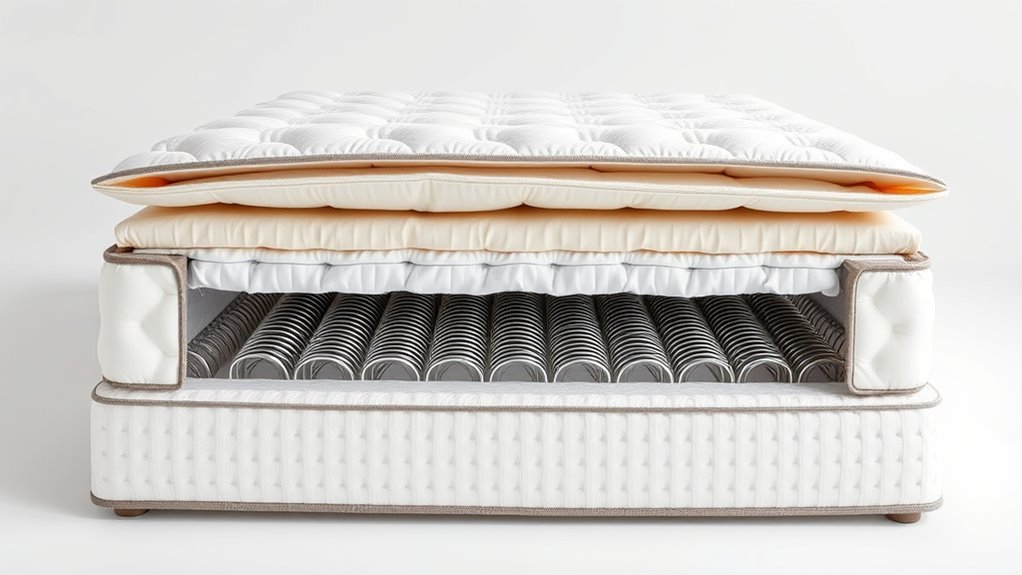
An innerspring mattress is a traditional mattress design that uses a network of metal coils to support your body and distribute weight evenly. In an innerspring mattress, the coils create responsive support, so you don’t sink in excessively or lose alignment.
Depending on the construction, open coils move as a unit, while pocketed coils respond independently, improving comfort and reducing motion transfer. You can also expect cushioning layers, often polyurethane foam or natural materials, that soften the surface without relying on memory foam.
Open coils move together, while pocketed coils work independently, boosting comfort and reducing motion transfer.
This mattress type promotes strong airflow through its internal space, which helps cooling and supports temperature regulation for hot sleepers. If you value a firm, springy feel and clear structural support, an innerspring mattress can deliver that freedom.
With proper care, it usually lasts about 7 to 8 years, depending on materials and quality.
How Is an Innerspring Mattress Built?
Innerspring mattresses rely on a steel coil core as their main support structure, with the coil system making up most of the mattress’s thickness and carrying the weight of your body. In an innerspring mattress, the support system uses steel coils to create foundational support, while comfort layers sit above it to tune pressure relief and feel.
- Open coils move as one unit, giving firm, responsive support.
- Pocketed coils work independently, helping you limit motion transfer.
- Comfort layers often use polyurethane foam or natural materials.
- Quality construction uses durable materials and higher coil counts for durability.
You’ll usually find these comfort layers under 2 inches thick, so you get cushioning without deep sink.
Some models add dual-sided construction for longer use, but that’s less common now.
When you choose well-built innerspring bedding, you get precise support, a freer sleep surface, and a structure designed for dependable durability and comfort.
What Coil Types Are Used in Innerspring Mattresses?
Steel coils are the core support element in innerspring mattresses, and you’ll usually find one of two systems: open coils or pocketed coils.
With open coils, the innerspring coils form a continuous wire network, so pressure spreads across the unit and you feel a firmer surface with more motion transfer.
Open coils create a continuous wire network, spreading pressure for a firmer feel and greater motion transfer.
Pocketed coils use individual fabric sleeves, letting each coil respond on its own. That construction improves contouring, pressure relief, and motion isolation, so you can move without disturbing a partner.
You should also check coil count and gauge, because they shape support, durability, and feel. Higher coil count often means finer body support, while thicker wire raises firmness.
The construction of coils can also add airflow pathways, which boosts breathability and temperature regulation.
When you compare coil types, look for the balance that matches your body and your need for freedom, support, and cool sleep.
How Comfort Layers Change an Innerspring Mattress
Comfort layers change how an innerspring mattress feels at the surface by adding cushioning above the coil system, usually with 1 to 2 inches of polyurethane foam, latex, or natural materials.
In innerspring mattresses, these comfort layers tune firmness, relieve pressure, and preserve the supportive response that many sleepers want.
- Quilted tops add a thin, even plush feel.
- Pillow tops create deeper cushioning without muting support.
- Latex boosts resilience and a cleaner, bouncier sleep experience.
- Material quality influences mattress durability and user satisfaction.
When you choose polyurethane foam, latex, or natural fibers, you control surface softness and motion feel.
Because many designs skip memory foam, you keep a traditional, freer rebound from the coil system.
That balance lets you customize comfort without surrendering structure.
If you want your bed to feel less rigid yet still responsive, the right comfort layers give you that liberated middle ground, with precision at the surface and support underneath.
Who Should Buy an Innerspring Mattress?
Who should buy this type of bed? You should consider an innerspring mattress if you want a traditional, buoyant surface with immediate response from each coil spring.
Back sleepers often benefit because the structure supports spinal alignment without the deep sink you’d get from foam. If you’re a hot sleeper, you’ll likely appreciate the airflow that helps regulate temperature through the night.
For budget-conscious consumers, innerspring mattress options span many price points, so you can match performance to cost without surrendering comfort.
If you want more pressure relief, look for models with comfort layers that do some adding comfort above the coils.
When you share a bed, pocketed coils can improve motion isolation by limiting how much movement travels across the surface.
In short, you should choose this design when you value responsiveness, ventilation, and clear support over a slow, enveloping feel.
What Should You Look for Before Buying One?
Before you buy an innerspring mattress, what matters most is how the coil system is built: pocketed coils usually improve motion isolation and targeted support, while open coils deliver a more traditional feel but can transfer movement more readily.
Innerspring mattresses reward careful comparison, so check coil types, coil count, and gauge. Higher coil count often means stronger support and durability; thicker, lower-gauge coils add sturdiness but can feel firmer.
- Inspect comfort layers for foam or natural materials that improve pressure relief.
- Confirm breatheability with airflow-friendly materials if you sleep hot.
- Read the warranty; 10 years or more signals confidence.
- Use the trial period, ideally 100 nights or longer, to test real comfort.
Choose a build that matches your body and sleep style.
You’re not buying a compromise; you’re selecting support that helps you sleep freely, with the right balance of resilience, cushioning, and cooling.
Frequently Asked Questions
What Are the Pros and Cons of Innerspring Mattresses?
You get responsive support, multiple comfort levels, and strong firmness options, so you can match your sleep positioning.
You’ll usually pay less in cost comparisons, and you may notice less heat retention because airflow stays open.
Downsides include weaker pressure relief, more motion transfer, and variable durability factors in cheaper models.
If you’re sensitive, check allergy concerns and compare support types carefully before you choose.
Can I Buy an Innerspring Mattress Without a Box Spring?
Yes, you can buy an innerspring mattress without a box spring.
You’ll get proper mattress support from alternative foundations like platform beds or slatted frames, which improve weight distribution, sleep comfort, and mattress durability.
Check bedding types, noise levels, and mattress height, plus follow maintenance tips and buying guides to protect the warranty.
With the right foundation, you free yourself from outdated setups and simplify your bedroom.
What Is the Lifespan of an Innerspring Mattress?
You can expect an innerspring mattress to last about 7–10 years; test that theory by checking mattress durability, coil types, and support structure.
Your comfort level depends on sleeping positions, motion transfer, and pressure relief, while maintenance tips like rotating and using a protector help. Review the mattress warranty, too.
If you notice sagging, lumps, or weak support, those replacement signs mean you should replace it soon.
Do People Still Buy Innerspring Mattresses?
Yes, you still buy innerspring mattresses, and you’ll see steady market demand driven by consumer preferences, budget considerations, and brand reputation.
You can compare innerspring mattress trends with memory foam comparison data to judge sleep quality, health benefits, and support.
Retailers keep offering models because customers’ reviews stay mixed but reliable.
Even with newer mattress technology, you’ll find breathable, responsive options that suit your needs and support your freedom.
Conclusion
Now you know what an innerspring mattress is and how it’s built: a coil support core, layered comfort materials, and construction choices that shape feel, support, and motion transfer. When you shop, you should check coil type, coil count, gauge, edge support, and the quality of the comfort layers. If you match those specs to your sleep needs, you’ll narrow the field fast and avoid a purchase that’s a total disaster for your sleep.