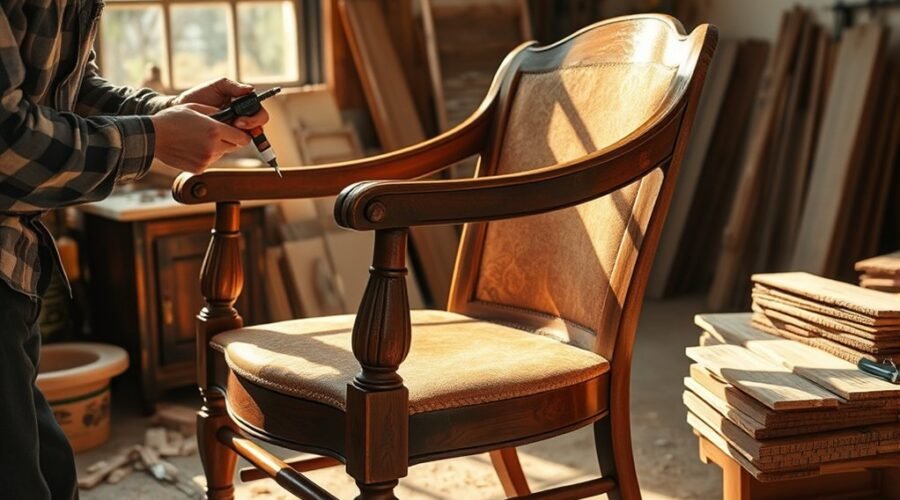
Furniture is often worth repairing when its main structure is still sound and the damage is limited to parts that can reasonably be tightened, reglued, refinished, reupholstered, or replaced. Instead of judging a piece only by its age or appearance, inspect the frame, joints, support system, moisture damage, repair cost, safety, and the quality of a comparable replacement.
Quick Answer
Furniture is usually worth repairing when the frame or main case is solid, the damage is localized, replacement parts or professional repairs are practical, and the finished piece will still meet your needs. Replacement makes more sense when damage is widespread, safety is compromised, or repair approaches the cost of an equivalent-quality replacement.
Key Takeaways
- Judge the frame, joints, and main structure before judging scratches, fabric, or finish.
- A 50% repair-to-replacement comparison can be a useful starting point, but it is not a fixed rule.
- Compare repair cost with an equivalent-quality replacement, not simply the cheapest new furniture available.
- Sagging sofas require separate checks of cushions, suspension, and frame.
- Old finishes, unstable dressers, recalls, rot, pests, and extensive structural damage deserve extra caution.
- Antiques and valuable heirlooms may need a furniture conservator rather than an aggressive DIY repair.
Signs Your Furniture Is Worth Repairing
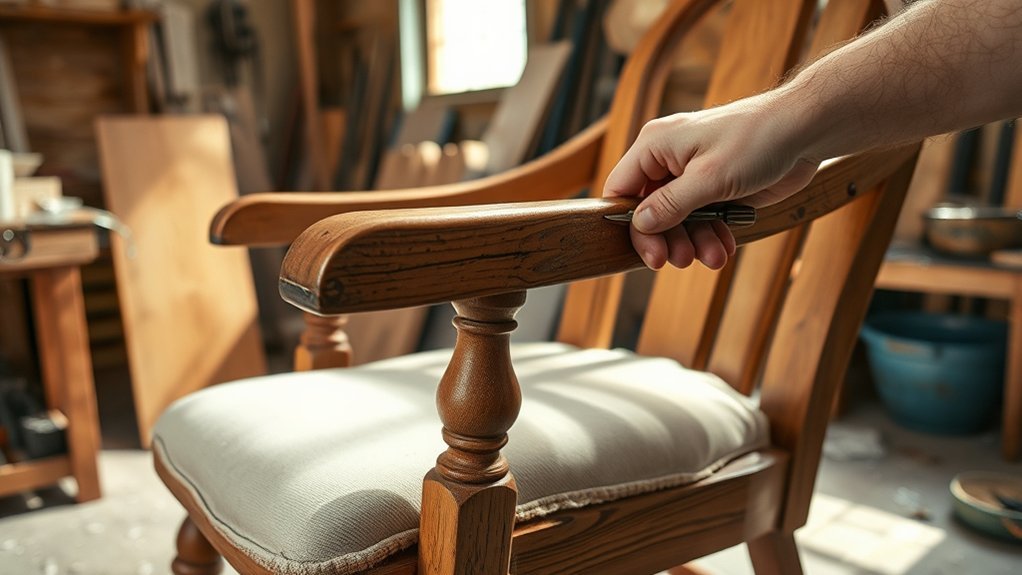
Furniture is a strong repair candidate when its main structure is square, stable, dry, and free of widespread deterioration. Localized problems such as a loose joint, damaged finish, worn upholstery, flattened cushion, missing hardware, or one broken component are generally easier to address than damage affecting the entire frame.
Solid wood and other well-built furniture can be especially repairable because individual joints, surfaces, hardware, and upholstery often can be serviced without discarding the whole piece. Construction quality matters more than age alone.
Start with the structure. Scratches and worn fabric may look dramatic, but a sound frame is usually more important to the repair decision than cosmetic appearance.
Sentimental value can also change the calculation. A family piece, custom-sized item, discontinued design, or well-crafted chair may reasonably justify a repair that would not make sense for inexpensive mass-market furniture.
Repair can also reduce unnecessary waste. The U.S. Environmental Protection Agency includes repair among its recommended approaches for reducing waste and conserving resources.
Five-Minute Repair-or-Replace Check
- Stability: Does the piece sit squarely without severe wobbling, twisting, or collapsing?
- Joints: Are failures limited to one or two accessible joints, or are many connections loose or broken?
- Material: Is the damaged material still strong enough to accept screws, glue, fasteners, or patches?
- Moisture: Look for swelling, softness, delamination, mold, or rot.
- Pests: Check for active insect damage, fresh dust, holes, or weakened wood.
- Function: Will the repaired furniture still be comfortable, stable, and suitable for its intended use?
- Cost: Compare a complete repair quote with the cost of furniture of similar quality, size, and construction.
- Safety: Check recalls and stability concerns before treating a defect as a simple repair problem.
The Sofa Sag Test: What It Really Means
A sagging sofa does not automatically mean the frame has failed. The problem may come from cushions, the seat-support system, or the frame itself, and each requires a different repair.
1. Check the Cushions
Remove the seat cushions and inspect them individually. Flattened foam, displaced filling, broken zippers, or permanently compressed cushion cores can cause a sofa to feel low even when the structure underneath remains sound.
2. Check the Seat Support
With the cushions removed, press gently across the seat deck. Compare one area with another. Excessive drop, uneven support, detached webbing, damaged springs, or loose spring clips can create sagging while leaving the main frame repairable.
3. Check the Frame
Listen for cracking or joint movement and inspect accessible rails, corner blocks, legs, and fasteners. A localized loose joint may be repairable. Multiple split rails, widespread joint failure, severe warping, rot, or crumbling engineered wood make the repair less attractive.
Pro Tip: When requesting an upholstery or sofa-repair quote, ask the technician to identify whether the problem is the cushion, suspension, frame, or a combination. A quote that states the actual failure is more useful than one that gives only a total price.
Do not rely on the sofa’s age alone. A heavily used newer sofa can develop problems earlier than an older, better-built one, while a sound frame may remain useful after cushions or fabric have worn out.
When Worn Case Goods Need Repair
Dressers, cabinets, nightstands, bookcases, and similar case goods are often repairable when their boxes remain square and solid. Sticking drawers, loose hinges, damaged slides, sagging shelves, and minor joint movement can often be corrected without replacing the entire item.
Before repairing a dresser or other tall storage unit, check whether the model has been recalled and whether it presents a tip-over hazard. The U.S. Consumer Product Safety Commission’s Anchor It guidance recommends securing furniture such as dressers and bookcases to help prevent tip-over injuries.
Sticking Doors And Drawers
Doors and drawers that drag, bind, or fail to close smoothly may result from loose hinges, worn slides, shifted joints, overloaded drawers, debris, seasonal wood movement, or moisture-related swelling.
Start with the least invasive checks. Empty the drawer, clean tracks or slides, tighten accessible hardware, and look for obvious alignment problems. Manufacturer-approved lubrication may help some metal or mechanical slides, but avoid applying random oils or sprays to wood surfaces or valuable historic furniture.
If a wooden edge has swollen, first identify the moisture source. Sanding away material before the piece has dried and stabilized can create a loose fit later. Loose joints may need proper regluing rather than additional screws driven into weakened material.
When a drawer or cabinet remains square and the problem is limited to hardware or alignment, repair is often practical. Widespread swelling, crumbling particleboard, structural mold or rot, or severe case distortion may favor replacement.
Sagging Shelves And Frames
A sagging shelf does not necessarily mean the entire cabinet has failed. Inspect the shelf itself, support pins or cleats, back panel, side panels, and joints before deciding.
Possible repairs include replacing damaged shelf supports, adding an appropriate center support, repairing a loosened joint, tightening suitable fasteners, or replacing one failed shelf. The correct method depends on the material and how the furniture carries its load.
- Check whether the case is twisted or out of square.
- Inspect shelf pins, cleats, brackets, and their mounting holes.
- Look for cracks, delamination, swelling, and stripped fastener holes.
- Check whether the back panel has detached and allowed the case to rack.
- Reduce loads that exceed the shelf’s intended capacity.
Warning: A tall dresser or cabinet that tips, rocks severely, has failed anchoring hardware, or is subject to a safety recall should not be treated as a normal cosmetic repair. Follow the manufacturer’s or CPSC recall instructions and use appropriate anti-tip hardware.
Repair Or Replace: The 50% Rule
The commonly cited 50% rule can be useful as a quick financial screen: when a repair quote approaches half the cost of a genuinely comparable replacement, stop and examine the decision more closely. It should not be treated as an automatic command to replace the furniture.
A good decision also considers structural condition, what the repair actually fixes, expected continued use, warranty coverage, sentimental value, availability of parts, and whether the proposed replacement is truly equivalent.
Half-Cost Repair Rule
Suppose a professional repair is quoted at $450. Comparing that figure with a $700 budget replacement can be misleading if replacing the same construction quality would actually cost $1,200. The meaningful comparison is repair versus equivalent replacement, not repair versus the least expensive item that performs the same basic function.
Use the percentage only as a starting point. A $450 repair may be sensible when it restores a solid piece for years of continued use, but less sensible when several other components are already failing.
- Get the full repair price, including labor, materials, transport, and finishing.
- Compare it with a similar-quality replacement.
- Ask what the repair fixes and what remains worn.
- Consider warranties on both repair work and replacement furniture.
- Factor in delivery, assembly, disposal, and modification costs.
Compare Replacement Value
Replacement value should reflect similar dimensions, materials, durability, features, and construction. A solid-wood table should not automatically be compared with the least expensive veneered or composite substitute simply because both are tables.
The same principle applies to upholstered furniture. Compare frame construction, suspension, cushion quality, upholstery, dimensions, and expected use rather than price alone.
Sentimental or historical value may also make a purely financial percentage less useful. In those cases, the goal may be preservation rather than achieving the lowest short-term cost.
When Repair Costs More
A repair that costs more than half of an equivalent replacement deserves careful scrutiny, especially for lower-quality furniture or a piece with several unrelated failures. It is not automatically a bad decision, but the reason for spending more should be clear.
Repair may still be reasonable when the piece is custom-sized, exceptionally well made, difficult to replace, part of a matching set, historically significant, or personally important.
Replacement becomes more attractive when structural damage is widespread, several systems are failing, the repair cannot provide reliable stability, replacement parts are unavailable, or an unresolved safety defect remains.
Which Furniture Materials Are Worth Repairing
Repairability depends on both the material and how the furniture was constructed.
- Solid wood: Loose joints, scratches, damaged finishes, and some cracks can often be repaired. Severe rot, extensive pest damage, or badly distorted structural members require closer assessment.
- Plywood: High-quality plywood furniture can be durable and repairable. Edge damage, delamination, or water damage may be more difficult depending on its extent.
- Particleboard and MDF: Hardware and surface damage may be repairable, but extensive swelling, crumbling around fasteners, or structural breakage can make lasting repairs difficult.
- Upholstered furniture: Fabric, foam, webbing, springs, and some frame components can be replaced when the underlying construction justifies the work.
- Metal furniture: Hardware replacement, welding, rust removal, and refinishing may be possible depending on the metal, corrosion depth, and structural loads.
- Leather furniture: Cleaning, conditioning, recoloring, panel repair, cushion work, and professional upholstery repairs may extend service when the frame remains sound.
- Antiques and historically important furniture: Preserve original material wherever possible and consult a qualified conservator before aggressive stripping, sanding, refinishing, or structural alteration.
The Smithsonian Museum Conservation Institute notes that inappropriate repairs can irreparably damage historic furniture, making professional conservation especially important for significant pieces.
When Cosmetic Damage Hides Bigger Problems
Scratches and worn finishes are often superficial, but some surface problems point to deeper damage. Water stains accompanied by swelling, loose legs accompanied by split joints, or peeling veneer over soft substrate deserve closer inspection.
- Check for wobble, creaking, twisting, or uneven alignment.
- Inspect joints for gaps, cracks, or repeated movement.
- Look beneath water damage for swelling, delamination, softness, or mold.
- Inspect wood for fresh insect holes, powder, or weakened areas.
- Check the underside and back, not just visible surfaces.
- Determine whether damage is localized or appears throughout the piece.
A structurally sound piece with cosmetic wear may need only refinishing or surface repair. A piece that looks acceptable but has extensive hidden structural failure can be a poor repair candidate.
When Not to DIY
Professional help is sensible when a repair affects structural safety, valuable upholstery, complicated joinery, welded load-bearing parts, major veneer work, or historically significant furniture. A professional assessment is also useful when you cannot tell whether the problem is cosmetic or structural.
Warning: Be cautious before sanding or stripping an unknown old finish. The EPA identifies refinishing old furniture as a potential source of lead exposure. Consumer paint and coating removers containing methylene chloride are also prohibited from consumer distribution in the United States because of serious exposure risks. Use appropriate testing, ventilation, protective equipment, and safer products for the material involved.
How Long Furniture Should Last
There is no single useful lifespan for every sofa, table, desk, cabinet, or chair. Construction quality, load, frequency of use, environment, maintenance, previous repairs, and materials can produce very different service lives.
Condition is therefore more useful than age when deciding whether to repair furniture. A relatively new cabinet damaged by a major water leak may be a poor repair candidate, while an older solid-wood table with a loose joint and worn finish may have substantial useful life remaining.
Instead of asking only, “How old is it?” ask:
- Is the main structure still stable?
- Is the damage localized?
- Can worn components be replaced without rebuilding the whole piece?
- Has the same failure returned repeatedly?
- Will the repaired item continue to meet your needs?
- Is the repair safe and economically reasonable?
Routine inspection and early repair can prevent small problems, such as loose hardware or joints, from producing more extensive damage.
What To Look For In Replacement Furniture
When replacement is the better option, compare more than appearance and price. Look at construction, durability, repairability, safety, warranty coverage, and whether replacement parts are available.
- Inspect joints, frame rigidity, drawer construction, hardware, and load-bearing parts.
- Prefer designs that allow cushions, covers, hardware, slides, shelves, or other wear parts to be replaced.
- Check the written warranty and what structural failures it actually covers.
- Choose dimensions and ergonomics that suit the intended user and room.
- For modular furniture, check whether components can be replaced individually.
- For wood products, credible certification such as Forest Stewardship Council certification can provide information about responsible forest-based sourcing.
If you are buying a dresser or another clothing-storage unit in the United States, pay attention to current stability requirements. The CPSC’s clothing-storage-unit guidance explains the mandatory federal stability requirements that apply to qualifying units manufactured after September 1, 2023.
Regardless of age, check the CPSC recall database when buying used furniture or when an existing piece shows an unusual stability or hardware problem. Do not resell a recalled product when the recall instructions prohibit doing so.
Frequently Asked Questions
How Do I Know if My Furniture Is Worth Restoring?
Start with structural condition. Furniture is a stronger restoration candidate when the frame or case is stable, damage is localized, the material can accept a reliable repair, and the finished piece will remain useful. Also compare the complete repair price with an equivalent-quality replacement. Antiques, heirlooms, and historically important pieces should be assessed more cautiously because aggressive repairs can reduce or destroy original material.
What Are the Benefits of Repairing Items Instead of Replacing Them?
Repair can preserve a well-made or meaningful piece, avoid unnecessary disposal, and cost less than buying furniture of equivalent quality. It may also save the disruption of delivery, assembly, disposal, and finding a replacement that fits the same space. The EPA specifically includes repair among its waste-reduction recommendations.
How Often Does the Average Person Replace Their Couch?
There is no replacement age that works for every couch. Construction quality, household use, cushion wear, suspension condition, upholstery, pets, moisture, and maintenance all affect useful life. Inspect the cushions, suspension, and frame separately and replace the sofa when its condition, safety, comfort, and repair economics no longer justify keeping it.
What Are the Common Mistakes to Avoid in Furniture Restoration?
Common mistakes include refinishing before checking structure, sanding through veneer, using incompatible finishes or adhesives, adding screws where proper joint repair is needed, ignoring moisture or pests, and stripping a valuable old finish without understanding its significance. Historic or valuable furniture deserves conservative treatment and, when needed, advice from a qualified furniture conservator.
Is a Sagging Sofa Worth Repairing?
Often, yes, if the frame remains sound. First determine whether the sag comes from compressed cushions, failed webbing or springs, loose suspension hardware, or structural damage. Cushion or suspension repairs can be worthwhile on a solid sofa. Widespread frame failure combined with worn upholstery and cushions makes replacement more attractive.
When Should I Call a Professional Furniture Restorer?
Consider professional help for antiques, heirlooms, structural failures, extensive veneer damage, complicated upholstery, welded structural parts, unknown old finishes, or repairs where a mistake could reduce safety or value. Ask for a written explanation of the damage, proposed treatment, price, and any limits of the repair.
Conclusion
Furniture is worth repairing when its underlying structure is still dependable and the damage can be corrected without creating new safety, durability, or cost problems. Loose joints, worn upholstery, tired cushions, damaged finishes, and replaceable hardware can often justify repair, while severe rot, widespread swelling, extensive frame failure, unresolved recalls, or multiple failing systems make replacement more reasonable.
Do not let a single percentage or the furniture’s age make the decision for you. Inspect the structure, identify the actual failure, compare a complete repair quote with an equivalent-quality replacement, and consider safety, sentimental value, and future usefulness. For valuable or historic furniture, conservative professional treatment may preserve far more than an aggressive DIY restoration.
Sources
- U.S. Environmental Protection Agency — Waste Reduction Guidance — supports repairing and reusing products as ways to reduce waste.
- U.S. Consumer Product Safety Commission — Anchor It! — furniture tip-over prevention and anchoring guidance.
- U.S. Consumer Product Safety Commission — Clothing Storage Units — current U.S. stability requirements for qualifying clothing-storage furniture.
- U.S. Environmental Protection Agency — Reduce the Risk of Lead Exposure at Home — lead-exposure considerations related to refinishing old furniture.
- Smithsonian Museum Conservation Institute — Furniture Conservation — preservation and professional-treatment considerations for valuable and historic furniture.
- Forest Stewardship Council — Furniture — information on FSC-certified forest-based materials used in furniture.