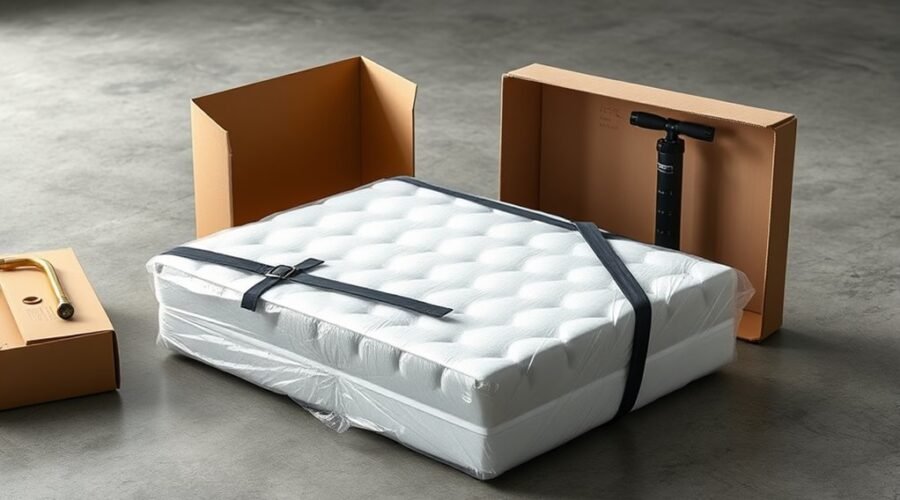
When you buy a mattress in a box, you receive a regular mattress that has been compressed and packaged into a smaller shipping box so it is easier to deliver and move through your home. Foam, latex, hybrid, and even some innerspring designs can use this format, depending on how the mattress is built. Once you remove the packaging, the mattress begins returning to its intended shape.
Quick Answer
A mattress in a box is a mattress that is compressed, usually rolled, sealed in protective packaging, and shipped in a compact carton. After unboxing, it expands toward its normal size. The packaging method does not determine mattress quality by itself; materials, construction, compression time, support, firmness, and manufacturer instructions matter more.
Key Takeaways
Key Takeaways
- A mattress in a box is a packaging and delivery format, not a separate mattress type or quality grade.
- Foam, latex, hybrid, and some innerspring mattresses can be compressed if their construction is designed for it.
- Expansion time varies by model; some beds are usable the same night while others may take up to several days to reach their intended dimensions.
- Move the unopened box to the bedroom before cutting the packaging because boxed mattresses can be heavy and difficult to move alone.
- Check firmness, materials, foundation requirements, warranty, return or exchange rules, and the manufacturer’s unboxing instructions before buying.
What Is a Mattress in a Box?
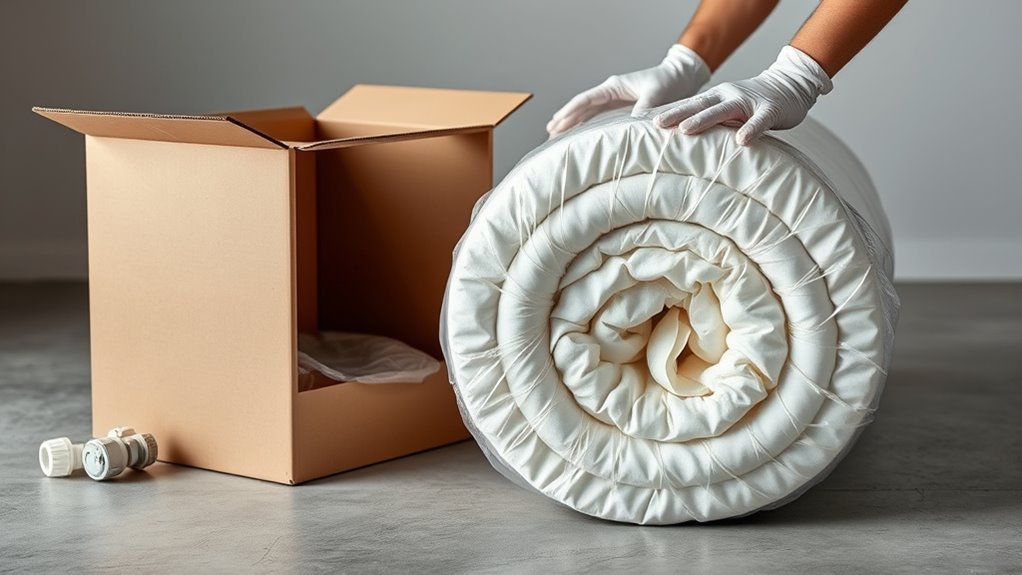
A mattress in a box is a mattress that has been compressed, packaged in protective material, and usually rolled so it can fit inside a compact shipping carton. The U.S. International Trade Commission describes mattress-in-a-box products as mattresses delivered to the consumer in a rolled and compressed state.
The mattress itself can use foam, latex, coils, or a combination of materials. After you remove the packaging, air returns to the compressed materials and the mattress starts recovering its intended shape and height.
The main advantage is practical: a boxed mattress is easier to ship and can be easier to move through stairs, hallways, elevators, and doorways than a mattress delivered at full size. However, the box can still be heavy, especially in Queen, King, and California King sizes.
Note: “Mattress in a box” describes how the mattress is packaged and delivered. It does not tell you whether the mattress is soft or firm, inexpensive or premium, all-foam or coil-based.
Does a Boxed Mattress Lose Quality?
A boxed mattress does not automatically lose quality simply because it was compressed for shipping. Manufacturers design compatible mattresses and packing processes so the materials can recover after the packaging is opened.
However, it is more accurate to say that compression must be appropriate for the mattress and should not continue indefinitely. The U.S. International Trade Commission reports industry evidence that mattresses stored in a compressed and boxed state have an approximate manufacturer shelf life of 6 to 12 months depending on the raw materials. The same report notes that extended compression can negatively affect shape, resilience, firmness, comfort, or material integrity.
Boxing is a delivery format, not a quality rating. Materials, construction, compression duration, support, and manufacturing quality matter more than the box itself.
- A properly designed mattress can recover well after factory compression.
- Packaging method alone does not predict durability or comfort.
- Leaving a mattress compressed longer than recommended can increase the risk of incomplete recovery.
- Different foams, latex formulations, coil systems, and edge structures respond differently to compression.
- Always follow the mattress manufacturer’s storage and unboxing instructions.
That means the safest comparison is not “boxed versus traditional.” Compare the actual materials, layer construction, firmness, support system, warranty, foundation requirements, and return or exchange policy.
Which Mattress Types Can Be Boxed?
Several mattress types can be sold in a box, but whether a specific mattress can be compressed depends on its construction. Flexible foams and individually pocketed coils are commonly used because they can usually tolerate factory compression more easily than rigid coil systems or mattresses with inflexible perimeter components.
| Mattress type | Can it be boxed? | What to know |
|---|---|---|
| All-foam | Often | Memory foam and polyfoam mattresses are commonly compressed for shipping. |
| Latex | Often, if designed for it | Construction, layer thickness, and manufacturer packing methods matter. |
| Hybrid / pocketed coil | Often | Individually pocketed coils are commonly compatible with roll-packing. |
| Traditional innerspring | Sometimes | Rigid perimeter rods or certain connected-coil designs may prevent rolling, while other innerspring constructions can be boxed. |
The USITC mattress industry report specifically notes that foam, hybrid, and innerspring mattresses may all be sold in compressed formats depending on their materials. It also explains that some rigid-edge constructions cannot be folded and rolled, while pocketed-coil designs can be compatible with mattress-in-a-box packaging.
When Do You Need Box Delivery Instead?
Box delivery is especially useful when a full-size mattress would be difficult to move through your home or when you are ordering from a manufacturer or retailer outside your local delivery area.
You may prefer a mattress in a box when:
- You have narrow stairs, hallways, elevators, or doorways.
- You are ordering online and standard parcel or freight delivery is more practical than local mattress delivery.
- You want to move the mattress into the room before it reaches full size.
- You are moving into an apartment, upstairs bedroom, dorm, or other space with limited access.
- The model you want is specifically designed and sold for compressed delivery.
Full-size delivery may make more sense when you want professional setup, old-mattress removal, a mattress that cannot be safely roll-packed, or less lifting on your part.
For Rested Pillow specifically, the company currently advertises qualifying local doorstep delivery near its St. Joseph, Michigan showroom and box shipping to the lower 48 states. Its current delivery information also notes additional freight considerations for King and California King mattresses.
How Do You Set Up a Mattress in a Box?
To set up a mattress in a box, move the unopened package into the bedroom first, confirm that your foundation is ready, and then remove the packaging carefully according to the manufacturer’s instructions.
At a Glance
| Time Required | About 10–20 minutes of active setup; full expansion may take several hours to several days depending on the mattress |
| Difficulty | Easy to moderate; two adults may be needed for heavier boxes |
| Tools Needed | Scissors or a safe package cutter, plus the correct bed frame or foundation |
| Cost | Usually no additional setup cost if you do it yourself; delivery or return fees depend on the seller |
Warning: Boxed mattresses can be heavy and may expand quickly after the final seal is opened. Move the box to the final room before opening it, keep children and pets clear, and cut the plastic away from the mattress surface so you do not slice the cover or foam.
| Step | Action |
|---|---|
| 1 | Confirm that your bed frame or foundation meets the mattress manufacturer’s support requirements. |
| 2 | Move the unopened box into the bedroom, using a second person if the package is too heavy to handle safely. |
| 3 | Open the shipping carton and slide the wrapped mattress out. |
| 4 | Place and unroll the still-sealed mattress on the foundation in the correct orientation. |
| 5 | Carefully cut the remaining plastic without letting the blade touch the mattress. |
| 6 | Let the mattress expand and ventilate for the amount of time recommended by its manufacturer. |
Pro Tip: Before discarding the box and packaging, confirm that the mattress appears to be expanding normally and review the seller’s return instructions. Do not assume that you will need—or be able—to compress the mattress back into its original box for a return.
How Long Does It Take to Expand?
A mattress starts expanding as soon as the final compression seal is removed, but there is no single expansion time that applies to every mattress in a box.
For example, Rested Pillow says its boxed mattresses are intended to be ready for sleep that night and describes its Sunny Side Up model as expanding within a few hours. Nectar, by comparison, currently advises that its mattress may take 24 to 72 hours to reach its intended size even though it can be slept on earlier.
That variation is why a universal statement such as “90% expanded within a few hours” is not useful for every bed. Check the instructions for your exact model.
- Expect visible expansion soon after opening.
- Allow the full manufacturer-recommended period before measuring final height or judging shape.
- Do not assume that slower expansion means the mattress is defective before the stated recovery window has passed.
- Ventilate the room if you notice a temporary new-product odor.
- Contact the seller if the mattress remains significantly misshapen after the recommended expansion period.
Physical expansion and new-mattress odor are also different issues. A mattress may reach its intended dimensions before a temporary odor has completely dissipated, or the odor may disappear while the mattress is still finishing its physical recovery.
What Are the Biggest Mattress-in-a-Box Myths?
Several common assumptions about mattresses in a box confuse the delivery format with the quality of the mattress itself.
Myth: Every boxed mattress is low quality.
Fact: Packaging does not establish quality. Compare construction, materials, support, durability information, warranty terms, and the seller’s reputation.
Myth: Compression can never affect a mattress.
Fact: Factory compression is normal for mattresses designed for it, but prolonged compressed storage can affect recovery and material integrity. Unbox the mattress promptly and follow the manufacturer’s instructions.
Myth: Only foam mattresses can be boxed.
Fact: Foam, latex, hybrid, pocketed-coil, and some innerspring mattresses can use compressed packaging.
Myth: Every boxed mattress is ready to sleep on immediately.
Fact: Some brands permit first-night use while others recommend more expansion time. Follow the instructions for your specific model.
Myth: A “100-night guarantee” always means you can return the mattress for a refund.
Fact: Policies differ. Some companies offer refundable home trials, while others offer exchanges or comfort adjustments instead.
What Are the Pros and Cons of a Mattress in a Box?
A boxed mattress can simplify delivery, but the format also shifts some work to you. Comparing both sides makes it easier to decide whether the delivery style fits your home and buying preferences.
| Advantages | Possible disadvantages |
|---|---|
| More manageable shape for stairs, hallways, and doorways | The box can still be very heavy |
| Convenient online shipping | You may need to perform setup yourself |
| Available in foam, hybrid, latex, and some coil designs | Some rigid or specialty mattresses cannot be roll-packed |
| Some online brands offer long home evaluation periods | Return rules, pickup charges, exchanges, and adjustment periods vary widely |
| Mattress can be moved into position before full expansion | Once opened, it usually cannot be recompressed into the original box using normal household tools |
How Do You Choose the Right Mattress?
Choose a mattress by starting with how you sleep, how much cushioning and support you prefer, and whether the construction fits your body and bedroom—not by the box alone.
Side sleepers often prefer more cushioning around the shoulders and hips. Back sleepers commonly look for a balance of contouring and support, while stomach sleepers often prefer a firmer surface that limits excessive sinking through the midsection. These are starting points rather than strict rules because body weight, body shape, pain, temperature preferences, and personal comfort also affect what feels right.
- Compare firmness with your sleep position, body weight, and personal preference.
- Check the actual layer materials and construction rather than relying only on marketing names.
- Look at cooling, motion isolation, edge support, and ease of movement if those features matter to you.
- Confirm which foundation or bed-frame designs are approved for the mattress.
- Read the warranty, trial or exchange policy, mandatory adjustment period, pickup fees, and return conditions before purchasing.
- Check whether certifications apply to the whole product or only to a specific component.
If a brand offers a mattress quiz or personalized consultation, it can help narrow the selection, but it should supplement rather than replace your review of materials, firmness, support, and policy terms.
Why Rested Pillow Mattresses Stand Out
Rested Pillow emphasizes Michigan-made construction, customizable models, and direct guidance for shoppers. The important manufacturing detail is that Rested Pillow identifies Capitol Bedding in Grand Ledge, Michigan as its mattress maker and manufacturing partner.
Its current mattress-in-a-box collection includes foam, latex, hybrid, flippable, and customizable models that are designed to be compressed for shipping.
Handcrafted Michigan Quality
Rested Pillow’s About page explains that its mattresses are made through its partnership with Capitol Bedding, a Grand Ledge manufacturer that Rested Pillow says has been making mattresses in Michigan since 1946.
That distinction is useful because it tells you who actually makes the product rather than relying on a vague “Michigan-made” claim.
- Michigan manufacturing through Capitol Bedding
- Hand-built construction methods
- Multiple mattress types and comfort levels
- Direct information about materials and layers
- Customizable options on selected models
Custom Comfort Options
Several Rested Pillow models are designed around adjustable comfort choices. Its customizable zipper mattresses allow selected comfort layers to be changed rather than requiring the entire mattress to be replaced when a different feel is needed.
The company also offers a personalized Sleep Match Quiz and direct consultation for customers who cannot visit its St. Joseph showroom. These tools can help you narrow firmness and construction choices, especially if you are ordering online.
Customization is still model-specific, so check the construction of the exact mattress rather than assuming every Rested Pillow bed has interchangeable layers.
Compression Without Compromise
For mattresses designed to handle it, factory compression reduces shipping volume and makes delivery easier without changing the mattress into a different product category.
Rested Pillow says its mattress-in-a-box models are compressed and rolled after manufacture and then shipped in compact packaging. The appropriate takeaway is not that compression can never matter, but that these particular models are built and packaged for compressed delivery.
- Compatible models are factory-compressed for shipping.
- Foam, latex, and pocketed-coil constructions can be used in boxed mattresses.
- The mattress begins regaining its shape after the seal is removed.
- Expansion time depends on the model.
- Prompt unboxing helps avoid unnecessary extended compression.
What Should You Know Before You Buy?
Before buying a mattress in a box, compare your sleep needs with the mattress construction, material specifications, foundation requirements, expansion instructions, warranty, and return or exchange policy.
Those details are more useful than assuming that every boxed mattress behaves the same way.
Sleep Needs
Your sleep position is a useful starting point, but it should not be the only factor. Side sleepers often want more pressure relief at the shoulders and hips. Back sleepers commonly prefer balanced contouring with enough support to prevent the midsection from sinking excessively. Stomach sleepers often prefer a firmer feel for the same reason.
Body weight also changes how firm a mattress feels. A mattress that feels firm to a lighter sleeper may feel noticeably softer to a heavier sleeper. Couples may also need to balance two different firmness and movement preferences.
- Side sleepers often prioritize pressure relief.
- Back sleepers often need balanced contouring and support.
- Stomach sleepers commonly prefer less sink through the midsection.
- Body weight affects how deeply you compress the comfort layers.
- Personal comfort still matters more than a generic firmness label.
Do not judge a new mattress only during the first few minutes after unboxing. Let it complete the manufacturer’s recommended expansion period and give your body reasonable time to adjust to a different sleep surface.
Material Quality
Material quality affects how a mattress feels and how well it may maintain its performance over time. Look at the actual comfort layers, support core, cover, edge design, coil construction, and any published foam specifications.
For polyurethane foam, density can provide useful durability information, but density and firmness are not the same thing. A denser foam is not automatically firmer, and a single density number does not determine the quality of the entire mattress.
If the mattress contains CertiPUR-US certified polyurethane foam, understand exactly what that means. According to the CertiPUR-US program, qualifying flexible polyurethane foam is tested against its standards for content, emissions, and durability. CertiPUR-US does not certify an entire mattress, a mattress company, or latex foam.
Note: A certification can tell you something useful about a specific component, but it does not replace checking mattress construction, comfort, support, warranty, and whether the product fits your needs.
Trial Period
Home evaluation policies vary substantially among mattress companies, so read the exact terms before ordering.
For example, Casper currently advertises a 100-night mattress trial with a 30-night adjustment period, while Nectar currently advertises a 365-night home trial for eligible mattresses.
Rested Pillow uses a different system. Its current 100-Night Comfort Guarantee is an adjustment or exchange policy rather than a refundable mattress trial. The company asks customers to sleep on the mattress for at least 21 nights before requesting a change. Depending on the model, eligible customers may receive a one-time comfort-layer exchange or a mattress exchange. Rested Pillow states that it does not offer mattress refunds, and transportation or re-delivery fees can apply.
- Confirm when the trial or guarantee starts.
- Check whether a minimum adjustment period applies.
- Determine whether the remedy is a refund, exchange, or comfort adjustment.
- Review pickup, return-shipping, and re-delivery charges.
- Check condition requirements for returns or exchanges.
Does the Foundation Matter?
Yes. A mattress in a box still needs the type of support specified by its manufacturer. Depending on the mattress, approved support may include a platform bed, closely spaced slats, a compatible foundation, or an adjustable base.
Using an unsupported frame can change how the mattress feels, contribute to sagging, or affect warranty coverage. Check the exact support requirements before setting up the mattress, especially if you plan to reuse an older box spring or widely spaced slatted frame.
If you are buying a heavy hybrid or latex mattress, also confirm that the frame is rated for the combined weight of the mattress, sleepers, and bedding.
What If the Mattress Does Not Fully Expand?
If your mattress still looks uneven or undersized after opening, first check the manufacturer’s stated expansion period. Some beds recover within hours while others may need 24 to 72 hours or longer to reach their intended dimensions.
- Confirm that every layer of compression plastic has been removed.
- Place the mattress flat on an approved foundation.
- Give it the full expansion time listed by the manufacturer.
- Keep the room reasonably ventilated and at a normal indoor temperature.
- After the stated period, measure the mattress and photograph any persistent low areas, folds, or deformation.
- Contact the manufacturer or retailer if the mattress remains substantially misshapen or fails to reach the specifications for your model.
Do not use a space heater, hair dryer, steam, heavy objects, or aggressive folding to force expansion unless the manufacturer specifically instructs you to do so.
Frequently Asked Questions
How Long Can a Mattress Stay Compressed in a Box?
There is no universal consumer-safe storage period for every mattress. A 2024 U.S. International Trade Commission report described an approximate manufacturer shelf life of 6 to 12 months in the compressed state depending on raw materials, while also noting that prolonged compression may affect performance and material integrity. For a mattress you have purchased, unpack it as soon as practical and follow the specific manufacturer’s instructions and warranty terms.
Are Mattresses in a Box as Good as Regular Mattresses?
They can be. A mattress in a box is a delivery format rather than a quality category. Boxed mattresses range from basic foam models to premium latex and hybrid designs. Compare the actual materials, construction, firmness, support, warranty, and comfort policy rather than assuming that boxed or full-size delivery is automatically better.
What Are the Disadvantages of Compressed Mattresses?
Possible disadvantages include a heavy shipping box, a waiting period for complete expansion, temporary new-product odor with some materials, and the need to perform setup yourself. Extended compressed storage can also reduce recovery in some mattresses, so it is best to follow the manufacturer’s unpacking timeline.
What Are the Disadvantages of Bed in a Box?
The buying format can make returns more complicated because an opened mattress generally cannot be compressed back into its original box with household equipment. You also need to check foundation compatibility, expansion time, heat retention, edge support, delivery method, warranty terms, and whether the seller offers a refund, exchange, or comfort adjustment.
Can You Put a Mattress Back in the Box After Opening It?
Usually not with normal household tools. Mattress factories use specialized compression equipment to reduce the mattress enough for roll-packing. If you need to return a mattress, follow the seller’s instructions rather than trying to force it back into the original carton.
Can You Sleep on a Mattress in a Box the First Night?
It depends on the mattress. Rested Pillow says its boxed mattresses can be ready to sleep on the same night, while Nectar says its mattresses may take 24 to 72 hours to fully expand but can be slept on earlier. Always follow the instructions for your exact model.
Conclusion
A mattress in a box is simply a mattress packaged in a compressed format for easier shipping and handling. Foam, latex, hybrid, and some innerspring designs can use this method when their construction is compatible with compression.
The box itself does not tell you whether a mattress is good or bad. Focus on the materials, firmness, support system, foundation requirements, manufacturer-recommended expansion time, warranty, and return or exchange policy. Move the box into place before opening it, allow the mattress to recover according to its instructions, and contact the seller if it remains misshapen after the stated expansion period.
If you are considering Rested Pillow, its current information supports the Michigan-made and customizable claims, but remember that its 100-Night Comfort Guarantee is an exchange or adjustment program rather than a refundable mattress trial.
Sources
- U.S. International Trade Commission — Mattresses Final Investigation Report — mattress-in-a-box construction, compression, coil compatibility, and compressed-state shelf-life information.
- CertiPUR-US — Frequently Asked Questions — what CertiPUR-US certification covers and what it does not cover.
- Rested Pillow — Mattress in a Box Mattresses — Rested Pillow boxed-mattress construction, customization, expansion, and Michigan-made claims.
- Rested Pillow — FAQ — current 100-Night Comfort Guarantee, exchange terms, fees, and no-refund policy.
- Nectar Sleep — FAQ — manufacturer example for 24–72 hour expansion guidance and first-night use.
- Casper — 100-Night Mattress Trial — example of a refundable home trial with a required adjustment period.