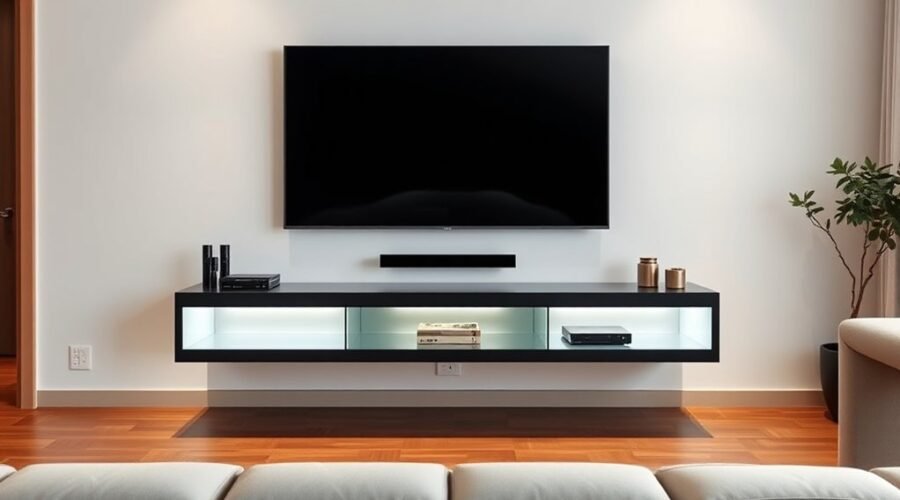
If you think a TV stand has to sit on the floor and take up space, a floating TV stand changes that idea fast. You mount it to the wall, open up the room, and give your media setup a cleaner, more architectural look. With hidden storage, cable control, and finishes that shape the mood of the space, it can do more than hold a screen—and the details start to matter.
Key Takeaways
- A floating TV stand is a wall-mounted media console that lifts the TV off the floor for a clean, modern look.
- It often includes shelves, cabinets, or drawers to store devices and keep the entertainment area organized.
- Built-in cable management helps hide cords, reducing clutter and creating a tidier setup.
- Floating TV stands save floor space, making rooms feel larger and less visually crowded.
- They come in various sizes, finishes, and styles, with some models offering LED lighting and custom design options.
What Is a Floating TV Stand?
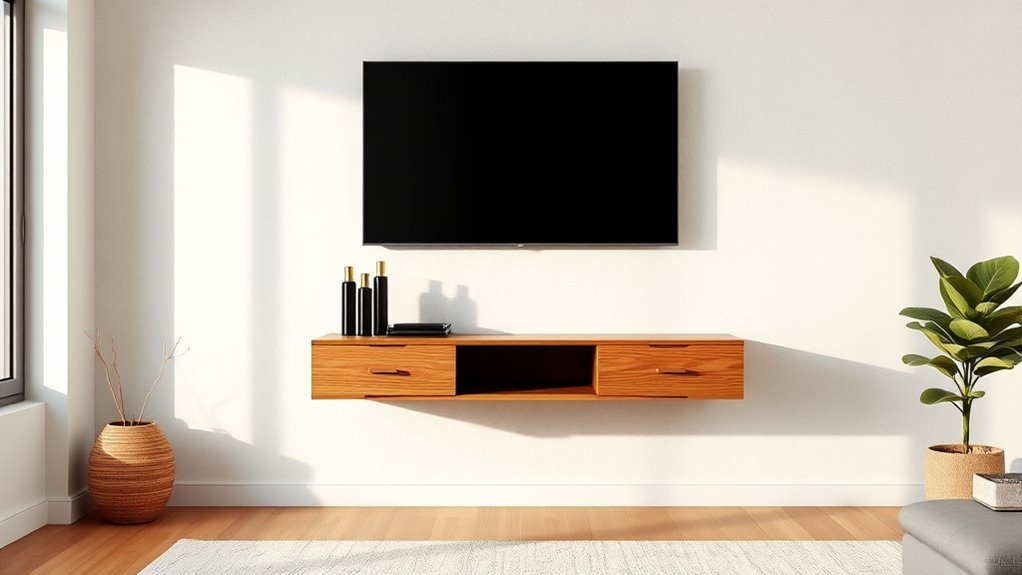
A floating TV stand is a wall-mounted media console that lifts your television off the floor, giving the room a cleaner, more modern feel.
You use floating TV stands to create a streamlined focal point that feels light, intentional, and visually balanced. Designers often pair them with shelves, cabinets, or drawers, so your setup can stay tidy without sacrificing style.
Built-in cable management helps you hide cords, keeping the wall plane calm and uncluttered. You can choose sizes that suit your screen, with length guidelines that support proper proportions and stability.
Many models also let you customize color and finish, so the media console can echo your flooring, cabinetry, or accent wall.
The result is a polished arrangement that shapes the space with simple, elegant lines.
Why Choose a Floating TV Stand?
You’ll free up floor space and give your room a lighter, more open feel with a floating TV stand.
It keeps cables and devices tucked away, so your setup looks cleaner and more intentional.
You also get a sleek, modern look that sharpens the whole wall without adding visual bulk.
Space-Saving Design
When wall space does the work, a floating TV stand frees up the floor and instantly makes a room feel more open and balanced.
You get a floating, space-saving design that lifts the media area off the ground, so your layout breathes. In a compact living room, that extra clearance matters: it reduces visual bulk and gives you room to move, style, and store what you need.
You can choose a size that fits your wall precisely, keeping proportions calm and intentional. Many stands also hide cables, which helps your setup feel orderly without demanding attention.
Some even add LED lighting for a subtle accent. The result is a smarter use of space that feels tailored, light, and well-composed.
Cleaner, Modern Look
Because it mounts to the wall, a floating TV stand instantly creates a cleaner, more modern look by reducing visual bulk and opening up the room. You get clean lines that make your entertainment area feel intentional, airy, and refined.
A floating TV stand also helps you avoid the cluttered, heavy look of traditional furniture.
- Built-in cable management keeps cords tucked away
- Wall mounting creates the illusion of more floor space
- Finishes like oak, gray, black, and white suit your style
If you add LED lighting, you can soften the mood and make the setup feel even more polished.
In smaller living rooms, that sleek, elevated profile can transform the whole wall into a calm focal point.
What Floating TV Stand Styles and Storage Options Are Available?
Floating TV stands come in a wide range of styles, from sleek, modern profiles with clean lines to more tailored designs that feel custom-made for your space.
If you want a floating TV stand that reads as part of the architecture, choose minimalist media consoles with low visual weight and refined finishes. You can also select slender, long silhouettes that stretch across a broad wall, or compact versions that keep smaller rooms feeling open.
Storage choices stay flexible: open shelves showcase components and décor, while cabinets and drawers conceal remotes, cables, and everyday clutter. Some models add built-in LED lighting, which creates a soft glow and elevates the viewing mood after dark.
Open shelves display your style, while cabinets, drawers, and LED lighting keep the space polished and practical.
Many designs also offer customizable dimensions, two-tone colorways, and finish options, so you can match the stand to your palette and create a balanced, cohesive focal point without overwhelming the room.
How Do You Pick the Right Floating TV Stand Size?
How do you choose the right floating TV stand size? Start by matching the stand’s width to your TV, or going slightly wider for a balanced, tailored look. If you own a 40” to 49” screen, choose a floating TV stand at least 39” long; for 50” to 59” TVs, aim for 46” or more. This keeps the composition visually grounded and supportive.
- Large wall? A longer stand can stretch the room elegantly.
- Small nook? A compact profile keeps the layout light and open.
- Built-in compartments? Leave room for media devices and tidy storage.
You should also consider height. When the TV sits at eye level from your seating position, the whole wall feels calmer and more refined.
In a tight space, a slimmer stand can reduce visual weight, while a wider one can anchor an expansive media wall.
How Do You Choose a Floating TV Stand Color?
Color does more than finish a floating TV stand—it shapes the whole mood of the room. If you want a crisp modern look, black or white can make the stand feel sleek and intentional.
Color shapes the mood of a room, and black or white keeps a floating TV stand sleek and modern.
For a softer, more grounded feel, oak and gray finishes bring warmth without crowding the space. You can also use two-tone combinations, like white and black or gray and oak, to add depth and keep the wall from feeling flat.
Think about how the color will affect openness: lighter neutrals often make a room feel larger, while darker tones can create contrast and a more dramatic focal point.
Most importantly, match the floating TV stand to your existing decor. Whether your room leans contemporary, minimalist, or traditional, a neutral color usually blends best with walls, rugs, and furnishings, so the whole composition feels balanced and calm.
What Materials, Lighting, and Features Should You Look For?
Once you’ve settled on a finish that fits the room, the next step is making sure the stand itself works as beautifully as it looks. Choose a floating TV stand made from MDF or plywood for a balance of lightness and strength, so your wall-mounted media feels visually airy but solid.
- Built-in LED lighting can wash the wall with a soft glow, and adjustable brightness or color lets you set the mood.
- Cable management keeps cords hidden, preserving a crisp, uncluttered line beneath the screen.
- Flip-down doors, pull-out drawers, and open shelves give you elegant places for media devices and a few sculptural objects.
Look for waterproof and anti-scratch finishes, too; they help the surface stay refined through everyday use.
The best design doesn’t just hold your media—it frames it, adding depth, polish, and a calm sense of order to the room.
How Do You Install and Mount a Floating TV Stand?
You’ll usually start by finding the wall studs. Then use the included template and mounting hardware to map out a clean, level line for the stand.
With your drill and the right bits, you can secure the bracket into the wall, keeping the placement crisp and stable.
Once it’s mounted, check the weight limit so your TV and media gear sit safely in the composition.
Mounting Hardware Basics
Mounting a floating TV stand is as much about precision as it’s about hardware, since the brackets, screws, and anchors need to work with your wall type—ideally wood studs—for a secure, clean-looking result.
You’ll want mounting hardware that supports both the stand and your wall-mounted TV, usually rated for 44 to 100 lbs. Think of the system as hidden architecture: it should disappear visually while holding the composition firmly.
- Brackets align the stand flush
- Anchors add grip where needed
- Cable paths keep the wall calm
Use a stud finder to locate the strongest points, then check that the layout feels balanced and airy.
A level helps preserve that crisp horizontal line, so the finished piece looks intentional, not improvised.
Step-By-Step Installation
With the hardware in place, the installation itself becomes a measured process of alignment and balance.
You begin your step-by-step installation by finding the wall studs with a stud finder, then marking each point for secure support.
Hold the floating TV stand in position, and use a level to keep its line crisp and horizontal before tracing the mounting holes.
Drill pilot holes at the marked spots, making sure they’re anchored to the studs.
Next, fasten the mounting bracket with screws rated for the stand and your equipment.
Once the bracket feels solid, lift the floating TV stand onto it and lock it in according to the manufacturer’s instructions.
The result is clean, airy, and visually weightless.
Frequently Asked Questions
Are Floating TV Stands a Good Idea?
Yes, floating TV stands can be a great idea if you want design benefits and a lighter, more open look.
You’ll free up floor space, hide cables, and give your room a cleaner, more modern feel. They work especially well in smaller rooms.
Before you buy, check wall strength, stud placement, and weight limits.
Good installation tips help you keep the setup safe, balanced, and visually seamless.
Can You Put a TV on a Floating TV Stand?
Yes, you can put a TV on a floating TV stand if you match the stand’s weight rating and mounting considerations.
You’ll want to anchor it into solid wood studs and choose a width that supports your TV’s size.
This setup works well across design styles, since it keeps your room open and sleek.
With hidden cables and balanced proportions, you’ll get a clean, spatially aware media display.
How Much Does a Floating TV Stand Cost?
You’ll usually pay $259 to $499 for a floating TV stand, with the average sitting around the midrange. That price can feel like a sleek rectangle of possibility on your wall.
You can find affordable options online, while custom sizes, premium plywood, LED lighting, and advanced cable management push costs higher. Different design styles shift the price too, so you’ll match your room’s look and spatial needs more easily.
What Can I Put Under a Floating TV Stand?
You can put decorative items, like plants, books, or art, under a floating TV stand to add visual balance.
You could also use baskets or bins for storage, keeping remotes and magazines neatly tucked away.
A slim bench or ottoman works well if you want extra seating or hidden storage.
Just leave room for cable management, so cords stay clean, concealed, and your setup feels airy and polished.
Conclusion
In the end, your floating TV stand does more than hold a screen—it shapes the room around it. You choose the size, finish, storage, and lighting to create a setup that feels open, polished, and intentionally designed. When you mount it correctly, you free up floor space and sharpen the whole wall. As the saying goes, “less is more,” and here, that balance can make your media area feel effortlessly refined.