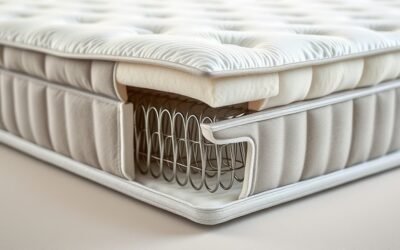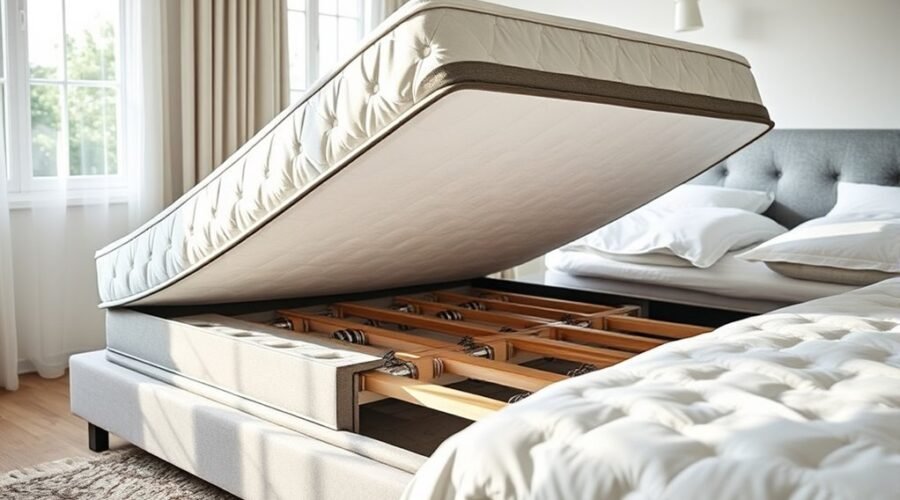
A box spring can still be useful, but most beds do not automatically need one. The correct support depends on your exact mattress, the type of bed frame underneath it, and the manufacturer’s foundation requirements. Traditional innerspring mattresses were commonly paired with spring-style box springs, while many modern foam, latex, and hybrid mattresses need a firmer surface.
Quick Answer
You need a box spring only if your mattress and bed frame are designed for one. Some traditional innerspring mattresses work well with box springs, while many modern foam, latex, and hybrid mattresses require a rigid foundation, platform, approved slats, or an adjustable base. Always check your mattress manufacturer’s support requirements first.
Key Takeaways
- A traditional box spring uses springs or a flexible metal support system inside a frame; many modern “box foundations” look similar but contain rigid slats instead.
- Do not decide by mattress type alone. Current manufacturers use different support, slat-spacing, and warranty requirements.
- Foam, latex, and many hybrid mattresses commonly need firm, even support rather than a traditional flexible box spring.
- Platform beds, rigid foundations, slatted bases, and compatible adjustable bases can often replace a box spring.
- The bed frame must also provide adequate structural and center support; a box spring cannot repair an inadequate frame.
What Is a Box Spring?
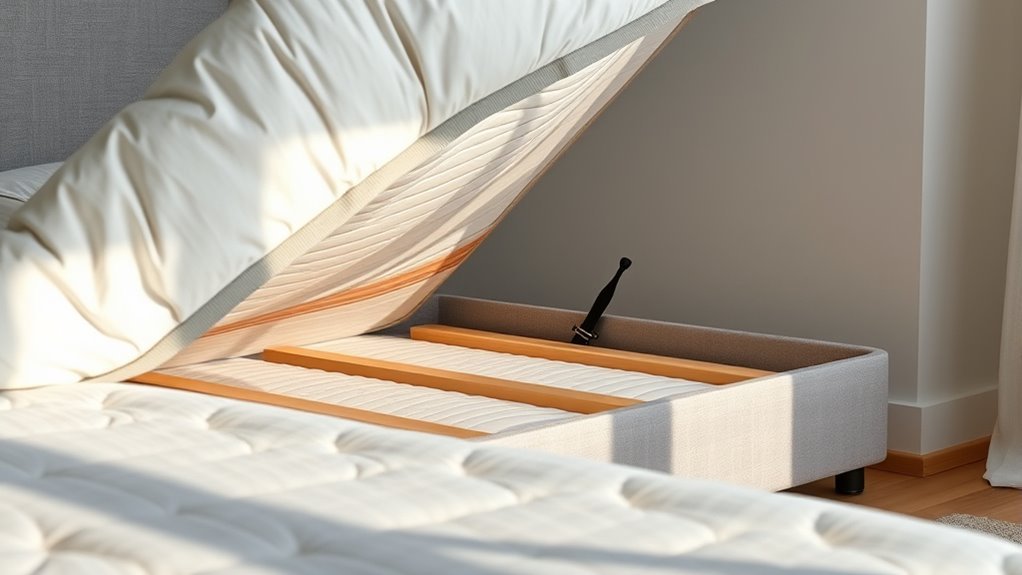
A traditional box spring is a mattress support layer built with a wood or metal frame and an internal spring, coil, or flexible metal system. It sits between the mattress and a compatible bed frame.
Traditional box springs were developed to work with older-style innerspring mattresses. Their flexible structure can absorb some movement and impact while adding height to the bed.
However, the term box spring is now used loosely. Many products sold as box springs are actually rigid foundations with wood or metal slats and no springs at all. Those foundations may look like traditional box springs from the outside but support a mattress differently.
Note: When a mattress company says “foundation,” do not assume it means a traditional spring-style box spring. Check the construction and the mattress warranty before combining the pieces.
Foundation height also varies. High-profile versions can add substantial height, while low-profile foundations provide the same basic support with a shorter overall bed.
How Does a Box Spring Support a Mattress?
A compatible traditional box spring can add support, absorb some movement from an innerspring mattress, and raise the sleeping surface. Its open internal structure can also allow air to move beneath the mattress.
What it cannot do is compensate for an inadequate bed frame. The frame underneath the box spring or foundation still needs to be structurally capable of supporting the mattress, foundation, sleepers, and any required center support.
The right foundation is the one your specific mattress was designed to use—not simply the base traditionally associated with that mattress category.
A flexible box spring can be helpful when a mattress is designed for that movement. The same flexibility can be a problem for a mattress that requires a firm, flat support surface.
Box Spring vs. Foundation: What Is the Difference?
A traditional box spring and a modern mattress foundation serve a similar purpose, but their internal construction is different.
| Feature | Traditional Box Spring | Rigid Foundation |
|---|---|---|
| Inside | Springs, coils, or a flexible metal grid | Rigid wood or metal structure, often with slats |
| Feel | Some flex or give | Firm and relatively inflexible |
| Common use | Traditional mattresses designed for spring support | Many modern foam, latex, hybrid, and coil mattresses |
| Compatibility | Model-specific | Model-specific |
This distinction explains why two mattress brands can give very different answers to the question, “Do I need a box spring?”
Which Mattresses Need a Box Spring?
No mattress category automatically requires a box spring. The safest rule is to check the support instructions for the exact model you own.
Traditional innerspring mattresses are the type most commonly associated with box springs. Foam and latex mattresses usually need firmer support, while hybrid requirements vary significantly by manufacturer.
Innerspring Mattress Needs
Traditional innerspring mattresses were designed to work with spring-style box springs, so this pairing can still be appropriate when the mattress manufacturer allows it.
However, do not assume every modern coil mattress needs one. Current manufacturers use different constructions and support systems. For example, Serta states that its mattresses can use a box spring or certain platform, slatted, and adjustable bases, while current Sealy guidance calls for a solid elevated support surface and does not recommend a traditional box spring for its current mattresses.
| Check | Why It Matters |
|---|---|
| Mattress support instructions | Confirms whether spring-style support is permitted |
| Existing box spring condition | Sagging or damaged components can create uneven support |
| Bed-frame support | The frame must properly support the mattress and foundation |
| Warranty requirements | An unapproved base can affect warranty coverage |
Foam And Latex Beds
Memory foam and latex mattresses commonly need a firm, even support system rather than the flex of a traditional box spring.
A solid platform, approved rigid foundation, or properly constructed slatted frame may work, but the allowed slat spacing is not universal. Do not rely on a generic “3-inch rule.”
For example, Tempur-Pedic specifies slats at least 3 inches wide and no more than 4 inches apart for qualifying slatted frames. Other brands use different measurements.
The goal is continuous enough support to prevent the mattress from dipping between supports while meeting its warranty conditions.
Hybrid And Adjustable Bases
Hybrid mattresses combine coils with foam, latex, or other comfort layers, so their support requirements depend on the complete design rather than the presence of coils alone.
Many hybrids work well on rigid platforms, foundations, or closely spaced slats. Some may also work with adjustable bases. A traditional box spring should be used only when the manufacturer specifically approves it.
- Hybrid mattresses: check the model instructions rather than assuming coil construction means “box spring.”
- Adjustable bases: the adjustable base itself normally provides the mattress support, so a separate box spring is not used.
- Traditional innersprings: a box spring may be appropriate when specified or permitted.
- Foam and latex mattresses: firm, even support is commonly required.
Warning: Do not assume an old box spring, plywood sheet, bunkie board, or widely spaced slatted frame is warranty-safe. Some manufacturers approve these setups while others specifically reject them.
When Do You Still Need a Box Spring?
You may still need or benefit from a traditional box spring when your mattress manufacturer approves or requires one and your bed frame is designed to hold a mattress-and-box-spring set.
This is most common with older or traditional innerspring sleep systems and rail-style frames that do not provide a complete mattress-support surface on their own.
A box spring can also add useful bed height. That may make the edge of the mattress easier to reach when sitting down or standing up, although the ideal height is a personal preference.
Do not use a box spring as a substitute for missing structural support. If your frame requires a center rail, center legs, cross supports, or another reinforcement system, install that support according to the frame and mattress instructions.
When Can You Skip a Box Spring?
You can usually skip a separate box spring when your existing setup already provides the support your mattress manufacturer requires.
Common examples include:
- a platform bed with an approved solid or slatted support surface;
- a rigid mattress foundation;
- a compatible adjustable base;
- a properly built slatted frame that meets the mattress manufacturer’s width, spacing, and center-support requirements;
- a mattress specifically designed to sit directly on the support system supplied with the bed.
Memory foam, latex, and many hybrid mattresses fall into this category, but the manufacturer’s instructions remain the deciding factor.
Box Spring Benefits and Drawbacks
A traditional box spring can be a practical choice when it is compatible with the mattress. It can add height, provide some flex, absorb movement or impact from a compatible innerspring mattress, and allow air beneath the mattress.
The drawbacks are equally important. Springs can weaken, sag, or become noisy over time. The flexible design may also provide inadequate support for mattresses that need a firm, flat surface.
| Potential Benefits | Potential Drawbacks |
|---|---|
| Adds bed height | Can make an already-thick bed too tall |
| Adds flex for compatible traditional mattresses | Flex may be unsuitable for modern mattresses needing rigid support |
| Can absorb some impact and movement | Springs or internal components can wear or become noisy |
| Open structure can provide underside airflow | May violate support requirements for some mattresses |
What Box Spring Alternatives Work Best?
The best box spring alternative is one that supports the entire mattress according to the manufacturer’s instructions.
Common alternatives include platform beds, rigid foundations, slatted frames, bunkie boards, and adjustable bases. Their suitability depends on the mattress and the construction of the support system.
Platform Beds And Foundations
Platform beds provide built-in mattress support through either a solid deck or a slatted structure, so they commonly eliminate the need for a separate box spring.
A rigid foundation serves a similar purpose while fitting inside a conventional bed frame. Modern foundations often resemble box springs but use wood or metal support members instead of flexible coils.
- Platform beds: useful when you want an all-in-one frame and mattress support system.
- Rigid foundations: useful when your existing bed frame needs a separate support layer.
- Adjustable bases: useful when both the mattress and base are designed for head or foot elevation.
- Bunkie boards: useful only when the mattress manufacturer permits them and the underlying frame is adequate.
Bunkie Boards And Slats
A bunkie board is a thin support panel designed to add a firmer surface without the height of a full foundation. It can work well in some low-profile setups, but it is not universally approved.
For example, Tempur-Pedic currently lists bunkie boards among inadequate bases for its mattresses, while other brands permit or sell them.
Slatted bases can provide strong support plus useful airflow, but slat dimensions matter. Current manufacturer examples show how much requirements vary:
- Serta: recommends slats no more than 2 inches apart for its current mattresses.
- Tempur-Pedic: specifies qualifying slats at least 3 inches wide and no more than 4 inches apart.
- Purple: states that slats in a qualifying flat foundation must be no more than 3.5 inches apart.
Those differences are why your mattress manual or current warranty matters more than a universal spacing number.
Can You Use a Box Spring With Memory Foam?
You generally should not place a memory foam mattress directly on a traditional flexible box spring unless the mattress manufacturer specifically approves that combination.
Memory foam needs even support across its underside. If the supporting surface flexes too much or leaves unsupported gaps, the mattress may dip or develop uneven wear.
Better options often include an approved rigid foundation, solid platform, or sufficiently close and sturdy slats.
- A rigid base helps distribute the mattress load evenly.
- Closely spaced approved slats can provide both support and underside ventilation.
- A traditional box spring can have too much flex for some foam mattresses.
- A bunkie board is only appropriate when the manufacturer permits it.
Does Your Bed Frame Need a Box Spring?
The bed frame matters just as much as the mattress.
A traditional metal or wood rail frame may be designed to hold a box spring or rigid foundation rather than support a mattress directly. A platform bed, by contrast, normally includes its own solid deck or slats and therefore does not need an extra box spring unless its manufacturer specifically calls for one.
Before placing a mattress directly on a frame, check:
- Whether the frame is designed for direct mattress support.
- Whether the slats meet the mattress manufacturer’s spacing and width requirements.
- Whether the frame has required center rails, center legs, or cross supports.
- Whether the frame can handle the combined weight of the mattress and sleepers.
Sealy’s current warranty guidance, for example, separately specifies center-support requirements for larger sizes. That support is a frame requirement; placing a box spring over an inadequate frame does not automatically solve it.
How Do You Know Your Bed Needs Better Support?
Inspect the mattress and foundation rather than judging the support system from comfort alone.
Signs worth investigating include:
- visible sagging or dipping in the foundation;
- broken, bent, or cracked structural components;
- a mattress dipping noticeably between widely spaced slats;
- loose or shifting slats;
- new squeaking or rattling from the foundation;
- a bed that rocks or feels structurally unstable;
- missing center supports required for the frame or mattress size.
If the mattress itself is sagging, inspect both the mattress and its supporting system. An unsupported or damaged foundation can contribute to uneven wear, but mattress defects and normal material changes are separate possibilities.
Pro Tip: Before replacing a mattress because it feels uneven, remove the bedding and inspect the frame, slats, center supports, and foundation. A damaged support component can sometimes mimic a mattress problem.
Can You Reuse an Old Box Spring?
You can reuse an existing box spring only when three things are true: your new mattress permits that type of support, the box spring is structurally sound, and the bed frame underneath it meets the required support specifications.
Inspect the old box spring for sagging, broken wood, bent components, excessive flex, squeaks, torn connections, or uneven areas. If the foundation no longer stays flat and stable under load, replacing it is safer than placing a new mattress on top.
Age alone does not determine compatibility. A relatively new base can still be wrong for a mattress that requires rigid support, while an older foundation in excellent condition may remain acceptable for a mattress whose manufacturer allows it.
How Do You Choose the Right Mattress Foundation?
Choose the foundation by working from the mattress manufacturer’s requirements outward.
- Identify the exact mattress model. Do not rely only on labels such as foam, hybrid, latex, or innerspring.
- Read its current support and warranty instructions. Look for approved foundation types, slat width, maximum slat spacing, center-support rules, and adjustable-base compatibility.
- Inspect your bed frame. Confirm that it supports the foundation or mattress correctly and includes any required center support.
- Match the support system. Choose a traditional box spring, rigid foundation, platform, slatted base, bunkie board, or adjustable base only if it satisfies those requirements.
- Check the condition of existing parts. Do not put a new mattress on a sagging, broken, or unstable foundation.
Manufacturer differences can be substantial. Serta currently permits several support types while specifying tight slat spacing. Tempur-Pedic requires a firm support system and rejects traditional box springs for its mattresses. Purple also says traditional box springs do not provide proper support for its current mattresses.
That makes one rule more reliable than all others: follow the requirements for the mattress you actually own.
Frequently Asked Questions
Do you really need a box spring anymore?
Not for every mattress. Platform beds, rigid foundations, slatted frames, and adjustable bases have replaced traditional box springs in many modern setups. Use a box spring only when your mattress and frame are compatible with it.
How do you know if a bed needs a box spring or not?
Check the mattress manufacturer’s foundation requirements first, then check the bed frame. A rail-style frame may require a separate foundation, while a platform bed may already provide direct mattress support. Confirm slat spacing, center support, and warranty requirements before choosing.
What are people using instead of box springs?
Common alternatives include platform beds, rigid mattress foundations, approved slatted bases, bunkie boards, and adjustable bases. The correct option depends on the mattress manufacturer’s specifications.
What happens if I don’t put a box spring on my bed?
Nothing harmful happens if your mattress is already on an approved support system. Problems arise when the mattress lacks the support it requires. That can cause instability, uneven wear, sagging, or warranty issues. The bed may also sit lower without the extra foundation height.
How far apart should mattress slats be?
There is no universal spacing limit. Current manufacturer requirements range considerably. Check your exact mattress instructions for both maximum spacing and minimum slat width instead of relying on a generic 2-, 3-, or 4-inch rule.
Can I put a mattress directly on a platform bed?
Usually, if the platform provides the support your mattress requires. A solid platform generally offers continuous support, while a slatted platform must meet the mattress manufacturer’s slat and center-support specifications.
Can I reuse my old box spring with a new mattress?
Only if the new mattress permits that type of box spring and the existing unit is flat, stable, undamaged, and properly supported by the frame. Replace it if it sags, flexes unevenly, has broken components, or does not meet the new mattress warranty requirements.
Conclusion
You do not need a box spring for every bed, but every mattress does need the correct support. Traditional innerspring mattresses may work with a box spring when the manufacturer approves it, while many modern foam, latex, hybrid, and coil mattresses use rigid foundations, platforms, approved slats, or adjustable bases instead.
The most important step is simple: check the support specifications for your exact mattress and then make sure the bed frame, slats, center supports, and foundation all meet those requirements. That protects the mattress from avoidable sagging and prevents an incompatible base from creating warranty problems.
Sources
- Serta Foundation/Base Requirements — current guidance on approved support systems and slat spacing.
- Tempur-Pedic Foundation Guidance — traditional box spring, slat, bunkie-board, and foundation requirements.
- Sealy Mattress and Flat Foundation Warranty — bed-frame, center-support, foundation, and slat requirements.
- Purple Mattress Foundation Guidance — rigid foundation and slat-spacing requirements and traditional box-spring restrictions.
- Helix Mattress Base Guidance — current support-system and slat guidance illustrating manufacturer-specific requirements.