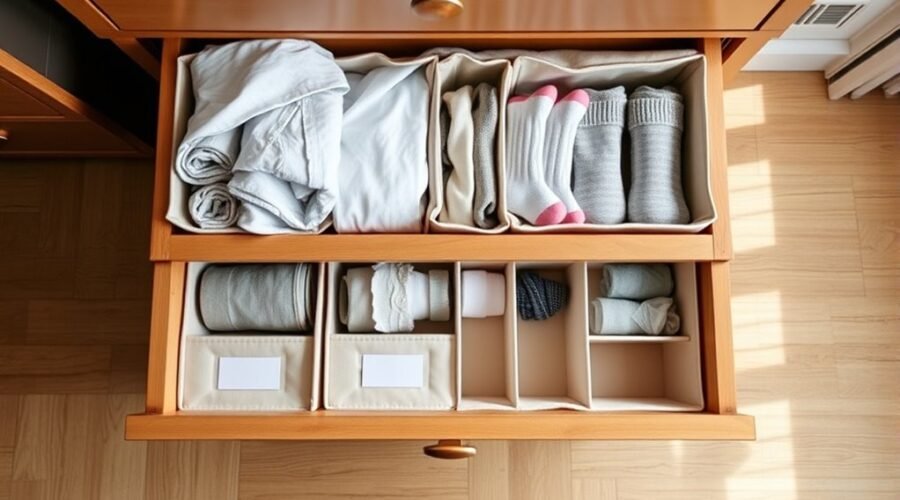
Start by emptying every dresser drawer so you can see what’s really there, then sort each item by type and how often you use it. Once you know what stays, choose dividers that fit your drawer size and fold clothes for quick visibility. Bulky pieces need a different approach, and if you want the system to hold, you’ll need one simple habit that keeps clutter from coming back.
Key Takeaways
- Empty each dresser drawer and remove items you no longer use, wear, or need.
- Group clothes by category and use, such as shirts, pants, underwear, work, and lounge.
- Use drawer dividers or bins sized to your drawers to keep categories separated.
- Fold clothes upright or file-style so every item is visible and easy to grab.
- Maintain the system monthly with quick resets and a one-in, one-out rule.
Empty Every Dresser Drawer
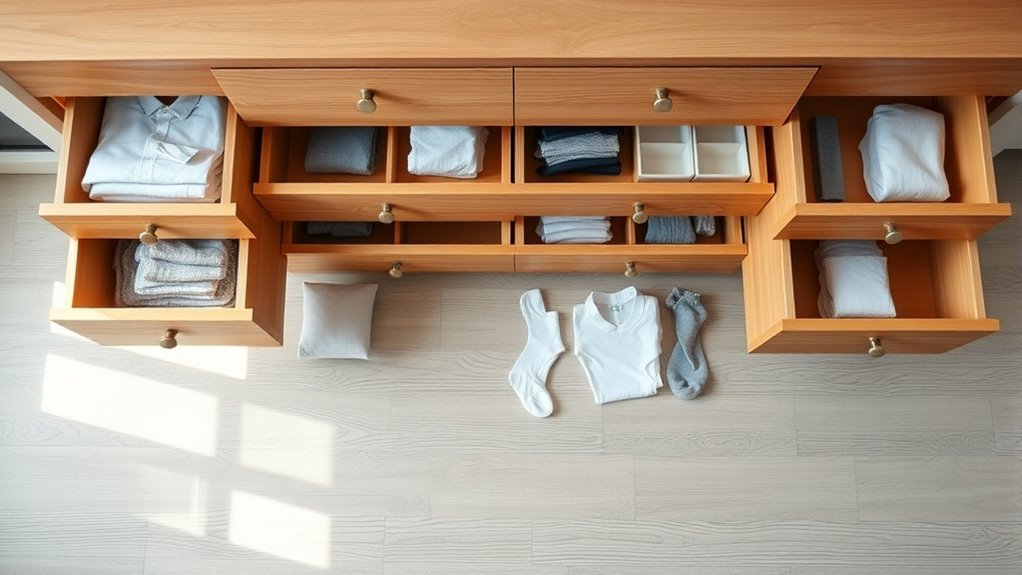
Start by emptying every dresser drawer so you can see exactly what you own and begin with a clean slate. This first move gives you full control over drawer organization and helps you decide what deserves drawer space.
As you sort each item, compare duplicates, spot worn pieces, and release anything you don’t need. That’s real decluttering: you stop letting forgotten items dictate your space.
With every drawer empty, you can wipe out dust and debris, which keeps your storage cleaner and healthier. You also create the chance to build a system that helps you keep things organized and easy to reach.
Empty drawers let you clear out dust and build a cleaner, easier-to-use system.
If you make this a seasonal habit, you’ll prevent clutter from creeping back and keep your dresser aligned with your current life. Empty drawers aren’t a setback; they’re freedom.
Sort Clothes by Type and Use
Start by grouping your dresser into everyday wear zones, like shirts, pants, and undergarments, so you can grab what you need fast.
Then sort items by use, keeping work, workout, and lounge clothes in separate sections for easier outfit choices.
If you use drawer dividers or bins, you’ll keep each category neat and prevent clothes from getting mixed together.
Everyday Wear Zones
To make your dresser easier to use every day, create dedicated zones for the clothes you reach for most often.
In your dresser drawers, group tops, bottoms, and activewear so your organization feels simple and intentional. Use drawer dividers to keep each category separate and stop piles from mixing.
Put frequently used items in the top drawers or front sections, where you can grab them fast without digging. Add a color-coding system inside each zone to make matching easier and cut down on decision fatigue.
Then review your home organization regularly, removing seasonal pieces that no longer belong there.
This keeps your daily clothes visible, accessible, and ready, so your routine stays smooth and your space works for you, not against you.
Activity-Based Sorting
Sort your dresser drawers by how you actually use your clothes, grouping items into clear categories like active wear, work attire, and casual basics.
This activity-based sorting helps you organize dresser space around your real life, not a fantasy closet. Use drawer dividers to keep each group separate and stop clutter from creeping back in.
- Put workout gear where you can grab it fast.
- Keep work clothes together for easy mornings.
- Store casual pieces in one zone.
- Do a monthly sorting session and use one in, one out.
Rotate seasonal items as your needs shift, and reassess what you reach for most.
When each drawer serves a purpose, you move with more ease, and your wardrobe stays clear, lean, and free.
Choose Dividers for Your Drawer Size
Choose dividers that fit your drawer size so each section sits snugly and keeps items from shifting around.
Before you buy drawer dividers, measure your drawer carefully, including width, depth, and height. That simple step keeps you from wasting space or forcing pieces that don’t belong.
If your needs change, adjustable dividers give you freedom to reshape compartments as your clothes, accessories, or routines shift.
Choose durable materials like bamboo or acrylic for a clean look that lasts and supports smart storage ideas.
The right fit improves visibility and accessibility, so you can spot what you need fast and avoid losing small items in the clutter.
When every section has a clear purpose, your drawer works with you instead of against you.
Keep the layout intentional, and you’ll create order that feels easy to maintain and genuinely freeing.
Fold Clothes for Easy Visibility
When you fold clothes with the KonMari method, each item stands upright in a vertical row, so you can see what’s in your drawer at a glance. You no longer dig, guess, or waste time. Instead, you create calm and control.
KonMari folding keeps every piece upright and visible, so your drawer feels calm, clear, and easy to use.
- File fold T-shirts and similar pieces so each one stays visible.
- Use drawer dividers to keep categories separate and stop shifting.
- Add drawer organizers or small bins when you need extra structure.
- Reassess often and fold clothes again before clutter returns.
This system helps you keep a beautifully organized drawer that supports your freedom. You can reach for one shirt, then put things back without disturbing the rest.
Because every item has a clear place, nothing gets buried or forgotten. You’ll open the drawer, see exactly what you own, and move through your day with less stress and more ease.
Store Bulky Clothes the Smart Way
Bulky clothes need a different approach because sweaters and hoodies can quickly crowd a drawer. Use the file folding method so each piece stands upright, stays visible, and won’t stretch out of shape. This vertical setup helps you grab what you need without digging through a pile.
Add drawer dividers to give bulky items their own lanes and keep oversized knits from spilling into each other. If you need more structure, place stackable organizers or bins inside the drawer to create defined zones and make the most of every inch.
You can also stand thicker clothes upright to save horizontal space and keep the drawer organized at a glance. Choose one section for sweaters, another for hoodies, and another for seasonal extras. That simple system gives you control, cuts chaos, and lets your clothing work for you, not against you.
Stop Clutter From Building Back up
Before you add anything new, reset your drawers by pulling out items you don’t use and returning everything to its place.
Keep clutter in check with a one-in, one-out rule, so every new item replaces something else. This simple habit helps you maintain order and stops excess from creeping back in.
Reset Before Refilling
Start with a full reset: empty each drawer completely so you can see exactly what you have and stop clutter from sneaking back in.
Lay everything out, then decide what truly serves you.
- Keep only the pieces you use and love.
- Move extras to Donate/Sell.
- Send misfits to Relocate/Discard.
- Add drawer organizers and bins before refilling.
This reset gives you a clean slate and makes decluttering feel lighter.
Put back only what belongs in each drawer, with clear spaces that help you find things fast.
Then protect your freedom with simple maintenance: spend 5 to 10 minutes each month straightening the drawer, and use seasonal check-ins during clothing swaps to reassess what still fits your life.
Keep A One-In, One-Out Rule
To keep your dresser from filling back up, use a simple one-in, one-out rule: whenever you buy a new clothing item, remove one old item from the drawer. This keeps clutter in check and helps you stay intentional about what you own.
| New item | Old item out |
|---|---|
| Shirt | Donate tee |
| Socks | Recycle pair |
Use organizers and drawer inserts to make sorting fast, so you can see what stays and what leaves. Each swap builds balance, lowers stress, and keeps your drawers easy to manage. You’ll shop with more purpose, choose better quality, and avoid hiding excess in the back. By donating or recycling what you release, you keep your space light, clear, and free.
Frequently Asked Questions
What Is the Most Efficient Way to Organize Dresser Drawers?
The most efficient way is to use a simple drawer layout with a minimalist approach.
You’ll get better space optimization by folding clothes vertically with smart folding techniques, then grouping similar items in dividers or fabric bins.
Keep only what you use often, rotate seasonally, and follow one in, one out.
Label sections if needed, so each item has a clear home and you can grab it fast without digging.
What Is the Konmari Method for Drawer Organizing?
You use the KonMari method by keeping only items that spark joy; studies show clutter can raise stress for many people.
You gather drawer categories together, then apply decluttering techniques: keep, donate, or discard.
Next, you use folding methods to make neat rectangles and store them upright.
This minimalist approach turns drawers into clear storage solutions, so you can see everything, save space, and feel more free.
How to Organize Drawers Without Organizers?
You can organize drawers without organizers by using drawer folding and vertical stacking. Fold clothes into neat rectangles, then stand them upright so you can see everything fast.
Group items by type, and use shoeboxes or small containers to create simple zones. Add color coordination for quicker grabbing, and keep a minimalist approach by decluttering often.
Use seasonal rotation for bulky pieces, and roll soft items to save space.
How to Organize a Dressing Drawer?
You organize a dressing drawer by giving each drawer one clear role—wait, then sort by clothing categories.
Use folding techniques like KonMari or rolling to boost space maximization and keep everything visible.
Add seasonal rotation so you store only what you’ll wear now.
Finish with simple drawer maintenance: declutter monthly, return items fast, and use dividers if you need them.
You’ll free your space and find things instantly.
Conclusion
Now you’ve got a system that should keep your dresser drawers easy to use and hard to mess up. If you’ve wondered whether a tidy drawer actually saves time, the answer is yes—you spend less time searching when everything has a clear place. Keep sorting by type, folding for visibility, and using dividers that fit. A quick monthly reset and the one-in, one-out rule will help you keep clutter from sneaking back in.